
الموارد
استكشف مجموعة واسعة من الموارد القيمة حول تعليم المواطنة العالمية لتعميق فهمك وتعزيز البحث والمناصرة والتعليم والتعلم.
تم العثور على 1,402 نتيجة
 The Socio-Cultural Impact of COVID-19: Exploring the Role of Intercultural Dialogue in Emerging Responses سنة النشر: 2020 المؤلف: Fethi Mansouri المؤلف المؤسسي: UNESCO This brief illustrates, proponents and practitioners of ICD were quick to adapt to this crisis situation and shifted much of their activities online in order to mitigate the negative impacts of the pandemic. The shift has ensured that cross-cultural exchange, mutual support and intergroup solidarity, all key dimensions of the ICD approach, can be maintained in safe online contexts and thus continue to play a key role within the socio-cultural response to COVID-19.Through inductive exploration of authentic, local, community responses to the COVID-19 crisis, this brief aims to shed light on the new context in which the ICD agenda is being pursued, complementing the many existing quantitative analyses of the socio-cultural impact of the pandemic.
  Media and Information Literacy: Policy and Strategy Guidelines سنة النشر: 2013 المؤلف: Alton Grizzle | Penny Moore | Michael Dezuanni | Sanjay Asthana | Carolyn Wilson | Fackson Banda | Chido Onumah | Maria Carme Torras Calvo المؤلف المؤسسي: UNESCO This resource aims to treat MIL as a composite concept, unifying information literacy and media literacy as well as considering the right to freedom of expression and access to information through ICTs. It is divided into two parts. Part 1 is the MIL Policy Brief, and is designed for policy or decision makers and can serve as a summary of the publication. Part 2 is divided into several comprehensive chapters and suggests: 1) how to enlist MIL a development tool; 2) conceptual frameworks for MIL policies and strategies; and 3) model MIL policy and strategies that can be adapted by countries globally.
 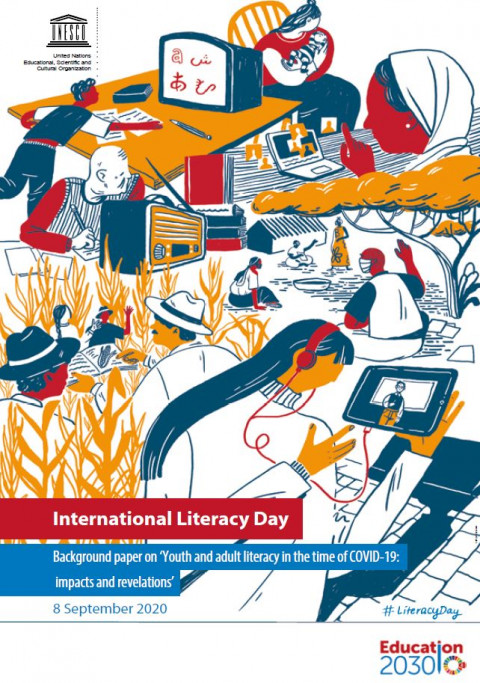 International Literacy Day: Background Paper on 'Youth and Adult Literacy in the Time of COVID-19; Impacts and Revelations' سنة النشر: 2020 المؤلف المؤسسي: UNESCO Specially prepared on the occasion of International Literacy Day 2020, this background paper illustrates the impact of the COVID-19 crisis on youth and adult literacy, based on the limited information that is currently available. It provides five regional snapshots and identifies preliminary lessons learned thus far, while aiming to inspire continued reflection and subsequent action. It also makes the case for the ongoing importance of advancing youth and adult literacy, a priority that was already neglected even before the pandemic but which deserves all our attention. ILD 2020 thus seeks to trigger reimaginations of literacy teaching and learning in the COVID-19 crisis and beyond, with a particular focus on the role of educators.
  What Does the Rule of Law Have to Do With Me? سنة النشر: 2020 المؤلف المؤسسي: UNESCO Using fun, interactive pedagogical tools and a classroom setting, this video explains to young people the basic concept of the rule of law and how they can engage in building a society on just laws which protect the fundamental rights of the individual and promote citizenship (https://en.unesco.org/themes/gced).In simple engaging language with real life examples and interaction with pupils, it explains 'accountability', 'freedom of expression', the characteristics of good law and equality before the law.The video describes the UNESCO-UNODC partnership on education for the rule of law (https://en.unesco.org/themes/gced/rul...) which works to bridge the gap between education and justice and supports Sustainable Development Goals 4 (in particular target 4.7) and 16. The partnership has developed interactive handbooks for schools and guidance for policy-makers.
 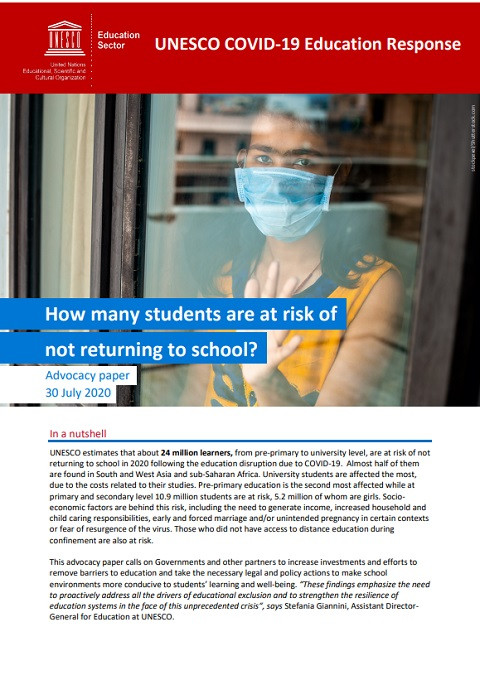 UNESCO COVID-19 Education Response: How Many Students Are at Risk of Not Returning to School?; Advocacy paper سنة النشر: 2020 المؤلف المؤسسي: UNESCO UNESCO estimates that about 24 million learners, from pre-primary to university level, are at risk of not returning to school in 2020 following the education disruption due to COVID-19. Almost half of them are found in South and West Asia and sub-Saharan Africa. University students are affected the most, due to the costs related to their studies. Pre-primary education is the second most affected while at primary and secondary level 10.9 million students are at risk, 5.2 million of whom are girls. Socioeconomic factors are behind this risk, including the need to generate income, increased household and child caring responsibilities, early and forced marriage and/or unintended pregnancy in certain contexts or fear of resurgence of the virus. Those who did not have access to distance education during confinement are also at risk. This advocacy paper calls on Governments and other partners to increase investments and efforts to remove barriers to education and take the necessary legal and policy actions to make school environments more conducive to students’ learning and well-being. “These findings emphasize the need to proactively address all the drivers of educational exclusion and to strengthen the resilience of education systems in the face of this unprecedented crisis“, says Stefania Giannini, Assistant DirectorGeneral for Education at UNESCO.
 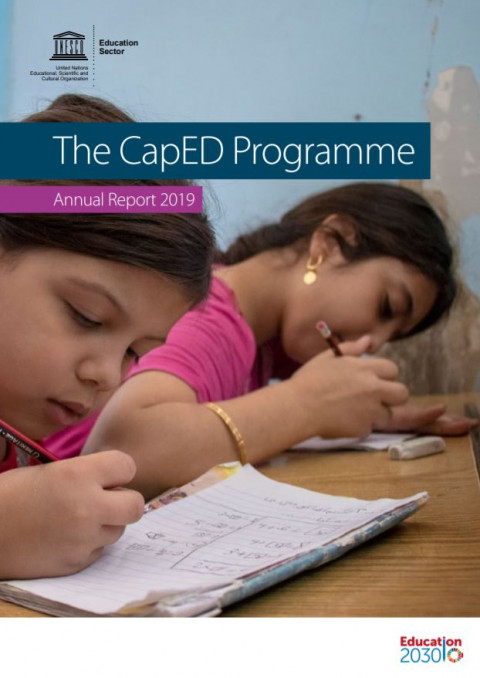 The CapED Programme: Annual Report 2019 سنة النشر: 2020 المؤلف المؤسسي: UNESCO UNESCO is the United Nation’s specialized agency for education and is mandated to lead and coordinate progress towards Sustainable Development Goal 4 – “Ensure inclusive and equitable quality education and promote lifelong learning opportunities for all”.The CapED Programme is central to delivering on this mandate through capacity development. It mobilizes UNESCO’s worldwide network of specialized Institutes and offices and works with partners to assist countries as they develop and implement national plans to deliver on SDG4 commitments.The Annual Report 2019 provides information on achievements and progress made in the 26 countries where CapED is operational. Programme CapED: rapport annuel 2019 سنة النشر: 2020 المؤلف المؤسسي: UNESCO Institution spécialisée des Nations Unies pour l'éducation, l'UNESCO est chargée de conduire et de coordonner les efforts entrepris pour atteindre l'Objectif de développement durable 4 : « Assurer l'accès de tous à une éducation de qualité, sur un pied d'égalité, et promouvoir les possibilités d'apprentissage tout au long de la vie ».Le Programme CapED de développement des capacités pour l'éducation joue un rôle central dans l'exercice de ce mandat. Il mobilise le réseau mondial des instituts spécialisés et des bureaux de l'UNESCO et, en collaboration avec ses partenaires, aide les pays à élaborer et mettre en oeuvre leurs plans nationaux afin d'honorer les engagements qu'ils ont pris au titre de l'ODD 4.Le Rapport annuel 2019 met en lumière les résultats obtenus et les progrès accomplis dans les 26 pays où le Programme CapED intervient.
 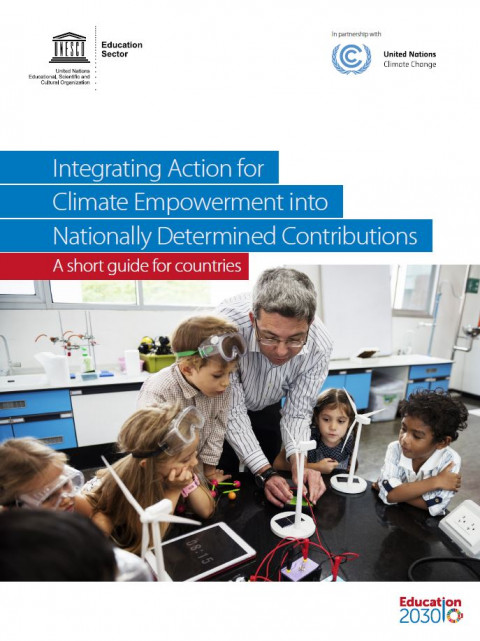 Integrating Action for Climate Empowerment into Nationally Determined Contributions: A Short Guide for Countries سنة النشر: 2020 المؤلف المؤسسي: UNESCO In the framework of the 2020 review of Nationally Determined Contributions (NDCs) under the Paris Agreement, this guide aims to provide countries with advice on how to enhance ambition and address the six elements of ‘Action for Climate Empowerment’ (ACE) – Education, Training, Public Awareness, Public Access to Information, Public Participation and International Cooperation – in their respective NDCs.In five simple questions and answers, it provides suggestions for elements that can be integrated into the NDCs in order to make ACE an integral part of countries’ climate responses. The guide also shows why ACE is key to achieve the goals of the Paris Agreement and its greenhouse gas emission targets.
  Using Civic Participation and Civic Reasoning to Shape Our Future and Education (Background Paper for the Futures of Education Initiative) سنة النشر: 2020 المؤلف: Sarah M. Stitzlein المؤلف المؤسسي: UNESCO Actualizing a preferred future relies on citizens who are prepared to effectively engage perhaps the most fundamental civic question: ‘What should we do?’ (Levine, 2016; Dishon & Ben-Porath, 2018). It is a question that arises when people face a problem, must reach a decision, or must figure out how to flourish together as a group. This question is closely tied to the key question posed by the International Commission on the Futures of Education: ‘What do we want to become?’ Engaging both questions is a useful way for us to envision education in the future. These questions push us to consider not only what we merely can do, but also what is right for us to do in light of our responsibilities to others.Civic reasoning is the sort of reasoning we do as we answer the question, ‘What should we do?’ Civic discourse is a means or method by which people engage in civic reasoning. Efforts to envision improved education and futures should foreground civic reasoning and discourse as both a means and ends of citizen participation. They are important for the ways in which they directly engage citizens and for their products, which lead to future civic action and better futures.
 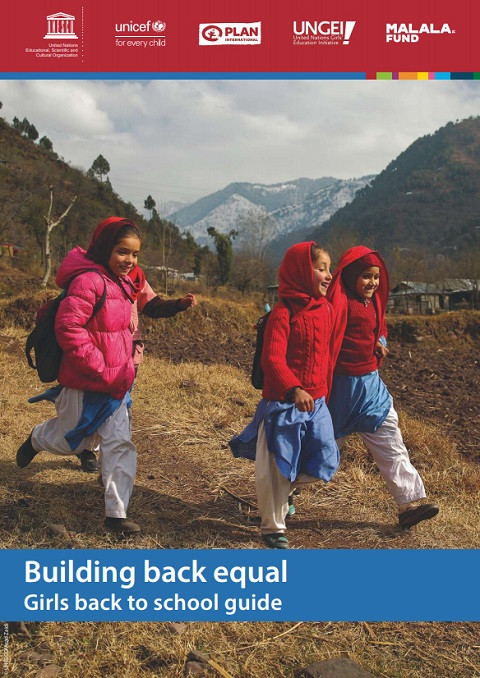 Building Back Equal: Girls Back to School Guide سنة النشر: 2020 المؤلف المؤسسي: UNESCO | United Nations Children's Fund (UNICEF) | Plan International | United Nations Girls' Education Initiative (UNGEI) | Malala Fund The guide provides targeted inputs to ensure continuity of learning during school closures, and comprehensive, timely and evidence-based plans for reopening schools in a way that is safe, gender-responsive and child-friendly, and meets the needs of the most marginalised girls. This guide emphasizes an approach to ‘build back equal’ through gender-responsive measures that transform education systems, prioritise resilience and address the key bottlenecks and barriers to girls’ education, including: Gender-responsive data and evidence to inform action, including data disaggregated by sex and gender-responsive monitoring to identify promising practices to promote gender equality. Policies, laws and plans to advance girls’ rights, including the removal of discriminatory practices that impede girls’ educational participation and completion, and ability to apply their learning. Sustained financing to achieve results, protecting education financing for girls’ education, alongside health, social protection and economy recovery initiatives with an equity lens.