
الموارد
استكشف مجموعة واسعة من الموارد القيمة حول تعليم المواطنة العالمية لتعميق فهمك وتعزيز البحث والمناصرة والتعليم والتعلم.
تم العثور على 3,229 نتيجة
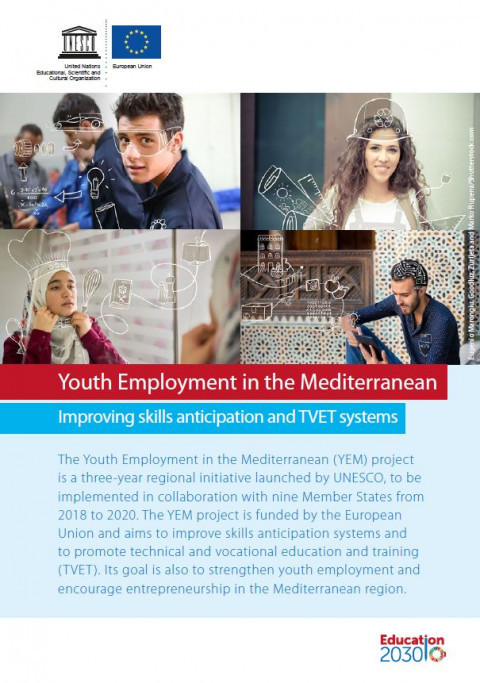 Emploi des jeunes dans la région méditerranéenne: améliorer la prévision des compétences et les systèmes d'EFTP سنة النشر: 2018 المؤلف المؤسسي: European Union (EU) Emploi des jeunes dans la région méditerranéenne (YEM) est un projet à l’échelle régionale de trois ans initié par l’UNESCO et mis en oeuvre en collaboration avec les États membres sur une période de trois ans (2018-2020). Le projet YEM est financé par l’Union européenne (UE) et vise à améliorer les systèmes de prévision des compétences et à promouvoir l’enseignement et la formation techniques et professionnels (EFTP) pour renforcer l’emploi et l’entrepreneuriat dans la région méditerranéenne.
  One in Five Children, Adolescents and Youth is Out of School (UIS Fact Sheet No. 48) سنة النشر: 2018 المؤلف المؤسسي: UNESCO Institute for Statistics (UIS) This fact sheet presents the latest UIS data on education available as of February 2018.Three years after the adoption of Sustainable Development Goal 4 (SDG 4) and the promise to provide universal primary and secondary education, there has been no progress in reducing the global number of out-of-school children, adolescents and youth. As the SDG 4–Education 2030 Steering Committee meets in Paris, the UNESCO Institute for Statistics (UIS) has released this fact sheet, highlighting trends at the global and regional levels, to inform discussions and provide stakeholders with the data needed to target policies, strategies and resources to get all children, adolescents and youth in school and learning.
 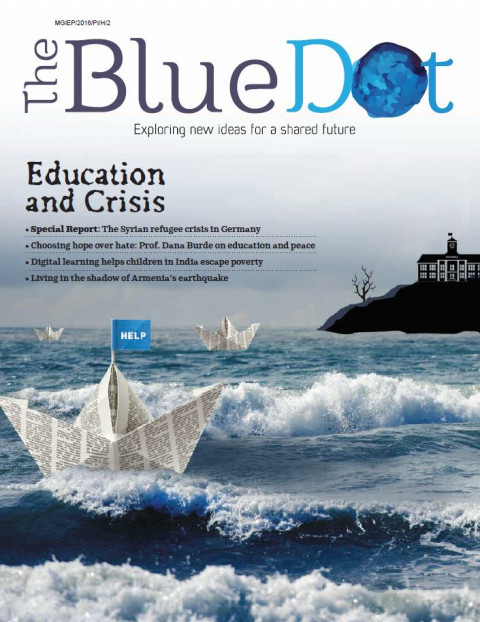 Education and Crisis (The Blue Dot Issue 3, 2016) سنة النشر: 2016 المؤلف المؤسسي: Mahatma Gandhi Institute of Education for Peace and Sustainable Development (MGIEP) In this third issue of The Blue Dot, we have chosen to focus on the often forgotten aspect of education in the context of crises. While relief efforts tend to focus on emergency responses such as providing food and shelter, more often than not rebuilding schools and ensuring that students continue to attend their classes are not considered priorities. At UNESCO MGIEP, we believe that when education is relegated to the side-lines, there is little hope for a country and its citizens to recover.In this issue, we have brought together expert contributors from academia and the field—from countries such as Afghanistan, Nepal and South Sudan—and have dedicated a large section to the ongoing civil conflict in Syria, which will soon enter its fifth year. With almost half of Syria’s population living as refugees or as internally displaced persons, an entire generation of young people risks losing out on stability and a better future. Our Syria Section explores how these young people, with a particular focus on those who have sought refuge in Germany, are faring and what their hopes are for the future.In other parts of the magazine, we focus on technology and on how modern information and communications technologies (ICTs) can help students access a better education. From impoverished communities in Calcutta using Skype to connect with teachers around the world, to new interactive platforms built for young people to discuss global issues, we hope the stories and experiences we have collected for our readers will give a new and fresh perspective on what it means for education when a crisis hits. We also hope that you enjoy our photo contest, which drew more than 100 entries from young people around the world on what “education and crisis” means to them.
 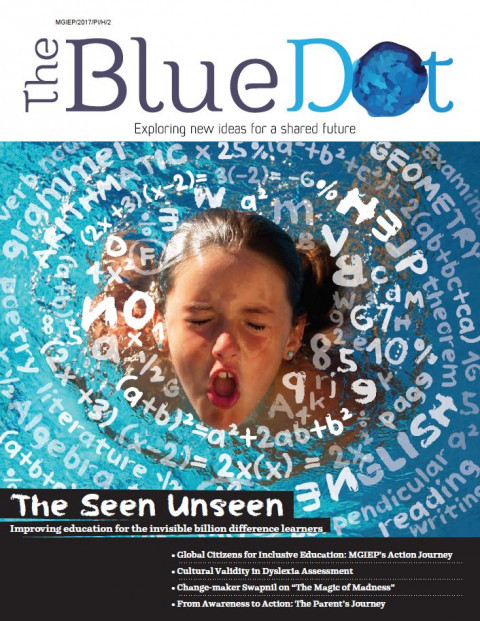 The Seen Unseen: Improving Education for the Invisible Billion Difference Learners (The Blue Dot Issue 5, 2017) سنة النشر: 2017 المؤلف المؤسسي: Mahatma Gandhi Institute of Education for Peace and Sustainable Development (MGIEP) MGIEP believes that addressing the needs of children with difference learning offers a unique opportunity to build the competency of understanding, respect and appreciation between the children and the rest of their peers in school.It provides the Institute favorable conditions to put in practice how inclusive education is a necessary condition for building peaceful and sustainable societies. Many of the Information Technology pedagogical tools developed by the Institute lend themselves to children with difference learning.Transforming the education system in such a manner will allow mainstream schools to provide a learning platform that breaks down barriers across learning types and provide the equitable access to education that is a fundamental Sustainable Development Goal.We are, in this issue of The Blue Dot, privileged to read from some of the world’s best experts on the subject describing the challenges at hand and suggesting ways and means of addressing the lacuna present in curricula and policy. As always, we dedicate a special section to reflecting the voices of young people in our discussion. I am especially honoured and delighted to present a foreword from a young entrepreneur who has not allowed his neurobiological dyslexic condition to prevent him from pursuing his dreams to help others.
 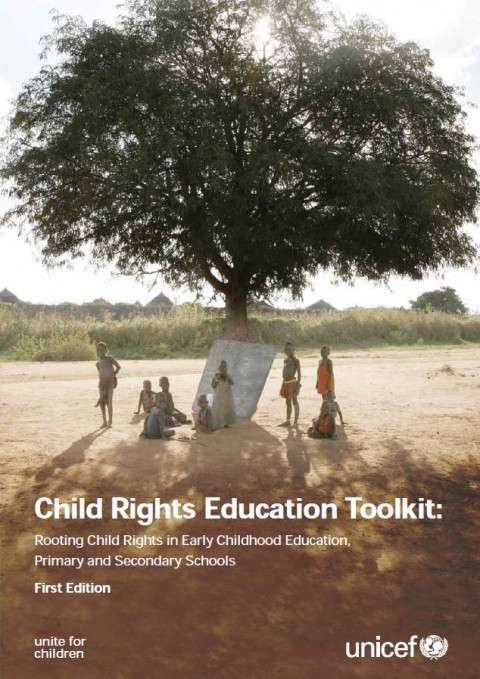 Child Rights Education Toolkit: Rooting Child Rights in Early Childhood Education, Primary and Secondary Schools سنة النشر: 2014 المؤلف المؤسسي: United Nations Children's Fund (UNICEF) This toolkit, developed by UNICEF, defines what is meant by child rights education and the child rights approach. It explains the relevance of child rights education to UNICEF’s mission and the ways in which education can take place in a range of contexts--including with professionals, caregivers, the corporate sector, the media, and children’s groups. The audience of this toolkit is therefore intended to be UNICEF National Committees, UNICEF country offices, UN agencies working on child rights education (CRE), governments, and other civil society organisations, NGOs, and academic institutions.Although this Toolkit focuses on child rights education in the formal learning environment (early childhood education settings, primary and secondary schools), it is hoped that it will also be useful for those working to promote child rights education through other channels, such as in the media, with children’s organizations and through children’s involvement in advocacy.For more information check the UNICEF webpage.
 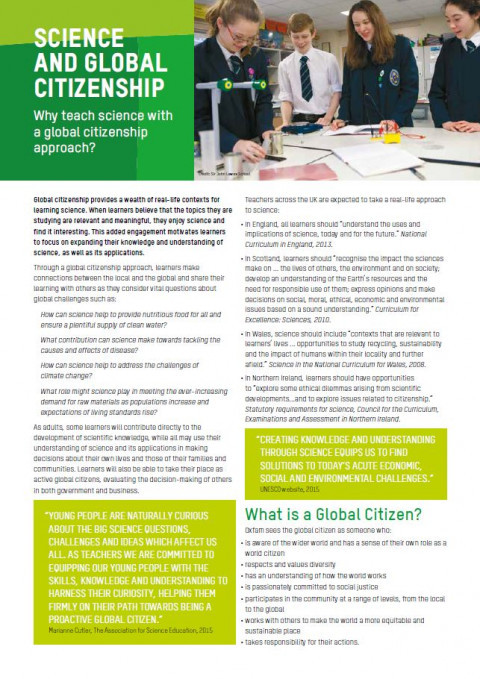 Science and Global Citizenship المؤلف المؤسسي: Oxfam GB Nurturing global scientists is key to the creation of a clean and fairer world for the future. A global citizenship approach enables learners to appreciate the relevance of science and investigate how it can be used to answer vital questions to global challenges.This guide includes practical advice for embedding global citizenship in topic areas like health and disease, water and climate change. It also has handy links to teaching resources which can be used in your lessons.
  التعليم كوسيلة للتعافي: معالجة صدمة النزوح من خلال التعلم الاجتماعي والعاطفي سنة النشر: 2019 وتتناول هذه الوثيقة أنشطة التعليم النظامي وغير النظامي، ولا سيما الأنشطة التي تركز على التعلم الاجتماعي والعاطفي، كنهج واعد لتوفير الدعم النفسي والاجتماعي للمهاجرين واللاجئين في مواجهة الآثار السلبية للصدمات التي تعرضوا لها. وتغطي الوثيقة سياقات الطوارئ والأوضاع المجتمعية التي تقود فينهاية المطاف إلى استقرار أطفال المهاجرين واللاجئين. كما تغطي الدراسة مسألة توفير التعليم وبيئة التعلم؛ ومحتوى التعليم والتعلم لكل من الأطفال وأولياء أمورهم؛ والدور الذي يمكن أن يقوم به المعلمون وغيرهم من المهنيين . Education as healing: addressing the trauma of displacement through social and emotional learning سنة النشر: 2019 The conditions under which migrants and refugees have to leave their homes and homelands can be traumatic in the extreme. Whether they have crossed the Mediterranean in an overcrowded and unsafe boat, been barricaded in a Syrian basement for protection from shelling, or been chased away from a burning village in Myanmar, the events of their departures and their journeys can leave scars on those affected – and none more than on children who have witnessed and experienced death, loss, violence, separation from family and prolonged insecurity. Even those fortunate enough to find a sanctuary often face further hardship or discrimination in their host communities that can exacerbate their vulnerability.
 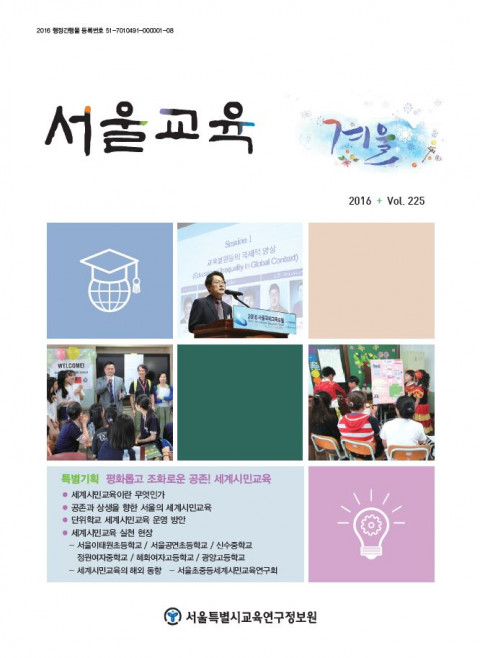 서울교육 2016년 겨울호 (제58권 통권 225호) سنة النشر: 2016 المؤلف المؤسسي: 서울특별시교육청 교육연구정보원 권두칼럼:혁신미래교육으로서의 세계시민교육특별기획: 평화롭고 조화로운 공존! 세계시민교육세계시민교육이란 무엇인가공존과 상생을 향한 서울의 세계시민교육단위학교 세계시민교육 운영 방안세계시민교육 실천 현장 해외교육:세계시민교육의 해외 동향 출처 URL:http://www.serii.re.kr/photo/viw.do?method=getView&mcode=S029a&seq=921
 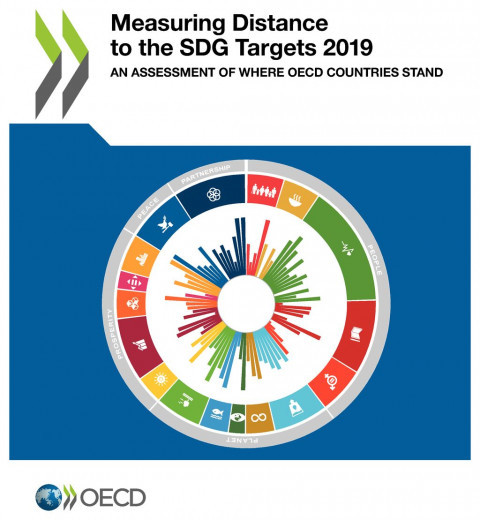 Measuring Distance to the SDG Targets 2019 - An Assessment of Where OECD Countries Stand سنة النشر: 2019 المؤلف المؤسسي: Organisation for Economic Co-operation and Development (OECD) The Sustainable Development Goals (SDGs) set a broad and ambitious programme for the world to achieve by 2030. With 17 Goals, underpinned by 169 Targets, the complex and integrated nature of the 2030 Agenda presents national governments with huge challenges for implementation. To assist countries, the OECD has developed a unique methodology allowing comparison of progress across SDG goals and targets. Based on the UN Global List of 244 indicators, this study evaluates the distance that OECD countries need to travel to meet SDG targets for which data is currently available. This 2019 edition of the study presents the latest results for OECD countries, both on average and individually, as well as new exploratory approaches to assessing progress over time and transboundary aspects of the SDGs. By providing a high-level overview of countries’ strengths and weaknesses in performance across the SDGs, this study aims to support member countries in navigating the SDGs and in setting their own priorities for action within the broad 2030 Agenda.