
الموارد
استكشف مجموعة واسعة من الموارد القيمة حول تعليم المواطنة العالمية لتعميق فهمك وتعزيز البحث والمناصرة والتعليم والتعلم.
تم العثور على 2,781 نتيجة
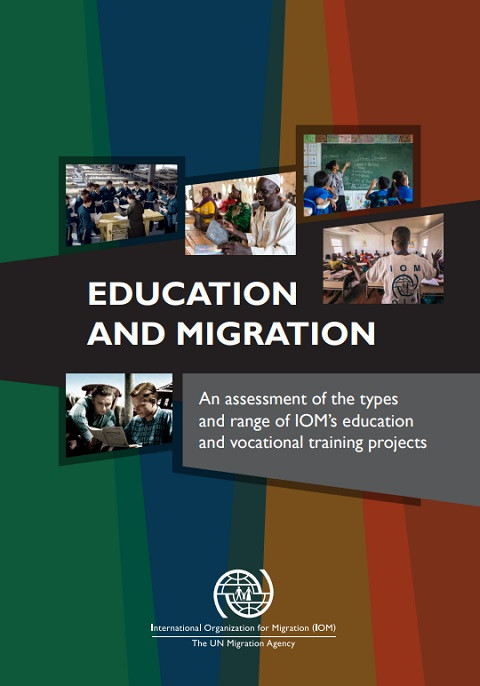 Education and Migration: An Assessment of the Types and Range of IOM’s Education and Vocational Training Projects سنة النشر: 2018 المؤلف: Rocio Sanz المؤلف المؤسسي: International Organization for Migration (IOM) This report presents the results of the assessment of the range and types of IOM’s education and vocational training programmes as of December 2017. Within an overall framework of reviewing the Organization’s role in supporting the development and implementation of migration policy, the purpose of this assessment is to understand how these programmes contribute to education and vocational training outcomes, especially in the specific context of SDG 4 (Quality Education) of the 2030 Agenda for Sustainable Development.
  La migration et le Programme 2030 : Un guide à l’usage des praticiens سنة النشر: 2018 المؤلف: Elisa Mosler Vidal المؤلف المؤسسي: International Organization for Migration (IOM) Ce guide est destiné aux acteurs gouvernementaux, à la fois nationaux et locaux, qui sont impliqués dans des activités de mise en œuvre des Objectifs de développement durable, y compris ceux qui travaillent spécifiquement dans le domaine de la migration et ceux d’autres secteurs qui souhaitent intégrer la question de la migration. Il s’adresse également aux acteurs gouvernementaux qui travaillent dans le domaine de la migration et souhaitent intégrer les ODD dans leur travail.L’objectif de ce guide est d’aider les responsables politiques à mettre en œuvre les aspects des ODD qui touchent à la migration. Les responsables politiques peuvent utiliser ce guide pour intégrer la migration dans les activités de développement à l’échelle locale ou nationale, par l’élaboration et la mise en œuvre d’interventions qui portent sur la migration dans le cadre des ODD. Ces interventions peuvent se présenter sous forme de lois, de politiques, de programmes, de projets ou d’autres activités et peuvent être liées à des thèmes de base de la migration ou intégrer la migration dans les activités d’un autre secteur. Par exemple, les responsables politiques peuvent utiliser ce guide pour élaborer des interventions qui sont directement consacrées à la traite des personnes, ainsi que des interventions dans le secteur de la santé qui permettent de protéger les victimes de la traite des personnes.Pour les acteurs disposant d’une expérience de l’intégration de la migration, ce guide offre une nouvelle approche qui repose sur le Programme 2030. Pour ceux qui ne possèdent aucune expérience de l’intégration de la migration, il présente les liens entre la migration et le développement dans le cadre des ODD, et les mesures à prendre compte tenu de ces liens. 移民与《2030 年可持续发展议程》 سنة النشر: 2018 المؤلف: Elisa Mosler Vidal المؤلف المؤسسي: International Organization for Migration (IOM) 本指南旨在为参与可持续发展目标实施过程的国家和地方政府行为体提供指导,对象包括专门从事移民工作的人员以及有兴趣将移民事物纳入工作活动中的其他部门人员。这也适用于希望将可持续发展目标纳入其移民领域工作的政府行为体。本指南的重点是帮助决策者实施可持续发展目标中与移民相关的部分。政策制定者可以使用该指南,通过设计和实施与可持续发展目标相关的与移民有关的干预措施,将移民纳入地方或国家发展计划。这些干预措施可以采取立法、政策制定、方案、项目或其他活动的形式,并可能涉及核心移民问题,或在其他部门的活动里将移民问题纳入其中。例如,决策者可以使用本指南来设计直接针对人口贩运的干预措施以及有助于保护人口贩运受害者的卫生部门的干预措施。对于在移民主流化方面有经验的行为体,本指南提供了一种基于2030年议程的新方法。对于那些没有移民主流化相关经验的人,它介绍了如何在可持续发展目标的背景下将移民和发展联系在一起,以及如何针对这些联系采取行动。它附有两个辅助工具,用以说明移民与可持续发展目标之间的联系:(i)一本全方位阐述移民与每个可持续发展目标之间关系的手册,以及(ii)一张概括这些关系的导图。
  Education Disrupted Education Reimagined: Responses from Education’s Frontline During the COVID-19 Pandemic and Beyond سنة النشر: 2020 المؤلف المؤسسي: WISE | Salzburg Global Seminar | Diplomatic Courier The special edition E-Book you are reading about today was produced in real time, as WISE, in partnership with Salzburg Global Seminar, convened key stakeholders and education leaders from over 98 countries in a three-part series of global conferences aimed at bringing the global education community together. The result is a contemporary historical record of how schools, NGOs, governments, and international organizations responded to school closures during the crisis and how they are attempting to use this crisis as a springboard to reimagine—and even transform—education in their communities and countries.The E-Book offers an opportunity to a global audience to make sense of what happened but it also offers a breeding ground of ideas from some of the world’s top education thinkers. It is the editors’ sincere hope that through this publication we provide the education community with a reference point from the crisis from which future research, policy, and innovation can grow.
  Analysis of the Education for Democratic Citizenship Policies in Norway (Global Education; No. 5) سنة النشر: 2013 المؤلف: Yang Tingting المؤلف المؤسسي: East China Normal University There are growing concerns about Islamophobia and far-right and anti-democratic movements across Europe. Norway’s vulnerability was not perceived until the July 2011 attacks happened in Norway in which 77 people died. This paper will examine education for democratic citizenship policies in the context both of extreme right political activity happened nationally and inter- nationally, considering ways in which it supports the national identity, cultural diversity, social cohesion, seeking the value orientation, core content and weaknesses of education for democratic citizenship policies in Norway. 试析挪威的民主公民教育政策 (全球教育展望; No. 5) سنة النشر: 2013 المؤلف: Yang Tingting المؤلف المؤسسي: East China Normal University 放眼整个欧洲,近来伊斯兰教恐慌、极端右翼分子和反民主运动此起彼伏,挪威也直 到 2011 年 7 月发生 77 人死亡的恶性案件后,才察觉到本国民主的脆弱性。本文在极端右翼 活动频发的国际和国内背景下,对挪威的民主公民教育政策进行文本分析,阐述各相关政策 文件是如何对国家认同、文化多样性、社会整合加以强调的,试图探求挪威民主公民教育政策 的价值导向与核心观点,以及挪威民主公民教育可能存在的不足。
  한 세대 후 교육 2050년의 한국교육은 어떻게 변해 있을까? (Future Horizon Plus 제42권 제5호) سنة النشر: 2019 المؤلف: 서영인 المؤلف المؤسسي: 과학기술정책연구원 세대를 평균 30년으로 보면 향후 약 2050년경의 한국교육은 어떻게 변해 있을까? 변화에는 인간의 의지가 작동하는 변화와 그와 상관없이 나타나는 변화가 있을 수 있다. 전자의 경우가 대부분이지만 간혹 후자가 작동하는 경우도 있다. 자연재해나 불의의 각종 사고 등이 그것이다. 그러나 현재의 모습이 과거 인간의 생각과 상상력의 결과라는 점을 인정한다면 한 세대 후 교육 역시 현재 인간의 상상력과 의지가 작동한 결과로 볼 수 있어 전자의 경우에만 한정하여 미래 교육을 예측해보려고 한다.
  Global Citizenship and Multimedia: Guidelines for Teachers and Educators سنة النشر: 2019 المؤلف: Giorgia Bailo | Mirca Ognisanti | Simona Bruni | Adriana Aralica | Sandra Oliveira | Fernando Catarino | Celia Quico | Maria Leonida | Dimitra Deroyiannis | Alessandro Soriani | Charlot Cassar المؤلف المؤسسي: WeWorld Onlus | European Union (EU) The objective of this book is to strengthen and systematize the effectiveness of global citizenship education through the use of new technologies, within and outside the school context. The aim is to provide theoretical basis and specific tools that can be used directly in educational activities, to promote critical thinking and the active involvement of young people in topics such as human rights, migration, climate change and the Sustainable Development Goals. Both the theoretical and practical sections have been laid out starting from the good practices already tested in several European countries, and the proposed educational methodologies intend to foster technology as an inclusive tool, therefore as an incentive for participation and dialogue between different cultures.
 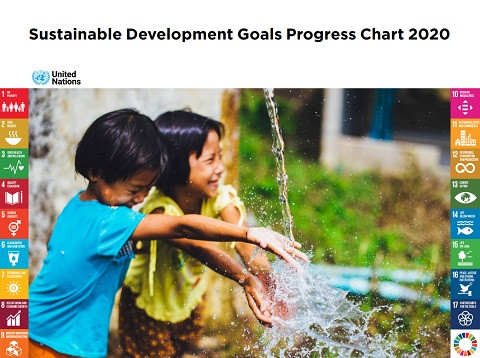 График хода достижения целей в области устойчивого развития к 2020 году سنة النشر: 2020 المؤلف المؤسسي: United Nations (UN) График хода достижения целей в области устойчивого развития к 2020 году отражает прогресс, достигнутый на конец 2019 года на глобальном и региональном уровнях в решении отдельных конкретных задач в рамках 17 целей Повестки дня в области устойчивого развития на период до 2030 года. В начале 2020 года Генеральный секретарь Организации Объединенных Наций объявил о Десятилетии действий, призвав национальные и местные органы власти, организации гражданского общества и частный сектор ускорить реализацию мер, направленных на достижение целей в области устойчивого развития к 2030 году. График хода достижения целей демонстрирует, как далеко мы продвинулись в выполнении наших обязательств и какие направления требуют неотложного внимания. Он также показывает, что для достижения большинства целей нынешних темпов прогресса недостаточно и требуется существенное ускорение. 2020年可持续发展目标进度表 سنة النشر: 2020 المؤلف المؤسسي: United Nations (UN) 《2020年可持续发展目标进度表》展现了到2019年底全球和地区进展的概况。它涵盖《2030年可持续发展议程》17个目标下选定的具体目标。2020年初,联合国秘书长启动了“行动十年”,呼 吁国家和地方政府、民间社会组织和私营部门采取加速的方案,以在2030年实现可持续发展目标。进度表显示了我们在兑现承诺方面已取得的进展以及哪些领域还亟待关注。它还显示出,对于 大多数目标而言,进展速度不够,需要大幅加快。