
الموارد
استكشف مجموعة واسعة من الموارد القيمة حول تعليم المواطنة العالمية لتعميق فهمك وتعزيز البحث والمناصرة والتعليم والتعلم.
تم العثور على 1,447 نتيجة
 2018 International Symposium on Media and Information Literacy سنة النشر: 2018 المؤلف المؤسسي: Korean National Commission for UNESCO | Community Media Foundation | National Association of Community Mediacenters | Korea Education and Research Information Service (KERIS) | Korea Press Foundation (KPF) This book is a conference report of 2018 International Symposium on Media and Information Literacy. The Symposium on MIL is hosted by the Korea Press Foundation (KPF), the Korea Education and Research Information Service (KERIS), and the Korean National Commission for UNESCO (KNCU), in cooperation with the Community Media Foundation, the National Association of Community Mediacenters. 2018 미디어·정보리터러시: 국제심포지엄 자료집 سنة النشر: 2018 المؤلف المؤسسي: 유네스코한국위원회 | Community Media Foundation | National Association of Community Mediacenters | 한국교육학술정보원 | 한국언론진흥재단 이 책은 유네스코한국위원회, 한국언론진흥재단, 한국교육학술정보원, 시청자미디어재단, 전국미디어센터협의회가 공동주최하고 교육부, 문화체육관광부, 방송통신위원회가 후원한 「2018 미디어·정보리터러시: 국제심포지엄」의 자료집으로 기조연설 및 주제별 발표내용을 담고 있다.
  2020 미디어교육 우수사례 공모전 수상작 모음집 سنة النشر: 2021 المؤلف المؤسسي: 시청자미디어재단 「2020 미디어 교육 우수사례 공모전」은 전국 미디어교육의 다양한 사례 발굴 및 격려를 통해 미디어교육에 대한 인식을 제고하고, 건강한 미디어 문화를 확산하기 위해 마련한 행사입니다. 지난해 12월 4일 본선심사를 통해 선발된 최종 10개의 수상작을 첨부로 공유드리니, 학교 및 사회미디어교육의 다양한 사례 분석에 참고하시기 바랍니다.※ 수상작 모음집은 분량 관계상 공모전 제출서류 및 발표자료 일부를 발췌하여 제작하였으며, 해당 내용과 사진은 시청자미디어재단의 동의없이 무단으로 사용할 수 없음을 알려드립니다.
 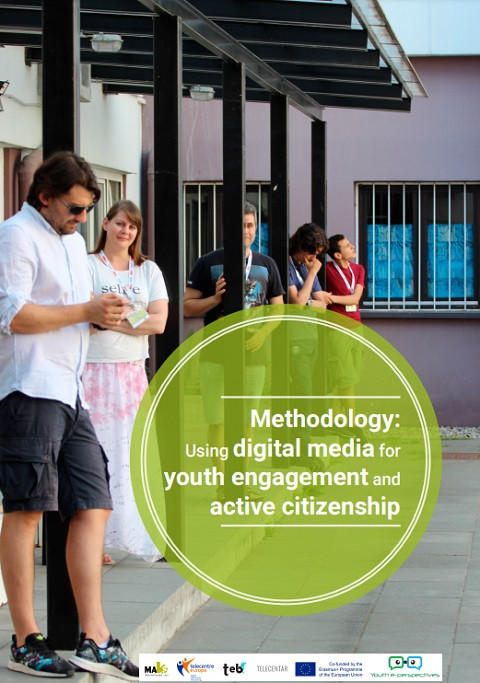 Methodology: Using Digital Media for Youth Engagement and Active Citizenship سنة النشر: 2017 المؤلف المؤسسي: Yep4Europe Consortium The training methodology “Find-Tell-Act” is the main output of the Youth e-Perspectives on Migration project. The project aimed at empowering young people to address sensitive contemporary societal issues (in our case migration and the refugee crisis) and at the same time to improve their digital and media skills. In this way, digital and technical skills developed in parallel with social values like active citizenship.For this purpose, we developed and implemented this methodology for a non-formal training course based on blended learning. The main part of the methodology is implemented as face-to-face activities. It includes four interrelated digital media modules (or, as we call them, workshops):Digital JournalismDigital PhotographyDigital StorytellingOnline Platforms,in which refugee crisis was our main theme. The methodology can be applied to any other “hot” societal topic that young people are faced with.Learn more about the project on the project website.
 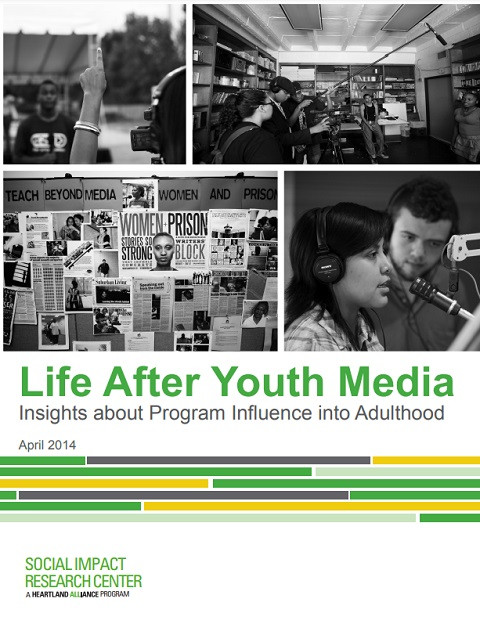 Life After Youth Media: Insights About Program Influence Into Adulthood سنة النشر: 2014 المؤلف: Suniya Farooqui | Amy Terpstra المؤلف المؤسسي: Social IMPACT Research Center * Do the skills, attitudes, and behaviors imparted in youth programs "stick" into adulthood? * If they do, how do they manifest in career, education, and life decisions? * How do the skills, attitudes, and behaviors that youth programs try to impart differ based on program intensity or levels of engagement? * Do these elements look different for people who went through youth media programs versus people who went through other types of youth programs? These are common questions that youth program providers, funders, public officials, and other leading thinkers regularly wrestle with. This report tells the story of a group in Chicago committed to providing quality youth media programming in the city and how, through a collective evaluation, they were able to begin to answer these critical questions.
  Do You Speak MIL?: Media and Information Literacy; A Handbook for Jordanian CSOs سنة النشر: 2020 المؤلف: Milica Pesic | Lucien Michael Steinberg | Anoud Al-Zou’bi المؤلف المؤسسي: Media Diversity Institute | UNESCO | UN. Office of Counter-Terrorism (UNOCT) This publication, “Do You Speak MIL?: Media and Information Literacy – A Handbook for Jordanian CSOs,” provides civil society organizations (CSOs) with practical tools to integrate Media and Information Literacy (MIL) into their training programs. Each chapter includes a technical introduction, thought-provoking questions, and real-life examples to guide trainers. Published in 2020, this handbook is a valuable resource for promoting MIL within Arab countries, intending to empower communities to navigate the evolving media landscape.
 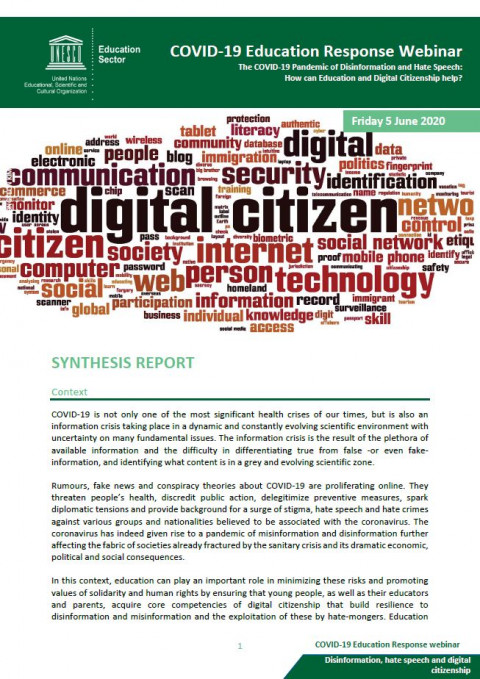 The COVID-19 Pandemic of Disinformation and Hate Speech: How can Education and Digital Citizenship Help? ; Synthesis Report سنة النشر: 2020 المؤلف المؤسسي: UNESCO COVID-19 is not only one of the most significant health crises of our times, but is also an information crisis taking place in a dynamic and constantly evolving scientific environment with uncertainty on many fundamental issues. The information crisis is the result of the plethora of available information and the difficulty in differentiating true from false -or even fake- information, and identifying what content is in a grey and evolving scientific zone.In this context, education can play an important role in minimizing these risks and promoting values of solidarity and human rights by ensuring that young people, as well as their educators and parents, acquire core competencies of digital citizenship that build resilience to disinformation and misinformation and the exploitation of these by hate-mongers. Education can also help young people engage in the online environment in a safe, sensitive, critical, ethical and accountable way as well as encourage them to play a role in pioneering educational initiatives that contribute to promoting digital citizenship.
 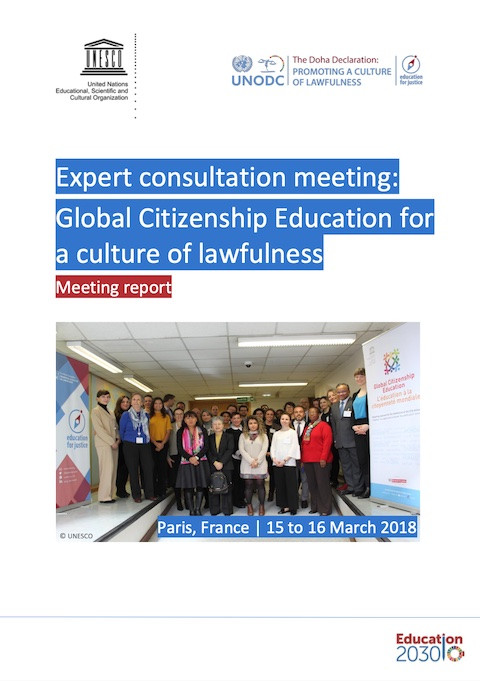 Expert Consultation Meeting: Global Citizenship Education for a Culture of Lawfulness, Paris, France, 15 to 16 March 2018; Meeting Report سنة النشر: 2018 المؤلف المؤسسي: UNESCO | UN. Office on Drugs and Crime (UNODC) In the context of a UNESCO/UNODC partnership on “Global Citizenship Education for a Culture of Lawfulness”, an expert consultation meeting was held in Paris on March 15 and 16 of 2018. The purpose of the partnership is to strengthen the capacities of educational systems to promote the rule of law. To this end, the partnership aims to empower and equip learners to act and engage in society as constructive and ethically responsible agents of change, supporting peace, justice, and strong institutions. This notably contributes to the achievement of the 2030 Agenda for Sustainable Development, and in particular Sustainable Development Goals 4 and 16. Additionally, the partnership intends to enable learners to be both motivated and capable to respond resiliently to crime and violence. The meeting had three broad objectives:To help clarify the conceptual foundation of the partnership;to identify the measures that can be taken in the education sector to promote a culture of lawfulness;and to identify effective educational approaches. Thus, the meeting is meant to elucidate core concepts and identify promising educational approaches in the promotion of a culture of lawfulness by asking fundamental questions, including: What constitutes the rule of law and a culture of lawfulness? How do we create demand for the rule of law? How do we ensure learners apply these principles? How do we ensure they survive in a context where there is no rule of law?
 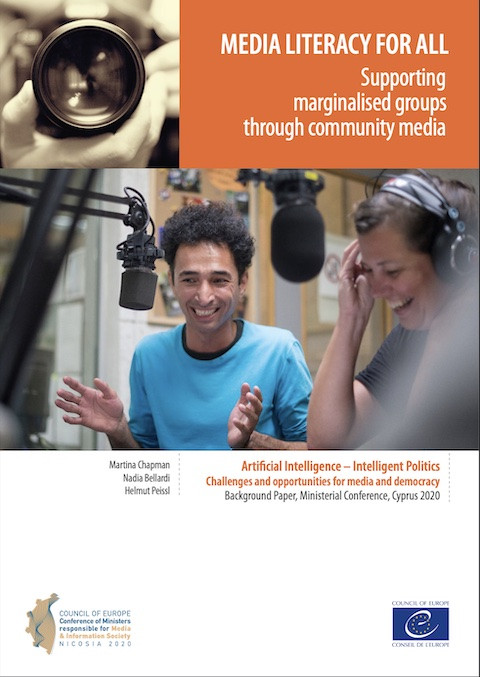 Media Literacy for All: Supporting Marginalised Groups Through Community Media سنة النشر: 2020 المؤلف: Martina Chapman | Nadia Bellardi | Helmut Peiss المؤلف المؤسسي: Council of Europe Being media literate means being able to critically understand and evaluate media content and to responsibly and safely use digital media services. Media literacy helps us engage with others in the public sphere, using the creative and participatory potential that new technologies and services can offer. Nowadays, it also includes understanding how data is used and how algorithms and AI can influence media production and choices.The importance of community media in supporting the formation of an ‘informed citizenry’ is well recognised by the Council of Europe. Community media have the ability to empower community groups with the neces- sary access and skills to create their own communica- tion channels and to foster their participation in the public sphere in a structured and professional man- ner. However, in many European countries community media still lack formal, legal recognition, fair access to distribution platforms and sustainable funding.This background paper explores how the community media sector promotes media literacy and how this work can strengthen marginalised communities’ partic- ipation in the media environment and public discourse. Comparing five models of community media from Cyprus, Ireland, Luxembourg, Spain and the United Kingdom, it seeks to inform and inspire practitioners and policy-makers, highlighting a number of findings and policy responses that can help member States fully realise the potential of community media.
 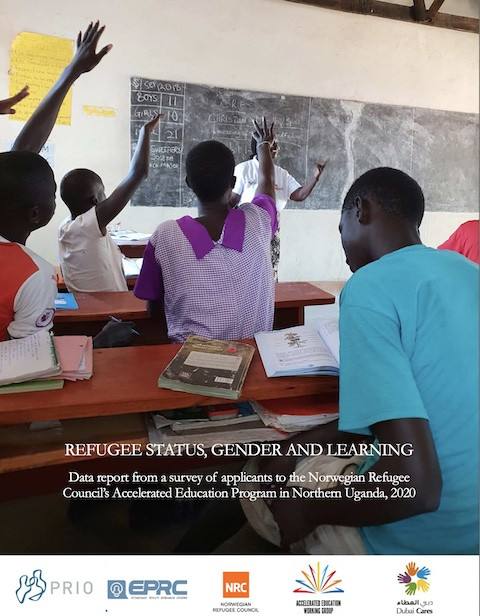 Refugee Status, Gender and Learning: Data Report From a Survey of Applicants to the Norwegian Refugee Council’s Accelerated Education Program in Northern Uganda, 2020 سنة النشر: 2020 المؤلف: Kendra Dupuy | Martin Flatø | Haakon Gjerløw | Andreas Kotsadam | Mette Løvgren | Francis Mwesigye | Siri Aas Rustad | Gudrun Østby المؤلف المؤسسي: Economic Policy Research Center (EPRC) | Peace Research Institute Oslo (PRIO) This data report provides details from a survey of applicants to the Norwegian Refugee Council’s Accelerated Education Program in Northern Uganda, 2020. The surveys covered a range of topics, such as demographic and socioeconomic background, school attendance, academic skills, social control, feelings and perceptions on various topics, and future aspirations.