
الموارد
استكشف مجموعة واسعة من الموارد القيمة حول تعليم المواطنة العالمية لتعميق فهمك وتعزيز البحث والمناصرة والتعليم والتعلم.
تم العثور على 3,453 نتيجة
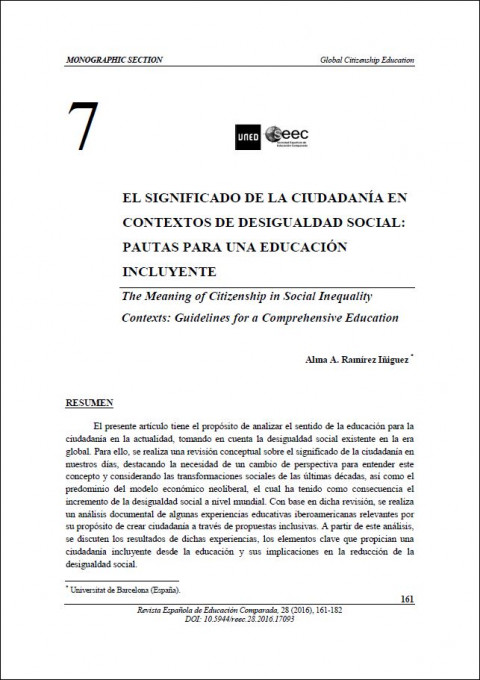 The Meaning of Citizenship in Social Inequality Contexts: Guidelines for a Comprehensive Education سنة النشر: 2016 المؤلف: Alma A Ramírez Iñiguez This article analyses the sense of citizenship education currently regarding the social inequality in the global era. For this, a conceptual framework about citizenship meaning is stablished and the need of a conceptual change is highlighted taking into account the social transformations, the increase of inequality in the worldwide and the neoliberal model hegemony in last decades. Based on this, some relevant Ibero American educational experiences in citizenship education are analyzed and their results are discussed. From this, some key elements involved in education for inclusive citizenship are pointed out as well as their contribution for social inequality decrease. El significado de la ciudadanía en contextos de desigualdad social: pautas para una educación incluyente سنة النشر: 2016 المؤلف: Alma A Ramírez Iñiguez El presente artículo tiene el propósito de analizar el sentido de la educación para la ciudadanía en la actualidad, tomando en cuenta la desigualdad social existente en la era global. Para ello, se realiza una revisión conceptual sobre el significado de la ciudadanía en nuestros días, destacando la necesidad de un cambio de perspectiva para entender este concepto y considerando las transformaciones sociales de las últimas décadas, así como el predominio del modelo económico neoliberal, el cual ha tenido como consecuencia el incremento de la desigualdad social a nivel mundial. Con base en dicha revisión, se realiza un análisis documental de algunas experiencias educativas iberoamericanas relevantes por su propósito de crear ciudadanía a través de propuestas inclusivas. A partir de este análisis, se discuten los resultados de dichas experiencias, los elementos clave que propician una ciudadanía incluyente desde la educación y sus implicaciones en la reducción de la desigualdad social.
 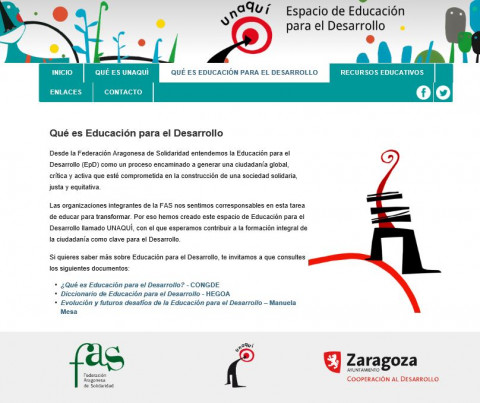 What is Education for Development? سنة النشر: 2019 المؤلف المؤسسي: UNAQUÍ The blog of Unaquí informs that the Aragones Federation of Solidarity understands that Education for Development (ED) is a process which fosters critical and active global citizenship, that promotes more just, equal and cooperative societies. The blog also informs that the organizations that are part of the FAS believe that they are responsible of the education in order to transform societies, therefore, they created this space, called UNAQUÍ, to promote Education for Development and contribute to the promotion of citizenship.The blog provides information about different projects that are carried out. Qué es Educación para el Desarrollo سنة النشر: 2019 المؤلف المؤسسي: UNAQUÍ El blog de Unaquí informa que desde la Federación Aragonesa de Solidaridad se entiende a la Educación para el Desarrollo (EpD) como un proceso encaminado a generar una ciudadanía global, crítica y activa que esté comprometida en la construcción de una sociedad solidaria, justa y equitativa. También informa que las organizaciones integrantes de la FAS se sienten corresponsables en la tarea de educar para transformar por lo que crearon ese espacio de Educación para el Desarrollo llamado UNAQUÍ para contribuir a la formación integral de la ciudadanía como clave para el Desarrollo. En el blog colocan información sobre distintos proyectos que son llevados a cabo.
 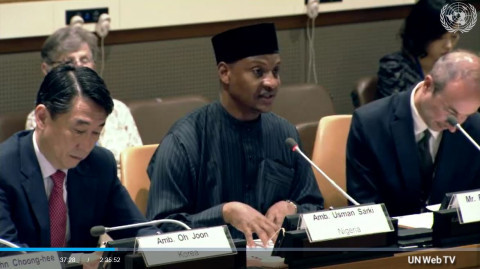 [Video] Global Citizenship Education for a just, peaceful, inclusive and sustainable world: a conceptual framework and its application in the field سنة النشر: 2015 المؤلف المؤسسي: United Nations (UN) The Seminar held at UN HQs entitled, "Global Citizenship Education for a Just, Peaceful, Inclusive, and Sustainable world: A Conceptual Framework and its Application in the Field" was co-organized by the Permanent Missions of France, Nigeria, Qatar and the Republic of Korea, the United States Mission and the United Nations Educational, Scientific and Cultural Organization (UNESCO), in support of the Secretary-General’s Global Education First Initiative (GEFI).The panel discussion was moderated by H.E. Ambassador Hahn Choong‐hee of Korea. Some of the speakers for this event included H.E. Ambassador Richard Erdman, Acting Representative to ECOSOC of the Permanent Mission of the United States of America to the United Nations; H.E. Ambassador Usman Sarki, Deputy Permanent Representative of the Permanent Mission of the Federal Republic of Nigeria to the United Nations; Yousef Laram, Deputy Permanent Representative of the State of Qatar to the United Nations; Mr. Francois Gave, Counsellor at the Permanent Mission of France to the United Nations; and Christopher Castle, Chief of UNESCO’s Section of Global Citizenship Education.This event was divided into two segments. In the first, GCED was discussed at the level of concept. How can it strengthen the three pillars of the United Nations and the three pillars of sustainable development in furtherance of a just, peaceful, inclusive and sustainable world. In the second, examples from the field – the local, national and international levels – were presented and discussed as were certain opportunities going forward including the important role of media. [vidéo] Éducation à la Citoyenneté mondiale pour un monde juste, pacifique, inclusive et durable: un cadre conceptuel et son application dans le domaine سنة النشر: 2015 المؤلف المؤسسي: United Nations (UN) Le séminaire a eu lieu au Siège de l'ONU intitulé «Éducation Mondiale Citoyenneté pour un monde juste, paisible, inclusive et durable: un cadre conceptuel et son application sur le terrain» a été co-organisée par les Missions permanentes de la France, le Nigeria, le Qatar et les République de Corée, la Mission des États-Unis et l'Organisation de l’ONU pour l'éducation, la science et la culture (UNESCO), à l'appui de First Éducation Mondiale Initiative du Secrétaire général (GEFI).Le débat a été animé par S.E. Ambassadeur Hahn Choong-hee de Corée. Certains des orateurs pour cet événement inclus S.E. Ambassadeur Richard Erdman, représentant par intérim à l'ECOSOC de la Mission permanente des États-Unis d'Amérique auprès de l'Organisation de l’ONU; IL. Ambassadeur Usman Sarki, Représentant permanent adjoint de la Mission permanente de la République fédérale du Nigéria auprès de l’ONU; Yousef LARAM, Représentant permanent adjoint de l'Etat du Qatar auprès de l'Organisation de l’ONU; M. François Gave, Conseiller à la Mission permanente de la France auprès de l’ONU; et Christopher Castle, la Section de l'éducation à la citoyenneté mondiale chef de l'UNESCO. Cet événement a été divisé en deux segments. Dans le premier, ECM a été discuté au niveau du concept. Comment peut-on renforcer les trois piliers de l'Organisation de l’ONU et les trois piliers du développement durable dans la poursuite d'un monde juste, pacifique, inclusif et durable. Dans le second, des exemples sur le terrain - aux niveaux local, national et international - ont été présentées et discutées de même que certaines opportunités à l'avenir, y compris le rôle important des médias.
 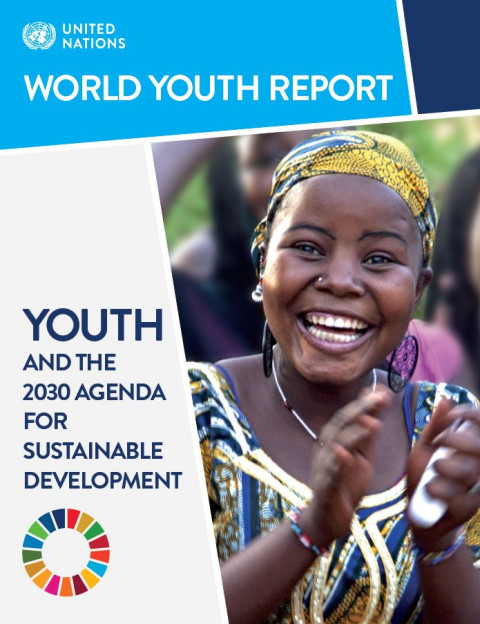 [Summary] World Youth Report: Youth and the 2030 Agenda for Sustainable Development سنة النشر: 2019 المؤلف المؤسسي: United Nations (UN) The World Youth Report on “Youth and the 2030 Agenda for Sustainable Development”, prepared by the United Nations Department of Economic and Social Affairs (UN DESA), examines the mutually supportive roles of the new agenda and current youth development efforts. The report provides insight into the role of young people in sustainable development in the context of the implementation of the 2030 Agenda for Sustainable Development and related frameworks, in particular, the Addis Ababa Action Agenda of the Third International Conference on Financing for Development and the World Programme of Action for Youth.The Report considers the role the 2030 Agenda can play in enhancing youth development efforts and examines how evidence-based youth policies can help accelerate youth-related objectives. It explores the critical role young people have in the implementation of sustainable development efforts at all levels. This publication is a summary of the World Youth Report on “Youth and the 2030 Agenda for Sustainable Development”. [요약문] 세계청소년보고서: 청소년과 2030 지속가능발전 의제 سنة النشر: 2019 المؤلف المؤسسي: United Nations (UN) UN 경제사회국이 작성한 『세계청소년보고서: 청소년과 2030 지속가능발전 의제(World Youth Report: Youth and the 2030 Agenda for Sustainable Development)』는 청소년 개발에 대한 현재의 노력과 새로운 의제 간의 상호 보완적인 역할을 다루고 있습니다. UN 경제사회국은 경제, 사회 및 환경 분야 글로벌 정책과 국가적 실천 사이의 연결고리를 제공하고 있습니다. 2년마다 발간되는 본 보고서는 회원국 및 기타 이해관계자들이 청소년 문제 해결에 대한 진전 사항을 파악하고, 정책과 현실의 격차를 평가하고, 가능한 정책 대안을 마련하기 위한 정보와 분석 결과를 제공합니다.본 보고서는 2030 지속가능발전 의제 및 관련 프레임워크 이행의 맥락, 특히 제3차 개발재원총회 아디스아바바 행동의제 (Ababa Action Agenda of the Third International Conference on Financing for Development) 및 세계청소년행동계획 (World Programme of Action for Youth) 의 이행과 관련하여 지속가능발전을 위한 청소년의 역할에 대한 통찰을 제시합니다. 2030 의제는 청소년개발 노력을 증진하고 증거기반(evidence ― based) 청소년정책이 청소년 목표 증진에 이바지하는 바를 검토하는 데 있어 중요한 역할을 할 수 있습니다. 본 보고서는 이를 통해 모든 수준에서의 지속가능발전 이행에 있어 결정적으로 중요한 청소년의 역할을 살펴봅니다. 이 간행물은 『세계청소년보고서: 청소년과 2030 지속가능발전 의제(World Youth Report: Youth and the 2030 Agenda for Sustainable Development)』의 요약본입니다.
 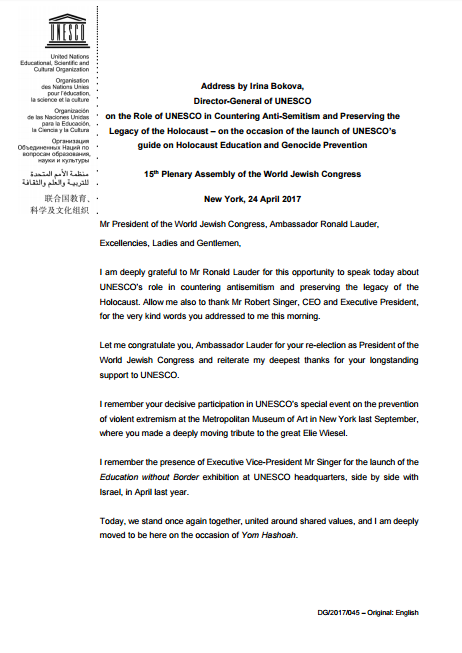 Address by Irina Bokova, Director-General of UNESCO, on the Role of UNESCO in Countering Anti-Semitism and Preserving the Legacy of the Holocaust on the occasion of the launch of UNESCO's guide on Holocaust Education and Genocide Prevention, 15th Plenary Assembly of the World Jewish Congress, New York, 24 April 2017 سنة النشر: 2017 المؤلف المؤسسي: UNESCO. Director-General, 2009-2017 (Bokova, I.G.) This address was given by Irina Bokova, Director-General of UNESCO, on the role of UNESCO in countering anti-semitism and preserving the legacy of the holocaust on the occasion of the launch of UNESCO's guide on Holocaust Education and Genocide Prevention, 15th Plenary Assembly of the World Jewish Congress.
 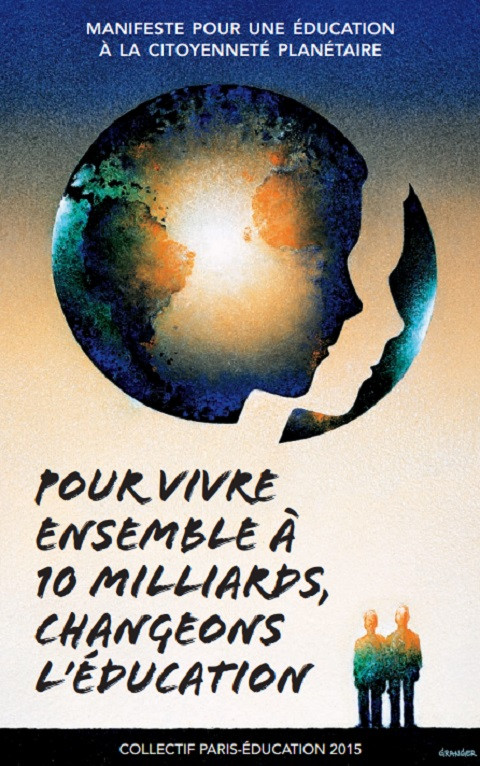 Pour vivre ensemble à 10 milliards, changeons l’éducation: Manifeste pour une éducation à la citoyenneté planétaire المؤلف المؤسسي: Le collectif Paris-éducation 2015 | Les Amis de Circée 2050, c’est demain. Nos enfants et petits-enfants seront alors, sans doute, 10 milliards sur la Terre. D’ici là, quelles que soient les décisions qui seront prises par les gouvernants et les engagements de millions de citoyens dans le monde, la température du globe aura monté, comme le niveau des océans. Selon ce que notre génération aura entrepris plus ou moins résolument pour réduire nos émissions de CO2, ce sera entre 2° C ou 4° C à l’horizon 2100, voire davantage. Il faudra donc, de toute façon, vivre autrement. Face à l’ampleur, l’urgence, la diversité et la complexité des problématiques engendrées par le modèle de développement de nos sociétés contemporaines, nous sommes donc obligés, dans l’urgence, de nous pencher sur les questions d’éducation et de formation des générations futures qui devront affronter des réalités biophysiques, économiques et politiques inédites, dont nous commençons à peine à entrevoir l’ampleur. Ce qui est dès lors en jeu, avec l’avenir de l’homme et de la Terre, c’est l’humain, ce qu’il deviendra, ce qu’il sera capable de porter comme projet pour l’humanité. Quelles qualités d’humains devons-nous faire advenir pour que ces réalités inédites puissent être rencontrées demain, sans que l’humanité bascule dans la violence et le dépeçage égoïste de la planète? Quels enfants voulons-nous laisser à notre Terre?Cette urgence impose un changement d’échelle dans la transformation des systèmes éducatifs, des contenus et des méthodes d’enseignement. Malgré la volonté et la compétence de nombreux acteurs de l’école, force est de constater que les actions menées pour une éducation plus en cohérence avec les enjeux climatiques et, plus largement, sociétaux restent à la marge. Elles sont réalisées par des individus clairvoyants. Il est temps d’enclencher la vitesse supérieure.