
الموارد
استكشف مجموعة واسعة من الموارد القيمة حول تعليم المواطنة العالمية لتعميق فهمك وتعزيز البحث والمناصرة والتعليم والتعلم.
تم العثور على 2,199 نتيجة
 L'éducation pour la compréhension interculturelle سنة النشر: 2010 المؤلف: Joy de Leo المؤلف المؤسسي: UNESCO Bangkok Le thème de la compréhension interculturelle et le respect de la diversité culturelle relève de la dimension sociale de la paix, l'égalité et les droits de l'homme, sous-tendue par le contexte culturel, à l'intérieur et à travers lequel l'apprentissage se produit, et qui constitue la base des liens entre les différentes dimensions de la durabilité (ie, socio-politique, environnemental et économique). Dans le cadre du programme d'application international, la valeur du respect est considérée comme essentielle à tous les aspects du développement durable: le respect de soi, des autres et de toute vie sur terre. 상호 문화 간 이해 교육 سنة النشر: 2010 المؤلف: Joy de Leo المؤلف المؤسسي: UNESCO Bangkok 상호 문화 간 이해와 문화 다양성에 대한 존중이라는 주제는 문화적 맥락에 기반을 둔 인권과 평등 및 평화의 사회적 영역에 속하며 학습 안에서 또한, 그 과정을 통해 이루어지며, 다양한 지속가능한 영역내에서 다양한 문화 간 상호 연계의 기반(즉, 사회·정치적, 환경적, 경제적으로)을 구축한다. 국제 실행계획(International Implementation Scheme)내에서, 존중의 가치는 지속가능한 발전의 모든 측면에서 핵심적인 것으로 간주된다. 곧, 자기 존중, 타인과 지구상의 모든 삶에 대한 존중을 의미한다.
  La Educación sobre el medio ambiente en acción: una historia de la reserva de biosfera Tonlé Sap de Camboya سنة النشر: 2013 المؤلف: Keat Kunthea Osmose is a not-for-profit association linking community-based conservation, ecotourism and environmental education in Prek Toal. Osmose has been supported by UNESCO in Phnom Penh in many projects including: production of a poster depicting the flooded forest and plants of the Tonle Sap Biosphere Reserve, handicraft, and particularly, environemental education (EE). EE was initiated in 2000 when Osmose realized there was an increase in the child population and that education was therefore needed in order to protect their natural resources. L'Education à l'environnement en action: l'exemple de la réserve de biosphère du Tonlé Sap au Cambodge سنة النشر: 2013 المؤلف: Keat Kunthea Osmose is a not-for-profit association linking community-based conservation, ecotourism and environmental education in Prek Toal. Osmose has been supported by UNESCO in Phnom Penh in many projects including: production of a poster depicting the flooded forest and plants of the Tonle Sap Biosphere Reserve, handicraft, and particularly, environemental education (EE). EE was initiated in 2000 when Osmose realized there was an increase in the child population and that education was therefore needed in order to protect their natural resources. Environmental education in action: a story from the Tonle Sap biosphere reserve in Cambodia سنة النشر: 2013 المؤلف: Keat Kunthea Osmose is a not-for-profit association linking community-based conservation, ecotourism and environmental education in Prek Toal. Osmose has been supported by UNESCO in Phnom Penh in many projects including: production of a poster depicting the flooded forest and plants of the Tonle Sap Biosphere Reserve, handicraft, and particularly, environemental education (EE). EE was initiated in 2000 when Osmose realized there was an increase in the child population and that education was therefore needed in order to protect their natural resources.
 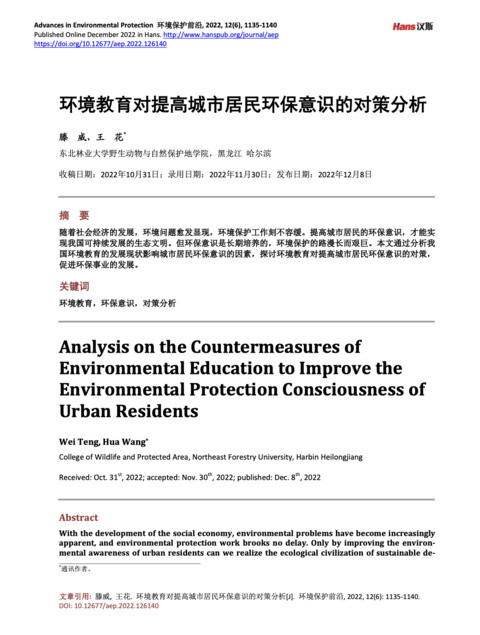 环境教育对提高城市居民环保意识的对策分析 (环境保护前沿 第12卷 第6期) سنة النشر: 2022 المؤلف: 滕威 | 王花 المؤلف المؤسسي: 汉斯出版社 随着社会经济的发展,环境问题愈发显现,环境保护工作刻不容缓。提高城市居民的环保意识,才能实 现我国可持续发展的生态文明。但环保意识是长期培养的,环境保护的路漫长而艰巨。本文通过分析我 国环境教育的发展现状影响城市居民环保意识的因素,探讨环境教育对提高城市居民环保意识的对策, 促进环保事业的发展。
 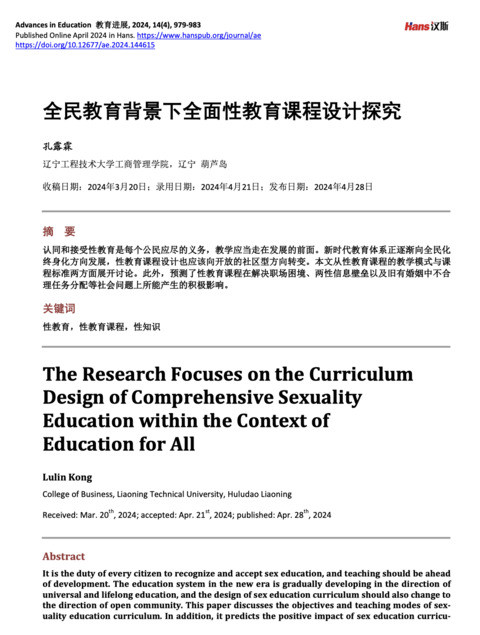 全民教育背景下全面性教育课程设计探究 (教育进展 第14卷 第4期) سنة النشر: 2024 المؤلف: 孔露霖 المؤلف المؤسسي: 汉斯出版社 认同和接受性教育是每个公民应尽的义务,教学应当走在发展的前面。新时代教育体系正逐渐向全民化 终身化方向发展,性教育课程设计也应该向开放的社区型方向转变。本文从性教育课程的教学模式与课 程标准两方面展开讨论。此外,预测了性教育课程在解决职场困境、两性信息壁垒以及旧有婚姻中不合 理任务分配等社会问题上所能产生的积极影响。
 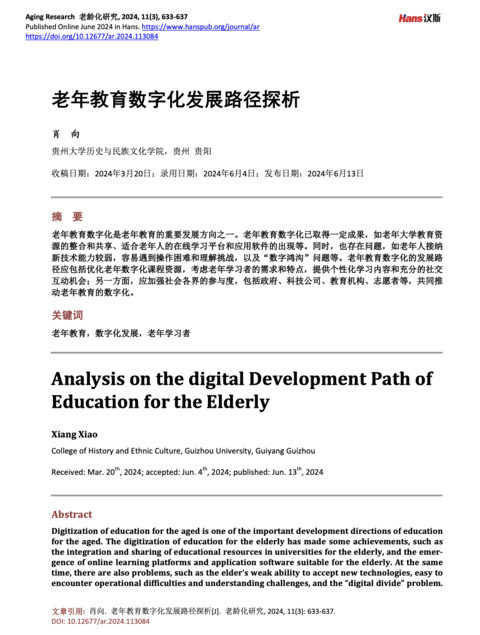 老年教育数字化发展路径探析 (老龄化研究 第11卷 第3期) سنة النشر: 2024 المؤلف: 肖向 المؤلف المؤسسي: 汉斯出版社 老年教育数字化是老年教育的重要发展方向之一。老年教育数字化已取得一定成果,如老年大学教育资 源的整合和共享、适合老年人的在线学习平台和应用软件的出现等。同时,也存在问题,如老年人接纳 新技术能力较弱,容易遇到操作困难和理解挑战,以及“数字鸿沟”问题等。老年教育数字化的发展路 径应包括优化老年数字化课程资源,考虑老年学习者的需求和特点,提供个性化学习内容和充分的社交 互动机会;另一方面,应加强社会各界的参与度,包括政府、科技公司、教育机构、志愿者等,共同推 动老年教育的数字化。
 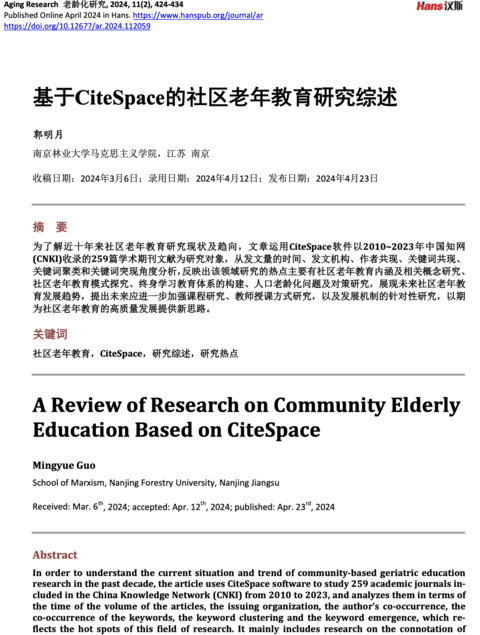 基于CiteSpace的社区老年教育研究综述 (老龄化研究 第11卷 第2期) سنة النشر: 2024 المؤلف: 郭明月 المؤلف المؤسسي: 汉斯出版社 为了解近十年来社区老年教育研究现状及趋向, 文章运用CiteSpace软件以2010~2023年中国知网 (CNKI)收录的259篇学术期刊文献为研究对象,从发文量的时间、发文机构、作者共现、关键词共现、 关键词聚类和关键词突现角度分析,反映出该领域研究的热点主要有社区老年教育内涵及相关概念研究、 社区老年教育模式探究、终身学习教育体系的构建、人口老龄化问题及对策研究,展现未来社区老年教 育发展趋势,提出未来应进一步加强课程研究、教师授课方式研究,以及发展机制的针对性研究,以期 为社区老年教育的高质量发展提供新思路。
 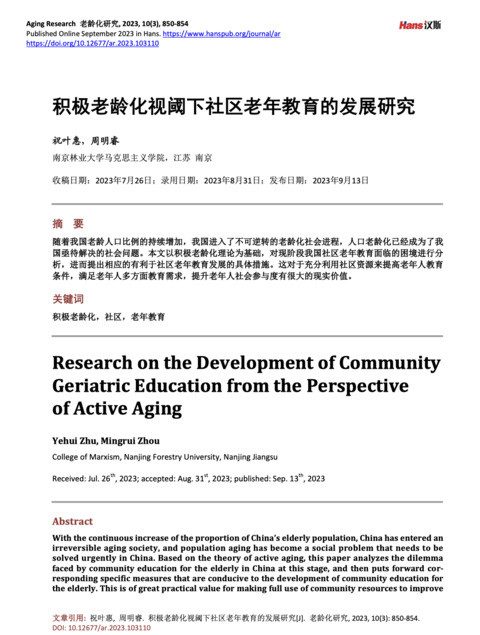 积极老龄化视阈下社区老年教育的发展研究 (老龄化研究 第10卷 第3期) سنة النشر: 2023 المؤلف: 祝叶惠 | 周明睿 المؤلف المؤسسي: 汉斯出版社 随着我国老龄人口比例的持续增加,我国进入了不可逆转的老龄化社会进程,人口老龄化已经成为了我 国亟待解决的社会问题。本文以积极老龄化理论为基础,对现阶段我国社区老年教育面临的困境进行分 析,进而提出相应的有利于社区老年教育发展的具体措施。这对于充分利用社区资源来提高老年人教育 条件,满足老年人多方面教育需求,提升老年人社会参与度有很大的现实价值。