
الموارد
استكشف مجموعة واسعة من الموارد القيمة حول تعليم المواطنة العالمية لتعميق فهمك وتعزيز البحث والمناصرة والتعليم والتعلم.
تم العثور على 1,725 نتيجة
 联合国关于仇恨言论的战略和行动计划 سنة النشر: 2019 المؤلف المؤسسي: United Nations (UN) 为应对世界各地仇恨言论上升的惊人趋势,秘书长安东尼奥·古特雷斯于2019年6月18日发布了《联合国关于仇恨言论的战略和行动计划》。该战略旨在帮助联合国加强应对全球仇恨言论现象,是联合国仇恨言论工作组下的16个实体密切协作的成果,由联合国防止灭绝种族罪行特别顾问协调。该战略坚定地承诺在全球和国家层面加强协调行动,以应对仇恨言论。
  평생학습 문화 수용하기: '교육의 미래' 이니셔티브에 대한 기여 سنة النشر: 2020 المؤلف المؤسسي: UNESCO Institute for Lifelong Learning (UIL) 유네스코 ‘교육의 미래’ 이니셔티브의 일환으로 발간되는 이 보고서는 교육 분야를 변화시키고, 보다 지속가능하고 건강하며 포용적인 미래를 만들기 위해 이루어진 평생학습의 잠재적 기여를 고찰하고 있다. 이 보고서는 서로 다른 분야와 국가에서 온 12명의 저명한 전문가들의 통찰력을 바탕으로, 평생학습에 대한 확고한 비전과 이를 뒷받침하는 가치와 원칙을 제시한다. 아울러, 교육의 사회적⋅개인적 차원을 인식하고, 평생학습을 새로운 인권으로 인정할 것을 국제사회에 요청하고 있다.이 보고서는 평생학습의 비전을 실현하기 위해서는 인류가 당면한 도전과제의 복잡하고 다차원적인 성격을 효과적으로 파악할 수 있는 초학제적 접근방식을 채택해야 한다고 주장한다. 이 책의 구성은 평생학습을 교육 정책의 주요 원칙으로 삼고, 배경이나 여건에 관계없이 모든 사람들에게 전 생애에 걸쳐 학습 기회를 제공할 수 있는 ‘우호적인 환경’의 주요 특징을 요약하고 있다. 그리고 일련의 주요 메시지를 결론으로 제시하고, 구체적인 행동 방침과 선정된 정책 조치를 보완적으로 논의하고 있다.
 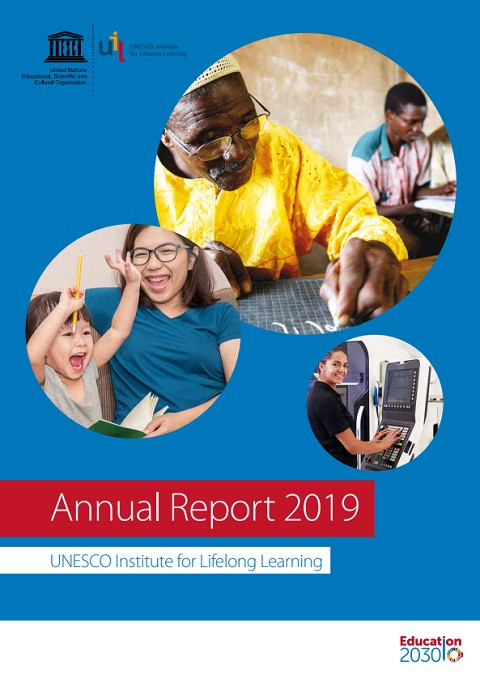 Annual Report 2019: UNESCO Institute for Lifelong Learning سنة النشر: 2020 المؤلف المؤسسي: UNESCO Institute for Lifelong Learning (UIL) This report shows how, in 2019, UIL worked to fulfil its mission, with a focus on youth and adults and a special emphasis on UNESCO’s priority areas of Africa and gender equality. UIL’s vision is for all children, young people and adults to benefit from quality lifelong learning opportunities, within the framework of sustainable development and peace. We promote lifelong learning as the leading educational paradigm for inclusive and sustainable learning societies in the context of the United Nations’ 2030 Agenda for Sustainable Development, which provides an ambitious set of goals and targets for Member States that together form a coherent, universal framework of reference for our activities. Working to this framework, and recognizing lifelong learning’s important transversal role not only with respect to Sustainable Development Goal (SDG) 4 on education but across all 17 SDGs, UIL has made an impact across a range of fronts, including in the areas of policy advice, capacity development, research, monitoring, and networking and advocacy. Rapport annuel 2019: Institut de l’UNESCO pour l’apprentissage tout au long de la vie سنة النشر: 2020 المؤلف المؤسسي: Institut de l’UNESCO pour l’apprentissage tout au long de la vie (UIL) Ce rapport décrit la façon dont l’Institut a opéré en 2019 pour remplir sa mission en concentrant ses activités sur les jeunes et les adultes, et en mettant particulièrement l’accent sur les domaines prioritaires de l’UNESCO que sont l’Afrique et l’égalité des genres. L’UIL nourrit la vision d’un monde où tous les enfants, tous les jeunes et tous les adultes bénéficient d’offres d’apprentissage de qualité tout au long de leur vie, dans le cadre d’un développement durable et dans un monde en paix. Nous assurons la promotion de l’apprentissage tout au long de la vie en tant que paradigme éducatif majeur de sociétés apprenantes inclusives et durables dans le contexte du Programme de développement durable des Nations unies à l’horizon 2030. Ce programme fournit aux États membres une série d’objectifs et de cibles ambitieux qui, dans leur ensemble, constituent un cadre de référence universel et cohérent pour nos activités. Œuvrant à la réalisation de ce cadre et reconnaissant le rôle important de l’apprentissage tout au long de la vie, non seulement dans l’optique de l’Objectif de développement durable 4 (ODD 4) sur l’éducation, mais aussi, de façon plus générale pour réaliser les 17 ODD, l’UIL s’est engagé sur différents terrains tels que la formulation des politiques et leur mise en œuvre, le développement des capacités, la recherche, le pilotage et suivi ainsi que la mise en réseau et le plaidoyer.
 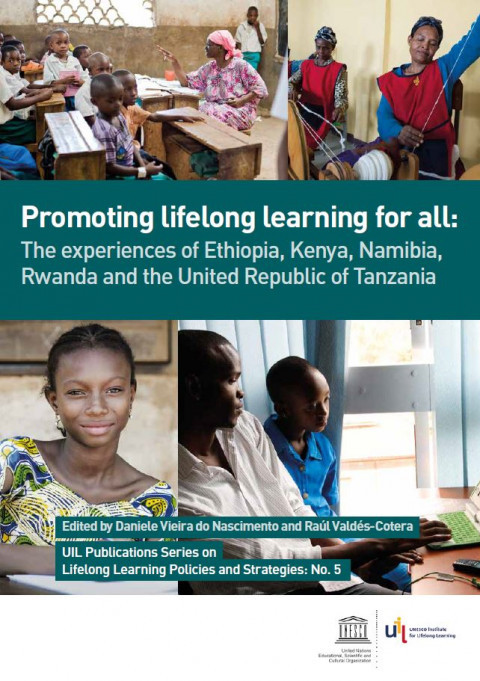 Promoting Lifelong Learning for All: The Experiences of Ethiopia, Kenya, Namibia, Rwanda and the United Republic of Tanzania سنة النشر: 2018 المؤلف المؤسسي: UNESCO Institute for Lifelong Learning (UIL) This report is an outcome of a project supporting the promotion of lifelong learning for all in selected African countries. The project aims to increase the capacity of policy-makers and researchers to develop national policies and strategies that will establish lifelong learning systems in Africa, ultimately contributing to the 2030 Agenda for Sustainable Development.This publication showcases the advancements made by five African countries in promoting and implementing lifelong learning as per the recommendations outlined in Key Issues and Policy Considerations in Promoting Lifelong Learning in Selected African Countries: Ethiopia, Kenya, Namibia, Rwanda and Tanzania (UIL, 2014). This continuous assessment and review of the countries’ progress can help monitor the reforms and developments taking place, and can contribute to the sharing of promising practices. The four main sections of the report include an introduction with the background to and methodology of the study; the origin, essence and benefits of lifelong learning; a compendium of good practices in promoting lifelong learning for all; and a conclusion comprising reflections on how progress can be accelerated in the region as well as potential collaboration opportunities with the UNESCO Institute for Lifelong Learning (UIL).Attempts to implement lifelong learning concepts in the five African countries has seen mixed results, but advancements are being made. It is hoped that this synthesis report will help foster the exchange of successful practices among the countries and the further development of lifelong learning policies and strategies across the African continent.
  Recognition, Validation and Accreditation of Youth and Adult Basic Education as a Foundation of Lifelong Learning سنة النشر: 2018 المؤلف المؤسسي: UNESCO Institute for Lifelong Learning (UIL) Since its 2005 General Conference, UNESCO has supported the recognition, validation and accreditation (RVA) of the outcomes of nonformal and informal learning for youth and adults and acknowledged the importance of RVA in the development of lifelong learning systems. More recently, the UNESCO Institute for Lifelong Learning, in partnership with UNESCO’s Section of Partnerships, Cooperation and Research, has undertaken a number of comprehensive analyses of policy and practice in this area. These studies have highlighted the need to focus on the RVA of non-formal basic education.Globally, the scale of need is enormous. There are significant challenges in integrating the recognition, validation and accreditation of the outcomes of non-formal and informal learning at the basic education level into existing RVA systems and in enabling young people and adults without basic education to complete such processes successfully.This report summarizes the research and policy dialogue of an international expert group invited by UNESCO to three meetings in 2016. It focuses on three themes – principles, policy and practice – and provides examples of how the issue is being approached across the world. It offers 12 conclusions, based on the evidence considered by the expert group, and proposes a number of key messages for stakeholders in Member States, including policy-makers and the research community.
  Рекомендация об обучении и образовании взрослых سنة النشر: 2016 المؤلف المؤسسي: Организация Объединенных Наций по вопросам образования, науки и культуры (UNESCO) | UNESCO Institute for Lifelong Learning (UIL) Рекомендация об обучении и образовании взрослых была принята на 38-й сессии Гене-ральной конференции ЮНЕСКО в ноябре 2015 г. Данная рекомендация направлена на поддержку осуществления рамочной программы действий «Образование-2030», она учитывает глобальные тенденции и будет способствовать трансформации обучения и образования взрослых и расширению равных возможностей в этой области.Рекомендация 2015 г. подходит к ООВ комплексно и системно и определяет три основные области обучения и приобретения навыков: грамотность и базовые навыки, непрерывное повышение образовательных и профессиональных навыков и либеральное, народное и общинное образование и гражданские навыки. В ней также описываются пять сквозных направлений деятельности: политика, управление, финансирование, участие, инклюзивность и равенство, а также качество. Данные области деятельности уже представлялись международному сообществу в Беленских рамках действий, принятых на КОНФИНТЕА в 2009 г. в качестве инструмента для содействия государствам-членам в совершенствовании ООВ. Такой комплексный и согласованный подход к ООВ поможет государствам-членам обеспечить всеохватное и справедливое качественное образование и поощрение возможности обучения на протяжении всей жизни для всех (цель 4 в области устойчивого развития).
 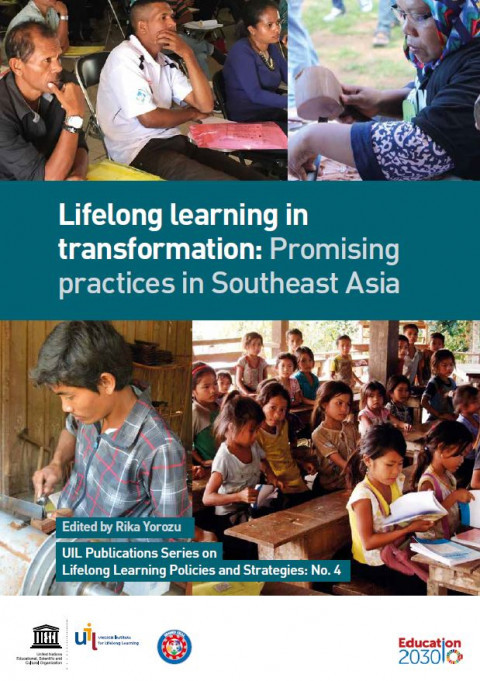 Lifelong Learning in Transformation: Promising Practices in Southeast Asia سنة النشر: 2017 المؤلف: Rika Yorozu المؤلف المؤسسي: UNESCO Institute for Lifelong Learning (UIL) This report is an outcome of a project on building a lifelong learning agenda in Southeast Asian countries, which aims to address the region’s remaining educational challenges in ensuring ‘inclusive and equitable quality education and promot[ing] lifelong learning opportunities for all’ (Goal 4 of the 2030 Agenda for Sustainable Development). By sharing promising policies and practices in implementing integrated lifelong learning from different perspectives, countries can learn from one another and move their visions for lifelong learning fully into practice. The publication documents a variety of promising practices from 11 countries, focusing particularly on the features critical to the promotion of lifelong learning for all; namely, inclusive and gender-responsive teaching and learning practices, recognition of learning outcomes from non-formal and informal learning, collaboration between social and economic development sectors and coherent national government policies and strategies. The report comprises three main sections: a reflection on lifelong learning in international and national documents, a collection of good practice drawn from their national reports, and a set of recommendations for policies and programmes promoting lifelong learning. It is hoped that these recommendations will stimulate discussion and new developments, in both policy and practice, in the region.
  Lifelong Learning Opportunities for All: Medium-Term Strategy 2022–2029 سنة النشر: 2022 المؤلف المؤسسي: UNESCO Institute for Lifelong Learning (UIL) The 2021 Futures of Education report calls for a new social contract for education, with recognition of an extended right to education throughout life. It represents an important restatement of the principles of UNESCO, and particularly its historic focus on our shared humanity, the universal right to education and its rich potential in addressing social, economic and political challenges. The need for a formal recognition of a universal entitlement to lifelong learning was also highlighted in the United Nations Secretary General’s Common Agenda report (also published in 2021) and is increasingly an avowed priority of the global development agenda for education, labour, human rights and sustainability. It is in this context that the UNESCO Institute for Lifelong Learning (UIL) advances its strategy for the next eight years. With this new Medium-Term Strategy (MTS), UIL aims to strike a balance between priorities rooted in the challenges faced by the global community and this new and emerging thinking about – and interest in – lifelong learning. The world must embrace lifelong learning if we are to build fairer societies and a sustainable world.
  Global Inventory of Regional and National Qualifications Frameworks 2017, Vol. II: National and Regional Cases سنة النشر: 2017 المؤلف المؤسسي: European Centre for the Development of Vocational Training (CEDEFOP) | European Training Foundation (ETF) | UNESCO | UNESCO Institute for Lifelong Learning (UIL) The global inventory 2017 further strengthens the knowledge base on developments in national and regional qualifications frameworks, as implemented by countries and regions, by end of 2016. It acts as an observatory of progress in establishing NQFs, as well as the challenges and success factors in implementation. The thematic chapters (Volume I) discuss key trends and policy issues emerging from qualifications frameworks and learning outcomes reforms and developments. Volume II consists of NQF case studies of 100 countries from all continents and seven regional qualifications frameworks (RQF). The case studies look at the educational, social, economic and political context in which an NQF is embedded, main policy objectives, implementation of learning outcomes, stakeholder involvement and institutional arrangements. They also show how NQFs open for and link to validation arrangements, support recognition and learning pathways. They conclude with important lessons and future plans.The global inventory draws on inventories from four agencies: the European Centre for the Development of Vocational Training (Cedefop), the European Training Foundation (ETF), the United Nations Educational, Scientific and Cultural Organisation (UNESCO) and the UNESCO Institute for Lifelong Learning (UIL), working and communicating with country officials and experts. It also draws on extensive international research in qualifications reforms, comparability of qualifications, and use of learning outcomes.