
الموارد
استكشف مجموعة واسعة من الموارد القيمة حول تعليم المواطنة العالمية لتعميق فهمك وتعزيز البحث والمناصرة والتعليم والتعلم.
تم العثور على 3,448 نتيجة
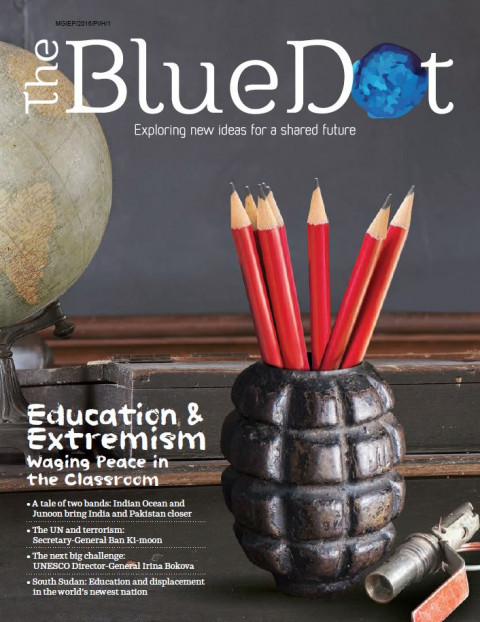 Education & Extremism: Waging Peace in the Classroom (The Blue Dot Issue 4, 2016) سنة النشر: 2016 المؤلف المؤسسي: Mahatma Gandhi Institute of Education for Peace and Sustainable Development (MGIEP) In this fourth issue of The Blue Dot, we have decided to focus on education as a tool for both preventing violent extremism and—sometimes—even propagating extremist ideologies. This issue reflects UNESCO MGIEP’s commitment to advancing the fundamental role of education as a means to changing mindsets and, ultimately, bringing about more peaceful societies.From an interview with award-winning social entrepreneur Prof. Sugata Mitra on the role of technology in revolutionizing education, to a foreword by Secretary-General Ban Ki-moon on the UN’s response to violent extremism, our contributors come from a host of different countries and backgrounds. What brings them together, however, is a call for changing current education systems. This is espoused even more clearly in a piece by Prof. K.P. Mohanan, who uses inquiry-driven approaches to prompt youth to question blind faith in any form of ideology or indoctrination.In this issue we also discuss UNESCO MGIEP’s activities in raising awareness of the strong link between education and radicalization and violent extremism, including our flagship Talking Across Generations (TAG) event which brought together policymakers and young people in an open discussion in Delhi this February. The outcome was a statement calling for greater inclusiveness and more space for young people to shape the policies that ultimately affect them.Just like our events, The Blue Dot is a platform for individuals from different backgrounds and walks of life who might have divergent ideologies, beliefs, and values, all of which may have prevented them from coming together to debate some of the most pressing issues of our time—including the global concern surrounding the rise in violent extremism. When individuals feel free to discuss, share ideas and question their beliefs, they can begin to think creatively and critically about the world and their surrounding environment. The challenge is to avoid lecturing or preaching to young people, but to provide youth with a safe space to discuss contentious issues in an open, inclusive and transparent manner.An open dialogue on violent extremism is a step towards providing young people with opportunities to ask questions and to reflect on their own beliefs, assumptions, and values, including animosities, prejudices, hatred and intolerance. At UNESCO MGIEP we believe that individuals who feel connected to others across political, religious or cultural divides also share a sense of responsibility for the world in which they live.
 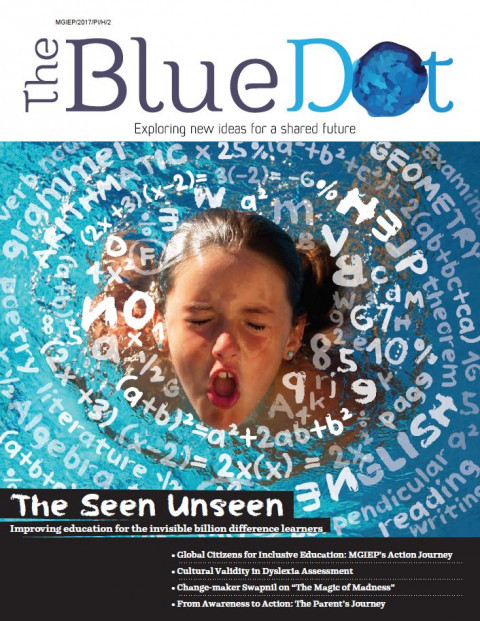 The Seen Unseen: Improving Education for the Invisible Billion Difference Learners (The Blue Dot Issue 5, 2017) سنة النشر: 2017 المؤلف المؤسسي: Mahatma Gandhi Institute of Education for Peace and Sustainable Development (MGIEP) MGIEP believes that addressing the needs of children with difference learning offers a unique opportunity to build the competency of understanding, respect and appreciation between the children and the rest of their peers in school.It provides the Institute favorable conditions to put in practice how inclusive education is a necessary condition for building peaceful and sustainable societies. Many of the Information Technology pedagogical tools developed by the Institute lend themselves to children with difference learning.Transforming the education system in such a manner will allow mainstream schools to provide a learning platform that breaks down barriers across learning types and provide the equitable access to education that is a fundamental Sustainable Development Goal.We are, in this issue of The Blue Dot, privileged to read from some of the world’s best experts on the subject describing the challenges at hand and suggesting ways and means of addressing the lacuna present in curricula and policy. As always, we dedicate a special section to reflecting the voices of young people in our discussion. I am especially honoured and delighted to present a foreword from a young entrepreneur who has not allowed his neurobiological dyslexic condition to prevent him from pursuing his dreams to help others.
 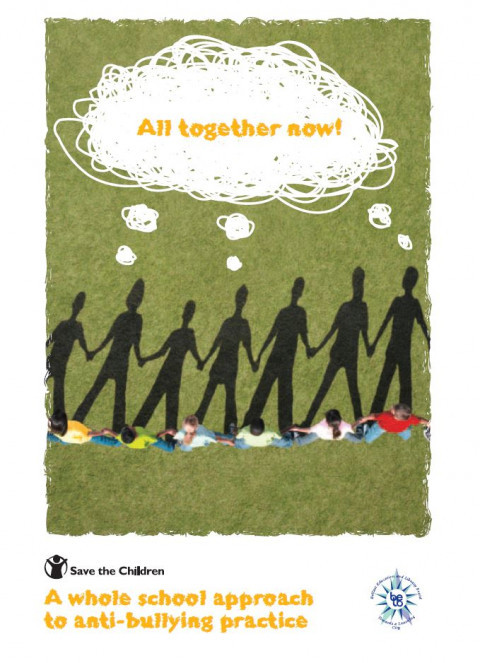 All Together Now!: A Whole School Approach to Anti-bullying Practice سنة النشر: 2010 المؤلف المؤسسي: Save the Children All Together Now! provides learning and examples of good practice for teachers and school management teams, in order to encourage a culture in which bullying is less likely to occur. In particular, this report recognises the benefits of two strategies to instil an anti-bullying culture within any school. First, it describes a whole school approach to tackling bullying and promoting positive behaviour, with children and young people participating in their school’s decision-making processes. Positive changes in school anti-bullying policy, together with the ongoing development of better professional practice and peer support, are more likely if everyone connected to the school is informed and offered the opportunity to play a part. Second, All Together Now! demonstrates how creating an effective anti-bullying ethos is dependent upon creating a ‘telling environment’. To achieve this, pupils, staff, and parents and carers need to be consulted and involved.
  Moral Disengagement and Building Resilience to Violent Extremism: An Education Intervention سنة النشر: 2014 المؤلف: Anne Aly | Elisabeth Taylor | Saul Karnovsky المؤلف المؤسسي: Taylor & Francis This article reports on the development of an education intervention, the Beyond Bali Education Resource funded by the Australian Governments’ Building Community Resilience Grants of the Federal Attorney General's Department, that applies a conceptual framework grounded in moral disengagement theory. The theory of moral disengagement has been applied to the study of radicalization to violent extremism to explain how individuals can cognitively reconstruct the moral value of violence and carry out inhumane acts. Moral Disengagement and Building Resilience to Violent Extremism: An Education Intervention سنة النشر: 2014 المؤلف: Anne Aly | Elisabeth Taylor | Saul Karnovsky المؤلف المؤسسي: Taylor & Francis Dans cet article, il est question du développement d'une approche éducative, the « Beyond Bali Education Resource » financée par « l’Australian Governments’ Building Community Resilience Grants of the Federal Attorney General's Department ». Cette approche utilise un cadre conceptuel fondé sur la théorie du désengagement moral. La théorie du désengagement moral a été appliquée à l'étude de la radicalisation à l'extrémisme violent en vue d’expliquer comment les individus peuvent, du point de vue cognitif, reconsidérer la violence comme une valeur morale et commettre des actes inhumains.
 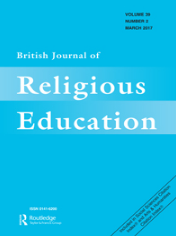 Resilience, violent extremism and religious education سنة النشر: 2013 المؤلف: Joyce Miller This article is an attempt to provide an educational justification for the British Government-funded project REsilience, on addressing contentious issues through religious education (RE), which was carried out by the RE Council of England and Wales. A number of issues relating to the inclusion of religiously inspired violent extremism in the curriculum are raised – definitional, political and educational.
 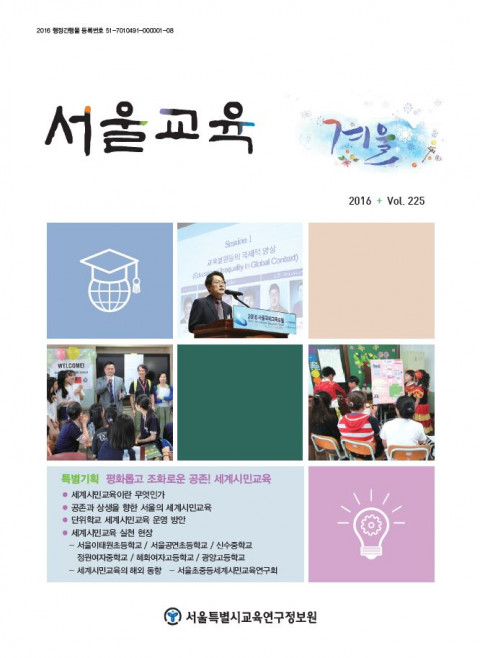 서울교육 2016년 겨울호 (제58권 통권 225호) سنة النشر: 2016 المؤلف المؤسسي: 서울특별시교육청 교육연구정보원 권두칼럼:혁신미래교육으로서의 세계시민교육특별기획: 평화롭고 조화로운 공존! 세계시민교육세계시민교육이란 무엇인가공존과 상생을 향한 서울의 세계시민교육단위학교 세계시민교육 운영 방안세계시민교육 실천 현장 해외교육:세계시민교육의 해외 동향 출처 URL:http://www.serii.re.kr/photo/viw.do?method=getView&mcode=S029a&seq=921
 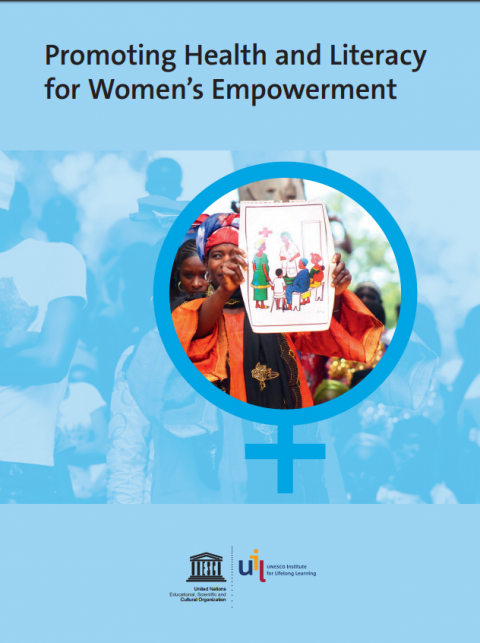 Promoting health and literacy for women's empowerment سنة النشر: 2016 المؤلف: Anna Robinson-Pant This publication is the third in a series of research studies focused on literacy and women’s empowerment. Its aim is to contribute to the development of crosssectoral approaches to the provision of adult literacy, education and training, traversing policy on education, family, integration, citizenship, health, social welfare and public finance. This paper uses a number of specific examples to show how literacy programmes for young people and adults, with a particular focus on young and adult women, can contribute to the achievement of the Sustainable Development Goals. Autonomiser les femmes par la promotion de la santé et de l'alphabétisme سنة النشر: 2016 المؤلف: Anna Robinson-Pant This publication is the third in a series of research studies focused on literacy and women’s empowerment. Its aim is to contribute to the development of crosssectoral approaches to the provision of adult literacy, education and training, traversing policy on education, family, integration, citizenship, health, social welfare and public finance. This paper uses a number of specific examples to show how literacy programmes for young people and adults, with a particular focus on young and adult women, can contribute to the achievement of the Sustainable Development Goals.
 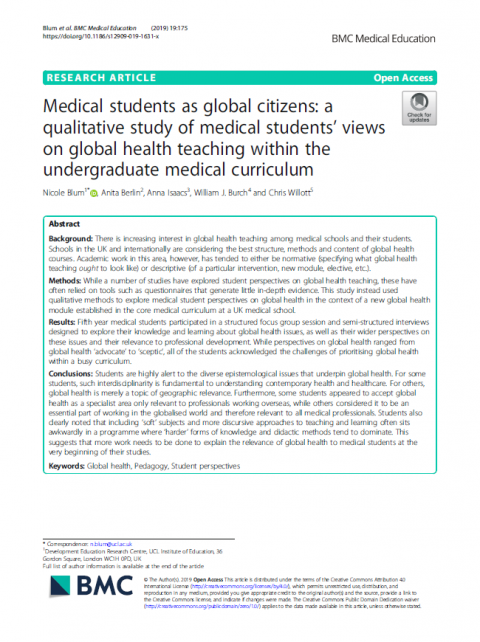 Medical students as global citizens: a qualitative study of medical students’ views on global health teaching within the undergraduate medical curriculum سنة النشر: 2019 المؤلف: Nicole Blum | Anita Berlin | Anna Isaacs | William J. Burch | Chris Willott The paper, entitled "Medical students as global citizens: a qualitative study of medical students’ views on global health teaching within the undergraduate medical curriculum", is based on a small-scale qualitative study with UCL(University College London) medical students. It aimed to explore Year 5 medical students’ knowledge and learning about global health issues, as well as their wider perspectives on its relevance to their professional development. The work builds on DERC(Development Education Research Centre)’s long-term interest in global issues within the initial training and professional development of a number of key global professions, such as teaching, medicine and engineering.