
الموارد
استكشف مجموعة واسعة من الموارد القيمة حول تعليم المواطنة العالمية لتعميق فهمك وتعزيز البحث والمناصرة والتعليم والتعلم.
تم العثور على 2,199 نتيجة
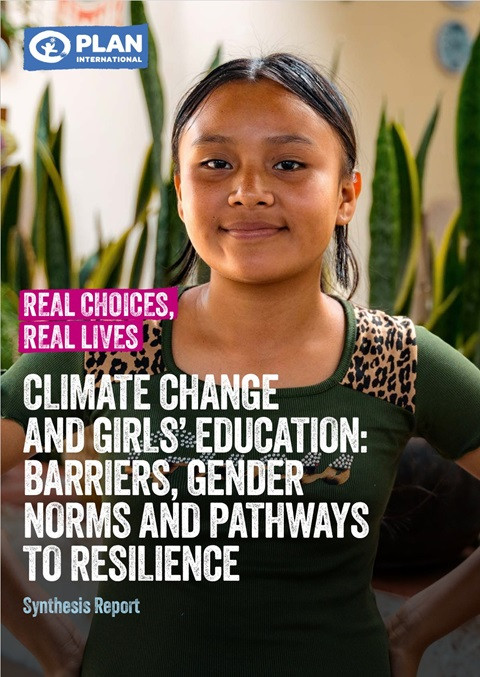 [Synthesis Report] Climate Change and Girls' Education: Barriers, Gender Norms and Pathways to Resilience سنة النشر: 2023 المؤلف المؤسسي: Plan International This research explores the relationship between climate change and girls' education: what are the direct and indirect impacts of climate change on girls' access to school and completion of their education? How do these impacts intersect with existing gender barriers to education? And how does your education help girls respond and adapt to climate change in their communities? A synthesis report and summary are also available, along with the technical report for more details on the conclusions and the research itself. [Rapport de synthèse] Changement climatique et éducation des filles: entraves, normes sexistes et chemins vers la resilience سنة النشر: 2023 المؤلف المؤسسي: Plan International This research explores the relationship between climate change and girls' education: what are the direct and indirect impacts of climate change on girls' access to school and completion of their education? How do these impacts intersect with existing gender barriers to education? And how does your education help girls respond and adapt to climate change in their communities? A synthesis report and summary are also available, along with the technical report for more details on the conclusions and the research itself. [Informe de síntesis] Cambio climático y educación de las niñas: barreras, normas de género, y rutas hacia la resiliencia سنة النشر: 2023 المؤلف المؤسسي: Plan International Esta investigación explora la relación entre el cambio climático y la educación de las niñas: ¿cuáles son los impactos directos e indirectos del cambio climático sobre el acceso de las niñas a la escuela y la finalización de su educación? ¿Cómo se cruzan estos impactos con las barreras de género existentes a la educación? ¿Y cómo ayuda su educación a las niñas a responder y adaptarse al cambio climático en sus comunidades? Se incluye un informe de síntesis y un resumen, junto con el informe técnico para más detalles sobre las conclusiones y la propia investigación.
 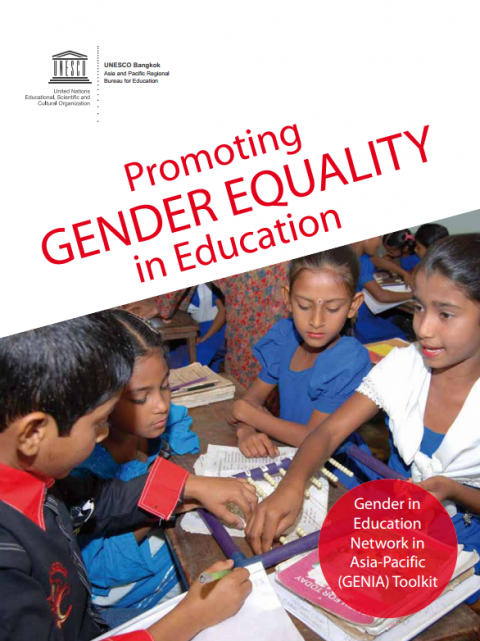 Promoting gender equality in education سنة النشر: 2009 المؤلف المؤسسي: UNESCO Kathmandu This publication was originally designed in 2003 when the Gender in Education Network in Asia-Pacific (GENIA) was established. Few gender in education resources were available at that time, and until the 2006 version, documents were mainly intended to be used by GENIA members, who are representatives (gender focal points) from ministries of education in the Asia-Pacific region. GENIA members have been using the Toolkit to sensitize and train their national counterparts ever since. However, the Toolkit has not only been distributed and used by gender focal points, but also by other people who have heard about GENIA, and/or who were interested in the resource materials published by UNESCO Bangkok. For this reason, the Toolkit has been accessible via the UNESCO Bangkok website1 since 2006. As a result, anyone searching the Web for information on gender equality can easily access the Toolkit. This fourth edition of the Toolkit, thus, expands the scope of the target audience. The content has likewise been adapted accordingly in order to meet the needs of all who could potentially access it. The Toolkit also integrates existing information and tools designed by other national or international organizations dedicated to promoting and providing training on gender equality in education and other sectors. Further information from these sources is obtained by consulting the references section at the end of the Toolkit. The Toolkit is designed as a user-friendly resource. As such, a matrix is provided on pages 4 and 5 to indicate each tool’s potential for use, based on its relevance to each prospective user group. Still, every tool will have relevance to many contexts or situations and, therefore, we encourage you to make use of all the materials by adapting them to your country context.
  Girl Rising سنة النشر: 2014 المؤلف المؤسسي: Girl Rising Suma's is one of Girl Rising's 9 remarkable stories. Though her brothers went to school, she was forced into bonded labor at age 6, like many other Nepali girls. Watch this chapter of Girl Rising to see how Suma gained her freedom and how she uses her education in a fight to free other girls. Written by Manjushree Thapa and voiced by Kerry Washington.
 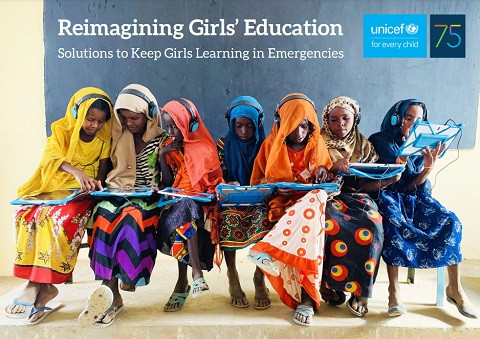 Reimagining Girls’ Education: Solutions to Keep Girls Learning in Emergencies سنة النشر: 2021 المؤلف المؤسسي: United Nations Children's Fund (UNICEF) Reimagining Girls’ Education: Solutions to Keep Girls Learning in Emergencies presents an empirical overview of what works to support learning outcomes for girls in emergencies. Research shows that girls in emergencies are disadvantaged at all stages of education and are more likely to be out-of-school than in non-emergency settings. Girls are also struggling to learn.This solutions book seeks to highlight promising evidence-based actions in education for decision makers who are designing and implementing interventions to support girls’ education in low and middle-income country humanitarian settings and settings where education has been interrupted by the COVID‑19 pandemic. It documents practical examples of approaches that have been or are being tested, and from which lessons can be drawn.The overarching aim is that this evidence be used to inform programming in crises and support diverse stakeholders in mitigating the impact of emergencies on girls’ education.
  G7 Global Objectives On Girls’ Education: Baseline Report سنة النشر: 2022 المؤلف المؤسسي: United Nations Girls' Education Initiative (UNGEI) This publication serves as a baseline report to accompany efforts of the G7 Accountability Working Group to monitor progress towards the two global objectives. It presents evidence on low- and lower-middle-income countries’ progress in achieving the two global objectives and what remains to be done.It is important to stress that the two G7 global objectives on girls’ education are measures of gender parity, which are necessary but not sufficient as measures of gender equality. Assessing progress towards the latter requires information, which tends not to be available systematically enough to allow a comparative perspective. However, this report provides insights to remaining challenges.
 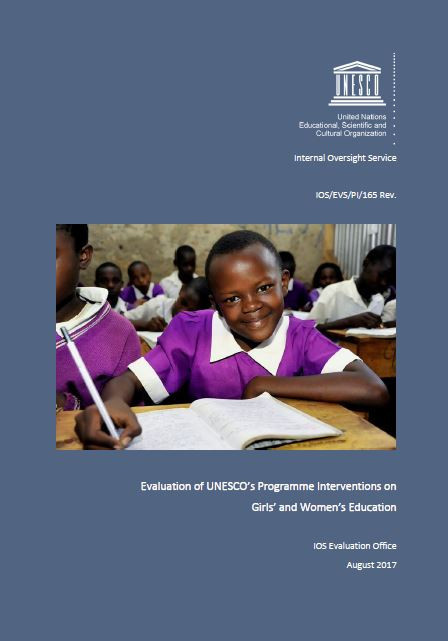 Evaluation of UNESCO's Programme Interventions on Girls' and Women's Education سنة النشر: 2017 المؤلف: Michael Reynolds, Martina Rathner, Estelle Loiseau المؤلف المؤسسي: UNESCO Internal Oversight Service (IOS) Since 2008, Gender Equality has been one of two global priorities for UNESCO. In May 2011, UNESCO launched the Global Partnership for Girls’ and Women’s Education, also known as “Better Life, Better Future”, which aims to increase learning opportunities for adolescent girls and women and to find solutions to some of the biggest obstacles to their education. To further advance the global priority of Gender Equality, since 2015 a dedicated Section of Education for Inclusion and Gender Equality specifically addresses the gender dimensions in education that contribute to differential access, participation, completion, and learning outcomes by boys and girls, and men and women. The evaluation examines UNESCO’s programme interventions in girls’ and women’s education during the period 2015 to 2017, in particular to ascertain the relevance, effectiveness, efficiency and sustainability of initiatives, and to clarify the strategic role and positioning of the Organization in supporting girls’ and women’s education at regional and country levels.The evaluation found that although UNESCO’s efforts for enhancing girls’ and women’s education are clearly aligned to SDG 4 and SDG 5 and also broadly in line with the overall principle of leaving no one behind, there is at times a trade-off between targeting the hardest to reach and other donor priorities, and UNESCO needs to more clearly position its efforts in support of girls’ and women’s education and its niche in the 2030 Agenda. Furthermore, continued efforts are required to scale up and/or replicate small-scale interventions, to better ensure sustainability and to consolidate mechanisms for coordination and information sharing among different interventions to seize synergies and enhance organizational learning.
 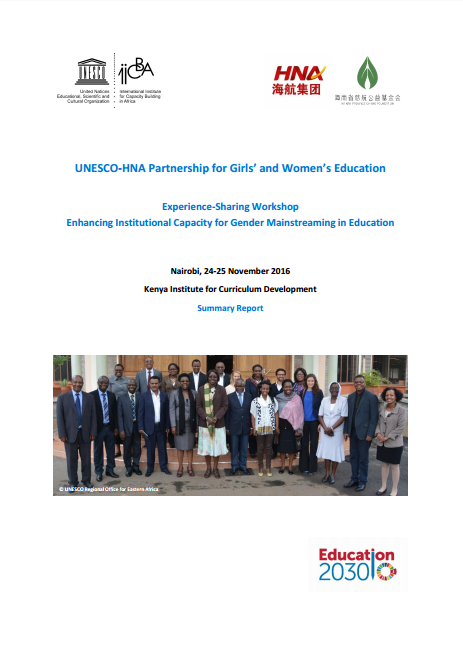 UNESCO-HNA partnership for girls' and women's education: experience-sharing workshop: enhancing institutional capacity for gender mainstreaming in education; summary report سنة النشر: 2016 المؤلف المؤسسي: UNESCO International Institute for Capacity-Building in Africa (IICBA) The first experience-sharing workshop was organised on 24-25 November 2016 in Nairobi, Kenya. The objectives of the workshop were to: v Increase awareness on girls' education activities through South-South interaction. v Exchange experiences and lessons on HFIT project implementation. v Enhance institutional networking and interaction on issues related to girls' education.
  Education for sustainable development country guidelines for changing the climate of teacher education to address sustainability: putting transformative education into practice سنة النشر: 2011 المؤلف المؤسسي: UNESCO Jakarta This document on ESD Country Guidelines for TEIs is the result of the Regional Training Workshop Programme, titled “Developing Capacities of Teacher Education Institutions (TEIs) of Brunei Darussalam, Indonesia, Malaysia, Philippines and Timor-Leste in Reorienting Teacher Education to Address Sustainability” and has been developed by the five cluster countries of the UNESCO Office, Jakarta. The developed guidelines ultimately aim to reorient each country's curriculum, policies, standard practices and programmes to address sustainability and implement it in a tangible way. Although many idealistic descriptions of sustainability and sustainability education exist, faculties of education must decide which themes should receive particular focus and create their own guidelines and design criteria on this specific area. Therefore, these ESD Country Guidelines are significant initial steps to ensuring teacher education programmes fit the environmental, social, cultural and economic conditions and goals of each country's communities, regions and nations.