
الموارد
استكشف مجموعة واسعة من الموارد القيمة حول تعليم المواطنة العالمية لتعميق فهمك وتعزيز البحث والمناصرة والتعليم والتعلم.
تم العثور على 2,162 نتيجة
 Educating for global citizenship: an ETFO curriculum development inquiry initiative سنة النشر: 2010 المؤلف: Alice Assor-Chandler | Mali Bickley | Jim Carleton | Antonino Giambrone | Janice Gregg | Jennifer Hunter | Laura Inglis | Leigh-Anne Ingram | Angela MacDonald | Miyuki (Erica) Moizumi | Carol Peterson | Carrie Schoemer | Nadya Weber | Tonia Wojciechowski المؤلف المؤسسي: Elementary Teachers’ Federation of Ontario (ETFO) Attention to educating for citizenship continues to expand and deepen worldwide. Many countries now include citizenship education as an important feature of their official curriculum, albeit in variant forms. Numerous research studies, policy reforms, and curriculum initiatives have been undertaken, as teachers, policy makers and researchers attempt to understand the intricate processes by which young people learn about democratic citizenship, and where and how citizenship education should be located and represented in school curricula.Educating for global citizenship has been a critical dimension of these discussions and investigations. Recent shifts in the speed and global reach of information and communication technologies, an increasingly interdependent global economy, challenges in human rights and social justice, and the impact of international tragedies and emergencies have, for example, created tensions and conditions that require more integrated, worldwide responses. Not surprisingly, understandings of global citizenship are being explored with increased intensity and, as might be expected, there has been a corresponding – and growing - interest among educators in various parts of the world to strengthen the global dimension of citizenship education in school curricula at all levels.In Canada, there has been increasing attention to what it means to educate for the global citizenship and provincial curriculum policy developments in recent years. A host of useful ideas in the form of new resource materials and websites to inform and guide teachers’ work have also emerged. The Canadian International Development Agency’s (CIDA) in the global classroom initiative, Classroom Connections’ Cultivating Peace in the 21st Century and Taking Action, Larsen’s ACT! Active Citizens Today: Global Citizenship for Local Schools, and UNICEF Canada’s Global Schoolhouse are a few examples of the many resources that have recently been developed. Despite this growing interest, there has been less attention devoted to examining practices of global citizenship education within Canadian classrooms, leaving a limited understanding of how it is applied in schools.A wide range of perspectives and practices has emerged, reflecting a considerable growth of interest in this dimension of education. In an effort to clarify the multiple dimensions of global citizenship education, below are two “working” frameworks that provide an overview of core learning goals and key teaching and learning practices associated with global citizenship education from the literature. They reveal both complexity and multidimensionality and provide a lens to analyse and reflect upon the breadth and depth of what it means to educate for global dimension of citizenship.
 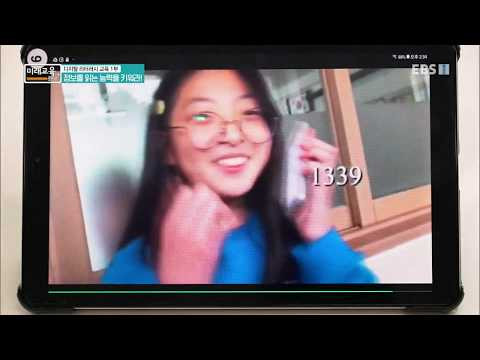 디지털 리터러시 교육 1부: 정보를 읽는 능력을 키워라! #1 سنة النشر: 2020 المؤلف المؤسسي: 한국교육방송공사 급변하는 매체환경, 범람하는 가짜뉴스 속에서 진짜 정보와 가짜 정보를 구분하는 능력인 디지털리터러시가 중요하게 여겨지고 있는 상황. 우리 학생들이 미래를 바꿀 수 있는 역량을 갖도록 하기 위해 시대의 흐름에 맞는 교육의 변화 또한 필요하다. 이번 <미래교육 플러스>에서는 변화한 흐름에 맞는 디지털리터러시 교육에 대해서 논의 한다. 디지털 리터러시 교육 1부 ‘정보를 읽는 능력을 키워라!’에서는 디지털 리터러시의 중요성과 디지털 리터러시 교육의 현주소를 점검해 본다.
 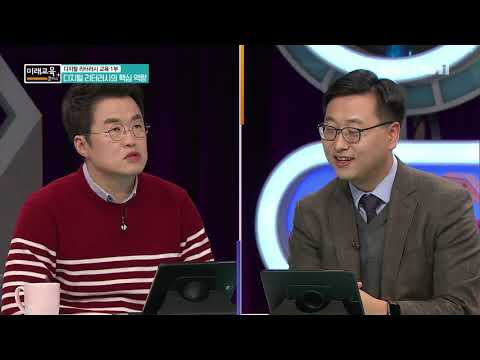 디지털 리터러시 교육 1부: 정보를 읽는 능력을 키워라! #2 سنة النشر: 2020 المؤلف المؤسسي: 한국교육방송공사 급변하는 매체환경, 범람하는 가짜뉴스 속에서 진짜 정보와 가짜 정보를 구분하는 능력인 디지털리터러시가 중요하게 여겨지고 있는 상황. 우리 학생들이 미래를 바꿀 수 있는 역량을 갖도록 하기 위해 시대의 흐름에 맞는 교육의 변화 또한 필요하다. 이번 <미래교육 플러스>에서는 변화한 흐름에 맞는 디지털리터러시 교육에 대해서 논의 한다. 디지털 리터러시 교육 1부 ‘정보를 읽는 능력을 키워라!’에서는 디지털 리터러시의 중요성과 디지털 리터러시 교육의 현주소를 점검해 본다.
 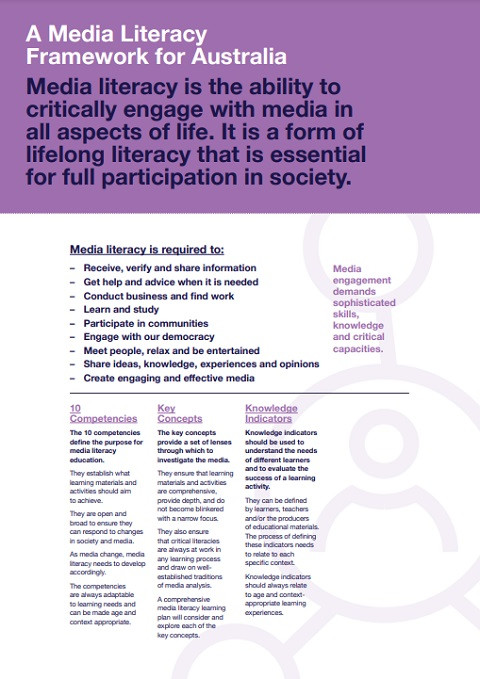 A Media Literacy Framework for Australia سنة النشر: 2020 المؤلف المؤسسي: Australian Media Literacy Alliance (AMLA) AMLA define media literacy as the ability to critically engage with media in all aspects of life.Media literacy complements Digital Literacy and Digital Safety – and all three are required to thrive in a digital world. Digital literacy focuses on the skills and knowledge required to access and use digital technologies. Digital Safety focuses on issues like online hate and abuse, bullying, the protection of personal information and online scams.Media Literacy encourages people to ask critical questions about the media and media technologies using a set of six key concepts. For any example of media (an advertisement, a news story, a film or television program, a YouTube video, video game or a social media post), we can ask the following questions:Institutions: who made this media and why did they make it?Audiences: who was this media made for and how are they likely to respond to it?Representations: how are people, places or ideas portrayed in this media, and what are the impacts of this?Technologies: what technology was used to produce, access and circulate this media? Does the technology gather personal data from users?Languages: how does this media communicate using image, sounds and written text?Relationships: what kind of relationships are being developed through the distribution and use of this media?These questions will have very different answers and follow-on questions depending on the media example, but the process of asking and answering these questions leads to critical understandings, and forms the basis for more successful media experiences. These questions can be asked during the process of consuming, sharing or creating media. They can be integrated as part of any Digital Literacy and Digital Safety learning program.
  세계시민을 위한 미디어정보리터러시 교안 개발 연구 سنة النشر: 2022 المؤلف: 김아미 | 김영은 | 박다혜 | 박유신 | 고기식 | 김현정 المؤلف المؤسسي: 유네스코한국위원회 어린이·청소년은 디지털 공간에서 세계시민이자 디지털 시민으로 성장하고 있다. 그러나 지금까지 어린이·청소년과 디지털 미디어를 논할 때에는 어린이·청소년을 미디어로부터 보호하거나 과의존을 방지하는 교육을 강조하거나 디지털 공간에서의 에티켓 교육 등에 치우친 경향이 있다. 하지만 어린이·청소년은 이미 디지털 공간의 중요한 구성원이자 성인과 미디어를 함께 경험해 나가는 주체이므로, 어린이·청소년이 디지털 세상에서 누려야 하는 권리는 무엇인지, 그리고 그러한 권리를 어떻게 지킬 것인지에 대한 보다 활발한 논의가 필요하다.어린이·청소년의 경험과 요구를 이해하고 학습자와 교육자가 함께 만들어가는 미디어정보리터러시 교육이야말로 지금 디지털 시민이자 세계시민으로 성장하는 어린이·청소년에게 필수적인 역량을 함양시킬 수 있는 교육일 것이다.이에 본 연구는 어린이·청소년이 경험하는 여러 미디어 관련 이슈에 대한 이해를 바탕으로 하여, 세계시민을 위한 미디어정보리터러시 교육안을 개발하는 것을 목적으로 한다. 특히 유엔아동권리협약 제12조에서 강조하고 있는 어린이·청소년의 참여권을 지원하기 위하여, 당사자의 목소리를 듣고 이를 반영하는 어린이·청소년 참여형 연구(participatory research)를 계획하였다. Basic education curriculum guide: building on strengths (Primary 1 - Secondary 3) سنة النشر: 2002 المؤلف المؤسسي: Curriculum Development Council (Hong Kong) The Basic Education Curriculum Guide – Building on Strengths is prepared by the Curriculum Development Council (CDC) to advise school supervisors, school heads/principals, teachers, parents and those concerned on how to realise both the aims of education (EC, 2000) and the recommendations made in the report on Learning to Learn – The Way Forward in Curriculum Development (CDC, 2001) for life-long learning and the whole-persons development of students. This Guide replaces the Guide to the Primary 1 to 6 Curriculum (CDC, 1993) and the part on junior secondary level of the Guide to the Secondary 1 to 5 Curriculum (CDC, 1993). It aims to provide:• Recommendations of a central curriculum for schools and time allocation which all schools to adopt at primary and junior secondary levels• Suggestions for actions in school curriculum planning, learning and teaching and assessment to improve the quality of education, and for school-based adaptations to build on the strengths of Hong Kong schools as well as to meet the needs of students• Illustrative examples in authentic school contexts• Opportunities for reflection by school heads/principals, teachers and related parties Guide de Programme d'Éducation de Base: construire sur les forces (primaire 1 - secondaire 3) سنة النشر: 2002 المؤلف المؤسسي: Curriculum Development Council (Hong Kong) Guide de Programme d'Éducation de ㅠase - Construire sur les Forces est préparé par le Curriculum Development Council (CDC) pour conseiller les superviseurs scolaires, les directeurs d'école / directeurs, les enseignants, les parents et les personnes concernées sur la façon de réaliser les objectifs de l'éducation (EC, 2000) et les recommandations formulées dans le rapport sur Apprendre à apprendre - Aller de l'avant dans le développement du curriculum (CDC, 2001) pour l'apprentissage à vie et le développement des personnes sistes des étudiants. Ce guide remplace la <cite> Guide du primaire 1 à 6 Curriculum (CDC, 1993) et la partie au niveau secondaire du premier cycle de la balise <cite> Guide du secondaire 1 à 5 Curriculum (CDC, 1993). Il vise à fournir: • Les recommandations d'un programme central pour les écoles et la répartition du temps qui toutes les écoles adoptent à des niveaux primaire et secondaire juniors • Suggestions pour des actions dans la planification des programmes scolaires, l'apprentissage et l'enseignement et l'évaluation pour améliorer la qualité de l'éducation, et pour adaptations scolaires pour construire sur les points forts des écoles de Hong Kong, ainsi que pour répondre aux besoins des élèves • des exemples illustratifs dans des contextes scolaires authentiques • Possibilités de réflexion par les chefs d'établissement / directeurs, les enseignants et les parties liées 基础教育课程指引——各尽所能 发挥所长 (小一至中三) سنة النشر: 2002 المؤلف المؤسسي: Curriculum Development Council (Hong Kong) The Basic Education Curriculum Guide – Building on Strengths is prepared by the Curriculum Development Council (CDC) to advise school supervisors, school heads/principals, teachers, parents and those concerned on how to realise both the aims of education (EC, 2000) and the recommendations made in the report on Learning to Learn – The Way Forward in Curriculum Development (CDC, 2001) for life-long learning and the whole-persons development of students. This Guide replaces the Guide to the Primary 1 to 6 Curriculum (CDC, 1993) and the part on junior secondary level of the Guide to the Secondary 1 to 5 Curriculum (CDC, 1993). It aims to provide:• Recommendations of a central curriculum for schools and time allocation which all schools to adopt at primary and junior secondary levels• Suggestions for actions in school curriculum planning, learning and teaching and assessment to improve the quality of education, and for school-based adaptations to build on the strengths of Hong Kong schools as well as to meet the needs of students• Illustrative examples in authentic school contexts• Opportunities for reflection by school heads/principals, teachers and related parties
 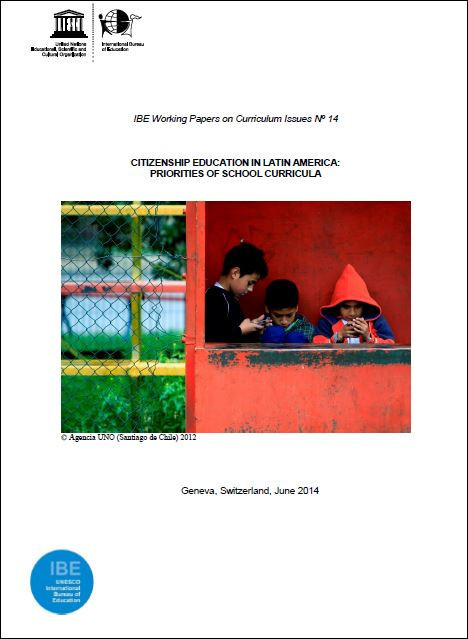 Citizenship education in Latin America: Priorities of School Curricula سنة النشر: 2014 المؤلف: Cristián Cox | Martín Bascopé | Juan Carlos Castillo | Daniel Miranda | Macarena Bonhomme المؤلف المؤسسي: UNESCO International Bureau of Education (IBE) This work focuses on the curricula of six Latin American countries – Colombia, Chile, the Dominican Republic, Guatemala, Mexico and Paraguay – which at the close of the past decade agreed to be part of the project Regional System of Evaluation and Development of Citizenship Competencies (SREDECC). With the support of the Inter-American Development Bank, SREDECC developed the Latin American module of the International Civic and Citizenship Study (ICCS- 2009) undertaken by the International Association for the Evaluation of Educational Achievement (IEA), in addition to encouraging the participation of the countries in that study (Cox 2010; Schulz, Ainley, Friedman and Lietz 2011). This document comprises four parts. The first section takes stock of the state of democratic belief in the region, drawing upon the most significant opinion studies of the past decade, so as to offer broader meaning bases for curriculum analysis and, more generally, for educational work in the field of citizenship. The second section describes the organizational (or structural) characteristics of the curricula of the six countries and presents a framework of categories for their comparative analysis. The subsequent section describes and analyses the contents of the six curricula examined and how they deal with the values, institutions and citizenship relations in their civic (political) and civil (coexistence) dimensions. On the basis of the most significant findings, the closing section includes some reflections regarding curriculum development with regard to citizenship. Educación Ciudadana en América Latina: Prioridades de los Currículos Escolares سنة النشر: 2014 المؤلف: Cristián Cox | Martín Bascopé | Juan Carlos Castillo | Daniel Miranda | Macarena Bonhomme المؤلف المؤسسي: UNESCO International Bureau of Education (IBE) El documento se organiza en cuatro partes. En la primera se da cuenta del estado de la creencia democrática en la región, recurriendo a evidencia de los estudios de opinión más importantes de la última década, de modo de ofrecer contexto y bases de significado amplios al análisis curricular, así como, más en general, al trabajo educativo en el área de ciudadanía. En la segunda sección se describe las características organizativas (o de estructura) de los currículos de los seis países y se presenta un esquema de categorías para el análisis comparado de los mismos. La sección siguiente describe y analiza los contenidos de los seis currículos examinados y su tratamiento de los valores, las instituciones y las relaciones de ciudadanía, en su dimensión cívica (política) y civil (convivencia). A partir de los hallazgos más importantes, la sección de cierre ofrece unas reflexiones orientadas al desarrollo curricular en el área.