
الموارد
استكشف مجموعة واسعة من الموارد القيمة حول تعليم المواطنة العالمية لتعميق فهمك وتعزيز البحث والمناصرة والتعليم والتعلم.
تم العثور على 2,668 نتيجة
 Indicators for evaluating municipal policies aimed at fighting racism and discrimination سنة النشر: 2005 المؤلف: Jean Claude Icart | Micheline Labelle | Rachad Antonius المؤلف المؤسسي: Centre de recherche sur l'immigration, l'ethnicité et la citoyenneté (Canada). Observatoire international sur le racisme et les discriminations Ethnocultural diversity increasingly constitutes an important characteristic of major cities around the world. As the primary centres for national, ethnic and cultural intermixing, cities are becoming laboratories for new ways of “living together” (UNESCO, 2004). However, when this diversity is accompanied by inequalities, racism and discrimination, it can increase the social divide. Therefore, in order to benefit from the true advantages of the ethnocultural diversity that makes up the fabric of contemporary societies, it has become increasingly necessary to employ methods to correct social injustices, and to ensure the equality and the full exercise of citizens’ rights. Accordingly, the last few years have seen true efforts to conceptualize interventions by cities to manage ethnocultural diversity. These efforts rely on ideologies controlled by the state and on the values of equality, social justice, and respect for pluralism that are endorsed by different international organizations such as the UN and UNESCO, or by national organizations such as human rights commissions.To promote and reinforce municipal anti-discriminatory policies, UNESCO supported the launching of the International Coalition of Cities Against Racism1. The initial framework for this Coalition was the proposal of the Ten-Point Action Plan, which was adopted in December 2004 in Nuremburg.The present research report relating to the development of a series of indicators for evaluating municipal policies to fight racism and discrimination should be situated in this context. It was carried out with the goal of assisting cities that want to adopt public policies of diversity management and to fight racism and discrimination, and to evaluate the impact of such policies. The goal is to equip cities with tools that make it possible to evaluate, in quantitative and/or qualitative terms, whether their actions produce results that correspond to the major goals of adopted policies. Indicateurs pour l'évaluation des politiques municipales visant à contrer le racisme et la discrimination سنة النشر: 2005 المؤلف: Jean Claude Icart | Micheline Labelle | Rachad Antonius المؤلف المؤسسي: Centre de recherche sur l'immigration, l'ethnicité et la citoyenneté (Canada). Observatoire international sur le racisme et les discriminations Ethnocultural diversity increasingly constitutes an important characteristic of major cities around the world. As the primary centres for national, ethnic and cultural intermixing, cities are becoming laboratories for new ways of “living together” (UNESCO, 2004). However, when this diversity is accompanied by inequalities, racism and discrimination, it can increase the social divide. Therefore, in order to benefit from the true advantages of the ethnocultural diversity that makes up the fabric of contemporary societies, it has become increasingly necessary to employ methods to correct social injustices, and to ensure the equality and the full exercise of citizens’ rights. Accordingly, the last few years have seen true efforts to conceptualize interventions by cities to manage ethnocultural diversity. These efforts rely on ideologies controlled by the state and on the values of equality, social justice, and respect for pluralism that are endorsed by different international organizations such as the UN and UNESCO, or by national organizations such as human rights commissions.To promote and reinforce municipal anti-discriminatory policies, UNESCO supported the launching of the International Coalition of Cities Against Racism1. The initial framework for this Coalition was the proposal of the Ten-Point Action Plan, which was adopted in December 2004 in Nuremburg.The present research report relating to the development of a series of indicators for evaluating municipal policies to fight racism and discrimination should be situated in this context. It was carried out with the goal of assisting cities that want to adopt public policies of diversity management and to fight racism and discrimination, and to evaluate the impact of such policies. The goal is to equip cities with tools that make it possible to evaluate, in quantitative and/or qualitative terms, whether their actions produce results that correspond to the major goals of adopted policies.
  Référentiel des compétences développées en éducation à la citoyenneté mondiale et solidaire à l’âge de l’obligation scolaire سنة النشر: 2017 المؤلف المؤسسي: Annoncer la Couleur (ALC) | La coopération belge au développement | Centre de Connaissances en Éducation à la Citoyenneté Mondiale (WikiCM) Ce référentiel de compétences ECM(Éducation à la citoyenneté mondiale) a été élaboré par WikiCM, le centre de connaissances en éducation à la citoyenneté mondiale coordonné par Annoncer la Couleur a réuni des professionnels de l’enseignement (administration, réseaux, inspection) et de l’éducation à la citoyenneté mondiale (ONG, ALC). Il présente dans un premier temps les repères sur les stades de développement de l’enfant et, dans un deuxième temps, les 7 compétences de l’ECM en milieu scolaire.
  Pedagogical Guides: Let's Educate With Equality سنة النشر: 2016 المؤلف المؤسسي: Chile. Ministry of Education This publication includes four pedagogical guides, the first seeks to generate reflection of teachers and managers about their role in gender constructions, the second one seeks critical reflection of elementary school students on how gender constructions affect decisions, the third guide looks the sdame for high school students, and the fourth guide goes around the reflection of parents / guardians on how gender roles affect the vocational decisions of boys and girls. Guías pedagógicas: Eduquemos con igualdad سنة النشر: 2016 المؤلف المؤسسي: Chile. Ministry of Education Esta publicación reune cuatro guías, en la primera se busca generar reflexión de docentes y directivos en torno a su rol en las construcciones de género, en la segunda se pretende la reflexión critica de los estudiantes de enseñanza básica sobre como inciden las construcciones de género en las decisiones vocacionales al igual que en la tercera guía en estudiantes de enseñanza mediay la cuarta guía gira entorno a la reflexión de padres/madres/ apoderados sobre como afectan los roles de género en las decisiones vocacionales de niños y niñas.
  Materiales para eliminar el castigo físico y humillante y promover la disciplina positiva سنة النشر: 2014 المؤلف المؤسسي: Save the Children Es una caja de herramientas que busca promover la disciplina positiva para eliminar el castigo físico y humillante. Presenta diferentes tipos de materiales: sistematización de experiencias, guías prácticas para familias y docentes, documentos de investigación y materiales de incidencia.
 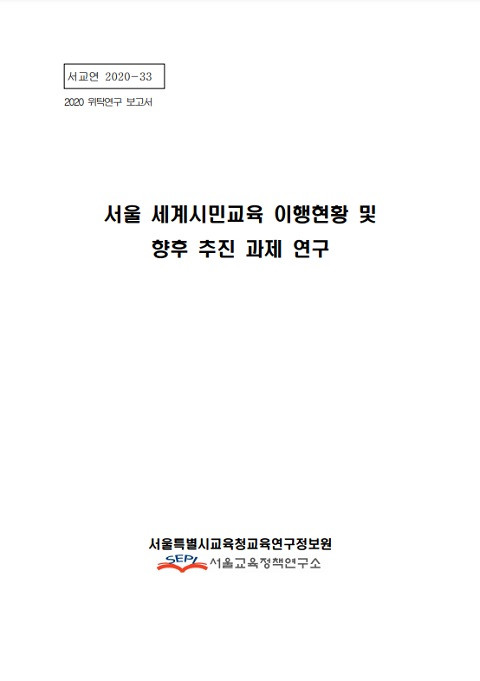 서울 세계시민교육 이행현황 및 향후 추진 과제 연구 سنة النشر: 2021 المؤلف: 김동택 | 서용덕 | 고선규 | 김지영 | 임재민 | 장경원 | 홍윤빈 المؤلف المؤسسي: 서울특별시교육청 교육연구정보원 이 연구는 서울시 교육청이 추진하고 있는 세계시민교육 이행 현황을 객관지표와 주관지표를 통해 분석하고 이를 바탕으로 향후 추진되어야 할 정책 과제들(협업체계, 교육 내실화, 내용·동력·변인, 데이터 축적 및 활동 플랫폼 구축 등)을 연구하는 데 목적이 있다. 이를 위하여 2015년부 터 시작되어 현재까지 진행된 세계시민교육의 성과를 확인하기 위해 객관 지표와 주관지표를 점검하였으며, 여기서 나타난 결과들을 바탕으로 앞으 로의 정책 방향을 설정하기 위해 정책 제안을 시도하였다. 서울특별시교육청교육연구정보원이(가) 창작한 서교연 2020-33 위탁연구(서울 세계시민교육 이행현황 및 향후 추진 과제 연구) 최종보고서 저작물은 "공공누리 제4유형(출처표시-상업적 이용금지-변경금지)" 조건에 따라 이용 할 수 있습니다.
 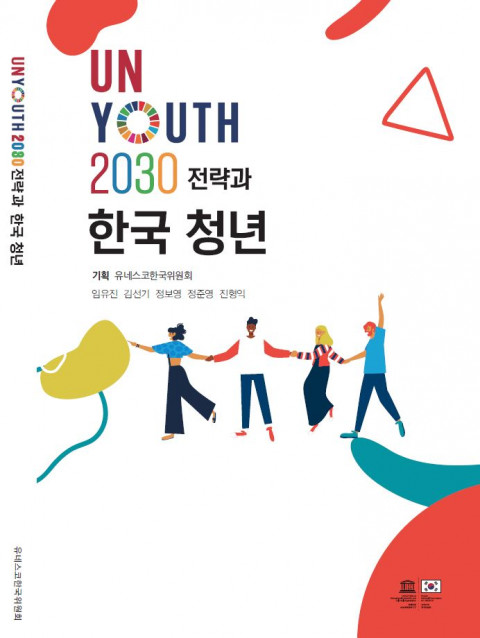 UN Youth 2030 전략과 한국 청년 سنة النشر: 2020 المؤلف: 임유진 | 김선기 | 정보영 | 정준영 | 진형익 المؤلف المؤسسي: 유네스코한국위원회 유네스코한국위원회가 2018년 유엔이 발표한 'Youth 2030 전략'을 바탕으로 청년 연구자들과 함께 한국사회의 청년 활동과 청년 정책, 청년 참여 등을 점검한 연구보고서이다.
 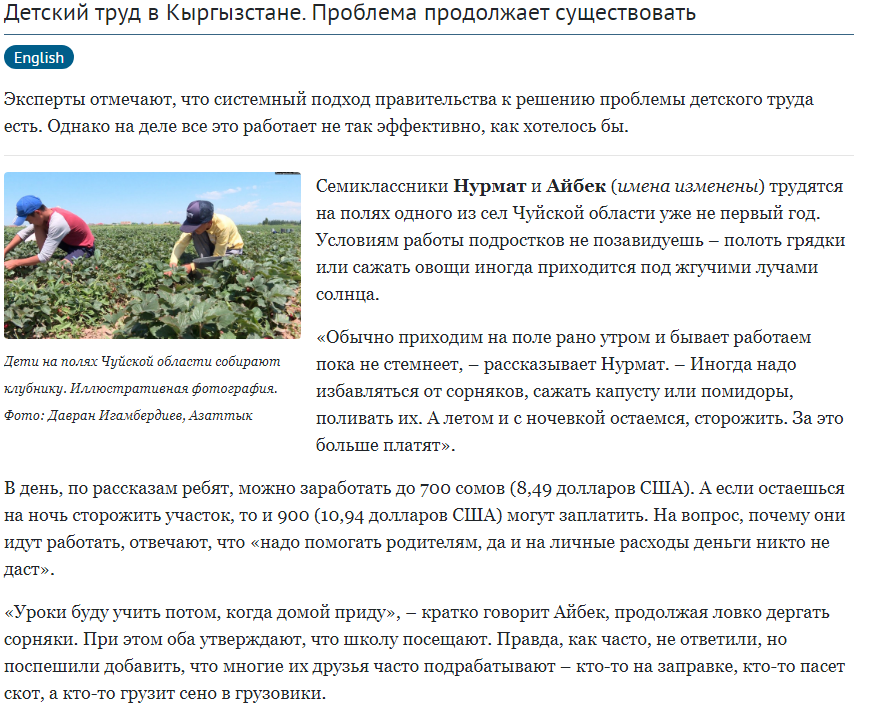 Child Labour in Kyrgyzstan: A Persisting Problem سنة النشر: 2022 المؤلف المؤسسي: Central Asian Bureau for Analytical Reporting (CABAR) Experts note that in the presence of a systematic approach of the Kyrgyz Government to solve the problem of child labor, a number of challenges remain in practice. This article examines some of the reasons for the involvement of children in the labor market, including economic instability, mass migration of the population, rising poverty levels, the influence of local customs and traditions. The article also provides an overview of relevant statistical data and some national initiatives aimed at eliminating child labor. Детский труд в Кыргызстане: Проблема продолжает существовать سنة النشر: 2022 المؤلف المؤسسي: Central Asian Bureau for Analytical Reporting (CABAR) Эксперты отмечают, что при наличии системного подхода правительства Кыргызстана к решению проблемы детского труда на практике сохраняется ряд вызовов. Данная статья рассматривает некоторые причины вовлечения детей в рынок труда, среди которых экономическая нестабильность, массовая миграция населения, рост уровня бедности, влияние местных обычаев и традиций. В статье также приведен обзор релевантных статистических данных и некоторых национальных инициатив, направленных на искоренение детского труда.