
الموارد
استكشف مجموعة واسعة من الموارد القيمة حول تعليم المواطنة العالمية لتعميق فهمك وتعزيز البحث والمناصرة والتعليم والتعلم.
تم العثور على 2,668 نتيجة
 Chaise UNESCO - UCLA dans l'apprentissage global et l'éducation à la citoyenneté mondiale سنة النشر: 2016 المؤلف المؤسسي: HFP | global media Documentaire Présentation du Dr. Carlos A. Torres comme Chaise UNESCO-UCLA dans l'apprentissage global et l'éducation à la citoyenneté mondiale.
 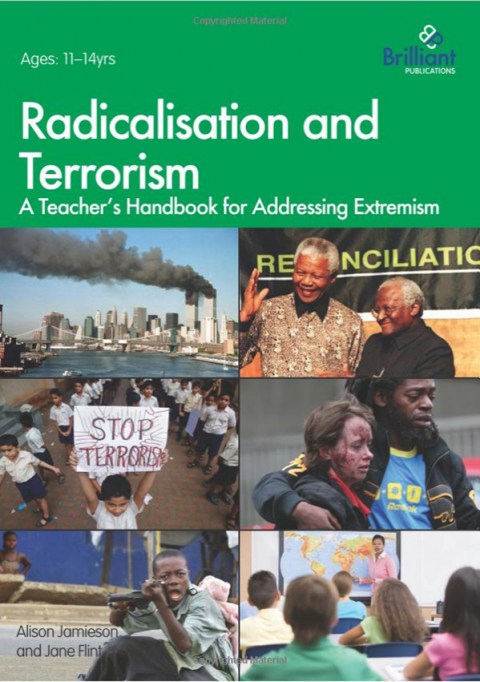 Radicalisation and Terrorism: A Teacher's Handbook for Addressing Extremism سنة النشر: 2015 المؤلف: Alison Jamieson | Janet Flint This practical handbook provides a reliable and objective resource to enable lower secondary school teachers to tackle the complex subjects of terrorism and radicalization with confidence. The text covers issues of citizenship, human rights and respect, civil and political engagement, the nature of identity and how we identify with others. It examines different forms of violence from bullying to the most recent examples of 21st century terrorism. Historical precedent is used to illustrate a variety of contexts in which political violence has occurred, from Assassins through Suffragettes to militancy in South Africa, Europe, the Middle East and Oceania. Radicalisation and Terrorism: A Teacher's Handbook for Addressing Extremism سنة النشر: 2015 المؤلف: Alison Jamieson | Janet Flint Cet outil pratique constitue une ressource fiable et objective, permettant aux professeurs de collège d’aborder les sujets complexes du terrorisme et de la radicalisation tout en étant préparés. Cet ouvrage parcourt les thèmes de la citoyenneté, des droits de l’homme et du respect, de l’engagement civique et politique, les fondements de l’identité et comment on s’identifie à l’autre. Il revient sur les différentes formes de violence : du harcèlement scolaire au phénomène plus récent de terrorisme tel que pratiqué au XXIème siècle. L’auteur s’appuie sur l’histoire pour illustrer la diversité des contextes dans lesquels la violence politique est apparue, des Nizârites aux Suffragettes, sans oublier le militantisme sud-africain, européen, du Moyen-Orient et d’Océanie.
 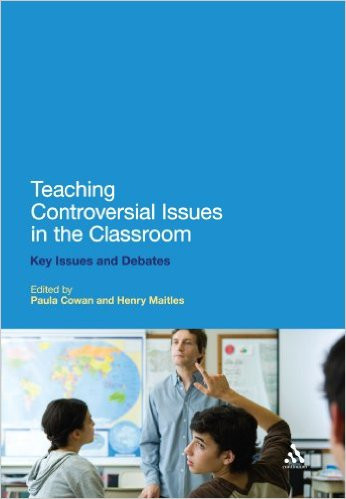 Teaching Controversial Issues in the Classroom: Key Issues and Debates سنة النشر: 2012 المؤلف: Paula Cowan, Henry Maitles المؤلف المؤسسي: Continuum The book provides an exploration of current debates and controversies relating to teaching controversial issues in primary and secondary schools. It investigates the changing nature of this type of learning experience and explore its contribution to the curriculum, particularly history and citizenship education. Topics covered include: - What is the 'right' age to discuss controversial issues? - The Citizenship Agenda - Discussing Iraq with school students - Teaching the Holocaust in the multicultural classroom – Islamophobia. International case studies provide fresh insights and valuable student and teacher feedback regarding the teaching of what many perceive as sensitive and difficult subjects. Teaching Controversial Issues in the Classroom: Key Issues and Debates سنة النشر: 2012 المؤلف: Paula Cowan, Henry Maitles المؤلف المؤسسي: Continuum Cet ouvrage propose un tour d'horizon des débats actuels que soulève la question de savoir s'il faut enseigner des sujets controversés à l’école primaire et au collège. L’auteur analyse également les changements engendrés par ce type d’expérience d’apprentissage et leur contribution aux programmes scolaires, particulièrement d’histoire et d’éducation civique.Les principaux thèmes abordés sont les suivants : A quel âge peut-on commencer à discuter de sujets controversés ? - L’agenda citoyen - Parler de l'Iraq avec les collégiens et lycéens - Enseigner l'Holocauste à une classe marquée par la diversité culturelle – L'islamophobie.
 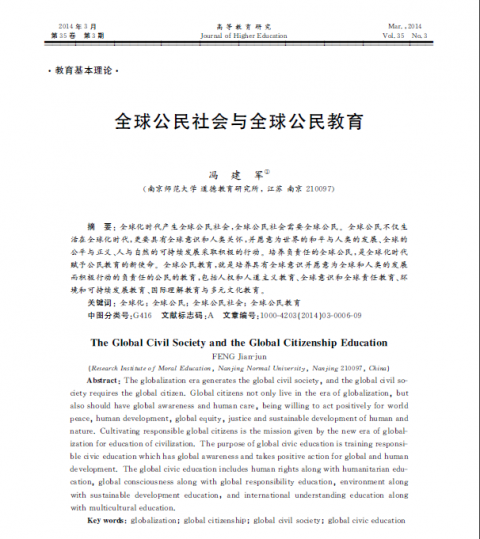 The Global Civil Society and the Global Citizenship Education سنة النشر: 2014 المؤلف: Feng Jianjun The globalization era generates the global civil society, and the global civil society requires the global citizen. Global citizens not only live in the era of globalization, but also should have global awareness and human care, being willing to act positively for world peace, human development, global equity, justice and sustainable development of human and nature. Cultivating responsible global citizens is the mission given by the new era of globalization for education of civilization. The purpose of global civic education is training responsible civic education which has global awareness and takes positive action for global and human development. The global civic education includes human rights along with humanitarian education, global consciousness along with global responsibility education, environment along with sustainable development education, and international understanding education along with multicultural education. 全球公民社会与全球公民教育 سنة النشر: 2014 المؤلف: Feng Jianjun 全球化时代产生全球公民社会,全球公民社会需要全球公民。全球公民不仅生活在全球化时代,更要具有全球意识和人类关怀,并愿意为世界的和平与人类的发展、全球的公平与正义、人与自然的可持续发展采取积极的行动。培养负责任的全球公民,是全球化时代赋予公民教育的新使命。全球公民教育,就是培养具有全球意识并愿意为全球和人类的发展而积极行动的负责任的公民的教育,包括人权和人道主义教育、全球意识和全球责任教育、环境和可持续发展教育、国际理解教育与多元文化教育。
 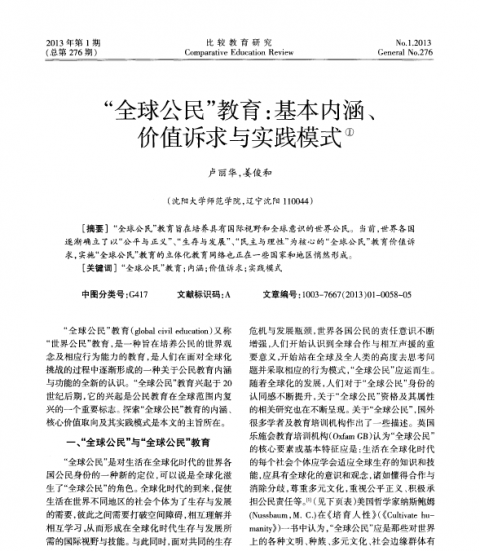 The Concept, Values and Implementation Models of GCED سنة النشر: 2013 المؤلف: Lu Lihua, Jiang Junhe “Global Citizenship education” aims to cultivate global citizens with an international perspective and global awareness. At present, there are more and more countries focusing on developing the core education value including” equity and justice”, “survival and development” and “democracy and rationality” and builds the global citizenship education network. “全球公民”教育基本内涵、价值诉求与实践模式 سنة النشر: 2013 المؤلف: Lu Lihua, Jiang Junhe “全球公民”教育旨在培养具有国际视野和全球意识的世界公民。当前,世界各国逐渐确立了以“公平与正义”、“生存与发展”、“民主与理性”为核心的“全球公民”教育价值诉求,实施“全球公民”教育的立体化教育网络也正在一些国家和地区悄然形成。
  The National Youth White Paper on Global Citizenship سنة النشر: 2015 المؤلف المؤسسي: Centre for Global Citizenship Education and Research (CGCER) On March 20, 2015, over 400 students from five high schools across Canada, in partnership with the Centre for Global Citizenship Education, The Centre for Global Education and TakingITGlobal, came together to collaborate, through the use of technology, in a Virtual Town Hall to discuss the youth’s vision for Global Citizenship Education. From Alberta to Ontario, downtown Toronto to Yellowknife, the youth of Canada exchanged ideas, debated alternatives, and ultimately created a document that represents their voice on the relationship Canadians should have with the rest of the world. The Virtual Town Hall, an “archetype of grassroots democracy,” (Senator Grant Mitchell) was the culmination of over a month of online teamwork, 2000 hours of student collaboration, over 100 hours of teacher facilitation, and the passion of over 1000 youth to engage in a national conversation and have their voices heard.In the month prior to the Virtual Town Hall, student leaders, systematically chosen from each school to represent Canada’s diverse geographic and demographic population, met on a weekly basis to exchange ideas, work with and listen to experts, and create a common framework. Concurrently, the students were trained to use an arsenal of Web 2.0 tools (YouTube, Twitter, cell phone voting, Google Docs, H.323 Video Conference, discussion boards, blogs, etc.) to collaborate, build consensus, and create community regardless of time or location.Equipped with this knowledge and empowered through online technology, the student leaders facilitated a full-day virtual town hall. In the morning, 400 youth peers engaged in a dialogue with local and international experts. Following this session, the youth participated in breakout groups to address three critical questions: What are our obligations as global citizens? What are the rights and responsibilities that we have? To what extent can well-intentioned global citizenship initiatives reinforce or resist power inequities? What types of policies/practices will enable/facilitate global citizenship? The National Youth White Paper on Global Citizenship, written collaboratively by Canadian students, is the direct result of this full-day, interactive event. The evolution of the document involved equipping leaders with knowledge and technology, having those leaders facilitate a larger conversation among their peers, taking the data generated to their community at large for feedback and direction, and then synthesizing the results in the student white paper. It represents the voices of over one thousand youth, introduced to the complexities of global citizenship education, unified through the power of 21st century technology, and sharing a passion to contribute to the dialogue taking place on the future of Canada and its relationship to the rest of the world.