
الموارد
استكشف مجموعة واسعة من الموارد القيمة حول تعليم المواطنة العالمية لتعميق فهمك وتعزيز البحث والمناصرة والتعليم والتعلم.
تم العثور على 2,668 نتيجة
 Naming and misnaming the nation. Ambivalence and national belonging in German textbook representations of the Holocaust At a time when the power of schools and both state and federal education authorities to guide young people’s sense of belonging is being challenged by multilingualism, by the claims of supra- and subnational regions and minorities, by memories of national catastrophes and crimes, and by out-of-school educational media, this collection of essays provides an apposite exploration of the ways in which shared narratives continue to be transmitted and learned. Its authors, whose work emerged from a series of conferences organized by the French National Institute for Pedagogical Research in Lyon, Barcelona and Paris in 2010, demonstrate not only ways in which multiple disciplines (including history, literature, social and language studies) address young people’s sense of attachment, but also how challenges to educational policy are reflected in school textbooks and curricula in Algeria, Bulgaria, Catalonia, France, Galicia, Germany, Quebec, Senegal and the USA. These studies about the role of education in relation to largely tenacious but shifting national identities should appeal to specialists of education, nationalism studies, history and political science. (By the author) A ‘Curtain of Ignorance’: An Analysis of Holocaust Portrayal in Textbooks from 1943 through 1959 If textbooks are supposed to be an honest and impartial portrayal of historical events, they should remain the same over time. However, when examining one event across different editions of the same textbook, it becomes apparent that this is not the case. This study seeks to examine how the beginnings of the Cold War may have influenced how the Holocaust was discussed during the 1940s and 1950s. Results indicate that as Germany transformed from an enemy to be defeated into an ally needed to stop the advance of Communism, discussion of the Holocaust became more muted. While the beginnings of the Cold War may not be the only factor in this phenomenon, the results of this study indicate a methodological process in which textbooks could be used to create critical and historical thinking in today's classroom. (By the author) Die Darstellung des Faschismus und Nationalsozialismus in deutschen, österreichischen und italienischen Schulbüchern Textbooks are often held to be official representations of history. Contrary to many other products of historical culture, they are subject to state control and approval. Yet, especially against this background, the question remains which historical theories and which history didactical concepts are being offered for students’ processing of this period in secondary school level I. How are the dictatorships evaluated and which possibilities are the students offered to deal with the didactically prepared material? Recent Italian, Austrian, and German history textbooks are analysed to see how Italian Fascism and German National Socialism are narratively conceptualized and to what extent students are offered the chance to make an independent evaluation of this recent history. The study tries above all to build a bridge to the contemporary debate about competences in the didactics of history and civics, related to the domain-specific competences students should acquire during their time in school. This is particularly interesting with respect to the two dictatorships, as it comes to determine to what extent the processing of the two dictatorships, in the sense of the acquisition of a reflective and (self-)reflexive historical consciousness, something which today is considered by the majority to be the goal of history education, is at the centre for these three democracies (By the publisher) Global school partnerships programme impact evaluation report سنة النشر: 2011 المؤلف: Juliet Sizmur | Bernadetta Brzyska | Louise Cooper | Jo Morrison | Kathryn Wilkinson | David Kerr المؤلف المؤسسي: National Foundation for Educational Research The overarching aim of this evaluation is to assess the impact of DFID‟s Global School Partnerships (GSP) programme on levels of global awareness and attitudes to global issues in pupils attending GSP schools in the UK.This main aim can be broken down into four subsidiary aims, namely:1. to measure levels of global awareness and attitudes to global issues amongst pupils taking part in GSP programme activities2. to compare awareness levels and attitudes among pupils in GSP schools with those of pupils in non-GSP schools3. to evaluate whether the impact of GSP on global awareness and attitudes to global issues differs depending on pupils‟ ages and educational stages (e.g. at primary versus secondary level)4. to assess whether levels of awareness and attitudes amongst participating pupils change as the GSP programme becomes more embedded in schools (i.e. whether, over time, the programme has a positive, neutral or negative impact on pupil levels of development awareness). Programme mondial de partenariats scolaires et Rapport d'évaluation d'impact سنة النشر: 2011 المؤلف: Juliet Sizmur | Bernadetta Brzyska | Louise Cooper | Jo Morrison | Kathryn Wilkinson | David Kerr المؤلف المؤسسي: National Foundation for Educational Research L'objectif principal de cette évaluation est d'évaluer l'impact de partenariats scolaires internationaux(PSI) et le programme de DFID sur les niveaux de prise de conscience globale et attitudes aux enjeux mondiaux chez les élèves fréquentant les écoles PSI au Royaume-Uni. Cet objectif principal peut être décomposé en quatre objectifs subsidiaires, à savoir: 1. pour mesurer les niveaux de prise de conscience globale et attitudes à l'égard des enjeux mondiaux entre les élèves qui participent aux activités du programme PSI 2. pour comparer les niveaux de sensibilisation et les attitudes des élèves dans les écoles du PSI avec ceux des élèves des écoles non-PSI 3. afin d'évaluer si l'impact du PSI sur la sensibilisation et les attitudes envers les problèmes mondiaux global diffère selon les élèves «âges et niveaux d'enseignement (par exemple, au primaire ou au secondaire) 4. d'évaluer si les niveaux de sensibilisation et attitudes parmi les élèves participants changent à mesure que le programme PSI devient plus intégré dans les écoles (à savoir si, au fil du temps, le programme a un impact positif, neutre ou négatif sur le niveau des élèves de sensibilisation au développement).
 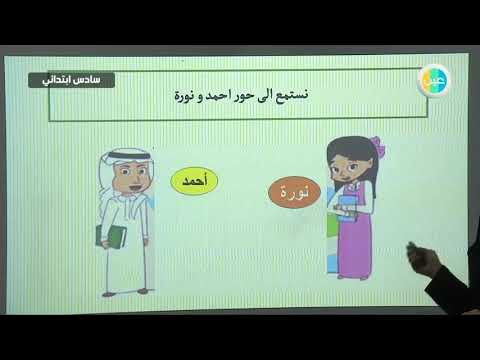 iEN Social Studies and Citizenship Lessons: Personality Enhancement Program - Sixth Primary سنة النشر: 2020 المؤلف: Fawzia Alghamdi المؤلف المؤسسي: iEN National Education Portal The teacher explains a sixth grade lesson on character development and enhancement. The lesson for students of the Kingdom of Saudi Arabia in a social studies course. With the Coronavirus pandemic, lessons explaining across platforms have emerged. دروس عين الدراسات الاجتماعية والمواطنة– برنامج تعزيز الشخصية - سادس ابتدائي سنة النشر: 2020 المؤلف: Fawzia Alghamdi المؤلف المؤسسي: iEN National Education Portal تقوم المعلمة بشرح درس للصف السادس الابتدائي في تنمية وتعزيز الشخصية. الدرس لطلاب المملكة العربية السعودية في مقرر الدراسات الاجتماعية. لقد ظهرت الدروس التي تشرح عبر المنصات مع جائحة كورونا.
  The Critical global educator: global citizenship education as sustainable development سنة النشر: 2016 المؤلف: Maureen Eills An acknowledged challenge for humanitarian democratic education is its perceived lack of philosophical and theoretical foundation, often resulting in peripheral academic status and reduced prestige. A rich philosophical and theoretical tradition does however exist. This book synthesises crucial concepts from Critical Realism, Critical Social Theory, Critical Discourse Studies, neuro-, psycho-, socio- and cognitive-linguistic research, to provide critical global educators with a Cultural Historical Activity Theory (CHAT) framework for self- and negotiated evaluation.
  Global Education Monitoring Report, 2021, Central and Eastern Europe, Caucasus and Central Asia: Inclusion and Education; All Means All سنة النشر: 2021 المؤلف المؤسسي: Global Education Monitoring Report Team | European Agency for Special Needs and Inclusive Education | Network of Education Policy Centers Prepared by the Global Education Monitoring (GEM) Report, in partnership with the European Agency for Special Needs and Inclusive Education and the Network of Education Policy Centers, the regional report on inclusion and education in Central and Eastern Europe, the Caucasus and Central Asia offers a deep dive into the core challenges and key solutions. The region is working hard to overcome a legacy, whereby children with disabilities attended special schools, once wrongly regarded as an effective solution, segregated by type of disability, if not fully excluded from education.The report draws on in-depth profiles of 30 education systems in the region. It also presents the additional risks to inclusion now posed by the COVID-19 pandemic. Building on the 2020 Global Education Monitoring Report, it documents barriers facing learners, particularly where multiple disadvantages intersect. Its recommendations provide a systematic framework for identifying and dismantling these barriers, according to the principle that ‘every learner matters and matters equally’. Всемирный доклад по мониторингу образования 2021 г. : для всех означает для всех инклюзивность и образование; центральная и восточная европа,кавказ и средняя азия سنة النشر: 2021 المؤلف المؤسسي: Global Education Monitoring Report Team | European Agency for Special Needs and Inclusive Education | Network of Education Policy Centers В этом докладе описана огромная и географически разнородная территория, которую объединили в один регион схожие образовательные системыи подходы, сформированные во второй половине 20 века в рамках государственного социализма. Образование было доступно, гендерное неравенство и неравенство, связанное с местом проживания, было искоренено. Но образовательные системы подвергали дискриминации детей с особыми потребностями, которые посещали специальные школы. Это решение ошибочно считалось эффективным: ученики разделялись по типу инвалидности, а некоторые из них полностью исключались из системы образования.Начиная с 1989 года, регион старается преодолеть это тяжелое наследие и перейти к инклюзивному образованию, основанному на правах человека, подходу, который часто поддерживается международными организациями. В законодательство и образовательную политику было включено более широкое понимание инклюзии. Педагогическое образование и программы повышения квалификации учителей были пересмотрены и реструктурированы. Тем не менее, прогресс неравномерен. Многие изменения произошли на бумаге, в то время как глубинные убеждения и реальная практика практически не изменились. В то же время образовательные системы пытаются преодолеть негативные последствия политического и экономического кризисов, которые углубили неравенство и усилили социальную напряженность. Такие факторы как гендер, удаленное место проживания, бедность, этническая принадлежность, язык, миграция, принадлежность к числу перемещенных лиц, тюремное заключение, сексуальная ориентация, гендерная идентичность и религиозные и другие убеждения связаны с неравенством образовательных возможностей.Составленный группой по подготовке Всемирного доклада по мониторингу образования, в партнерстве с Европейским агентством по специальным потребностям и инклюзивному образованию и Сетью центров образовательной политики, этот доклад содержит подробные описания 30 образовательных систем региона. В докладе также представлены дополнительные риски для инклюзии, возникшие в результате пандемии COVID-19. Основываясь на Всемирном докладе ЮНЕСКО по мониторингу образования, этот документ фиксирует барьеры, с которыми сталкиваются учащиеся. Рекомендации, данные в докладе, предлагают систему для выявления и устранения этих барьеров, в основе которой лежит принцип «каждый ученик важен и важен одинаково».