
الموارد
استكشف مجموعة واسعة من الموارد القيمة حول تعليم المواطنة العالمية لتعميق فهمك وتعزيز البحث والمناصرة والتعليم والتعلم.
تم العثور على 306 نتيجة
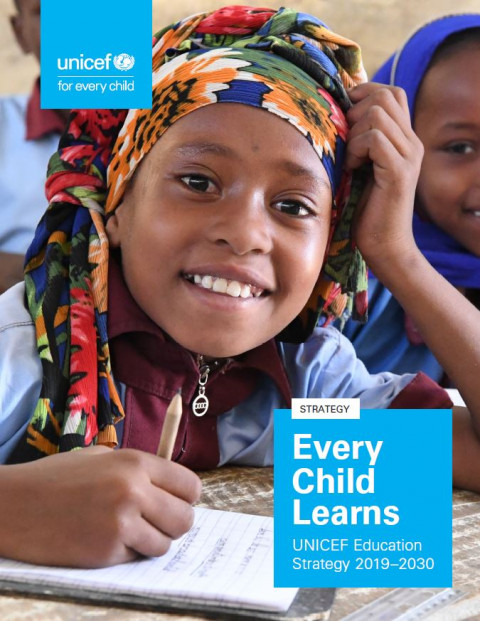 Every Child Learns: UNICEF Education Strategy 2019–2030 سنة النشر: 2019 المؤلف المؤسسي: United Nations Children's Fund (UNICEF) The gap between the levels of learning that education systems are providing and what children, communities and economies need, is growing. The breadth and depth of this learning crisis constitute the greatest global challenge to preparing children and adolescents for life, work and active citizenship. The lesson of the learning crisis is clear: the conventional assembly of education inputs is not improving learning outcomes. This presents a fundamental challenge to the way that governments, development partners and communities are managing and supporting education systems. A new, more radical approach that focusses on enhancing learning outcomes is long overdue and forms the basis for this strategy.The report also outlines the shift towards a greater focus on improving learning outcomes, including supporting the breadth of skills that allow young people to become agile, adaptive learners and citizens, equipped to navigate personal, social, academic, economic and environmental challenges.
  "It is Very Painful to Talk About”: The Impact of Attacks on Education on Women and Girls سنة النشر: 2019 المؤلف: Holly Cartner المؤلف المؤسسي: Global Coalition to Protect Education from Attack (GCPEA) This report presents the key findings of GCPEA’s multi-country study on the impact of attacks on education on women and girls.10 GCPEA’s research focuses on the types and causes of abuse most typically committed against female students in the context of attacks on education, and the long-term consequences that female students may face as a result of such attacks.11 GCPEA initiated this study to contribute to a better understanding of the implications for girls and women when education is attacked and to inform our advocacy for better strategies to protect girls and women, prevent attacks and abuse, and diminish harmful consequences against them.This report relies on previous GCPEA research, including Education Under Attack 2018 and 2014, and updates, and the organization’s field research in Nigeria and the Democratic Republic of Congo, which focused specifically on the experiences of women and girls when education is attacked. In addition, the report draws from interviews with numerous country and regional experts and an extensive review of secondary data sources, including reports by United Nations (UN) agencies, development and humanitarian non-governmental organizations (NGOs), human rights organizations, government bodies, and think tanks, including numerous contributions from GCPEA’s member organizations.
  Counting on the World to Act: A Roadmap for Governments to Achieve Modern Data Systems for Sustainable Development سنة النشر: 2019 المؤلف المؤسسي: Sustainable Development Solutions Network Thematic Research Network on Data and Statistics (SDSN TReNDS) Eradicating poverty and hunger, ensuring quality education, instituting affordable and clean energy, and more – the Sustainable Development Goals (SDGs) lay out a broad, ambitious vision for our world. But there is one common denominator that cuts across this agenda: data. Without timely, relevant, and disaggregated data, policymakers and their development partners will be unprepared to turn their promises into reality for communities worldwide. With only eleven years left to meet the goals, it is imperative that we focus on building robust, inclusive, and relevant national data systems to support the curation and promotion of better data for sustainable development. In Counting on the World to Act, TReNDS details an action plan for governments and their development partners that will enable them to help deliver the SDGs globally by 2030. Our recommendations specifically aim to empower government actors – whether they be national statisticians, chief data scientists, chief data officers, ministers of planning, or others concerned with evidence in support of sustainable development – to advocate for, build, and lead a new data ecosystem.
  تقرير التنمية الإنسانية العربية للعام 2016: الشباب وآفاق التنمية واقع متغير سنة النشر: 2016 المؤلف المؤسسي: UNDP Arab States يتناول تقرير "التنمية الإنسانية العربية للعام 2016: الشباب وآفاق التنمية واقع متغير" بالدراسة التحديات والفرص التي تواجه الشباب في المنطقة العربية، وخاصة منذ عام 2011، ويسعى لتقديم لمحة عامة عن الشباب في المنطقة، ولتحفيز نقاش جاد يشارك فيه الشباب أنفسهم مع أهم الأطراف الأخرى في المجتمع حول حول مستقبل التنمية في المنطقة بالنظر إلى وضع الشباب ودورهم باعتبارهم قضية محورية في هذا الوقت بالذات.ينطلق التقرير من حقيقة أن جيلُ الشباب الحالي يمثل أكبرُ كتلة شبابيّة تشهدها المنطقة على مدى السنوات الخمسين الماضية، إذ يكون 30 في المئة من سكّانها الذين يبلغ عددُهم 370 مليونَ نسمة. وينبِّه التقرير إلى أن البلدان العربية تستطيع تحقيقَ طفرة حقيقية ومكاسب كبيرة في مجالي التنمية، وتعزيزَ الاستقرار، وتأمينَ هذه المكاسب على نحوٍ مستدام إذا تبنَّت سياساتٍ تُعطي الشبابَ حصةً يستحقونها في تشكيل مجتمعاتِهم وتَجعلهم محطَّ الاهتمام - سياسيًّا واجتماعيًّا واقتصاديًّا.ويدعو تقرير التنمية الإنسانية العربية 2016 دول المنطقة إلى الاستثمار في شبابها وتمكينهم من الانخراط في عمليات التنمية، كأولوية حاسمة وملحة في حد ذاتها وكشرط أساسي لتحقيق التنمية المستدامة. وتكتسب هذه الدعوة أهمية خاصة اليوم إذ تشرع كافة البلدان زمنها الدول العربية في إعداد خططها الوطنية لتنفيذ خطة 2030 للتنمية المستدامة. كما يدعو التقرير إلى تبني نموذجِ تنميةٍ ذي تَوجُّهٍ شبابي، يُركِّز في آن واحد على بناء قدرات الشباب وتوسيعِ الفرص المتاحةِ لهم، ويعتبر أن تحقيقَ السلام والأمن على الصعيدَين الوطنيِّ والإقليمي شرطًا أساسيًّا لمستقبلٍ جدير بالشباب. Arab Human Development Report 2016: Youth and Development Prospects سنة النشر: 2016 المؤلف المؤسسي: UNDP Arab States AHDR 2016 examines challenges and opportunities facing youth in the Arab region, especially since 2011, and seeks to provide an overview on youth in the region and stimulate a broad dialogue between youth and key stakeholders on the future of development in the region, focusing on the role of youth as critical partners at this very point in time.The point of departure of the report is the demographic fact that the current youth generation is the largest youth cohort this region has had over the past 50 years, making up 30% of its population of 370 million. The report argues that Arab countries can achieve a great leap forward in development, reinforce stability and secure such gains in a sustainable manner, if they adopt policies that give youth a stake in shaping their societies and put them at the centre—politically, socially and economically.The AHDR 2016 calls upon Arab countries to invest in their young people and empower them to engage in the development process as an urgent and critical priority in its own right and prerequisite to achieving sustainable development –a call that is particularly timely as Arab countries embark on formulating their plans to meet the goals of the Sustainable Development Agenda 2030. The report also calls for a youth-oriented development model that focuses simultaneously on building young people’s capabilities and expanding opportunities available to them, considering the achievement of peace and security at national and regional levels as a prerequisite for a future fit for youth.
 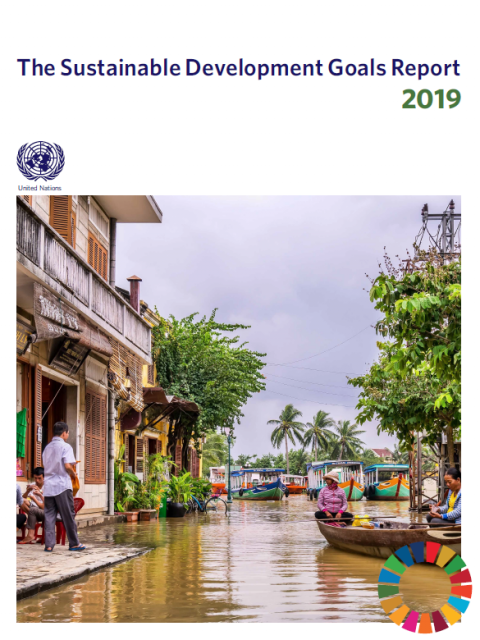 The Sustainable Development Goals Report 2019 سنة النشر: 2019 المؤلف المؤسسي: United Nations (UN) Four years after signing the 2030 Agenda for Sustainable Development, countries have taken action to integrate the Goals and targets into their national development plans and to align policies and institutions behind them. The Sustainable Development Goals Report 2019 uses the latest available data to track global progress on the SDGs and to take stock of how far we have come in realizing our commitments. The report shows that, while advances have been made in some areas, monumental challenges remain. The evidence and data spotlight areas that require urgent attention and more rapid progress to realize the 2030 Agenda’s far-reaching vision. Member States agree that these challenges and commitments are interrelated and call for integrated solutions. It is therefore imperative to take a holistic view of the 2030 Agenda and to identify the highest impact areas in order to target interventions. The most urgent area for action is climate change. If we do not cut record-high greenhouse gas emissions now, global warming is projected to reach 1.5°C in the coming decades. As we are already seeing, the compounded effects will be catastrophic and irreversible: increasing ocean acidification, coastal erosion, extreme weather conditions, the frequency and severity of natural disasters, continuing land degradation, loss of vital species and the collapse of ecosystems. These effects, which will render many parts of the globe uninhabitable, will affect the poor the most. They will put food production at risk, leading to widespread food shortages and hunger, and potentially displace up to 140 million people by 2050. The clock for taking decisive actions on climate change is ticking. The other defining issue of our time is increasing inequality among and within countries. Poverty, hunger and disease continue to be concentrated in the poorest and most vulnerable groups of people and countries. Over 90 per cent of maternal deaths occur in low- and middle-income countries. Three quarters of all stunted children live in Southern Asia and sub-Saharan Africa. People living in fragile States are twice as likely to lack basic sanitation, and about four times as likely to lack basic drinking water services as people in non-fragile situations. Youth are three times more likely to be unemployed than adults. Women and girls perform a disproportionate share of unpaid domestic work and lack autonomy in decision-making. Just as problems are interrelated, the solutions to poverty, inequality, climate change and other global challenges are also interlinked. Valuable opportunities exist to accelerate progress by examining interlinkages across Goals. For example, tackling climate change requires a shift to clean energy, reversing the trend in forest loss, and changing our production and consumption patterns. Promoting sustainable agriculture can help reduce both hunger and poverty, since close to 80 per cent of those who are extremely poor live in rural areas. Increasing access to safe drinking water, sanitation and hygiene can save millions of lives per year and improve school attendance. Improving proficiency in reading and mathematics of some 200 million children who are falling behind in sub-Saharan Africa will help them climb out of poverty and ultimately enable the region to better compete in the global marketplace. This report also highlights the importance of investing in data for the full implementation of the 2030 Agenda. Most countries do not regularly collect data for more than half of the global indicators. The lack of accurate and timely data on many marginalized groups and individuals makes them “invisible” and exacerbates their vulnerability. While considerable effort has been made to address these data gaps over the past four years, progress has been limited. Increased investment is urgently needed to ensure that adequate data are available to inform decision-making on all aspects of the 2030 Agenda. Towards that end, the Dubai Declaration, launched at the second World Data Forum in October 2018, outlines a demand-driven funding mechanism under Member States’ oversight that will respond quickly and efficiently to the priorities of national statistical systems.
 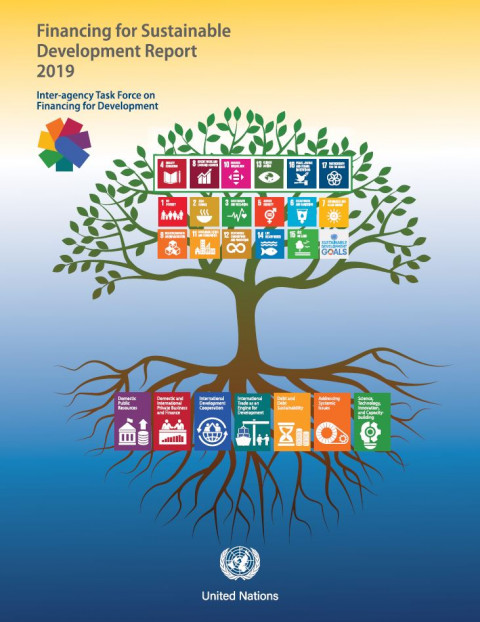 Financing for Sustainable Development Report 2019: Report of the Inter-agency Task Force on Financing for Development سنة النشر: 2019 المؤلف المؤسسي: United Nations (UN) This report provides a comprehensive assessment of the state of sustainable finance. Prepared by more than 60 UN agencies, programmes and offices and other relevant international organizations, the report puts forward a set of policy recommendations for achieving tangible progress on financing for sustainable development in 2019 and beyond.The report warns that creating favorable conditions is becoming more challenging. Rapid changes in technology, geopolitics, and climate are remaking our economies and societies, and existing national and multilateral institutions -- which had helped lift billions out of poverty -- are now struggling to adapt. Confidence in the multilateral system has been undermined, in part because it has failed to deliver returns equitably, with most people in the world living in countries with increasing inequality.
  Achieving SDG4 for Children and Youth Affected by Crisis سنة النشر: 2019 المؤلف المؤسسي: Inter-agency Network for Education in Emergencies (INEE) With the Sustainable Development Goal 4 (SDG4), the global community committed to ensuring a quality education for all children and youth. Despite this promise, children and youth in crisis contexts continue to be neglected. We will never achieve SDG4 unless all children and youth affected by conflict and crisis are able to access and attend school and learn in a quality, safe, relevant and inclusive education environment. There is an urgent need for governments and the international community to make and adhere to political, financial and legal commitments if we truly are to leave no child behind. This brief offers recommendations for addressing the disparities in safe, quality, inclusive education for children affected by crisis. It begins by highlighting key areas for policy and practice, and looks at ways to use the various tools developed by the Inter-agency Network of Education in Emergencies (INEE). It takes a look at overall themes and trends, as well as the specific issues of gender disparities, the importance of supporting teachers, children’s psycho-social wellbeing and the protection and safety of education in conflict.
 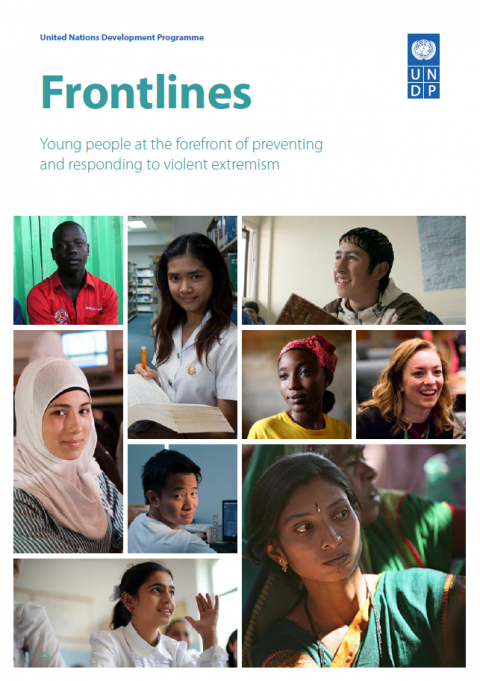 Frontlines - Young people at the forefront of preventing and responding to violent extremism سنة النشر: 2019 المؤلف المؤسسي: United Nations Development Programme (UNDP) The Frontlines global report was developed by the United Nations Development Programme (UNDP), under the umbrella of the UNDP Youth Global Programme for Sustainable Development and Peace (Youth-GPS 2016–2020), and in collaboration with the Oslo Governance Centre (OGC). This new global research initiative was made possible with generous support by the Government of Norway. The report puts forward and synthesizes data from field case studies/focus group discussions, a mapping of youth-led actions in the five regions, a global literature review, and a global survey on Youth and countering and preventing violent extremism for practitioners, to better understand young people’s aspirations and perceptions and improve programming. It is titled “Frontlines” in recognition of the fact that young people are already at the forefront of efforts to address and prevent violent extremism (PVE). Effective and long-term prevention approaches require the active support of, and investment in, young people’s holistic development priorities, their initiatives and their participation in decision-making.
 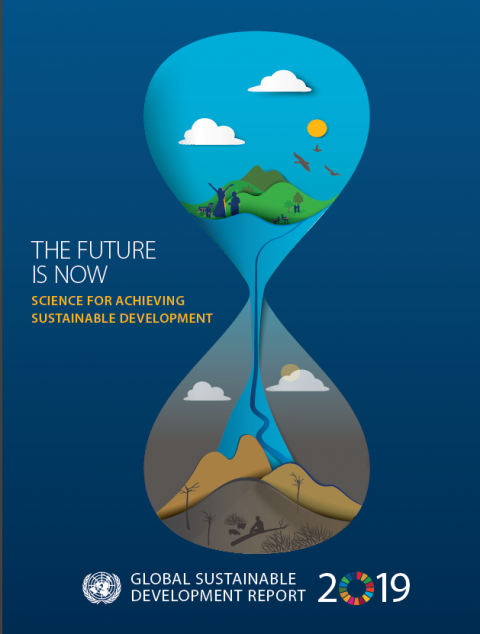 Global Sustainable Development Report 2019: The Future is Now سنة النشر: 2019 المؤلف المؤسسي: United Nations (UN) The Report, requested by all countries to evaluate progress on the 2030 Sustainable Development Agenda, is the first of its kind since the landmark Sustainable Development Goals (SDGs) were adopted four years ago. Entitled “The Future is Now: Science for Achieving Sustainable Development,” the report finds that the current development model is not sustainable, and the progress made in the last two decades is in danger of being reversed through worsening social inequalities and potentially irreversible declines in the natural environment that sustains us. The scientists concluded that a far more optimistic future is still attainable, but only by drastically changing development policies, incentives and actions.The report argues that understanding the interconnections between the individual SDGs and the concrete systems that define society today will be essential to devise policies that manage difficult trade-offs.