
الموارد
استكشف مجموعة واسعة من الموارد القيمة حول تعليم المواطنة العالمية لتعميق فهمك وتعزيز البحث والمناصرة والتعليم والتعلم.
تم العثور على 2,668 نتيجة
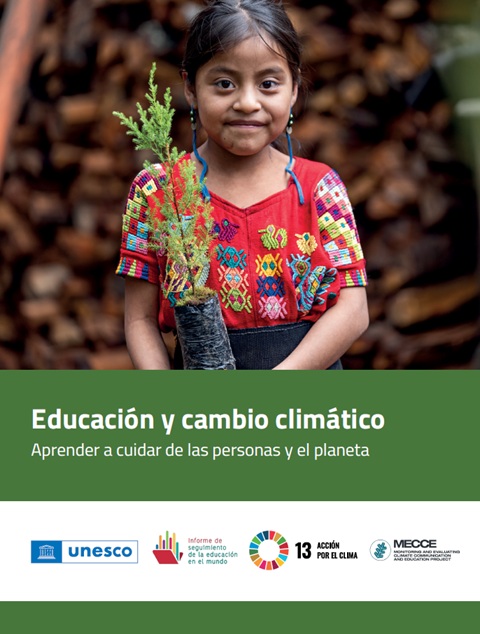 Educación y cambio climático: aprender a cuidar de las personas y el planeta سنة النشر: 2024 المؤلف المؤسسي: Global Education Monitoring Report Team | Monitoring and Evaluating Climate Communication and Education Project (MECCE) | University of Sakatchewan ¿Cómo puede la educación conducir a la acción contra el cambio climático?A pesar de las sólidas pruebas existentes sobre la repercusión de la educación en el logro de otros objetivos de desarrollo y la función que desempeña en el desarrollo de la capacidad profesional para las transiciones hacia el desarrollo sostenible, la educación suele estar ausente de las consideraciones estratégicas, políticas, de planificación y de financiación de otros sectores.El Informe de seguimiento de la educación en el mundo presenta una nueva serie destinada a fomentar el diálogo sobre la interrelación de la educación con los demás Objetivos de Desarrollo Sostenible. El primer documento de la serie se centra en el cambio climático, y empieza por analizar el creciente impacto del cambio climático en la educación antes de pasar a abordar la función de la educación en la acción climática.La contribución de la educación al desarrollo de capacidades profesionales para la transición a una economía verde está en cierta medida infravalorada. Al mismo tiempo, existe la conciencia de que el aprendizaje, tanto formal como no formal e informal, desempeña una función esencial a la hora de motivar la acción en materia de mitigación del cambio climático y adaptación a sus efectos.Sin embargo, la existencia de una correlación positiva entre el nivel de educación y los niveles de consumo insostenibles, así como la falta de conclusiones de muchas investigaciones sobre la repercusión directa de la educación en la mitigación del cambio climático y la adaptación a sus efectos, han contribuido en parte a que se otorgue escasa prioridad a la educación en las agendas mundiales y nacionales sobre el cambio climático.En este documento se sostiene que es necesario adaptar la educación sobre el cambio climático para que desarrolle todo su potencial. El paradigma educativo no puede basarse únicamente en la transferencia de conocimientos, sino que debe centrarse en el aprendizaje socioemocional y orientado a la acción. Gran parte de la investigación se ha centrado en analizar el logro educativo y los resultados que se alcanzan mediante el aprendizaje cognitivo. Por ello, es necesario seguir investigando para evaluar otros factores mediante los cuales la educación puede influir en los comportamientos y motivar la acción contra el cambio climático. Estas investigaciones son necesarias para formular paquetes de reformas educativas viables que mejoren los planes de estudios, refuercen la preparación de las escuelas y los sistemas educativos para el cambio climático, impliquen a los educandos y preparen a los educadores en consecuencia.
  National identity and xenophobia in an ethnically divided society سنة النشر: 2005 المؤلف: Noah Lewin Epstein | Asaf Levanon المؤلف المؤسسي: UNESCO Recent studies have suggested that national identity is empirically related to negative sentiments of individuals towards foreigners. This type of analysis has hitherto been based on the notion that xenophobia is shaped by the specific nature of national identity in a given society. Representing a stronger and more exclusive perception of national identity, ethnic national identity (compared with civic national identity) is expected in this line of research to result in less favourable perceptions of immigrants. In this paper we expand this approach by arguing that, in deeply divided societies, national identity itself may have different meanings among different social groups. L'identité nationale et la xénophobie dans une société ethniquement divisée سنة النشر: 2005 المؤلف: Noah Lewin Epstein | Asaf Levanon المؤلف المؤسسي: Organisation des Nations Unies pour l'éducation, la science et la culture (UNESCO) Des études récentes ont suggéré que l'identité nationale est empiriquement associée à des sentiments négatifs des individus envers les étrangers. Ce type d'analyse a été jusqu'ici fondée sur la notion que la xénophobie est façonnée par la nature spécifique de l'identité nationale dans une société donnée. Représenter une perception plus forte et plus exclusive de l'identité nationale, l'identité nationale ethnique (par rapport à l'identité nationale civique) est attendue dans cette ligne de recherche pour aboutir à la perception moins favorable des immigrants. Dans cet article, nous étendre cette approche en faisant valoir que, dans les sociétés profondément divisées, l'identité nationale elle-même peut avoir des significations différentes entre les différents groupes sociaux. نحو صالح مشـترك عاملي؟ إعـادة التفكير في التـربـيــة والتعليم سنة النشر: 2015 المؤلف المؤسسي: منظمة الأمم المتحدة للتربية والعلم والثقافة (UNESCO) The changes in the world today are characterized by new levels of complexity and contradiction. These changes generate tensions for which education is expected to prepare individuals and communities by giving them the capability to adapt and to respond. This publication contributes to rethinking education and learning in this context. It builds on one of UNESCO’s main tasks as a global observatory of social transformation with the objective of stimulating public policy debate.It is a call for dialogue among all stakeholders. It is inspired by a humanistic vision of education and development, based on respect for life and human dignity, equal rights, social justice, cultural diversity, international solidarity, and shared responsibility for a sustainable future. These are the fundamentals of our common humanity. This book enhances the vision provided by the two landmark UNESCO publications: Learning to Be: The world of education today and tomorrow (1972), the ‘Faure Report’, and Learning: The treasure within (1996), the ‘Delors Report 反思教育:向“全球共同利益”的理念转变? سنة النشر: 2015 المؤلف المؤسسي: 联合国教科文组织 (UNESCO) The changes in the world today are characterized by new levels of complexity and contradiction. These changes generate tensions for which education is expected to prepare individuals and communities by giving them the capability to adapt and to respond. This publication contributes to rethinking education and learning in this context. It builds on one of UNESCO’s main tasks as a global observatory of social transformation with the objective of stimulating public policy debate.It is a call for dialogue among all stakeholders. It is inspired by a humanistic vision of education and development, based on respect for life and human dignity, equal rights, social justice, cultural diversity, international solidarity, and shared responsibility for a sustainable future. These are the fundamentals of our common humanity. This book enhances the vision provided by the two landmark UNESCO publications: Learning to Be: The world of education today and tomorrow (1972), the ‘Faure Report’, and Learning: The treasure within (1996), the ‘Delors Report’.
  Education 2030: Incheon declaration and framework for action towards inclusive and equitable quality education and lifelong learning for all سنة النشر: 2015 المؤلف المؤسسي: UNESCO | United Nations Development Programme (UNDP) | United Nations Population Fund (UNFPA) | UN. Office of the United Nations High Commissioner for Refugees (UNHCR) | United Nations Children's Fund (UNICEF) | United Nations Entity for Gender Equality and the Empowerment of Women (UN Women) | World Bank This framework — painstakingly drafted over many months with input from governments, international agencies, civil society and experts — provides guidance for implementing the education commitments made in the 2030 Agenda for Sustainable Development at a national, regional and global level. In particular: it aims at mobilizing all countries and partners around Sustainable Education Goal 4 and its targets;it proposes ways of implementing, coordinating, financing and monitoring the new commitments; andit proposes indicative strategies which countries may wish to draw upon in developing their plans, taking into account different national realities, capacities and levels of development and respecting national policies and priorities. 교육 2030 인천선언과 실행계획: 포용적이고 공평한 양질의 교육과 모두를 위한 평생학습을 향해 سنة النشر: 2015 المؤلف المؤسسي: 유네스코 | United Nations Development Programme (UNDP) | United Nations Population Fund (UNFPA) | UN. Office of the United Nations High Commissioner for Refugees (UNHCR) | United Nations Children's Fund (UNICEF) | United Nations Entity for Gender Equality and the Empowerment of Women (UN Women) | World Bank 정부, 국제기구, 시민사회와 전문가의 조언을 받아 몇 달 동안 많은 노력을 기울여 초안이 작성된 이 실행계획은 지속가능한 발전을 위한 2030 아젠다의 국가적, 지역적, 세계적 단계에서의 실현을 위한 교육의 역할에 대한 실천 가이드를 제공한다. 이는 모든 국가와 지속가능목표 4와 그 대상을 둘러싼 파트너들을 움직이도록 하는 데에 그 목적을 둔다.이 실행계획은 새로운 역할에 대한 실천, 협력, 자금조달과 관찰 방안을 제안한다.이 실행계획은 각 국가들이 서로 다른 국가적 상황과 역량, 발전 단계 및 각국의 정책과 우선순위를 존중한 계획을 세울 수 있도록 전략을 보여준다. Education 2030: Déclaration d'Incheon et Cadre d'action: vers une éducation inclusive et équitable de qualité et un apprentissage tout au long de la vie pour tous سنة النشر: 2016 المؤلف المؤسسي: Organisation des Nations Unies pour l'éducation, la science et la culture (UNESCO) | United Nations Development Programme (UNDP) | United Nations Children's Fund (UNICEF) | United Nations Entity for Gender Equality and the Empowerment of Women (UN Women) | World Bank | United Nations Population Fund (UNFPA) | UN. Office of the United Nations High Commissioner for Refugees (UNHCR) This framework — painstakingly drafted over many months with input from governments, international agencies, civil society and experts — provides guidance for implementing the education commitments made in the 2030 Agenda for Sustainable Development at a national, regional and global level. In particular: it aims at mobilizing all countries and partners around Sustainable Education Goal 4 and its targets; it proposes ways of implementing, coordinating, financing and monitoring the new commitments; and it proposes indicative strategies which countries may wish to draw upon in developing their plans, taking into account different national realities, capacities and levels of development and respecting national policies and priorities.
  Textbooks for Sustainable Development: A Guide to Embedding سنة النشر: 2017 المؤلف المؤسسي: UNESCO | Mahatma Gandhi Institute of Education for Peace and Sustainable Development (MGIEP) This guidebook introduces the approach of embedding education for sustainable development into core subjects, building on the German initiative as well as consolidating other existing efforts. This ambitious work began when the UNESCO Mahatma Gandhi Institute of Education for Peace and Sustainable Development (MGIEP), with support from Engagement Global gGmbH, brought together 30 international experts in mathematics, sciences, languages, geography and education for sustainable development in Bangalore, India, in June 2016. These experts co-drafted this guidebook. This publication is designed as a guide for stakeholders in textbook development – education ministries, national curriculum authorities, textbook writers and publishers – to help them produce a new generation of textbooks. Such textbooks will make a clear departure from the mechanistic transmission of information and procedural knowledge devoid of meaning and contextual relevance. They will also advocate a new vision of learning and contribute to fostering young people’s competencies and capabilities to shape more peaceful and sustainable societies. Competencies such as critical and systemic thinking, appreciation of diversity, empathy and commitment to change are the key goals of this ambitious publication. Учебные пособия по устойчивому развитию. Руководство по внедрению سنة النشر: 2017 المؤلف المؤسسي: Организация Объединенных Наций по вопросам образования, науки и культуры (UNESCO) | Mahatma Gandhi Institute of Education for Peace and Sustainable Development (MGIEP) Данное руководство представляет подход по внедрению образования для устойчивого развития в учебные дисциплины, основываясь на опыте Германии, а также объединяя другие существующие усилия. В июне 2016 года Институт Махатмы Ганди по образованию в интересах мира и устойчивого развития ЮНЕСКО, при поддержке Engagement Global gGmbH, собрал в г. Бангалор, Индия, 30 международных экспертов по математике, естественным наукам, языкам, географии и образованию для устойчивого развития. Эти эксперты участвовали в разработке данного руководства.Данная публикация разработана в качестве руководства для заинтересованных сторон – министерств образования, органов, разрабатывающих государственные образовательные стандарты и учебные планы, авторов и издателей учебников в помощь и поддержку в создании ими учебных материалов нового поколения. Такие учебники станут очевидным отступлением от механической передачи информации и методических знаний, лишенных смысла и контекстуальной значимости. Они также поддержат новое видение обучения и будут способствовать укреплению компетенции и возможностей молодежи в создании более мирных и устойчивых обществ. Ключевыми целями этого амбициозного руководства являются развитие таких компетенции, как критическое и систематическое мышление, правильное восприятие разнообразия, сопереживание и приверженность изменениям.