
الموارد
استكشف مجموعة واسعة من الموارد القيمة حول تعليم المواطنة العالمية لتعميق فهمك وتعزيز البحث والمناصرة والتعليم والتعلم.
تم العثور على 2,781 نتيجة
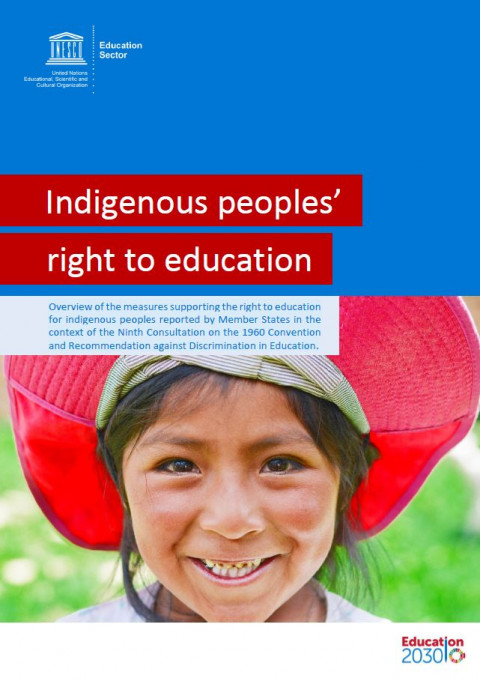 Indigenous Peoples’ Right to Education سنة النشر: 2019 المؤلف المؤسسي: UNESCO Among the many inequalities that indigenous peoples face, the lack of access to quality education is particularly blatant. The 2030 Agenda commitment to ‘leave no one behind’, brings new impetus to ensure that indigenous peoples’ priorities are heard. In 2017, UNESCO adopted the Policy on engaging with indigenous peoples. Concurrently, as part of its mandate, UNESCO monitors the implementation of the 1960 Convention and Recommendation against Discrimination in Education. During the Ninth Consultation on the implementation of this instrument, several Member States reported upon measures they have taken in relation to the right to education for indigenous peoples. This document (Indigenous Peoples’ Right to Education: Overview of the Measures Supporting the Right to Education for Indigenous Peoples Reported by Member States in the Context of the Ninth Consultation on the 1960 Convention and Recommendation against Discrimination in Education) compiles practical examples extracted from these reports for information sharing and advocacy.
 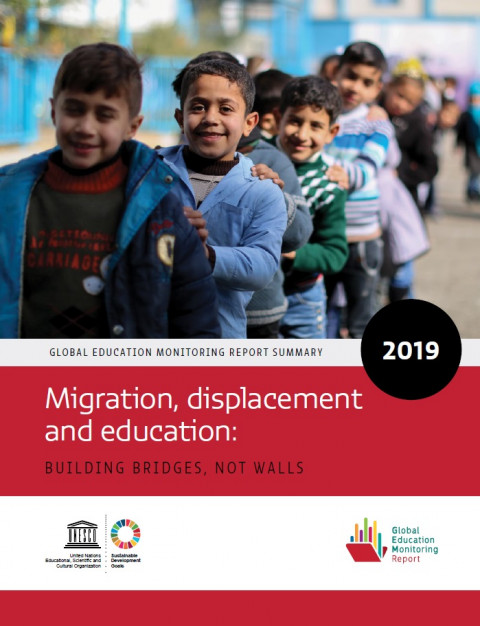 [Резюме] РЕЗЮМЕ ВСЕМИРНОГО ДОК ЛАДА ПО МОНИТОРИНГ У ОБРАЗОВАНИЯ 2019 г .: Миграция, перемещенные лица и образование: наводить мосты, а не возводить препятствия سنة النشر: 2018 المؤلف المؤسسي: Организация Объединенных Наций по вопросам образования, науки и культуры (UNESCO) | Global Education Monitoring Report Team В докладе четко указан один из главных вызовов: как обеспечить поддержку учителей в их инклюзивной работе. В нем увлекательно рассказывается об истории человечества и о феномене миграции, существующем с незапамятных времен. Я приглашаю вас рассмотреть содержащиеся в нем рекомендации и действовать в соответствии с ними. Настоящий доклад является важнейшим информационным источником для этих договоров, охватывающим вопросы политики, которые, среди прочего, касаются сезонных мигрантов, объединения сельских школ, межкультурных учебных программ, включения беженцев в национальные системы образования и борьбы с сегрегацией, признания квалификаций, целенаправленного финансирования школ, более эффективной гуманитарной помощи образованию и подготовленности учителей к работе в классах с разнообразным составом учащихся в чрезвычайных ситуациях, в условиях затянувшегося кризиса и в новых обстоятельствах, характерных для сегодняшнего дня. Настоящий доклад также содержит обращенный к странам призыв рассматривать образование как средство для регулирования миграции и перемещений и как возможность для тех, кто в этой возможности нуждается. [요약문] 세계 교육 현황 보고서 요약본: 이주, 강제이주와 교육: 장벽이 아닌 가교 만들기 سنة النشر: 2018 المؤلف المؤسسي: 유네스코 | 세계교육현황보고서팀 『2019 세계 교육 현황 보고서』는 국경 내 및 국경 간, 자발적이거나 강제적인, 고용이나 교육을 위한 모든 인구 이동에 따른 이주 및 강제이주에 교육이 미치는 영향을 검토한다. 이 보고서는 또한 2030 지속가능발전의제에서 교육의 진전 상황도 평가한다. 다양성이 증가하면서 이 보고서는 교육이 어떻게 포용적인 사회를 구축하고, 어떻게 사람들이 관용을 넘어서서 함께 사는 법을 배울 수 있는지를 분석한다. 교육을 평등하게 제공하면 다리를 건설하지만, 교육을 불평등하게 제공하면 이주민, 난민 및 수용국 지역사회 사이에 벽을 쌓는다.이주민과 난민에 대한 두 가지 새로운 글로벌 콤팩트는 교육의 역할을 인식하고 ‘어느 누구도 뒤처지지 않게 한다’는 전 세계적인 약속과 일치하는 목표를 설정한다. 이 보고서는 이 글로벌 콤팩트를 위한 중요한 툴킷(toolkit)으로 다양한 정책 이슈를 다루고 있다. 즉, 계절 이주자, 농촌 학교 통합, 문화간 교육과정, 국가 교육제도에 난민 포용 및 분리 폐지, 자격 인정, 학교 기금 목표 설정, 보다 효과적인 인도주의적 교육 원조, 그리고 위기 상황, 장기화된 상황, ‘뉴 노멀(new normal)’ 상황에서 다양한 교실을 위한 교사의 준비 등을 포함한다. 이 GEM 보고서 요약본은 국가들이 교육을 이주와 강제이주를 관리하는 도구로 보고, 이를 필요로 하는 사람들을 위한 기회로 간주할 것을 요구한다.
  Mainstreaming SDG4-Education 2030 in sector-wide policy and planning: technical guidelines for UNESCO field offices سنة النشر: 2016 المؤلف المؤسسي: UNESCO Mainstreaming SDG4-Education 2030 in sector-wide policy and planning offers technical guidelines for UNESCO field offices to ensure adequate technical support to national authorities. The guidelines take into account the different profiles of countries’ need and capacities, thus avoiding a one-size-fits-all approach. The document contains resources and pointers that can be combined and tailored to fit the particular context of each country. In all cases, UNESCO is expected to ensure that all the relevant information about SDG4-Education 2030 is properly disseminated in these guidelines. Field staff will adapt the guidelines provided here to the country they are serving to ensure that UNESCO plays its role as the leading United Nations agency in the field.
 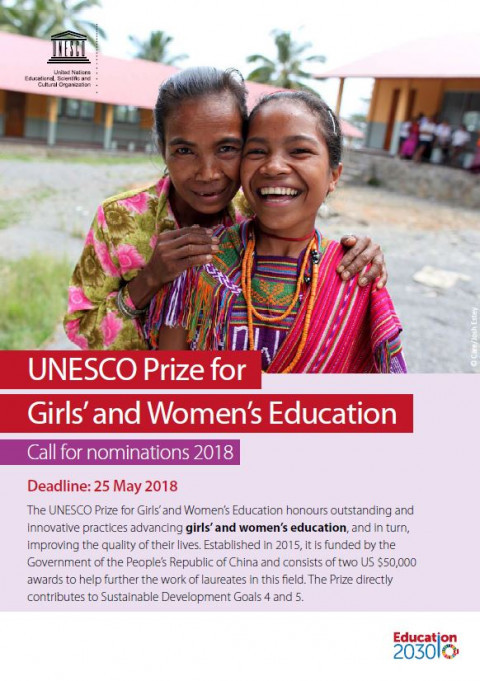 UNESCO Prize for Girls' and Women's Education: Call for Nominations 2018 سنة النشر: 2018 المؤلف المؤسسي: UNESCO The UNESCO Prize for Girls’ and Women’s Education honours outstanding and innovative practices advancing girls’ and women’s education, and in turn, improving the quality of their lives. Established in 2015, it is funded by the Government of the People’s Republic of China and consists of two US $50,000 awards to help further the work of laureates in this field. The Prize directly contributes to Sustainable Development Goals 4 and 5. Prix UNESCO pour l'éducation des filles et des femmes: appel à candidatures 2018 سنة النشر: 2018 المؤلف المؤسسي: Organisation des Nations Unies pour l'éducation, la science et la culture (UNESCO) Le Prix UNESCO pour l'éducation des filles et des femmes honore les pratiques exemplaires et novatrices qui font progresser l'éducation des filles et des femmes et, par conséquent, améliorent la qualité de leur vie. Crée en 2015, il est financé par le gouvernement de la République populaire de Chine et consiste de deux prix de 50 000 dollars des États-Unis afin d’aider les lauréats à poursuivre leur travail dans ce domaine. Le prix contribue directement aux objectifs de développement durable 4 et 5.
 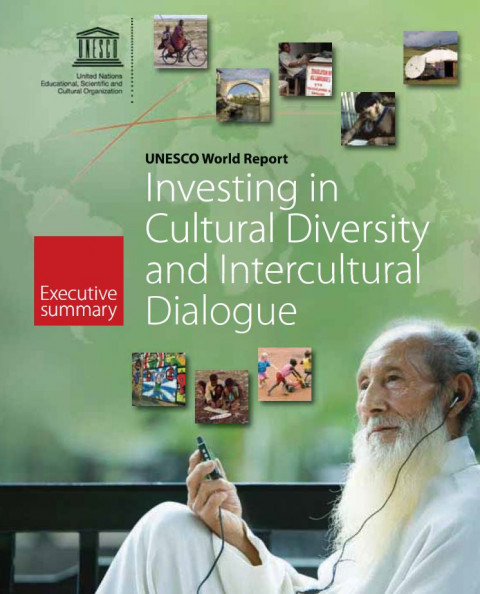 تقرير اليونسكو العالمي: الاستثمار في التنوع الثقافي والحوار بين الثقافات سنة النشر: 2009 المؤلف المؤسسي: منظمة الأمم المتحدة للتربية والعلم والثقافة (UNESCO) أن المعاني التي ارتبطت بهذا المصطلح، الذي يكاد يشمل كل شيء، متنوعة تماماً كما أنها كثيرة التغير. فالبعض يعتبر التنوع الثقافي عاملاً ايجابياً في حد ذاته، فهو يدلّ على تقاسم الثروة التي تجسدها كل ثقافة من ثقافات العالم، وبذلك يوضح الروابط التي توحدنا جميعاً في سياق عمليات التبادل والحوار. ويعتبر آخرون أن الفوارق الثقافية هي التي تجعلنا نعجز عن تبيّن إنسانيتنا المشتركة وهي بالتالي تكمن في جذور الكثير من النزاعات. ويصبح هذا التشخيص الأخير أقوى احتمالاً اليوم مع ما نتج عن العولمة من زيادة في نقاط التفاعل والاحتكاك بين الثقافات أدت إلى توترات وانسحابات ومطالبات تتعلق بالهوية، وبخاصة مما له طابع ديني، أصبحت مصادر محتملة للنزاع. ولذا، فإن التحدي الأساسي يتمثل في طرح رؤية منسجمة متماسكة للتنوع الثقافي توضح أن التنوع الثقافي، بدلاً من أن يكون مصدراً للخطر، يمكن أن يفيد العمل على صعيد المجتمع الدولي. وهذا بالذات هو الهدف الأساسي للتقرير الحالي.
 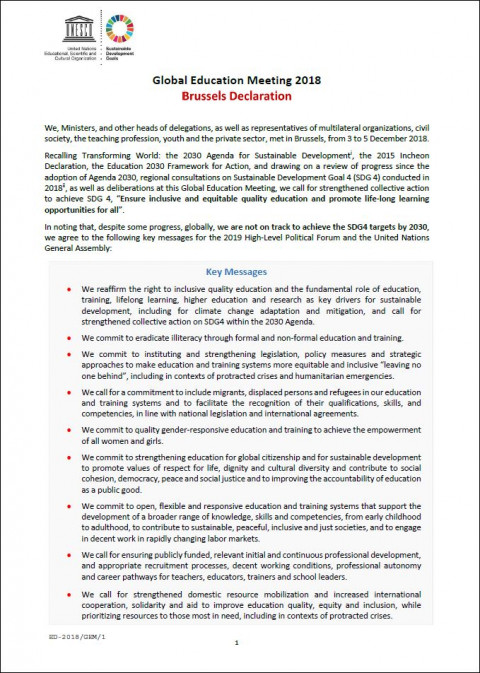 Global Education Meeting 2018: Brussels Declaration سنة النشر: 2018 المؤلف المؤسسي: UNESCO Ministers, and other heads of delegations, as well as representatives of multilateral organizations, civil society, the teaching profession, youth and the private sector, met in Brussels, from 3 to 5 December 2018. This document describes key messsages and commitments for the 2019 High-Level Political Forum and the United Nations General Assembly.
  The Intersections Between Education, Migration and Displacement are not gender-neutral (Global Education The Intersections between Education, Migration and Displacement Monitoring Report, 2019) سنة النشر: 2019 المؤلف المؤسسي: UNESCO The 2019 Global Education Monitoring Report emphasized the need to include migrants and refugees in national education systems, and also called for more planning to respond to the needs of these populations. As this short review has outlined, many of these needs have gender dimensions. These range from the vulnerability of rural‑to‑urban migrant girls who end up as domestic workers deprived of education opportunities to the vulnerability of refugee boys, often unaccompanied, who have limited opportunities to develop their skills. They encompass the deskilling of international migrant women in the ‘global care chain’ as well as the increasing chore burden that left‑behind girls face when a parent migrates.Still, research on the experiences of girls and women or boys and men in migration and displacement contexts – and how these can be affected by education – remains limited. More analysis on the intersection of gender, education, migration and displacement is needed on a wide variety of issues, including the gender-specific dimensions of remittance use, gender-responsive teaching practices and the empowerment impact of non-formal education opportunities. To fulfil their potential for instilling resilience, education systems need to recognize these needs and respond to them. Las intersecciones entre educación, migración y desplazamiento no son género-neutrales (Informe de Seguimiento de la Educación en el Mundo, 2019) سنة النشر: 2019 المؤلف المؤسسي: Organización de las Naciones Unidas para la Educación, la Ciencia y la Cultura (UNESCO) El Informe de Seguimiento de la Educación en el Mundo de 2019 enfatizaba la necesidad de incluir a migrantes y refugiados en los sistemas educativos mundiales, y también marcaba la necesidad de aumentar las planificaciones que busquen dar respuestas a las necesidades de estas poblaciones. Como desarrolla este corto informe, muchas de estas necesidades tienen dimensiones vinculadas al género. Estas van desde las vulnerabilidades de niñas migrantes de contextos tanto rurales como urbanos que terminan como trabajadoras domésticas siendo privadas de oportunidades educativas, hasta las vulnerabilidades de niños varones refugiados, muchas veces sin acompañantes, que tienen limitadas oportunidades de desarrollar sus habilidades. Ellas abarcan tanto la falta de cualificación de las mujeres migrantes en la ‘cadena global de cuidado’ como el incremento de la carga de trabajos que recae sobre niñas que han sido dejadas de lado cuando el padre o la madre migra. Más allá de esto, investigaciones sobre las experiencias de mujeres y niñas o de hombres y niños en contextos de migración y desplazamiento – y cómo estos pueden ser afectados por la educación – continúan siendo limitadas. Es preciso ahondar en el análisis de la intersección entre género, educación, migración y desplazamiento en una gran variedad de asuntos, incluyendo las dimensiones género-específicas de uso de remesas, repuestas a prácticas educativas en base a género y el impacto que tienen sobre el empoderamiento las oportunidades de educación no formal. Para cumplir con el potencial de instalar resiliencia, los sistemas educativos precisan reconocer todas estas necesidades y responder a ellas.