
الموارد
استكشف مجموعة واسعة من الموارد القيمة حول تعليم المواطنة العالمية لتعميق فهمك وتعزيز البحث والمناصرة والتعليم والتعلم.
تم العثور على 2,668 نتيجة
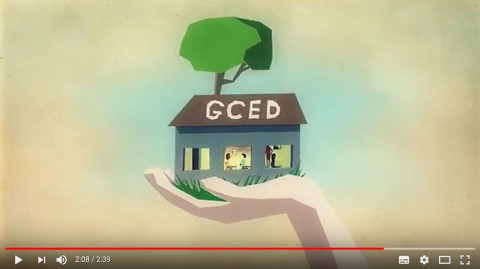 [Vidéo] Apprendre à vivre ensemble dans la paix par l’éducation à la citoyenneté mondiale سنة النشر: 2016 المؤلف المؤسسي: Organisation des Nations Unies pour l'éducation, la science et la culture (UNESCO) La vidéo de l'UNESCO sur le thème "Apprendre à vivre ensemble dans la paix par l’Éducation à la Citoyenneté Mondiale", explique l'importance de l'Éducation à la Citoyenneté Mondiale (ECM) dans un monde globalisé et de plus en plus interconnecté et interdépendant. ECM est essentiel de comprendre les interconnexions entre le local et le global et à favoriser un sentiment d'appartenance à une humanité commune. Il construit la motivation à assumer un rôle actif pour contribuer à un monde plus juste, pacifique, tolérante et durable. La vidéo montre également comment ECM peut être livré dans et à l'extérieur des écoles.
  Ensinando sobre o Holocausto na Escola : Informações e Propostas para Professores dos Ensinos Fundamental e Médio سنة النشر: 2014 المؤلف: Nilton Mullet Pereira | Ilton Gitz المؤلف المؤسسي: UNESCO This textbook aims at helping teachers of primary and secondary education to address the Holocaust theme in their classes. This book contains suggested activities, lists of books and films references to help pupils to make connections between the Holocaust and others genocides but also to develop critical thinking and respect for human rights.
  UNESCO and Gender Equality in Sub-Saharan Africa: Innovative Programmes, Visible Results المؤلف المؤسسي: UNESCO For over twenty years, UNESCO’s work in Africa has been undertaken in a specific framework with a range of institutional mechanisms designed to help translate into action its priorities: Africa and gender equality. During this period, UNESCO achieved important results in the areas covered by its mandate to promote gender equality.This publication highlights UNESCO’s contribution to the implementation of the African Union’s Agenda 2063 and the 2030 Agenda for Sustainable Development of the United Nations, in the field of gender equality in Africa, through examples of good practice, lessons learnt as well as suggestions and recommendations for the future. L'UNESCO et l'égalité des Genres en Afrique Subsaharienne: Des Programmes Novateurs, des Résultats Perceptibles المؤلف المؤسسي: Organisation des Nations Unies pour l'éducation, la science et la culture (UNESCO) Depuis plus d’une vingtaine d’années l’UNESCO a inscrit son action dans un cadre spécial assorti d’un ensemble de mécanismes institutionnels conçus pour appuyer l’opérationnalisation de ses Priorités: l’Afrique et l’égalité des genres. Au cours de cette période, l’UNESCO a été à l’origine d’importantes réalisations dans les domaines relevant de son mandat à travers la mise en oeuvre des programmes et activités novateurs.La présente publication met en exergue la contribution de l’UNESCO à la mise en oeuvre de l’Agenda 2063 de l’Union africaine et du Programme de développement durable à l’horizon 2030 dans le domaine de l’égalité des genres en Afrique, à travers des exemples de bonnes pratiques, de leçons apprises ainsi que des suggestions et recommandations pour le futur.
  Textbooks pave the way to sustainable development (Policy paper 28) سنة النشر: 2016 المؤلف المؤسسي: UNESCO This paper’s focus on textbooks is directly related to the global indicator established for Target 4.7, which seeks to measure the extent to which global citizenship education and education for sustainable development, including gender equality and human rights, are mainstreamed in national education policies, curricula, teacher education and student assessments. Textbooks are related mostly to policy implementation and curricular intentions but also to teacher preparation and student assessment. Rapport mondial de suivi sur l'éducation: document d'orientation سنة النشر: 2016 المؤلف المؤسسي: Organisation des Nations Unies pour l'éducation, la science et la culture (UNESCO) This paper’s focus on textbooks is directly related to the global indicator established for Target 4.7, which seeks to measure the extent to which global citizenship education and education for sustainable development, including gender equality and human rights, are mainstreamed in national education policies, curricula, teacher education and student assessments. Textbooks are related mostly to policy implementation and curricular intentions but also to teacher preparation and student assessment. Informe de seguimiento de la educatión en el mundo: documento de política سنة النشر: 2016 المؤلف المؤسسي: Organización de las Naciones Unidas para la Educación, la Ciencia y la Cultura (UNESCO) This paper’s focus on textbooks is directly related to the global indicator established for Target 4.7, which seeks to measure the extent to which global citizenship education and education for sustainable development, including gender equality and human rights, are mainstreamed in national education policies, curricula, teacher education and student assessments. Textbooks are related mostly to policy implementation and curricular intentions but also to teacher preparation and student assessment.
 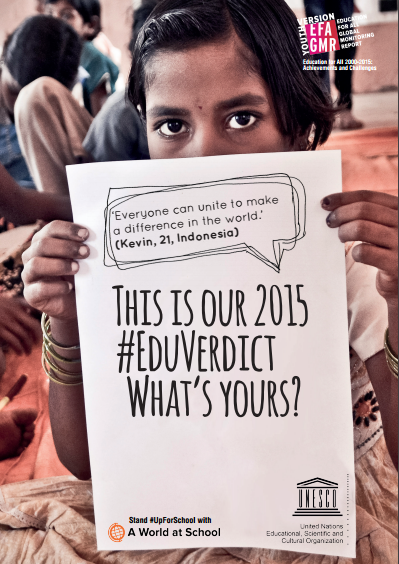 Education for All 2000-2015: Achievements and Challenges; Education for All Global Monitoring Report, 2015; Youth Version سنة النشر: 2015 المؤلف المؤسسي: UNESCO This report highlights the progress and challenges of education that countries have faced over 15 years, brining together the voices of young people to show how Education for All (EFA) has affected their lives and hope for the future. L'Education pour tous 2000-2015: progrès et enjeux, rapport mondial de suivi sur l'EPT, 2015, youth version سنة النشر: 2015 المؤلف المؤسسي: Organisation des Nations Unies pour l'éducation, la science et la culture (UNESCO) This report highlights the progress and challenges that countries have faced over 15 years, brining together the voices of young people to show how Education for All (EFA) has affected their lives. La Educación para Todos, 2000-2015: logros y desafíos, informe de seguimiento de la EPT en el mundo, 2015: youth version سنة النشر: 2015 المؤلف المؤسسي: Organización de las Naciones Unidas para la Educación, la Ciencia y la Cultura (UNESCO) This report highlights the progress and challenges that countries have faced over 15 years, brining together the voices of young people to show how Education for All (EFA) has affected their lives.