
الموارد
استكشف مجموعة واسعة من الموارد القيمة حول تعليم المواطنة العالمية لتعميق فهمك وتعزيز البحث والمناصرة والتعليم والتعلم.
تم العثور على 55 نتيجة
 Le guide qui rend ton évènement plus éco-citoyen المؤلف المؤسسي: eventecocitoyen Ce guide sert à faciliter le passage à l’action de tous et toutes en proposant des conseils, outils, témoignages et ressources pratiques pour rendre les concerts et/ou festivals de Belgique plus éco-citoyens ! Pour permettre un questionnement, une remise en question en soi, qui implique ensuite des changements de comportements. Ici on vous donne des conseils/trucs et astuces mais aussi des ressources pour vous permettre de réfléchir autrement, d’agrandir notre angle de vue. This guide serves: To help everyone take action by offering advice, tools, testimonials and practical resources to make Belgium's concerts and/or festivals more eco-citizen! To enable questioning, self-questioning, which then implies changes in behavior. Here we give you tips and tricks, but also resources to help you think differently, to widen our angle of vision.
  Vivir con la controversia: Cómo enseñar temas controvertidos mediante la Educación para la ciudadanía y los derechos humanos (EDC/HRE) Módulo de formación para el profesorado سنة النشر: 2015 المؤلف المؤسسي: European Union (EU) Learning how to engage in dialogue with people whose values are different from one’s own and to respect them is central to the democratic process and essential for the protection and strengthening of democracy and fostering a culture of human rights. ■ Yet in Europe young people do not often have an opportunity to discuss controversial issues in school because they are seen as too challenging to teach, e.g., issues to do with extremism, gender violence, child abuse, or sexual orientation. Unable to voice their concerns, unaware of how others feel or left to rely on friends and social media for their information, young people can be frustrated or confused about some of the major issues which affect their communities and European society today. In the absence of help from school, they might have no reliable means of dealing with these issues constructively and no one to guide them. ■ The idea for this Pack came out of a call from policy-makers and practitioners in a number of European countries for more effective training for teachers in the teaching of controversial issues.
  L’université de paix, ressources pédagogiques المؤلف المؤسسي: L'université de paix L'Université de Paix diffuse des outils pédagogiques et des articles de fond pour apprendre à mieux communiquer et développer des relations plus sereines et constructives.The University of peace distributes teaching tools and in-depth articles to help people learn to communicate better and develop calmer, more constructive relationships.
 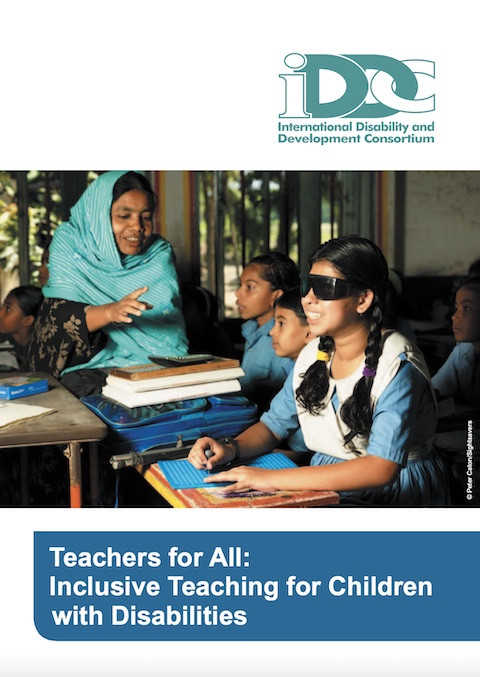 Teachers for All: Inclusive Teaching for Children With Disabilities سنة النشر: 2013 المؤلف: Ingrid Lewis | Sunit Bagree المؤلف المؤسسي: International Disability and Development Consortium (IDDC) Globally we need more well-trained and motivated teachers.Good teachers can help ensure that every child learns to their full potential from an early age and enters adult life well-equipped to be active citizens and support the development of their community and country. Many countries do not have enough teachers, let alone enough teachers who have received sufficiently high quality pre- and in-service training and access to continuing professional development. This paper first provides detail about the context and scale of the challenge. It then outlines five broad issues that need addressing if we are to prepare, recruit and support enough teachers, with appropriate skills, to educate every child – including those with disabilities.
 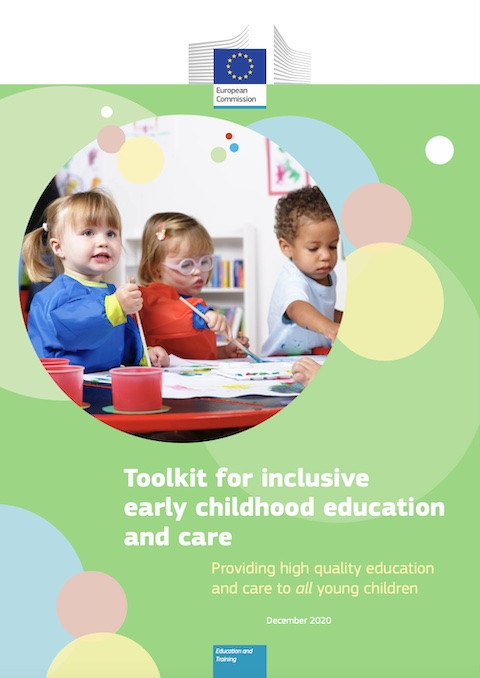 Toolkit for Inclusive Early Childhood Education and Care (ECEC): Providing High Quality Education and Care to All Young Children سنة النشر: 2021 المؤلف المؤسسي: European Commission | European Union (EU) Early childhood education and care (ECEC) is the first step on the lifelong learning ladder. It provides young children with professional support to grow, learn and flourish. While it benefits all children, it is even more crucial to children who may face additional needs or difficulties due to individual or family circumstances, e.g. children living in poverty or precarious conditions, children with disabilities or special learning needs, or children from a migrant background or from a minority ethnic community. All children must therefore be able to benefit from high quality ECEC, independently from their individual or family circumstances. It helps them develop to the best of their abilities and supports their well-being. The European Union 2019 Council Recommendation for High-Quality Early Childhood Education and Care Systems offers a Quality framework for ECEC to support Member States to work towards achieving higher quality and more inclusive ECEC systems. The 2020 Communication from the European Commission on achieving the European Education Area by 2025 announced the release of a European toolkit for inclusion in ECEC, drawing on exchange of best practice and the input of experts and stakeholders. The Toolkit for inclusion in ECEC recalls political commitments made e.g. in the European Pillar of Social Rights, policy recommendations which have been adopted by EU Member States as well as research findings. They all converge towards the need and will to develop more inclusive ECEC systems and settings. To ensure equity for all children in accessing and benefitting from ECEC, the toolkit includes a set of practical solutions and measures to inspire ECEC policy makers at the national, regional or local level, as well as ECEC practitioners. It includes examples of good practice in ECEC settings and identifies useful ideas and resources to inspire leaders and staff across Europe to progress towards practice that is more inclusive. The toolkit aims to inspire decision-makers to use the examples of good practice to create appropriate conditions that can benefit all children and families.
 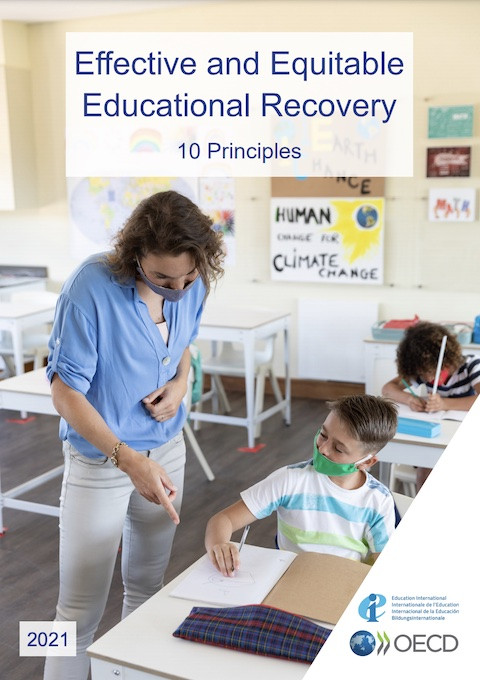 Effective and Equitable Educational Recovery: 10 Principles سنة النشر: 2021 المؤلف المؤسسي: Education International (EI) | Organisation for Economic Co-operation and Development (OECD) The COVID-19 pandemic has led to the frequent closure of school buildings in most countries in the world and has interrupted the school attendance of at least 1.2 billion students in 2020 and 2021. Although many education systems have been able to adapt in varying degrees, the pandemic has shown that countries’ current learning infrastructures are highly vulnerable to external shocks.While schools have shown great resilience in trying to compensate for the crisis, they need to be better prepared for similar challenges. Education systems must ensure the continuity of learning which must be the centrepiece of all considerations.Acknowledging the disruption that the health crisis has brought about and its likely impact on educational quality and equity, the OECD Secretariat and Education International have, based on their respective work during the pandemic, jointly established 10 principles that can facilitate the collaboration of education authorities, the teaching profession and their organisations to navigate the crisis effectively and reshape education systems after the pandemic to reach greater levels of educational quality and equity.Education systems around the world have been facing similar challenges but generated diverse approaches and experiences. The intention is also for these principles to contribute to a framework for international cooperation and peer learning.
  Building Bridges: Peace Education and Dialogue for Conflict Resolution سنة النشر: 2020 المؤلف المؤسسي: International Falcon Movement-Socialist Educational International (IFM-SEI) This toolkit addresses young people and educators who work with children and youth, in order to provide them with tools and resources on peace and conflict resolution. The activities of this toolkit are designed for young people who are active and willing to build their skills and knowledge on the topic. This toolkit will also provide resources for educators to share their knowledge on the topic and train young people to become peace advocates in the future. Building Bridges: Educación por la paz y el diálogo en la resolución de conflictos سنة النشر: 2020 المؤلف المؤسسي: International Falcon Movement-Socialist Educational International (IFM-SEI) Esta guía de herramientas está dirigida a jóvenes y educadoras que trabajan con niñas y jóvenes, con el fin de proporcionarles herramientas y recursos sobre la paz y la resolución de conflictos. Las actividades de estas herramientas están diseñadas para jóvenes activas y dispuestas a desarrollar sus habilidades y conocimientos sobre el tema. Esta guía también proporcionará recursos para que las educadoras compartan sus conocimientos y capaciten a jóvenes para que se conviertan en nuevas defensoras de la paz en el futuro.
 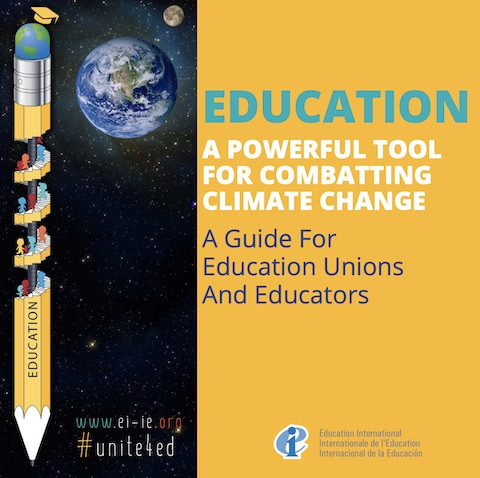 Education: A Powerful Tool for Combatting Climate Change; A Guide for Education Unions and Educators سنة النشر: 2019 المؤلف: Richard Langlois المؤلف المؤسسي: Education International (EI) This guide aims to provide EI member organisations with a tool for exploring the principal questions, issues and challenges arising from the climate crisis and how unions can respond. L'éducation: Un outil puissant pour lutter contre les changements climatiques; Guide pour les syndicats de l’éducation et les éducateur•rice•s سنة النشر: 2019 المؤلف: Richard Langlois المؤلف المؤسسي: Education International (EI) Ce guide vise à doter les organisations membres de l’IE d’un outil d’information explorant les principaux enjeux et défis que soulève la crise climatique ainsi que certaines pistes d’action pour les syndicats.