
الموارد
استكشف مجموعة واسعة من الموارد القيمة حول تعليم المواطنة العالمية لتعميق فهمك وتعزيز البحث والمناصرة والتعليم والتعلم.
تم العثور على 22 نتيجة
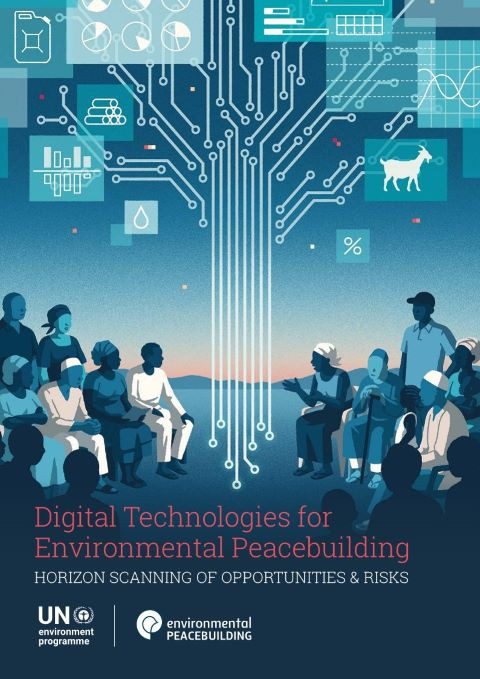 Digital Technologies for Environmental Peacebuilding : Horizon Scanning of Opportunities and Risks سنة النشر: 2024 المؤلف المؤسسي: United Nations Environment Programme (UNEP) This report specifically delves into how digital technologies can be harnessed to manage environmental and natural resource risks that contribute to insecurity and social conflict, as well as the opportunities they present for peacebuilding, cooperation, and social cohesion. It examines relevant use cases spanning the peace and security continuum and concludes with a set of important policy and governance recommendations. The report is designed to inform and contribute to significant upcoming frameworks addressing digital technologies, including the Summit of the Future and the Global Digital Compact.
 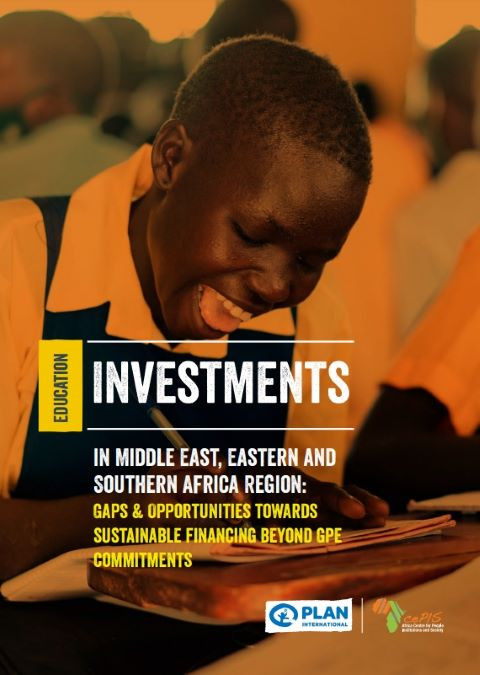 Education Investments in Middle East, Eastern and Southern Africa: Gaps & Opportunities Towards Sustainable Financing Beyond GPE Commitments سنة النشر: 2022 المؤلف المؤسسي: Plan International To achieve the goals of the global and continental agendas of repositioning access, equity, quality education and skills development as key drivers of inclusive growth and sustainable development, African governments must provide a level of predictable and sustainable investment in education. With these strategic investments, African countries can change the status quo, accelerate the pace of catching up with the developed countries and be able to compete in an increasingly technology and knowledge-based world where skills have become the “global currency of the 21st century”. Plan International in Middle East, Eastern and Southern Africa commissioned a study to assess the extent to which the Education Sector budget is adequate, gender-responsive and inclusive and to analyse education budget trends between 2019 and 2021. The focus was to generate concrete evidence regarding trends in education sector budget allocations and expenditure. Furthermore, due to the recent pandemic, the study aimed to compare current and previous allocations to detect trends/patterns in allocations and any reallocations due to COVID-19. Specifically, the study sought to: Analyse allocations (and expenditure) to the education sector with a particular focus on initiatives aimed at supporting the provision of gender-responsive and disability-inclusive education in line with the country policies; Assess the efficiency of resource allocation and use against planned expenditure; and Recommend effective strategies for CSOs and citizens to advocate for education budget increase to or above 20% of the national budget and 6% of GDP. The study focused on 10 countries in the region – Kenya, Uganda, Zambia, Malawi, Zimbabwe, South Sudan, Tanzania, Egypt, Somalia and Rwanda. With a multi-pronged research process of budget tracking and analysis, policy analysis, political economy analysis and varied data collection methods – the research findings and recommendations are ready for wider dissemination and use.
 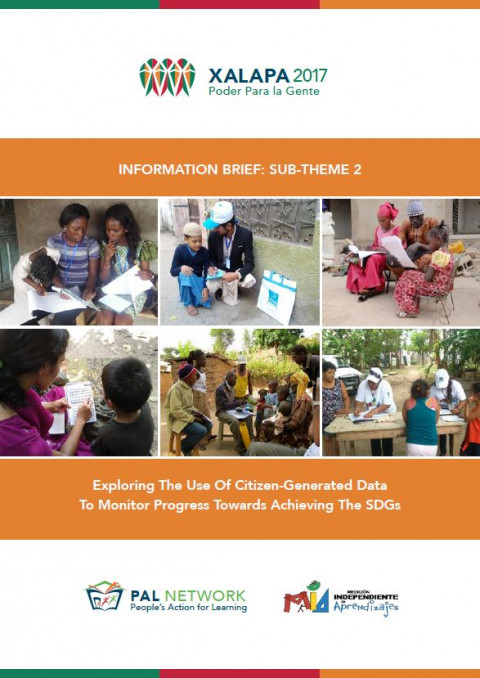 Exploring the Use of Citizen-generated Data to Monitor Progress Towards Achieving the SDGs سنة النشر: 2017 المؤلف المؤسسي: People's Action for Learning Network The 5th Annual PAL Network meeting was held in Xalapa, Mexico from 13th to 16th March 2017. The meeting was jointly hosted by Medición Independiente de Aprendizajes (MIA) and the PAL Network. The meeting provided structured opportunities for deep exploration of this year’ theme: ‘Power to the People’. The theme was critically explored by over 80 participants from more than 19 Global South countries in four different sub‑theme groups. Each sub-theme focused on a different aspect of citizen participation in conducting household-based learning assessments with a focus on value, potential and next steps.
 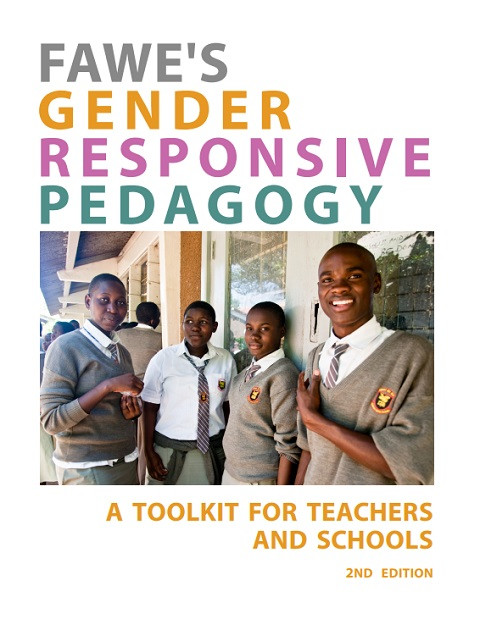 Gender Responsive Pedagogy: A Toolkit for Teachers and Schools سنة النشر: 2019 المؤلف: Clare Dowd | Aryeh Shell | Veronica Thamaini | Louisa Trackman المؤلف المؤسسي: Forum for African Women Educationalists (FAWE) This toolkit is intended as a practical tool for training new teachers and refreshing the knowledge and skills of seasoned teachers and a reference for teacher and school management to creatively engage a wide range of community stakeholders in gender-responsive pedagogy (GRP) and related topics.
 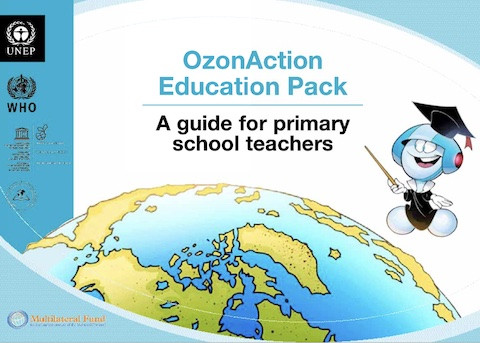 OzonAction Education Pack: A Guide for Primary School Teachers سنة النشر: 2006 المؤلف: Fabienne Pierre المؤلف المؤسسي: United Nations Environment Programme (UNEP) This education pack contains an entire teaching and learning programme, based on basic knowledge, practical skills and participation, for students to learn about concrete and simple solutions to protect the ozone layer and safely enjoy the sun.
 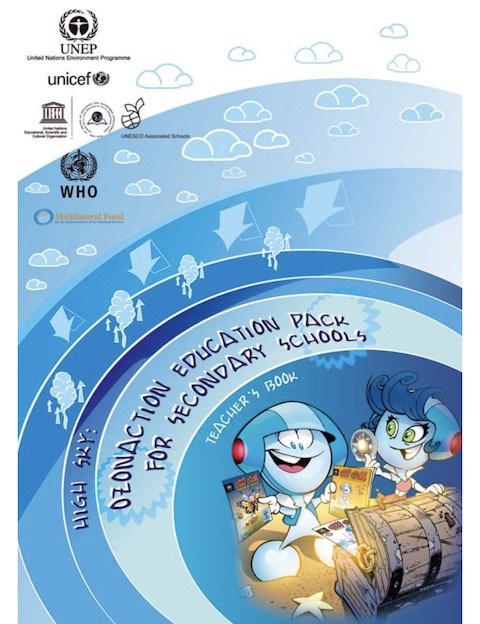 OzonAction Education Pack for Secondary School Teachers: Teacher’s Book سنة النشر: 2008 المؤلف: Wayne Talbot المؤلف المؤسسي: United Nations Environment Programme (UNEP) The education pack aims to raise awareness and encourage the active participation of young people in the debate on ozone depletion, its potential effects on them, the place in which they live and the planet. It also offers them a chance to design their own projects for taking action. These materials build upon ideas and activities in our OzonAction Education Pack for Primary Schools and other Ozzy Ozone materials. Education à la Couche d’Ozone: Guide de l’enseignant سنة النشر: 2008 المؤلف: Wayne Talbot المؤلف المؤسسي: United Nations Environment Programme (UNEP) Ce pack éducatif vise à sensibiliser les jeunes et à encourager leur participation active au débat sur la réduction de la couche d’ozone, les effets potentiels qu’elle peut avoir sur eux, sur leur lieu de vie et sur la planète. Il leur offre également l’opportunité d’élaborer leur propre projet d’action. Ce matériel pédagogique s’inspire des idées et des activités présentées dans le Pack Educatif pour les écoles primaires et autres productions Ozzy Ozone.
 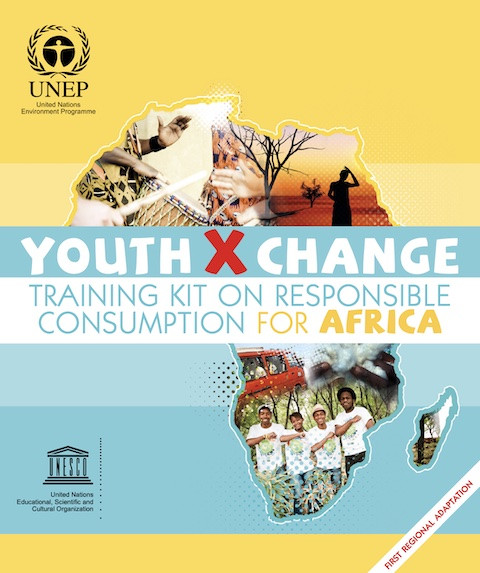 YouthXchange Training Kit on Responsible Consumption for Africa سنة النشر: 2017 المؤلف: Carme Martinez-Roca | Victoria Thoresen المؤلف المؤسسي: UNESCO | United Nations Environment Programme (UNEP) Young people from all walks of life play a critical role in delivering the 17 goals of the 2030 Agenda for Sustainable Development, particularly in areas like education, lifestyle and responsible consumption and production. As the consumers of today and decision-makers of tomorrow, they define the demand for goods and services and have the power to drive economic prosperity, environmental sustainability and social equality.This approach underpins the YouthXchange Initiative, which contributes to the Global Action Programme on Education for Sustainable Development and aligns with the goals of the 2030 Agenda. The initiative promotes equitable, informed and efficient consumption, while the training kit supports that effort with clear, reliable and compelling information. As well as outlining the relationship between the environment, the economy and social justice, the kit uses case studies to showcase the available opportunities and encourage readers to take shared responsibility for their future, starting with their own attitudes and behaviours.
 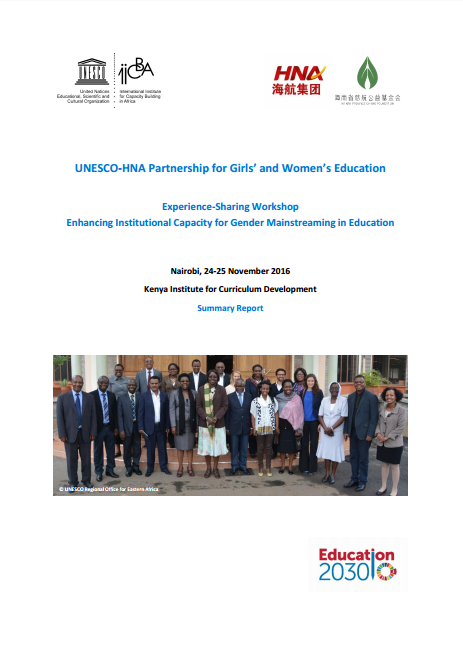 UNESCO-HNA partnership for girls' and women's education: experience-sharing workshop: enhancing institutional capacity for gender mainstreaming in education; summary report سنة النشر: 2016 المؤلف المؤسسي: UNESCO International Institute for Capacity-Building in Africa (IICBA) The first experience-sharing workshop was organised on 24-25 November 2016 in Nairobi, Kenya. The objectives of the workshop were to: v Increase awareness on girls' education activities through South-South interaction. v Exchange experiences and lessons on HFIT project implementation. v Enhance institutional networking and interaction on issues related to girls' education.
 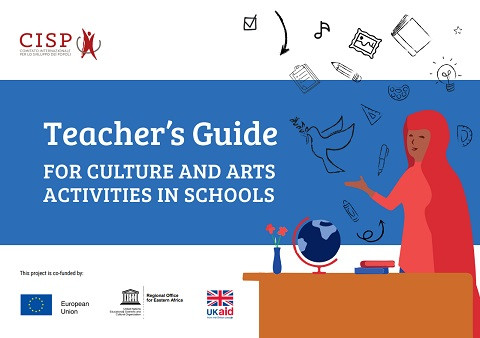 Teacher’s Guide for Culture and Arts Activities in Schools سنة النشر: 2019 المؤلف: Beatrice Polato | Xavier Verhoest المؤلف المؤسسي: Comitato Internazionale per lo Sviluppo dei Popoli (CISP) | European Union (EU) | UNESCO | UK aid This guide was designed as a curriculum to be used by teachers and mentors who facilitate modules and sessions aiming at involving school children in the study of cultural heritage, peace, inclusion and gender equity through artistic expressions. It has been tested and used by teachers in 24 schools in Somalia between 2018 and 2019, involving a total of 48 teachers and about 700 children. It contains text in Somali for activities.