
الموارد
استكشف مجموعة واسعة من الموارد القيمة حول تعليم المواطنة العالمية لتعميق فهمك وتعزيز البحث والمناصرة والتعليم والتعلم.
تم العثور على 2,668 نتيجة
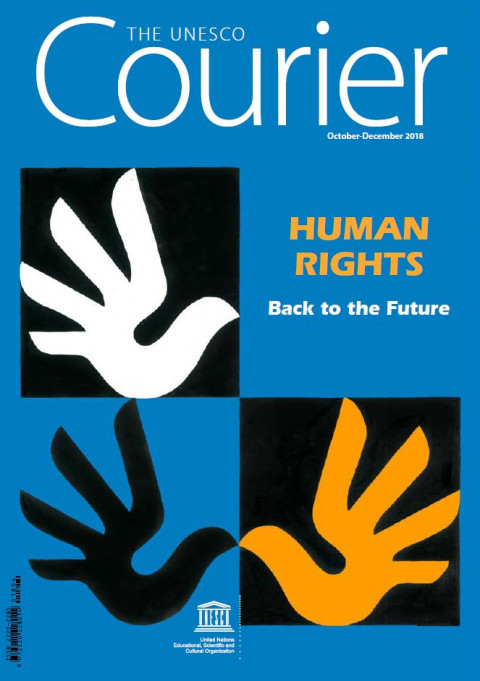 Droits de l’homme : retour vers le futur (Le Courrier de l’UNESCO no. 4, octobre-décembre 2018) سنة النشر: 2018 المؤلف المؤسسي: Organisation des Nations Unies pour l'éducation, la science et la culture (UNESCO) Benedetto Croce, Aldous Huxley, Humayun Kabir, Harold J. Laski, Lo Chung-Shu, Jacques Maritain, F. S. C. Northrop, Arnold Schoenberg, Pierre Teilhard de Chardin : voici quelques-uns des contributeurs de ce numéro du Courrier. Pour marquer le soixante-dixième anniversaire de la Déclaration universelle des droits de l’homme, adoptée le 10 décembre 1948, nous avons décidé de faire un détour par le passé, afin de mieux nous orienter dans l’avenir. Ce qui explique le titre de ce numéro : « Retour vers le futur ». Nous sommes donc en 1946. Alors que le spectre de la guerre totale hante tous les esprits, « la communauté internationale a besoin de formuler un énoncé moral qui exprime adéquatement son indignation collective et son espoir (pour utopique qu'il fût) d'un avenir meilleur », explique Mark Goodale, auteur de l’article introductif et consultant pour Grand angle. Un dossier qui dévoile tout un pan méconnu de l’histoire de la Déclaration universelle des droits de l’homme : l’enquête mondiale sur les fondements philosophiques des droits de l’homme, décidée lors de la première Conférence générale de l’UNESCO (novembre-décembre 1946), lancée l’année suivante par le premier Directeur général, Julian Huxley, et coordonnée par le jeune philosophe français Jacques Havet. L’UNESCO a réuni autour de ce projet l’élite intellectuelle du monde de l'après-guerre et apporté ainsi une contribution essentielle à la réflexion sur les droits de l’homme. Elle demeure aujourd’hui d’une étonnante actualité. Tout aussi actuels sont les dessins de Notre invité, l’artiste péruvien Fernando Bryce qui puise son inspiration dans cette période historique « où l'idée de progrès ouvrait réellement de multiples perspectives ». Sa série The Book of Needs (Le livre des nécessités), qui transfigure en œuvres d’art des pages du Courrier des années 1948 - 1954, fait l’objet du supplément à ce numéro. Derechos humanos: regreso al futuro (El Correo de la UNESCO no. 4, Octubre-Diciembre 2018) سنة النشر: 2018 المؤلف المؤسسي: Organización de las Naciones Unidas para la Educación, la Ciencia y la Cultura (UNESCO) Benedetto Croce, Aldous Huxley, Humayun Kabir, Harold J. Laski, Lo Chung-Shu, Salvador de Madariaga, Jacques Maritain, F. S. C. Northrop, Arnold Schoenberg, Pierre Teilhard de Chardin: estos son algunos de los colaboradores de este número de El Correo. Para conmemorar el 70 aniversario de la Declaración universal de los derechos humanos, adoptada el 10 de diciembre de 1948, decidimos hacer un recorrido por el pasado para orientarnos mejor en el futuro, lo cual explica el título de este número: “Regreso al futuro”. Nos encontramos pues en 1946. Mientras el espectro de la guerra mundial atormenta todas las conciencias, “la comunidad internacional necesita formular un enunciado moral que exprese adecuadamente su indignación colectiva y su esperanza (por utópica que fuese) de un futuro mejor”, explica Mark Goodale, autor del artículo introductorio y consultor para nuestra sección Gran angular. Una sección que desvela toda una parte desconocida de la historia de la Declaración universal de los derechos humanos: la encuesta mundial sobre los fundamentos filosóficos de los derechos del hombre, decidida durante la primera Conferencia General de la UNESCO (noviembre-diciembre de 1946), enviada el año siguiente por el primer Director General, Julian Huxley, y coordinada por el joven filósofo francés Jacques Havet. La UNESCO reunió en torno a este proyecto a la élite intelectual del mundo de la posguerra y aportó así una contribución fundamental a la reflexión sobre los derechos humanos. Una encuesta que aún hoy resulta de sorprendente actualidad. Igual de actuales son los dibujos de Nuestro invitado, el artista peruano Fernando Bryce, que encuentra su inspiración en este período histórico “donde la idea de progreso abría realmente múltiples perspectivas”. Su serie The Book of Needs (El libro de las necesidades), que transfigura en obras de arte algunas páginas de El Correo de los años 1948 - 1954, es objeto del suplemento de este número.
  Enforcing the right to education of refugees: a policy perspective سنة النشر: 2019 المؤلف المؤسسي: UNESCO This paper, aimed at education policymakers, provides analysis and insights on how the right to education for refugees could be ensured from a policy perspective. It does so by reviewing the current status of access to education of refugees, using the scant data that is available in this area. It also outlines some of the extensive barriers to education that refugees face, with recognition of the multifaceted, interlinked and complex nature of exclusion. It provides an overview of the international normative frameworks and global agendas on education that can be applied to refugees to ensure their right to education and achieve SDG 4. Additionally, this document presents practical examples, good practices, and promising measures taken by countries in order to ensure the inclusion of refugees in their national systems and better guarantee the fulfilment of their right to education. As a result of this research, collaboration and the invaluable contributions from the participants in a dedicated Expert Meeting in Barcelona (2018), a set of policy recommendations are provided in the last chapter which aims to guide policymakers to ensure equal access to good quality education for refugees.
 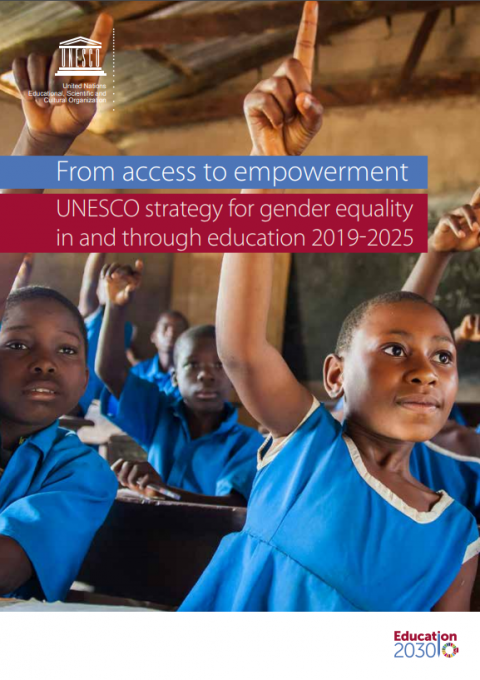 From access to empowerment: UNESCO strategy for gender equality in and through education 2019-2025 سنة النشر: 2019 المؤلف المؤسسي: UNESCO Gender bias still permeate the entire education system in some settings and is often perpetuated rather than questionned. This includes the absence of women as leaders in textbooks, to differential expectations of boys and girls by teachers, to school policies that put pregnant girls at the door rather than respecting, protecting and fulfilling their right to education. This Strategy focuses on system-wide transformation to benefit all learners and targeted interventions to support girls’ and women’s empowerment. It offers three clear lines of action: better data to inform action for gender equality in and through education, better legal, policy and planning frameworks to advance rights, and better teaching and learning practices to empower. De l’accès à l’autonomisation: stratégie de l’UNESCO pour l’égalité des genres dans et par l’éducation 2019-2025 سنة النشر: 2019 المؤلف المؤسسي: Organisation des Nations Unies pour l'éducation, la science et la culture (UNESCO) Les préjugés de genres continuent d’imprégner l’ensemble du système éducatif et sont souvent perpétués au lieu d’être contestés. Ces derniers vont de l’absence de leaders féminins dans les manuels scolaires, aux attentes différentes des enseignants concernant les filles et les garçons, en passant par les politiques scolaires qui excluent les filles enceintes au lieu de les respecter, de les protéger et de garantir leur droit à l’éducation. Cette stratégie met l’accent sur la transformation à l’échelle du système au profit de tous les apprenants, et sur des interventions ciblées pour soutenir l’autonomisation des filles et des femmes. Elle propose trois thématiques prioritaires distincts : meilleures données pour éclairer l’action ; meilleurs cadres juridiques, politiques et de planification pour faire progresser les droits ; et meilleures pratiques d’enseignement et d’apprentissage pour autonomiser.
 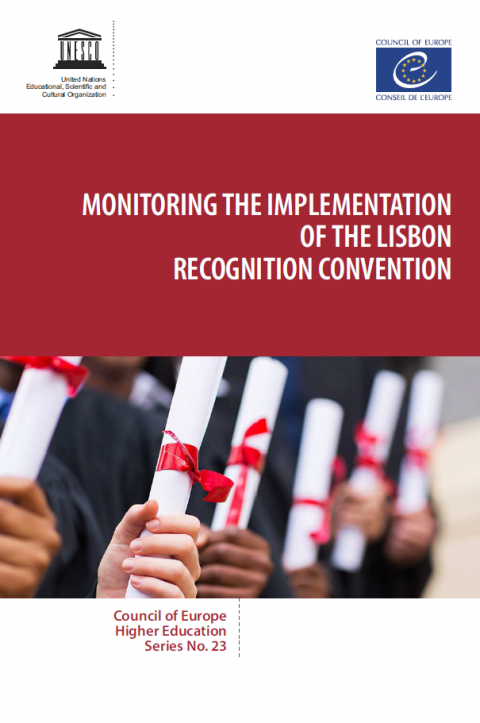 Monitoring the implementation of the Lisbon Recognition Convention - Council of Europe Higher Education Series No. 23 سنة النشر: 2019 المؤلف المؤسسي: UNESCO | Council of Europe In accordance with the Lisbon Recognition Convention, the Committee of the Convention shall oversee its implementation and guide the competent authorities in implementing the convention and in their consideration of applications for the recognition of foreign qualifications. The Rules of procedure (adopted by the Committee in Vilnius in 1999) reiterate this role – the function of the Committee is to promote the application of the convention and oversee its implementation. Article II. of the convention states that where the central authorities of a party are competent to make decisions in recognition cases, that party shall be immediately bound by the provisions of the convention and shall take the necessary measures to ensure the implementation of its provisions on its territory. Where the competence to make decisions in recognition matters lies with individual higher education institutions or other entities, each party, according to its constitutional situation or structure, shall transmit the text of this convention to those institutions or entities and shall take all possible steps to encourage the favourable consideration and application of its provisions. The provisions of Article II. are central to determining the obligations of the parties to the convention. This article places upon these parties an obligation to make sure that information on the provisions is disseminated to all competent recognition authorities, and that these institutions are encouraged to abide by the convention (Explanatory report to the convention). The objective of this monitoring exercise has been to oversee the implementation of the main provisions of the convention and to report to parties on the outcome of this monitoring, presenting the main findings and recommendations. This monitoring report is also a contribution to the commitment set out in the Yerevan Communiqué (2015) to review national legislation to ensure full compliance with the convention, and to ask the Convention Committee, in co-operation with the ENIC (Council of Europe and UNESCO European Network of National Information Centres on academic recognition and mobility) and NARIC (EU Network of National Academic Recognition Information Centres) networks, to prepare an analysis of the national legislation reports by the end of 2017, taking due account of this monitoring report. This is the first monitoring of implementation of the Lisbon Recognition Convention (LRC) since its signature in 1997. The questionnaire used for the monitoring exercise was drawn up by the Bureau of the Convention Committee, namely Gunnar Vaht, President of the Committee, Gayane Harutyunyan, Vice-President, Allan Bruun Pedersen, Vice-President, and Baiba Ramina, Rapporteur, together with the joint Council of Europe/UNESCO Secretariat. The monitoring covers the 10 main provisions of the convention and comprises 22 questions relating to implementation of the main principles. The questions focus primarily on how the convention requirements are regulated at national level and to what extent the rules are reflected in national legislation. In cases where some or all of the provisions are not regulated at national level and where the higher education institutions have total autonomy in establishing the principles of the convention, the aim has been to discover how national authorities oversee implementation of the principles of the convention at institutional level. As stated above, the objective of this monitoring report is to monitor implementation of the convention by the parties to the convention. The executive summary focuses on the key findings and the conclusions focus on the recommendations made by the Convention Committee Bureau, which will require political decisions from the Convention Committee and from national authorities for follow-up action. The various chapters of the report elaborate further on both the key findings and the recommendations. The questionnaire was sent to 53 states parties to the LRC, and replies were received from 50 countries. The initial deadline given was 15 February 2015, but this was extended to June 2015. The analysis by the members of the Convention Committee Bureau took place from June to November 2015 and was assisted and reviewed by the Council of Europe and UNESCO, the joint Secretariat of the LRCC Bureau.
 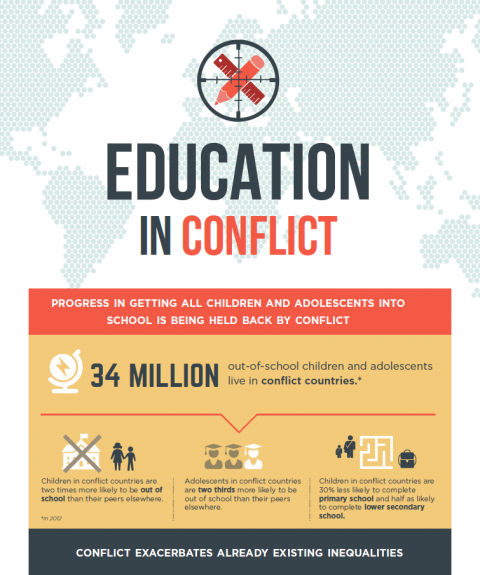 EDUCATION IN CONFLICT المؤلف المؤسسي: EFA Global Monitoring Report Team | UNESCO PROGRESS IN GETTING ALL CHILDREN AND ADOLESCENTS INTO SCHOOL IS BEING HELD BACK BY CONFLICT - 34 million out-of-school children and adolescents live in conflict countries. - Children in conflict countries are two times more likely to be out of school than their peers elsewhere.- Adolescents in conflict countries are two thirds more likely to be out of school than their peers elsewhere.- Children in conflict countries are 30% less likely to complete primary school and half as likely to complete lower secondary school.- Girls are almost two and a half times more likely to be out of school if they live in a conflict country than those elsewhere.- Adolescent girls are almost 90% more likely to be out of secondary school than young women elsewhere.- The poorest children in conflict countries are twice as likely to be out of school as the poorest elsewhere.
  Global Citizenship Education for the Rule of Law: Doing the Right Thing سنة النشر: 2018 المؤلف المؤسسي: UNESCO | UN. Office on Drugs and Crime (UNODC) UNESCO and UNODC have established a partnership to promote the rule of law and a culture of lawfulness through education. Combining their resources and expertise, they are seeking to build the capacities of educators, teachers and policy-makers to plan and undertake educational activities that empower learners to take constructive and ethically responsible decisions in their daily lives that support justice, human rights and strong institutions to defend them.
  Measuring Global Citizenship Education: A Collection of Practice and Tools سنة النشر: 2017 المؤلف المؤسسي: Center for Universal Education at Brookings | UNESCO | UN Global Education First Initiative - Youth Advocacy Group (YAG) The idea of global citizenship has existed for several millennia. In ancient Greece, Diogenes declared himself a citizen of the world,1 while the Mahaupanishads of ancient India spoke of the world as one family.2 Today, education for global citizenship is recognized in many countries as a strategy for helping children and youth prosper in their personal and professional lives and contribute to building a better world.This toolkit is intended to shed light on one aspect of operationalizing global citizenship education (GCED): how it can be measured. This toolkit is the result of the collective efforts of the Global Citizenship Education Working Group (GCED-WG), a collegium of 90 organizations and experts co-convened by the United Nations Educational, Scientific, and Cultural Organization (UNESCO), the Center for Universal Education (CUE) at the Brookings Institution, and the United Nations Secretary General’s Global Education First Initiative’s Youth Advocacy Group (GEFI-YAG). To gather the measurement tools in this collection, the working group surveyed GCED programs and initiatives that target youth (ages 15–24).3 For the purposes of this project, GCED was defined as any educational effort that aims to provide the skills, knowledge, and experiences and to encourage the behaviors, attitudes, and values that allow young persons to be agents of long-term, positive changes in their own lives and in the lives of people in their immediate and larger communities (with the community including the environment).This toolkit begins with a brief review of opinions on why GCED is important and the variety of definitions of GCED. We follow the report with a catalog of 50 profiles of assessment efforts, each describing practices and tools to measure GCED at the classroom, local, and national levels. Note that the survey does not represent an exhaustive list but may be regarded as a living document that will grow as the field of GCED itself grows around the world.Broadly speaking, the assessment efforts in this survey may be categorized across achieving three goals: (1) fostering the values/attitudes of being an agent of positive change; (2) building knowledge of where, why, and how to take action toward positive change; and (3) developing self-efficacy for taking effective actions toward positive change.Today, global challenges such as climate change, migration, and conflict will require people to do more than just think about solutions. They will require effective action, by both individuals and communities. Education for global citizenship is one means to help young people develop the knowledge, skills, behaviors, attitudes, and values to engage in effective individual and collective action at their local levels, with an eye toward a long-term, better future at the global level. We offer this toolkit to provide guidance for educators, policymakers, non-governmental organizations, civil society, and researchers, and to inform this conversation.
 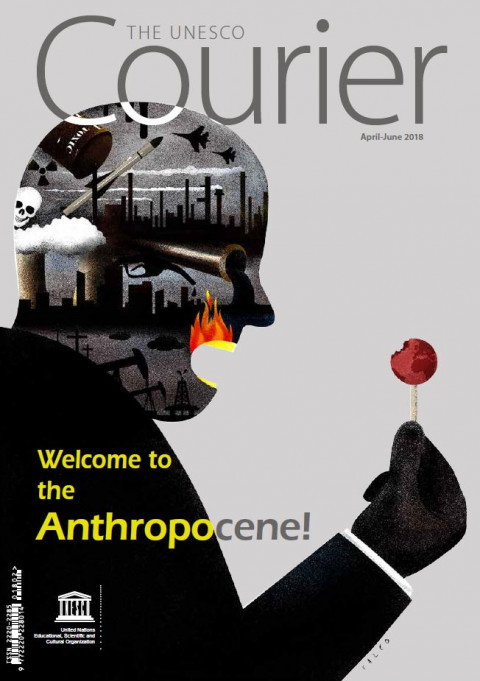 Welcome to the Anthropocene! (The UNESCO Courier no. 2, April-June 2018) سنة النشر: 2018 المؤلف المؤسسي: UNESCO In the Ideas section of this issue, three internationally celebrated academics consider the notion of diversity – Mireille Delmas-Marty, a member of the Institut de France; Souleymane Bachir Diagne, Senegalese philosopher; and Abdourahman Waberi, novelist and diarist from Djibouti. With these articles, the Courier marks the celebrations of the World Day for Cultural Diversity for Dialogue and Development (21 May) and the International Day for Biological Diversity (22 May).Our Guest for this issue is Bibi Russell, a fashion designer from Bangladesh. A former top model in London, she quit the catwalk to devote herself to using fashion for development. She is currently working in India, helping young women, some of whom were trafficked as children, to find their bearings and start a new life.To mark UNESCO’s Africa Week in May, we focus on youth in the West and the South of the continent, in our Current Affairs section. After visiting Athens, World Book Capital 2018, we travel to Canada’s Northwest territories, on the other side of the world, to discover the people of Great Bear Lake, in the Tsá Tué biosphere reserve – established and looked after by the indigenous community that lives there.Finally, Zoom invites us to follow an ordinary day in the life of Qello, a 13-year old girl in Ethiopia, hour by hour.The UNESCO Courier celebrates its 70th birthday in 2018. Each issue this year will feature an article that looks back at this extraordinary adventure. In this issue, Roberto Markarian, Rector of the University of the Republic, Uruguay, recounts the story of the role the Courier has played in his life.