
الموارد
استكشف مجموعة واسعة من الموارد القيمة حول تعليم المواطنة العالمية لتعميق فهمك وتعزيز البحث والمناصرة والتعليم والتعلم.
تم العثور على 2,668 نتيجة
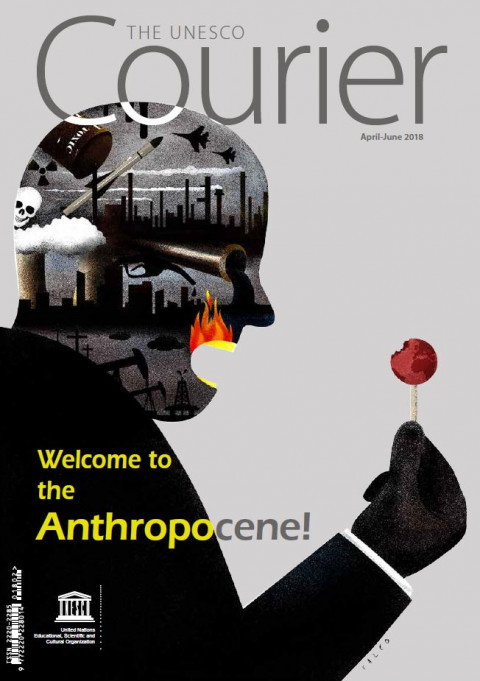 Bienvenue dans l'Anthropocène! (Le Courrier de l'UNESCO no. 2; Avril-Juin 2018) سنة النشر: 2018 المؤلف المؤسسي: Organisation des Nations Unies pour l'éducation, la science et la culture (UNESCO) Selon les uns, l’Anthropocène n’est qu’un autre nom pour l’époque que nous appelons Holocène, les humains ayant commencé à exercer une pression sur l’environnement depuis 10 000ans, c’est-à-dire depuis leur sédentarisation et l’invention de l’agriculture. Selon d’autres, l’Anthropocène commencerait autour de 1800, avec la révolution industrielle. D’autres encore voient l’Anthropocène éclore dupremier champignon atomique de 1945. Malgré ces divergences, très rares sont ceux qui ne reconnaissent pas qu’au cours du dernier demi-siècle l’état de la planète s’est dégradé plus rapidement et plus dramatiquement que jamais : amasgigantesques de plastique sur les plages et dans les mers, développement sans précédent de nouveaux matériaux qui couvrent la surface terrestre et ne se recyclent que très peu, sols gorgés d’engrais, augmentation du taux d’acidité des mers, tauxde pollution sans précédent, érosion des forêts tropicales, dérèglement desécosystèmes, extinction massive des espèces et diminution drastique de la biodiversité, réchauffement climatique...À qui la faute ? Auxhumains – répond lamajorité des scientifiques. Reste à savoir si nous devrions tous porter la même charge deresponsabilité. Certains blâmant avant tout le système capitaliste né en Occident, parlent de Capitalocène ou d’Occidentalocène. Courons-nous à la catastrophe? Des voix s’élèvent pour prophétiser la fin du monde! Des notions comme Chtulhucène ou Thanatocène sont avancées pour signifier que le monstre rôde, quela mort nous guette... Des experts, bien plus modérés, n’en sont pas moins inquiets face à l’indécision des décideurs. «Tout se passe comme si l’humanité, léthargique, attendait la fin du film et le moment où les héros viendront tout arranger et où nous serons tous heureux pour toujours», lira-t-on dans ces pages.Le débat fait rage, les solutions tardent à venir. Le Courrier fait le point.
  Holocaust Education in a Global Context: Report سنة النشر: 2013 المؤلف المؤسسي: UNESCO Teaching and learning about the Holocaust, which until this point had largely been a matter of regional interest, for Europeans, as well as North Americans and Israelis, became officially an issue of universal concern. Other countries are now invited to teach about the Holocaust even if they do not have a direct link to the event. This raises many issues concerning the pedagogical implications of this global perspective on Holocaust education. Why and how is the Holocaust taught in countries that have no connections with the genocide and the history of the Jewish people? How does this history connect and resonate with the preoccupations of these countries? Generally speaking, what could be the purposes and the benefits of teaching about the Holocaust globally?In order to address these issues, UNESCO organized an experts-meeting on 27 April 2012, in partnership with the Topography of Terror Foundation (Berlin, Germany). The purpose was specifically to clarify the following questions: What are the current trends of Holocaust education worldwide? How can the Holocaust be studied in a comparative fashion in the classroom? In which ways does Holocaust education contribute to the prevention of genocide? Furthermore, how is it taught in a human rights education perspective? Can the Holocaust provide a suitable framework to address other traumatic events of the past?
  A Guide for Gender Equality in Teacher Education Policy and Practices سنة النشر: 2015 المؤلف: María C. Arango Restrepo | Esther Corona-Vargas المؤلف المؤسسي: UNESCO Transforming the culture of teacher education institutions and making them gender-sensitive entities is a daunting task. However, it is not an impossible task. Understanding gender and applying gender mainstreaming are critical foundations for fostering social cohesion that goes beyond teacher education institutions and the school. Teachers are increasingly expected to play crucial roles in preparing young people to face the future with confidence, purpose, responsibility and gender sensitivity. Teacher education institutions must be ready to provide the enabling environment and training and continuing education for the development of knowledge, values, skills and gender-responsive practices that the teachers need in the 21st century.This Guide, through its ten Modules, takes the reader through step by step on how gender can be mainstreamed in all areas of teacher education and training: from policy and planning, administration and management, gender-responsive budgeting, social services, the environment, curriculum, pedagogy, research, and to advocacy. Through this Guide, teacher educators are also reminded what teachers must know and be able to do in order to promote gender equality through education. The Modules can be used individually or comprehensively depending on the situation and context of countries.This Guide is dedicated to all teacher educators, whose intellectual rigour and tireless efforts to foster enabling environments for inclusive and gender sensitive education, are indispensable for success in continuing education. Guide pour l'égalité des genres dans les politiques et les pratiques de formation des enseignants سنة النشر: 2015 المؤلف: María C. Arango Restrepo | Esther Corona-Vargas المؤلف المؤسسي: Organisation des Nations Unies pour l'éducation, la science et la culture (UNESCO) Transformer la culture des institutions de formation des enseignants pour en faire des entités sensibles aux genres est une tâche ardue. Cependant, elle n’est pas impossible. Comprendre les problématiques liées aux genres et savoir comment appliquer l’égalité des sexes se révèlent être des aspects essentiels afin de favoriser une cohésion sociale allant au-delà des institutions de formation des enseignants et de l’école. Les enseignants sont de plus en plus appelés à jouer un rôle crucial dans la préparation des jeunes à faire face à l’avenir avec confiance, décision, responsabilité et sensibilité aux notions de genre. Ainsi, les institutions de formation des enseignants doivent être prêtes à fournir un environnement favorable et une formation continue pour le renforcement des capacités, des valeurs, des compétences et des pratiques sensibles au genre dont les enseignants ont besoin au 21e siècle.À travers ses dix modules, ce guide explique comment intégrer la notion de genre dans tous les domaines de l’éducation et de la formation des enseignants : politiques et planification, gestion et administration, budgétisation sensible au genre, services sociaux, environnement, programmes, pédagogie, recherche et plaidoyer. Ce guide vise à rappeler également aux formateurs d’enseignants ce que ces derniers devraient savoir et être en mesure de faire afin de promouvoir l’égalité des genres à travers l’éducation. Les modules peuvent être utilisés individuellement ou dans leur totalité en fonction de la situation et du contexte des pays.Ce guide est dédié à tous les formateurs d’enseignants, dont la rigueur intellectuelle et les efforts inlassables en vue de favoriser un environnement propice à l’éducation inclusive sensible aux genres, sont indispensables à la réussite de la formation continue. Guía para la igualdad de género en las políticas y prácticas de la formación docente سنة النشر: 2015 المؤلف: María C. Arango Restrepo | Esther Corona-Vargas المؤلف المؤسسي: Organización de las Naciones Unidas para la Educación, la Ciencia y la Cultura (UNESCO) La Guía para la Igualdad de Género en las Políticas y Prácticas de la Formación Docente, ha sido concebida como una herramienta práctica para impulsar una cultura organizacional con perspectiva de género en los centros de formación docente. Su objetivo es fortalecer las capacidades de los formadores de docentes, directores y estudiantes de pedagogía para reconocer y modificar en sus prácticas cotidianas los elementos que alientan la desigualdad de género.Asimismo, la guía busca contribuir a una mayor comprensión conceptual de la perspectiva de género y sirve de ayuda para identificar necesidades y opciones de cambio en las políticas institucionales, planes, estrategias y prácticas, según las características particulares de cada contexto.Esta guía está estructurada en torno a algunos de los aspectos críticos de la formación docente y el desarrollo temático destaca, en cada caso, las cuestiones de género. Tiene una organización modular y los módulos pueden ser consultados individualmente para una formación específica según la necesidad o el interés particular en un determinado momento. Sin embargo, dada la interconexión entre los temas de género debe considerarse, también, una interrelación entre los diferentes módulos.
 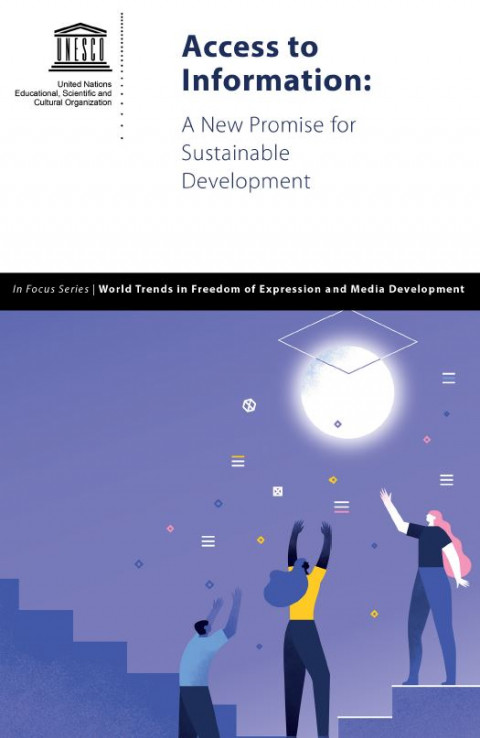 Access to Information: A New Promise for Sustainable Development سنة النشر: 2019 المؤلف المؤسسي: UNESCO The central aim of this study is to unpack the major trends in the field of ATI laws and their implementation. In order to understand the trends, the report examines the activities of trendsetters. It focuses on awareness-raising by UNESCO, Member State recommendations in the Universal Periodic Review, the commitments of the Open Government Partnership, actions of civil society organizations, and the standard-setting activities of such regional intergovernmental organizations as the Council of Europe, the African Union and the Organization of American States.
 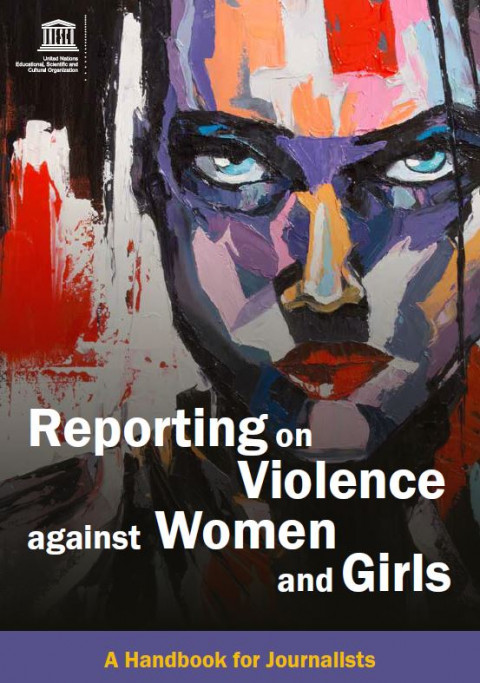 Reporting on Violence against Women and Girls: A Handbook for Journalists سنة النشر: 2019 المؤلف: Anne-Marie Impe المؤلف المؤسسي: UNESCO Ethical journalism is inseparable from fact-based journalism that seeks to promote gender equality in and through the media. This handbook aims to support media professionals in their coverage of the various types of violence against girls and women.It provides advice, benchmarks and resources to help journalists and reporters ensure quality media coverage that is accurate, regular, engaged and respectful of the fundamental principles of the profession.By adopting these principles, the media has the power to shed light on the extent and implications of violence against women and girls, and to inform victims about available resources for support. This can, in turn, influence public opinion and help stop violence against girls and women through collective awareness-raising of the human rights at stake. Informer sur les violences à l’égard des filles et des femmes: manuel pour les journalistes سنة النشر: 2019 المؤلف: Anne-Marie Impe المؤلف المؤسسي: Organisation des Nations Unies pour l'éducation, la science et la culture (UNESCO) Tout journalisme éthique est inséparable d’un journalisme basé sur les faits et qui vise à promouvoir l’égalité des genres dans et à travers les médias.Destiné aux professionnels des médias, ce manuel est conçu pour accompagner les médias dans leur traitement journalistique des divers types de violences faites aux filles et aux femmes.Il offre des conseils, des repères et des ressources afin d’aider les journalistes et reporters à assurer une couverture médiatique de qualité : précise, fréquente, engagée et respectueuse des principes fondamentaux du métier.En reprenant ces principes, les médias ont le pouvoir d’éclairer sur l’étendue de ces violences et de leurs implications, ainsi que d’informer les victimes sur les recours existants. Ainsi, ils peuvent influer sur l’opinion publique et contribuer à arrêter les violences à l’égard des filles et des femmes par le biais d’une prise de conscience collective des droits humains en péril.
 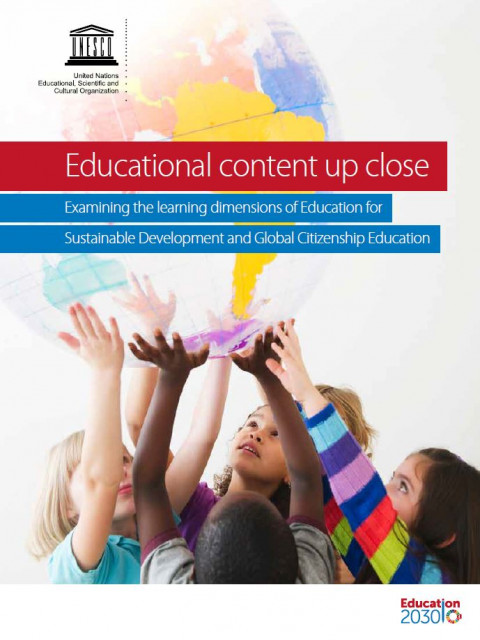 Educational Content up Close Examining the Learning Dimensions of Education for Sustainable Development and Global Citizenship Education سنة النشر: 2019 المؤلف المؤسسي: UNESCO In taking ESD and GCED forward, UNESCO seeks to advance a holistic approach to education that emphasizes three inter-related dimensions of learning – the cognitive, social and emotional and behavioural.This publication summarizes the findings of a study commissioned by UNESCO to examine if and how these three dimensions of learning and teaching of ESD and GCED are reflected in pre-primary, primary and secondary educational content (ie. national laws, policies and the intended curriculum) in Costa Rica, Japan, Kenya, Lebanon, Mexico, Morocco, Portugal, Republic of Korea, Rwanda and Sweden. The outcome of this work shows a major pattern of commitment to the three learning dimensions in the selected countries and across the four education levels, with noteworthy nuances between ESD and GCED. 지속가능발전교육 및 세계시민교육의 학습 영역 연구: 국가별 교육 과정 분석을 중심으로 سنة النشر: 2019 المؤلف المؤسسي: 유네스코 이 보고서는 유네스코가 의뢰한 연구 결과를 요약한 것으로, ESD 및 GCED의 교수·학습에 있어서 이 세 가지 영역이 취학전교육, 초등교육, 중등교육의 내용 (예: 국가법, 정책 및 의도된 교육과정)에 반영되고 있는지 여부와 어떻게 반영되고 있는지를 검토하고 있다. 연구 대상 국가로는 코스타리카, 일본, 케냐, 레바논, 멕시코, 모로코, 포르투갈, 한국, 르완다, 스웨덴 등 10개국이다. 이 연구결과는 선정 국가별, 교육단계별로 나타나는 세 가지 학습 영역에 대한 주요 양상을 보여주고 있으며, ESD와 GCED 사이의 미묘한 차이는 주목할 만하다.