
الموارد
استكشف مجموعة واسعة من الموارد القيمة حول تعليم المواطنة العالمية لتعميق فهمك وتعزيز البحث والمناصرة والتعليم والتعلم.
تم العثور على 1,726 نتيجة
 For a Transnational History of Disability: Argentina, Brazil and Spain 20th Century سنة النشر: 2022 المؤلف: Gildas Bregain المؤلف المؤسسي: Latin American Council of Social Sciences (CLACSO) Publications on disability have been mostly limited to health, rehabilitation and education editorials. On the other hand, this new Editorial Series, open to social movements, platforms of struggle, academic groups, collaboration networks, public policy makers, citizens of all of our Latin America and the Caribbean and other latitudes of the global South, combines a multiplicity of edges, perspectives and approaches. This volume comes to occupy a vacant place in critical studies on disability in Latin America, which is to record the struggles for the rights of these people in our region. Introducing a historical problematization in this regard not only has an epistemological and political relevance, but also makes a contribution to the present and to contemporary disability policies. Para una historia transnacional de la discapacidad: Argentina, Brasil y España Siglo XX سنة النشر: 2022 المؤلف: Gildas Bregain المؤلف المؤسسي: Latin American Council of Social Sciences (CLACSO) Las publicaciones sobre discapacidad han estado circunscriptas mayoritariamente a las editoriales de salud, rehabilitación y educación. En cambio, esta nueva Serie Editorial, abierta a los movimientos sociales, a las plataformas de lucha, a los grupos académicos, a las redes de colaboración, a los hacedores de políticas públicas, a los ciudadanos y ciudadanas de toda nuestra América Latina y el Caribe y otras latitudes del Sur global, conjuga una multiplicidad de aristas, perspectivas y enfoques. El presente volumen viene a ocupar un lugar de vacancia en los estudios críticos sobre discapacidad en América Latina, que es el historiar las luchas por los derechos de dichas personas en nuestra región. Introducir una problematización histórica al respecto no solo posee una relevancia espistemológica y política, sino que también realiza una contribución al presente y a las políticas contemporáneas de discapacidad.
  COVID-19 and Human Rights: We Are All in This Together سنة النشر: 2020 المؤلف المؤسسي: United Nations (UN) Human rights are key in shaping the pandemic response, both for the public health emergency and the broader impact on people’s lives and livelihoods. Human rights put people centre-stage. Responses that are shaped by and respect human rights result in better outcomes in beating the pandemic, ensuring healthcare for everyone and preserving human dignity. But they also focus our attention on who is suffering most, why, and what can be done about it. They prepare the ground now for emerging from this crisis with more equitable and sustainable societies, development and peace.This paper aims to translate this Call into concrete action to assist with the response to the pandemic. It presents six key messages that must be central to an effective response to the COVID-19 pandemic.
  Youth Engagement to Counter Violent Extremism and Radicalization that Lead to Terrorism: Report on Findings and Recommendations from an OSCE Secretariat - OSCE ODIHR Expert Roundtable سنة النشر: 2013 المؤلف المؤسسي: Организация по безопасности и сотрудничеству в Европе (ОБСЕ) This report is based on the results of a joint meeting of experts in a round-table format of the OSCE Secretariat and the OSCE Office for Democratic Institutions and Human Rights on October 23-24, 2012 in Vienna, Austria.This report should not be considered official OSCE recommendations on the basis of an agreed decision or the official position of the OSCE Secretariat, the OSCE Office for Democratic Institutions and Human Rights, or any OSCE participating State. It presents opinions individually expressed by the participants in the expert meeting in a round-table format. Вовлечение молодежи в усилия по противодействию насильственному экстремизму и радикализации, ведущим к терроризму: Отчет о выводах и рекомендациях سنة النشر: 2013 المؤلف المؤسسي: Организация по безопасности и сотрудничеству в Европе (ОБСЕ) Данный отчет составлен по итогам совместного заседание экспертов в формате «круглого стола» Секретариата ОБСЕ и Бюро ОБСЕ по демократическим институтам и правам человека 23-24 октября 2012 года в Вене, Австрия.Настоящий отчет не следует считать официальными рекомендациями ОБСЕ на основании согласованного решения или официальной позицией Секретариата ОБСЕ, Бюро ОБСЕ по демократическим институтам и правам человека или какого-либо государства-участника ОБСЕ. В нем представлены мнения, индивидуально выраженные участниками заседания экспертов в формате «круглого стола».
  State Program on Countering Religious Extremism and Terrorism in the Republic of Kazakhstan for 2018 - 2022 سنة النشر: 2018 المؤلف المؤسسي: Government of the Republic of Kazakhstan The document contains the main provisions of the State program on countering religious extremism and terrorism in the Republic of Kazakhstan for 2018 - 2022.The geopolitical changes taking place in the world initiate a new spectrum of challenges and risks in the field of national security, which is becoming more diverse and emanating from a greater number of sources of danger. This determines the complexity and relevance of the tasks within the framework of a systematic prevention of threats of religious extremism and terrorism.Under these conditions, the current national system of combating religious extremism and terrorism needs to be further improved in the context of creating a mechanism for reliable protection of individuals, society and the state from extremist manifestations of a violent nature and threats of terrorism. Государственная программа по противодействию религиозному экстремизму и терроризму в Республике Казахстан на 2018 – 2022 годы سنة النشر: 2018 المؤلف المؤسسي: Government of the Republic of Kazakhstan Документ содержит основные положения Государственной программы по противодействию религиозному экстремизму и терроризму в Республике Казахстан на 2018 – 2022 годы.Происходящие в мире геополитические изменения инициируют новый спектр вызовов и рисков в сфере национальной безопасности, который становится все более разнообразным и исходящим от большего числа источников опасности. Этим обусловлены сложность и актуальность задач в рамках системного предупреждения угроз религиозного экстремизма и терроризма.В этих условиях действующая общегосударственная система противодействия религиозному экстремизму и терроризму нуждается в дальнейшем совершенствовании в контексте создания механизма надежной защиты личности, общества и государства от экстремистских проявлений насильственного характера и угроз терроризма.
  Economic, Social and Cultural Rights: Handbook for National Human Rights Institutions (Professional Training Series No.12) سنة النشر: 2005 المؤلف المؤسسي: UN. Office of the United Nations High Commissioner for Human Rights (UN. OHCHR) This publication reviews economic, social and cultural human rights. It is a guide to national institutions produced by the United Nations. The guide is a reference in all matters related to human rights to create a decent life for people, and to clarify the role that governments should play in this regard.This handbook is intended to help national human rights institutions maximize the effectiveness of their functions and powers in addressing economic, social and cultural rights. Its aim is to assist national human rights institutions in the development of policies, processes and skills to integrate economic, social and cultural rights further into their work, thereby enabling them to address poverty and development, for example, through an economic, social and cultural rights framework.This handbook will discuss ways in which national human rights institutions can become more effective in protecting and promoting economic, social and cultural rights. It will examine how national institutions’ legal mandates can be interpreted to incorporate economic, social and cultural rights within their jurisdictions, how their functions and powers can be exercised more appropriately in regard to these rights, how they can use their resources most efficiently and effectively and how they can implement economic, social and cultural rights in the political and social contexts in which they operate. الحقوق الاقتصادية والاجتماعية والثقافية: دليل للمؤسسات الوطنية لحقوق الإنسان سنة النشر: 2005 المؤلف المؤسسي: UN. Office of the United Nations High Commissioner for Human Rights (UN. OHCHR) يستعرض المنشور حقوق الانسان الاقتصادية والاجتماعية والثقافية، وهو دليل للمؤسسات الوطنية انتجته الأمم المتحدة. ويعتبر الدليل مرجع في جميع ما يخص الحقوق لإيجاد حياة كريمة للإنسان، وتوضيح الدور الذي يجب أن تلعبه الحكومات في ذلك.مهام والصلاحيات الممنوحة لها في مجال الحقوق الاقتصادية والاجتماعية والثقافية، وهدفه هو مساعدة تلك المؤسسات على تطوير سياسات وعمليات ومهارات لمواصلة إدماج تلك الحقوق في عملها، وبالتالي تمكينها من معالجة الفقر والتنمية، وذلك على سبيل المثال، من خلال إطار قوامه الحقوق الاقتصادية والاجتماعية والثقافية.يتناول الدليل الطرق التي يمكن بها للمؤسسات الوطنية لحقوق الإنسان أن تصبح أكثر فعالية في حماية وتعزيز الحقوق الاقتصادية والاجتماعية والثقافية، ويطرح الكيفية التي تفسر بها ولايتها القانونية، بحيث يتسنى لها إدماج الحقوق الاقتصادية والاجتماعية والثقافية ضمن نطاق سلطتها، والكيفية التي يمكنها أن تحسن بها أداء مهامها وصلاحياتها فيما يتعلق بهذه الحقوق. وعلى الرغم من أن الدليل يستهدف حماية وتعزيز الحقوق ااقتصادية والاجتماعية والثقافية على وجه التحديد، إلا أنه يهتم ـ أيضا ـ بعمل المؤسسات الوطنية لحقوق الإنسان فيما يتعلق بالحقوق المدنية والسياسية.
 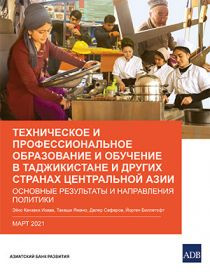 Technical and Vocational Education and Training in Tajikistan and Other Central Asian countries. Main Results and Policy Directions سنة النشر: 2021 المؤلف المؤسسي: Asian Development Bank (ADB) This publication is an analysis of the technical and vocational education and training (TVET) system and its effectiveness in Tajikistan and other Central Asian countries, with recommendations for policy makers and implementers. It shows the importance of TVET and the urgent need for its improvement in the context of labor market needs and responses to the Sustainable Development Goals.