
الموارد
استكشف مجموعة واسعة من الموارد القيمة حول تعليم المواطنة العالمية لتعميق فهمك وتعزيز البحث والمناصرة والتعليم والتعلم.
تم العثور على 3,396 نتيجة
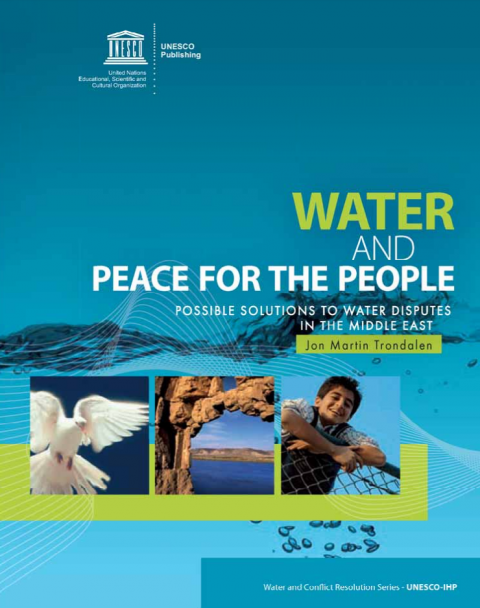 المياه والسلام من أجل الناس: حلول ممكنة للنزاعات المائية في الشرق الأوسط سنة النشر: 2008 المؤلف المؤسسي: منظمة الأمم المتحدة للتربية والعلم والثقافة (UNESCO) This book proposes practical and objective solutions to the entrenched water conflicts in the Middle East. The author reveals and clarifies the complexity of the water conflicts, drawing on years of experience facilitating and chairing water negotiations in the region. The bottom line is: Unless the countries involved co-operate, the consequences will be devastating. The lack of plentiful and clean water for the people will not only result in severe human suffering, but could also have grave geopolitical consequences.
  Intégrer l'ODD 4-Education 2030 dans les politiques et la planification sectorielles: directives techniques à l'intention des bureaux hors Siège de l'UNESCO سنة النشر: 2016 المؤلف المؤسسي: Organisation des Nations Unies pour l'éducation, la science et la culture (UNESCO) Mainstreaming SDG4-Education 2030 in sector-wide policy and planning offers technical guidelines for UNESCO field offices to ensure adequate technical support to national authorities. The guidelines take into account the different profiles of countries’ need and capacities, thus avoiding a one-size-fits-all approach. The document contains resources and pointers that can be combined and tailored to fit the particular context of each country. In all cases, UNESCO is expected to ensure that all the relevant information about SDG4-Education 2030 is properly disseminated in these guidelines. Field staff will adapt the guidelines provided here to the country they are serving to ensure that UNESCO plays its role as the leading United Nations agency in the field. Integración del ODS 4-Educación 2030 en la formulación de políticas y planeamiento para todo el sector: directrices técnicas para las oficinas de la UNESCO fuera de la Sede سنة النشر: 2016 المؤلف المؤسسي: Organización de las Naciones Unidas para la Educación, la Ciencia y la Cultura (UNESCO) Mainstreaming SDG4-Education 2030 in sector-wide policy and planning offers technical guidelines for UNESCO field offices to ensure adequate technical support to national authorities. The guidelines take into account the different profiles of countries’ need and capacities, thus avoiding a one-size-fits-all approach. The document contains resources and pointers that can be combined and tailored to fit the particular context of each country. In all cases, UNESCO is expected to ensure that all the relevant information about SDG4-Education 2030 is properly disseminated in these guidelines. Field staff will adapt the guidelines provided here to the country they are serving to ensure that UNESCO plays its role as the leading United Nations agency in the field. Water and peace for the people: possible solutions to water disputes in the Middle East سنة النشر: 2008 المؤلف المؤسسي: UNESCO This book proposes practical and objective solutions to the entrenched water conflicts in the Middle East. The author reveals and clarifies the complexity of the water conflicts, drawing on years of experience facilitating and chairing water negotiations in the region. The bottom line is: Unless the countries involved co-operate, the consequences will be devastating. The lack of plentiful and clean water for the people will not only result in severe human suffering, but could also have grave geopolitical consequences.
  Study on challenges in the development of local equality indicators: a human-rights-centred model; Commitment 2 of the Ten-Point Plan of Action سنة النشر: 2010 المؤلف: Klaus Starl | Jennifer Pinno المؤلف المؤسسي: UNESCO | European Training and Research Centre for Human Rights and Democracy (Austria) The study aims at: Providing a theoretical fundament of ECCAR Indicators to measure racism or (in)equality1 and to evaluate municipal anti-discrimination policies (framework concept), and Discussing related legal and practical issues such as legality and reliability of available ‘ethnic’ data (legal and practical preconditions) in the context of ECCAR’s endeavours to set up an ECCAR-wide applicable system of monitoring racism, discrimination, equality and respective municipal policies. The study is structured in three parts. In the first part, preliminary questions concerning legality and practical feasibility of ‘ethnic’ data collection as a prerequisite for the development of and work with adequate indicators will be discussed. The second part deals with the conceptualization of human rights law as the constructing principle of ECCAR Indicators. It includes the discussion of the proposed model of the ECCAR-ADIX. The third part of the study describes practical examples of indicator use in selected ECCAR member cities. The section shows various approaches and gives evidence on different attempts by municipalities to set up fact-based anti-racism policies but also highlights the variety of methods, data, measurement topics, goals, etc.
  Declaración Final de la Reunión Mundial sobre la EPT de 2014 El Acuerdo de Mascate سنة النشر: 2014 المؤلف المؤسسي: Organización de las Naciones Unidas para la Educación, la Ciencia y la Cultura (UNESCO) This statement is agreed by Ministers, heads of delegations, leading officials of multilateral and bilateral organizations, and senior representatives of civil society and private sector organizations at the Global Education for All (EFA) Meeting in Muscat, Oman on May 12-14, 2014. Recalling the GEM 2012 Final Statement, the conference took note of the 2013/14 EFA Global Monitoring Report, the regional EFA reports, the Resolution of the 37th session of UNESCO's General Conference on Education Beyond 2015, the Decision of the Executive Board of UNESCO at its 194th session and the Joint Proposal of the EFA Steering Committee on Education Post-2015. 2014 GEM Final Statement: The Muscat Agreement سنة النشر: 2014 المؤلف المؤسسي: UNESCO This statement is agreed by Ministers, heads of delegations, leading officials of multilateral and bilateral organizations, and senior representatives of civil society and private sector organizations at the Global Education for All (EFA) Meeting in Muscat, Oman on May 12-14, 2014. Recalling the GEM 2012 Final Statement, the conference took note of the 2013/14 EFA Global Monitoring Report, the regional EFA reports, the Resolution of the 37th session of UNESCO's General Conference on Education Beyond 2015, the Decision of the Executive Board of UNESCO at its 194th session and the Joint Proposal of the EFA Steering Committee on Education Post-2015. 2014 GEM Final Statement: The Muscat Agreement سنة النشر: 2014 المؤلف المؤسسي: Organisation des Nations Unies pour l'éducation, la science et la culture (UNESCO) Cette déclaration est acceptée par les Ministres, les chefs de délégation, de hauts responsables d'organisations multilatérales et bilatérales, et les hauts représentants de la société civile et des organisations du secteur privé à l'Education pour tous (EPT) Réunion à Muscat, Oman du 12 au 14 mai 2014 . Rappelant la Déclaration finale SEM 2012, la conférence a pris note de l'EPT Rapport mondial de suivi 2013/14, rapporte l'EPT régional, la résolution de la 37e session de la Conférence générale de l'UNESCO sur l'éducation au-delà de 2015, la décision du Conseil exécutif de l'UNESCO à sa 194e session et la proposition conjointe du Comité directeur de l'EPT sur l'éducation post-2015. 2014 무스카트 협약, ‘모두를 위한 교육(EFA)’에 관한 세계 회의 최종 선언문 سنة النشر: 2014 المؤلف المؤسسي: 유네스코 본 성명서는 2014년 5월 12일에서 14일까지 오만(Oman)의 무스카트(Muscat)에서 이루어진 유네스코 ‘모두를 위한 교육(이하 EFA)’을 위한 글로벌 교육 회의에서 장관, 대표단, 다자 및 양자간 조직의 주요 관계자, 시민 사회 및 민간 부분 조직의 수석 대표들이 모여 합의한 것이다. 본 회의에선 2012 글로벌 교육현황(이하 GEM) 보고서, 2013/14 ‘EFA 글로벌 모니터링 회의 보고서’, 지역 EFA 보고서, 2015년 이후 제 37차 세션 유네스코 총회의 결의안, post-2015 유네스코 운영 위원회의 공동 제안 및 194차 유네스코 집행위원회 결정 회의에 관한 결의안을 재작성 하였다.
  First Meeting of the SDG-Education 2030 Steering Committee: report سنة النشر: 2016 المؤلف المؤسسي: منظمة الأمم المتحدة للتربية والعلم والثقافة (UNESCO) The present report provides the first SDG-education 2030 Steering Committee meeting programme, a short summary of key outcomes and decisions, as well as a second part including a more detailed summary of deliberations reflecting the themes, issues and understandings emerging from the discussions.