
الموارد
استكشف مجموعة واسعة من الموارد القيمة حول تعليم المواطنة العالمية لتعميق فهمك وتعزيز البحث والمناصرة والتعليم والتعلم.
تم العثور على 2,781 نتيجة
 Peace Education in Northeast Asia: A Situational Analysis سنة النشر: 2021 المؤلف: Soonwon Kang | Cheng Liu | Ketei Matsui | Batbaatar Monkhooroi | Boyoung Park | Muyu Huang | Oyuntsetseg Dugarsuren المؤلف المؤسسي: APCEIU Being central to education for international understanding and global citizenship, peace education has always been an important theme in UNESCO. For effective delivery of peace education, it is critical to examine and understand the relevance of peace education and its key issues and approaches at a given juncture. With this in mind, in 2020, APCEIU conducted a study on peace education in South Korea to review its current state and suggest some policy recommendations. Following up on this study, APCEIU initiated in 2021 a research project on peace education in Northeast Asia in order to identify how peace education is interpreted and practised in the countries of the region and explore possibilities of cooperation among peace educators, researchers, and practitioners in the region. Building on this research, APCEIU hopes to develop and carry out joint projects for peace education in the region.
 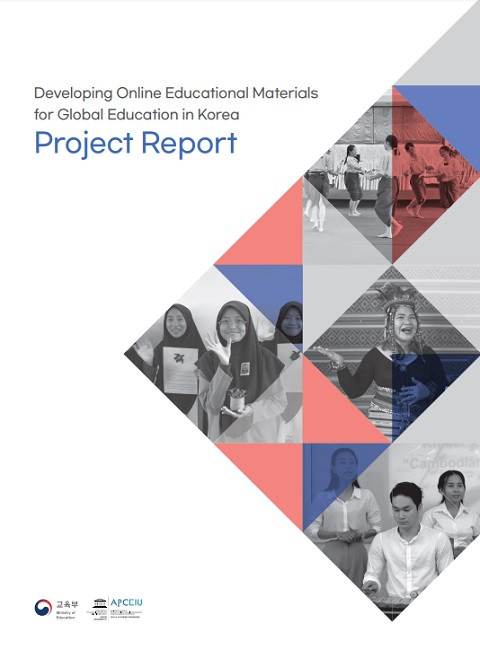 Developing Online Educational Materials for Global Education in Korea: Project Report سنة النشر: 2020 المؤلف المؤسسي: APCEIU | Korea R. Ministry of Education This project aims to enhance the intercultural understanding of Korean teachers and students by utilizing global education and Global Citizenship Education(GCED) materials produced by partner countries’ teachers. Simultaneously, for the teachers from partner countries, the project is expected to enhance their educational competency, global competency, and online teaching competency required in this pandemic era. The project also aims to establish an online teaching and learning model by using online educational materials in Korean classrooms and accumulate and expand educational achievements in response to the spread of online exchange. 초청교사 온라인 교수자료 제작: 최종 보고서 سنة النشر: 2020 المؤلف المؤسسي: 유네스코 아시아태평양 국제이해교육원 | 대한민국 교육부 본 프로젝트는 대상국 교사가 제작한 글로벌·세계시민교육 자료 활용을 통해, 국내 학교 교원 및 학생의 다문화 감수성을 제고하는 것을 목표로 한다. 동시에 강의자로 참여하는 대상국 교사의 교육 역량과 글로벌 역량, 그리고 언택트 시대에 요구되는 온라인 강의 역량을 향상시키고자 한다. 또한 외국 교사가 제작한 온라인 교수자료를 국내 교육 현장에 활용하여 이를 토대로 온라인 교수-학습 체제를 구축하고, 온라인 교류 확산 추세에 대응하며 교육성과를 축적·확산하고자 한다.
 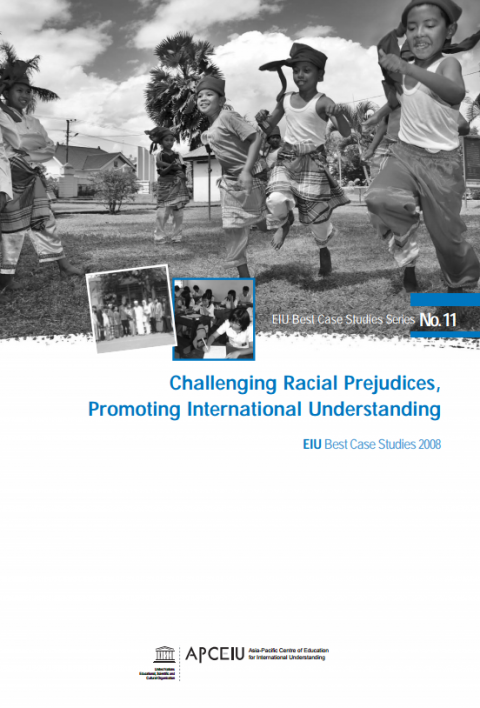 EIU Best Practices Series No. 11: Challenging Racial Prejudices, Promoting International Understanding سنة النشر: 2008 المؤلف المؤسسي: APCEIU This monograph is one of APCEIU's EIU Best Practices Series, which aims to encourage educators, scholars, and activists to implement and share local initiatives on EIU. The Series No.11 introduces a case study of the SMA Taman Harapan High School in Indonesia, conducted to explore prevalent issues of racial prejudices and devise methods to reduce racism. Research revealed that students held a degree of racist perception against people of certain heritage. Activities were conducted thenceforth, allowing participants to have direct and extended interactions with people of different cultures. Despite the short timeframe of the activity, perception on stereotypes did not change altogether, yet progress was evident in students’ understanding of the severity of the issue. As educators also learned ways to help alleviate the problem of racism, the case is an exemplary example of increasing cultural awareness and international understanding.
 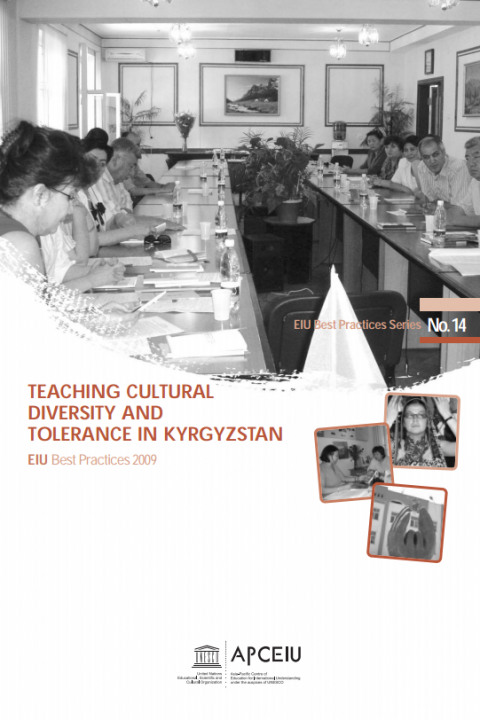 EIU Best Practices Series No. 14: Teaching Cultural Diversity and Tolerance in Kyrgyzstan سنة النشر: 2009 المؤلف: Erkeayim Jorobekavo | Almakan Naizabekova المؤلف المؤسسي: APCEIU This report is one of APCEIU's EIU Best Practices Series, which aims to encourage educators, scholars, and activists to implement and share local initiatives on EIU. The Series No.14 introduces ‘Culturology,’ a mandatory course instituted in Kyrgyz-Uzbek University, designed and implemented to teach cultural diversity and tolerance to students. Given the nation’s recent history of independence and racial and religious diversity, the University chose to develop the course program and methodology guidebook to foster understanding of international education and multiculturalism.
  EIU Best Practices Series No. 19: Culture-Based Education Programme for Indigenous Children & Youth in the Philippines سنة النشر: 2010 المؤلف: Benjamin David Abadiano المؤلف المؤسسي: APCEIU This monograph is one of APCEIU's EIU Best Practices Series, which aims to encourage educators, scholars, and activists to implement and share local initiatives on EIU. The Series No.19 introduces the Pumulaan program, a successful culture-based education programme for indigenous children and youth in the Philippines. The program is similar to that of Tugdaan, a widely recognized education program that promote learning for the Indigenous people. The Pumulaan program focuses on providing culturally sensitive, appropriate, and relevant education to students in Mangyan Tribe in Mindoro and the Matigsalog Tribe in Mindanao, incorporating values of peace, harmony, and diversity within the education programs.
 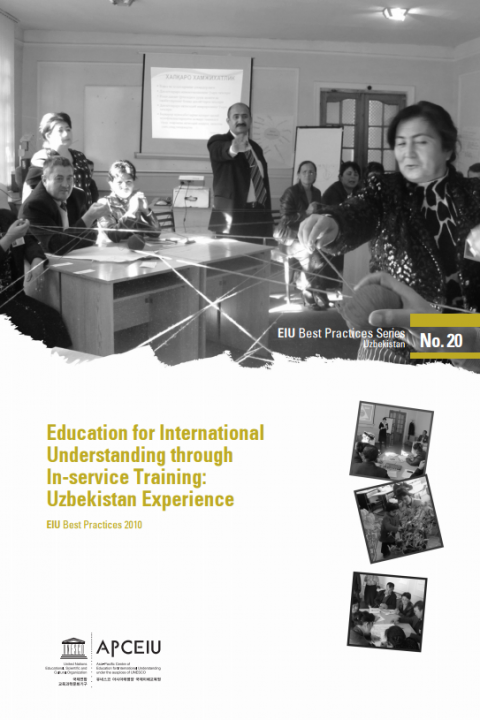 EIU Best Practices Series No. 20: Education for International Understanding through In-service Training: Uzbekistan Experience سنة النشر: 2010 المؤلف: Mukhamadjon Aliyev المؤلف المؤسسي: APCEIU This monograph is one of APCEIU's EIU Best Practices Series, which aims to encourage educators, scholars, and activists to implement and share local initiatives on EIU. The Series No.20 introduces EIU projects undertaken by the Avloni In-Service Teacher Training Institute in Uzbekistan. The programme integrates EIU concepts into the public education through in-service training programs, promotes EIU concepts in different subjects and projects, and broadcasts good practices in the field of global citizenship education nationwide. Although it is still in the process of improvement, the programme is expected to raise awareness of EIU and empower education managers, principals and teachers in Uzbekistan.
 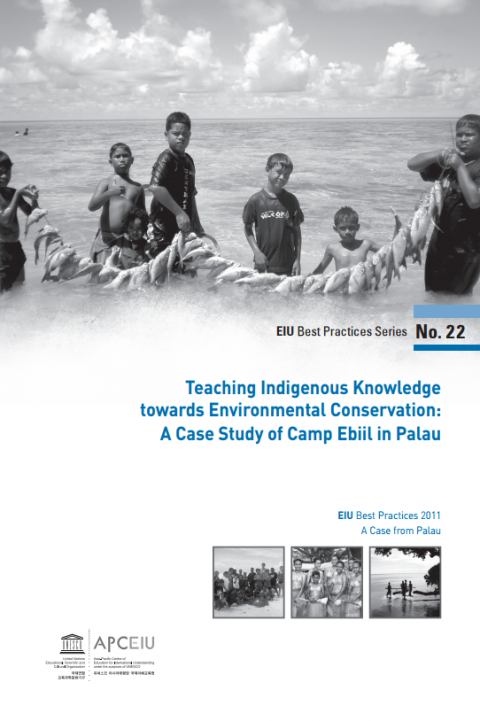 EIU Best Practices Series No. 22: Teaching Indigenous Knowledge towards Environmental Conservation: A Case Study of Camp Ebiil in Palau سنة النشر: 2011 المؤلف: Ann Kloulechad Singeo المؤلف المؤسسي: APCEIU This monograph is one of APCEIU's EIU Best Practices Series, which aims to encourage educators, scholars, and activists to implement and share local initiatives on EIU. The Series No.22 introduces a case study of community-based education program from Camp Emiil in Palau that promote protection of one's identity and heritage by teaching the youth with the traditional knowledge. The camp allows young participants to take direct part in fun activities and learning opportunities to immerse in culture and nature. Through such experiential learning, participants become more knowledgeable about ethnic practices and acquire important character building skills and conservation knowledge.
 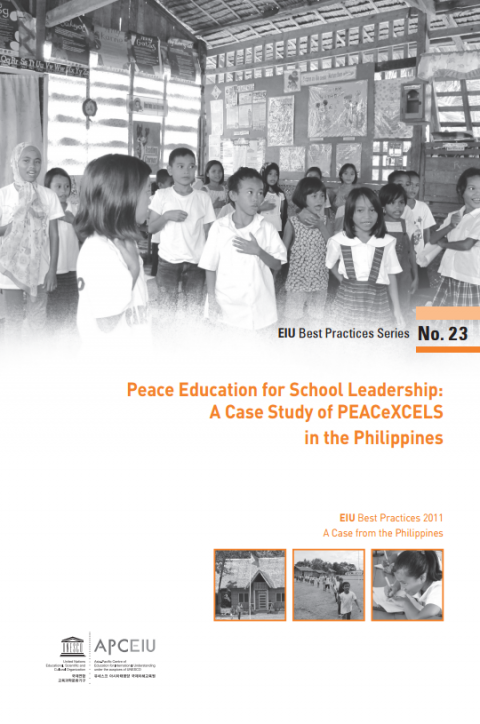 EIU Best Practices Series No. 23: Peace Education for School Leadership: A Case Study of PEACeXCELS in the Philippines سنة النشر: 2011 المؤلف: Ethel Agnes Pascua-Valenzuela | Elaissa Marina Mendoza | Cristina Villanueva-Moreno المؤلف المؤسسي: APCEIU This report is one of APCEIU's EIU Best Practices Series, which aims to encourage educators, scholars, and activists to implement and share local initiatives on EIU. The Series No.23 showcases Peace Education Excellence in School Leadership for Southeast Asia (PEACeXCELS) in the Philippines, a competency building program for educators on EIU. Through comprehensive training, principals and educators undertook reforms in respective schools, implementing various activities to include concept of peace and multiculturalism within school policies and lesson plans.
 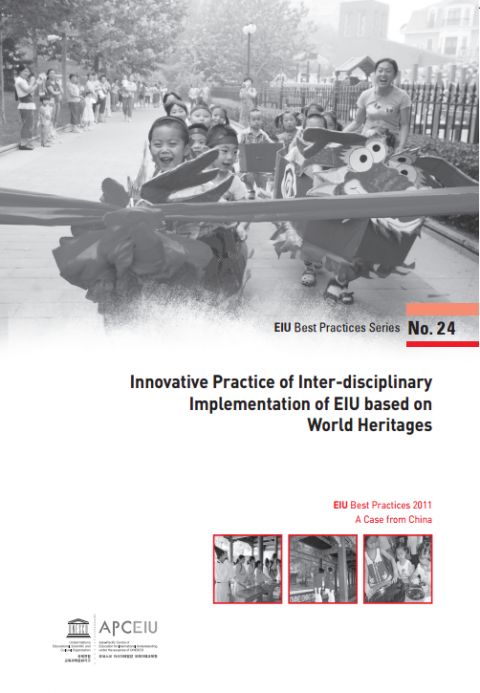 EIU Best Practices Series No. 24: Innovative Practice of Inter-disciplinary Implementation of EIU based on World Heritages سنة النشر: 2011 المؤلف: QIAN Lixia المؤلف المؤسسي: APCEIU This monograph is one of APCEIU's EIU Best Practices Series, which aims to encourage educators, scholars, and activists to implement and share local initiatives on EIU. The Series No.24 introduces a research undertaken by the Research Center for ESD, which outline projects that can be implemented to explore and promote education for international understanding and world heritage. To test the effectiveness, the Center carried out activities such as role-playing discussions and hands-on festival experiences at four kindergartens of the Huijia Education Organization and the High School Affiliated to the Renmin University of China. Overall, such initiative increased multicultural awareness of students and teachers alike, and affirmed commitment for further research and development.