
الموارد
استكشف مجموعة واسعة من الموارد القيمة حول تعليم المواطنة العالمية لتعميق فهمك وتعزيز البحث والمناصرة والتعليم والتعلم.
تم العثور على 2,193 نتيجة
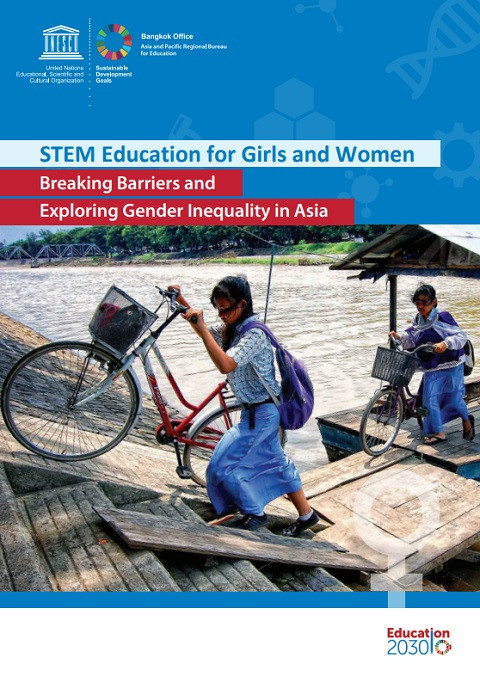 STEM Education for Girls and Women: Breaking Barriers and Exploring Gender Inequality in Asia سنة النشر: 2020 المؤلف المؤسسي: UNESCO Bangkok | UNESCO Science, Technology, Engineering and Mathematics (STEM) fields are considered catalysts for the achievement of the 2030 Agenda for Sustainable Development. Yet, particularly for STEM fields, girls and women, for a multitude of social, cultural and psychological reasons, engage and participate at a lower rate than boys and men. This research collection aims to highlight the contextual barriers that girls and women face in STEM education and careers and offer concrete examples of interventions that successfully encourage participation of girls and women in STEM. These eight case studies from across Asia explore both the barriers and the achievements in SDG 4 and SDG 5, and give context-specific analysis of different aspects of gender disparities in the respective countries.
 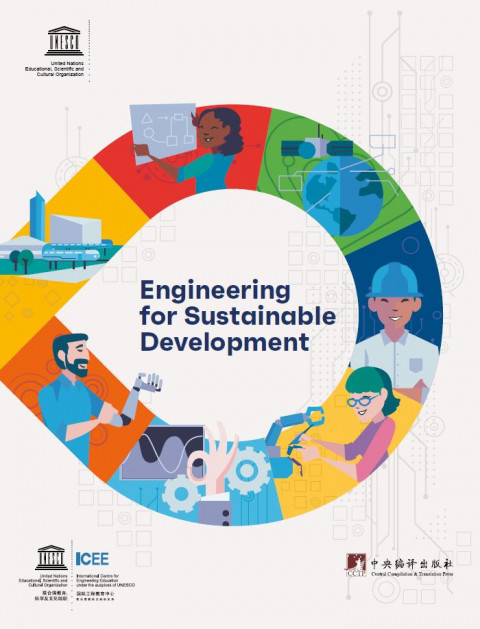 Engineering for Sustainable Development: Delivering on the Sustainable Development Goals سنة النشر: 2021 المؤلف المؤسسي: UNESCO | International Centre for Engineering Education (ICEE) The report highlights the crucial role of engineering in achieving each of the 17 SDGs. It shows how equal opportunities for all is key to ensuring an inclusive and gender balanced profession that can better respond to the shortage of engineers for implementing the SDGs. It provides a snapshot of the engineering innovations that are shaping our world, especially emerging technologies such as big data and AI, which are crucial for addressing the pressing challenges facing humankind and the planet. It analyses the transformation of engineering education and capacity-building at the dawn of the Fourth Industrial Revolution that will enable engineers to tackle the challenges ahead. It highlights the global effort needed to address the specific regional disparities, while summarizing the trends of engineering across the different regions of the world.By presenting case studies and approaches, as well as possible solutions, the report reveals why engineering is crucial for sustainable development and why the role of engineers is vital in addressing basic human needs such as alleviating poverty, supplying clean water and energy, responding to natural disasters, constructing resilient infrastructure, and bridging the development divide, among many other actions, leaving no one behind.It is hoped that the report will serve as a reference for governments, engineering organizations, academia and educational institutions, and industry to forge global partnerships and catalyse collaboration in engineering so as to deliver on the SDGs. 工程—支持可持续发展 سنة النشر: 2021 المؤلف المؤسسي: UNESCO | International Centre for Engineering Education (ICEE) 报告强调了工程在实现17项可持续发展目标中的关键作用。它表明,人人机会均等是确保一个包容性和性别均衡的职业的关键,能够更好地应对实施可持续发展目标的工程师短缺的问题。它提供了塑造我们世界的工程创新的快照,特别是大数据和人工智能等新兴技术,这些技术对于解决人类和地球面临的紧迫挑战至关重要。它分析了第四次工业革命初期工程教育和能力建设的转变,这将使工程师能够应对未来的挑战。它强调了解决具体地区差异所需的全球努力,同时总结了世界不同地区的工程趋势。通过介绍案例研究和方法以及可能的解决办法,报告揭示了为什么工程对可持续发展至关重要,以及为什么工程师的作用对解决人类的基本需求至关重要,例如减轻贫困、提供清洁水和能源、应对自然灾害,在许多其他行动中,建设有弹性的基础设施和弥合发展鸿沟,不让任何人掉队。希望该报告能为各国政府、工程组织、学术界和教育机构以及工业界建立全球伙伴关系和促进工程领域的合作提供参考,以实现可持续发展目标。