
الموارد
استكشف مجموعة واسعة من الموارد القيمة حول تعليم المواطنة العالمية لتعميق فهمك وتعزيز البحث والمناصرة والتعليم والتعلم.
تم العثور على 3,229 نتيجة
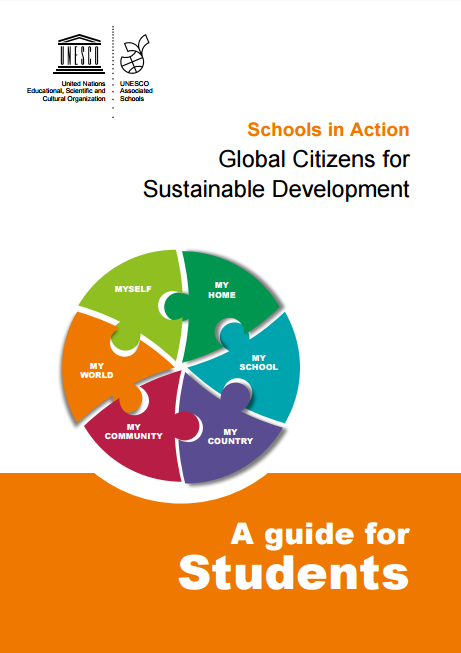 Escuelas en acción Ciudadanos del mundo para el desarrollo sostenible: guía para el alumnado سنة النشر: 2016 المؤلف المؤسسي: Organización de las Naciones Unidas para la Educación, la Ciencia y la Cultura (UNESCO) The UNESCO Associated Schools Project Network (ASPnet) in Action: Global Citizens for Sustainable Development student guide aims to introduce secondary school students to Global Citizenship Education (GCED) and Education for Sustainable Development (ESD) and provide them with ideas and activities to contribute proactively to a more peaceful and sustainable world. The guide draws on the discussions and activities of almost 1,100 participants from 104 countries, including ASPnet National Coordinators, school principals, teachers, students and experts who contributed to the ASPnet Online Collaborative Platform: Global Citizens Connected for Sustainable Development in 2014 and 2015 [http://en.unesco.org/aspnet/globalcitizens]. You will find in this student guide: An overview of what it means to be a global citizen and of how you can contribute to sustainable development. Ideas for getting active yourself, as part of your home, school, community, country and globally. Selected activities on GCED and ESD from ASPnet schools around the world.
  우리가 원하는 미래를 조성하자: 유엔 지속가능 발전교육 10년 최종 보고서 سنة النشر: 2014 المؤلف: Carolee Buckler | Heather Creech المؤلف المؤسسي: 유네스코 유엔 지속가능 발전교육10년은(2005-2014, 이하DESD) 교육과 학습의 모든 측면에서 지속가능한 발전의 원칙과 관행의 통합, 모두를 위한 정의로운 사회, 보다 지속가능한 비전을 가지고 지식과 가치와 태도의 변화를 독려하는 것을 그 목적으로 한다. 지속가능 발전교육의 권한은 지속가능한 교육 시스템에 새로운 방향을 제시함으로 파트너십을 발휘하는 다수의 이해 당사자당들- UN 회원국, UN 기관, 교육분과, 민간 부문 및 시민 사회-에 동력을 공급한다. 이 최종 지속가능 발전교육 글로벌 모니터링 및 평가 보고서(이하GME)는 지속가능한 발전 노력과 교육 시스템으로 지속가능 발전교육(이하 ESD)을 포함한 진행 평가를 제공한다.지난 DESD, GME, 이 두 개의 보고서는 회원국과 ESD현상황에 대한 평가를 하는 이해 당사자들에 의존하여 세계, 국가 및 모든 지역과 교육 수준에서의 ESD 성과와 10년의 진행 경과에 대해서 그 지도를 그리고 있다. مرحلة ما بعد عام 2015: التعليم الذي نصبو إليه سنة النشر: 2014 المؤلف المؤسسي: منظمة الأمم المتحدة للتربية والعلم والثقافة (UNESCO) | United Nations Children's Fund (UNICEF) The post-2015 education agenda should be aspirational, transformative and holistic, and an integral part of the broader post-2015 development agenda. It should be of universal relevance and mobilize all stakeholders in all countries. Education must be a stand-alone goal in the broader post-2015 development agenda and should be framed by a comprehensive overarching goal, with measurable global targets and related indicators. In addition, education must be integrated into other development goals. The future education agenda should be rights-based and reflect a perspective based on equity and inclusion, with particular attention to gender equality and to overcoming all forms of discrimination in and through education, ensuring that no-one is left behind. It must support free and compulsory basic education. It should expand the vision of access for all to reflect relevant learning outcomes through the provision of quality education at all levels, from early childhood to higher education, in safe and healthy environments. It should take a holistic and lifelong learning approach, and provide multiple pathways of learning using innovative methods and information and communication technologies. It should reinforce approaches such as global citizenship education and education for sustainable development, which foster attitudes and behaviours that promote peace, conflict resolution and mutual understanding, tolerance, critical thinking, and respect for cultural diversity and for the environment. Más allá de 2015: la educación que queremos سنة النشر: 2014 المؤلف المؤسسي: Organización de las Naciones Unidas para la Educación, la Ciencia y la Cultura (UNESCO) | United Nations Children's Fund (UNICEF) The post-2015 education agenda should be aspirational, transformative and holistic, and an integral part of the broader post-2015 development agenda. It should be of universal relevance and mobilize all stakeholders in all countries. Education must be a stand-alone goal in the broader post-2015 development agenda and should be framed by a comprehensive overarching goal, with measurable global targets and related indicators. In addition, education must be integrated into other development goals. The future education agenda should be rights-based and reflect a perspective based on equity and inclusion, with particular attention to gender equality and to overcoming all forms of discrimination in and through education, ensuring that no-one is left behind. It must support free and compulsory basic education. It should expand the vision of access for all to reflect relevant learning outcomes through the provision of quality education at all levels, from early childhood to higher education, in safe and healthy environments. It should take a holistic and lifelong learning approach, and provide multiple pathways of learning using innovative methods and information and communication technologies. It should reinforce approaches such as global citizenship education and education for sustainable development, which foster attitudes and behaviours that promote peace, conflict resolution and mutual understanding, tolerance, critical thinking, and respect for cultural diversity and for the environment. L'Après-2015: l'éducation que nous voulons سنة النشر: 2014 المؤلف المؤسسي: Organisation des Nations Unies pour l'éducation, la science et la culture (UNESCO) | United Nations Children's Fund (UNICEF) The post-2015 education agenda should be aspirational, transformative and holistic, and an integral part of the broader post-2015 development agenda. It should be of universal relevance and mobilize all stakeholders in all countries. Education must be a stand-alone goal in the broader post-2015 development agenda and should be framed by a comprehensive overarching goal, with measurable global targets and related indicators. In addition, education must be integrated into other development goals. The future education agenda should be rights-based and reflect a perspective based on equity and inclusion, with particular attention to gender equality and to overcoming all forms of discrimination in and through education, ensuring that no-one is left behind. It must support free and compulsory basic education. It should expand the vision of access for all to reflect relevant learning outcomes through the provision of quality education at all levels, from early childhood to higher education, in safe and healthy environments. It should take a holistic and lifelong learning approach, and provide multiple pathways of learning using innovative methods and information and communication technologies. It should reinforce approaches such as global citizenship education and education for sustainable development, which foster attitudes and behaviours that promote peace, conflict resolution and mutual understanding, tolerance, critical thinking, and respect for cultural diversity and for the environment.
  The United Nations world water development report 2016: water and jobs سنة النشر: 2016 المؤلف المؤسسي: UNESCO Three out of four jobs worldwide rely on water. As such, water shortages and lack of access may limit economic growth in the years to come, according to the World Water Development Report 2016. From its collection, through various uses, to its ultimate return to the natural environment, water is a key factor in the development of job opportunities either directly related to its management (supply, infrastructure, wastewater treatment, etc.) or in economic sectors that are heavily water-dependent such as agriculture, fishing, power, industry and health. In its analysis of the economic impact of access to water, the report cites numerous studies that show a positive correlation between investments in the water sector and economic growth. It also highlights the key role of water in the transition to a green economy. Rapport mondial des Nations Unies sur la mise en valeur des ressources en eau 2016: l'eau et l'emploi سنة النشر: 2016 المؤلف المؤسسي: Organisation des Nations Unies pour l'éducation, la science et la culture (UNESCO) Three out of four jobs worldwide rely on water. As such, water shortages and lack of access may limit economic growth in the years to come, according to the World Water Development Report 2016. From its collection, through various uses, to its ultimate return to the natural environment, water is a key factor in the development of job opportunities either directly related to its management (supply, infrastructure, wastewater treatment, etc.) or in economic sectors that are heavily water-dependent such as agriculture, fishing, power, industry and health. In its analysis of the economic impact of access to water, the report cites numerous studies that show a positive correlation between investments in the water sector and economic growth. It also highlights the key role of water in the transition to a green economy.
 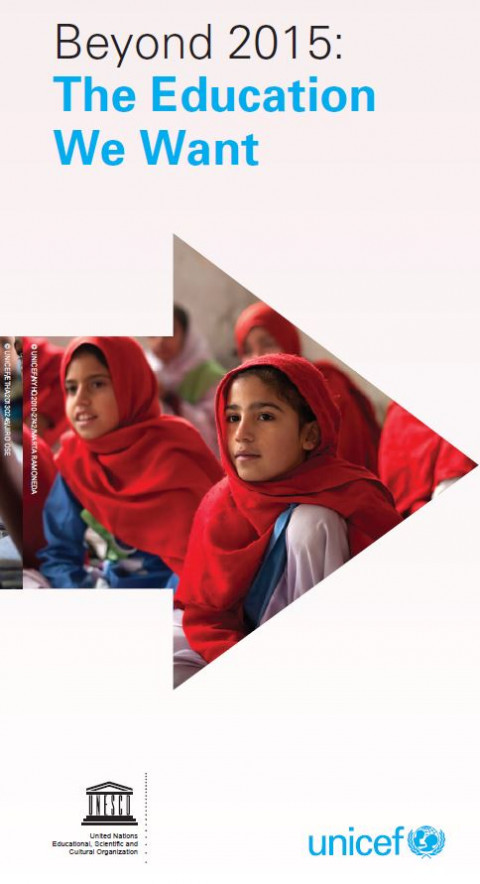 Beyond 2015: the education we want سنة النشر: 2014 المؤلف المؤسسي: UNESCO | United Nations Children's Fund (UNICEF) The post-2015 education agenda should be aspirational, transformative and holistic, and an integral part of the broader post-2015 development agenda. It should be of universal relevance and mobilize all stakeholders in all countries. Education must be a stand-alone goal in the broader post-2015 development agenda and should be framed by a comprehensive overarching goal, with measurable global targets and related indicators. In addition, education must be integrated into other development goals. The future education agenda should be rights-based and reflect a perspective based on equity and inclusion, with particular attention to gender equality and to overcoming all forms of discrimination in and through education, ensuring that no-one is left behind. It must support free and compulsory basic education.It should expand the vision of access for all to reflect relevant learning outcomes through the provision of quality education at all levels, from early childhood to higher education, in safe and healthy environments. It should take a holistic and lifelong learning approach, and provide multiple pathways of learning using innovative methods and information and communication technologies. It should reinforce approaches such as global citizenship education and education for sustainable development, which foster attitudes and behaviours that promote peace, conflict resolution and mutual understanding, tolerance, critical thinking, and respect for cultural diversity and for the environment.
 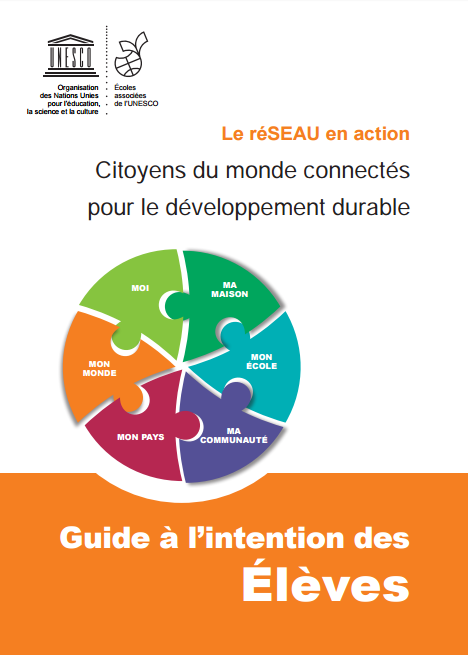 Le réSEAU en action: citoyens du monde connectés pour le développement durable: guide à l'intention des élèves سنة النشر: 2017 المؤلف المؤسسي: UNESCO Le guide « Le réSEAU en action : Citoyens du monde connectés pour le développement durable » à l’intention des élèves a pour but d’initier les élèves du secondaire à l’éducation à la citoyenneté mondiale (ECM) et à l’éducation en vue du développement durable (EDD), et de leur proposer des idées et des activités pour qu’ils contribuent activement à la construction d’un monde plus pacifique et durable. Le guide s’appuie sur les discussions et les activités de près de 1 100 participants originaires de 104 pays, notamment des coordinnateurs nationaux du réSEAU, des chefs d’établissement, des enseignants, des élèves et des experts qui ont contribué à la plateforme collaborative en ligne « Le réSEAU en action : Citoyens du monde connectés pour le développement durable » en 2014 et 2015 [http://fr.unesco.org/aspnet/globalcitizens/]. Le guide à l’intention des élèves : donne une idée de ce que signifie « être un citoyen du monde » ainsi que des suggestions pour contribuer au développement durable ; propose des idées pour agir vous-mêmes dans votre foyer, dans votre école, dans votre communauté, dans votre pays et dans le monde ; présente une sélection d’activités sur l’ECM et l’EDD mises en œuvre par des écoles du réSEAU du monde entier.
 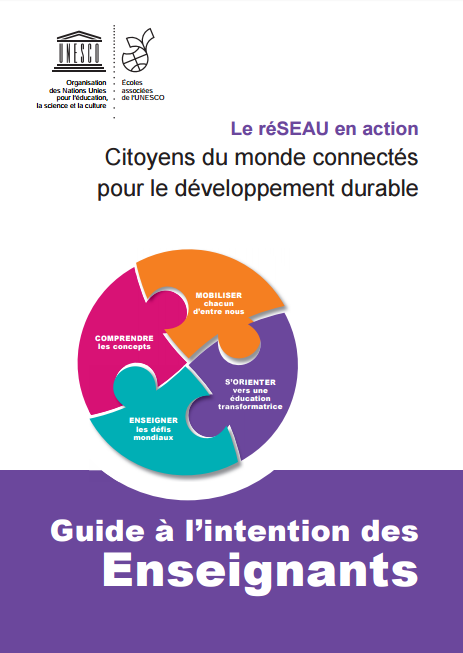 Le réSEAU en action: Citoyens du monde connectés pour le développement durable: guide à l'intention des enseignants سنة النشر: 2017 المؤلف المؤسسي: UNESCO Le guide à l’intention des enseignants : donne aux élèves une idée de ce que signifie pour eux « devenir des citoyens du monde » ainsi que des suggestions pour contribuer au développement durable ; propose des idées d’activités en classe pour aider les élèves du secondaire à développer des connaissances, des compétences, des valeurs, des attitudes et des comportements en faveur de l’ECM et de l’EDD ; présente une sélection d’activités sur l’ECM et l’EDD mises en œuvre par les écoles du réSEAU du monde entier.