
الموارد
استكشف مجموعة واسعة من الموارد القيمة حول تعليم المواطنة العالمية لتعميق فهمك وتعزيز البحث والمناصرة والتعليم والتعلم.
تم العثور على 2,781 نتيجة
 학교 수준 민주시민교육을 위한 교육과정 개선 방안 سنة النشر: 2020 المؤلف: 장의선 | 김기철 | 박진용 | 박태준 | 이인태 | 강대현 | 정윤미 المؤلف المؤسسي: 한국교육과정평가원 본 연구의 목적은 먼저 세계화가 이미 일상화 된 21세기의 학생들에게 요구되는 민주시민성을 폭넓게 성찰하고, 이를 측정할 수 있는 민주시민성 지표를 구안한 후, 구안한 지표를 준거로 민주시민성 인식 및 교육과정 현황 등 민주시민교육 관련 주요 실태와 요구를 분석하여, 민주시민교육 강화를 위한 교육과정 개선안을 도출하는 데 있다.
 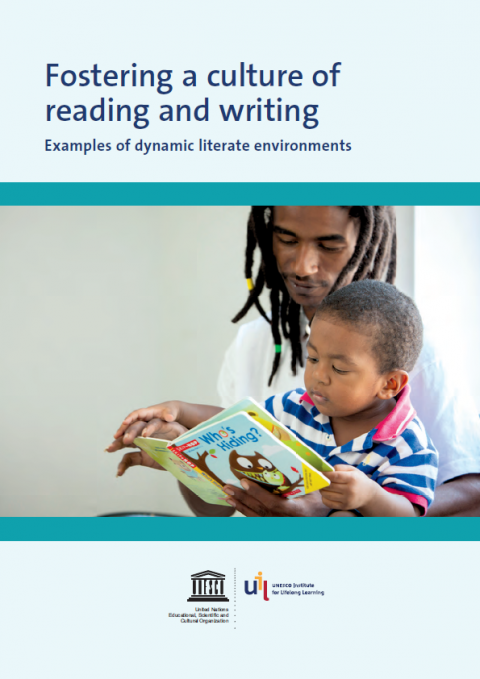 Fostering a culture of reading and writing: examples of dynamic literate environments سنة النشر: 2017 المؤلف: Hanemann, Ulrike | Krolak, Lisa المؤلف المؤسسي: UNESCO Institute for Lifelong Learning (UIL) The examples of literacy programmes showcased and analysed in this publication confirm the critical role of literate environments. They have been selected from UNESCO’s Effective Literacy and Numeracy Practises Database (LitBase), which UIL develops on a continuous basis. They demonstrate first and foremost how the development of literate environments can positively influence people’s motivation to (re-)engage in literacy and learning and how they can practise their newly acquired skills in their daily activities to reach sustainable skills levels. In addition, they reveal successful strategies towards a culture of reading, writing and learning in the family, community or wider society. The examples reflect different contexts, such as families, libraries and prisons, to illustrate the potential of ICTs, intergenerational approaches, and community, mobile and prison libraries to engage young people and adults in literacy and learning. Créer des cultures de la lecture, de l'écriture et de l'apprentissage سنة النشر: 2017 المؤلف: Hanemann, Ulrike | Krolak, Lisa المؤلف المؤسسي: Institut de l’UNESCO pour l’apprentissage tout au long de la vie (UIL) Les exemples de programmes d'alphabétisation présen-tés et analysés dans cette publication confirment le rôle déterminant des environnements alphabétisés. Ils sont tirés de la base de données Pratiques efficaces d'alpha-bétisation (LitBase) de l'UNESCO, que UIL développe en permanence. Ils démontrent, d'abord et avant tout, com-ment la mise en place d'environnements alphabétisés peut influencer positivement une personne et la pousser à se (re)mettre à l'alphabétisation et à l'apprentissage, mais aussi comment l'apprenant peut pérenniser ses acquis en les appliquant à ses activités quotidiennes. En outre, ils révèlent des stratégies efficaces pour créer une culture de la lecture, de la lecture et de l'apprentissage au sein de la famille, de la communauté ou de la société. Les exemples incluent divers contextes – familles, biblio-thèques et prisons – pour illustrer la capacité des TIC, des approches intergénérationnelles et des bibliothèques communautaires, mobiles et carcérales à encourager jeunes et adultes à s'alphabétiser et à apprendre.
 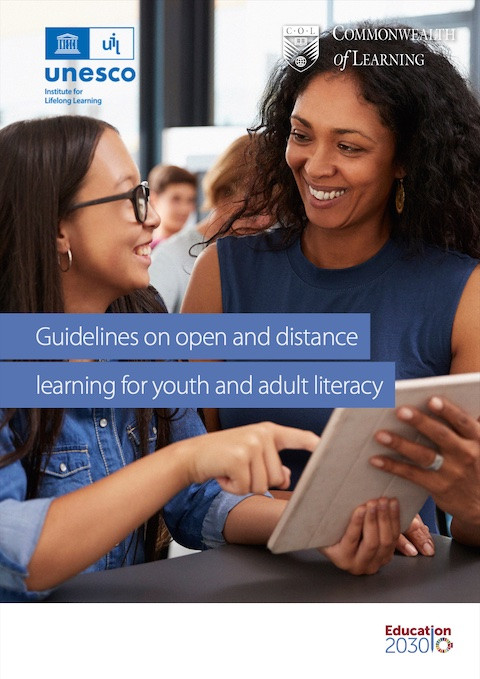 Guidelines on Open and Distance Learning for Youth and Adult Literacy سنة النشر: 2022 المؤلف المؤسسي: UNESCO Institute for Lifelong Learning (UIL) | Commonwealth of Learning Guidelines on open and distance learning for youth and adult literacy addresses a gap in literacy provision by presenting open and distance learning (ODL) principles and practices to illustrate how learning and education can be delivered at a distance.This publication is divided into two main parts. Part 1 presents practical guidance in four areas—planning, development, implementation, and monitoring and evaluation—and part 2 considers the various technologies that are used for ODL programmes and could support youth and adult literacy learning.Policy-makers, literacy providers and educators will benefit from understanding and applying the concept and principles of ODL in designing and delivering effective, inclusive and sustainable literacy programmes and learning opportunities— strengthening the resilience of their literacy programmes and expanding outreach and participation in the process. Apprentissage libre et à distance pour l’alphabétisation des jeunes et des adultes: lignes directrices سنة النشر: 2022 المؤلف المؤسسي: Institut de l’UNESCO pour l’apprentissage tout au long de la vie (UIL) | Commonwealth of Learning Les lignes directrices sur l'apprentissage ouvert et à distance pour l'alphabétisation des jeunes et des adultes comblent une lacune dans l'offre d'alphabétisation en présentant des principes et des pratiques d'apprentissage ouvert et à distance (ODL) pour illustrer comment l'apprentissage et l'éducation peuvent être dispensés à distance. Cette publication est divisée en deux parties principales. La partie 1 présente des conseils pratiques dans quatre domaines—la planification, le développement, la mise en œuvre et le suivi et l'évaluation—et la partie 2 examine les diverses technologies qui sont utilisées pour les programmes ODL et qui pourraient soutenir l'apprentissage de l'alphabétisation des jeunes et des adultes. Les décideurs politiques, les prestataires d'alphabétisation et les éducateurs bénéficieront de la compréhension et de l'application du concept et des principes de l'ODL dans la conception et la prestation de programmes d'alphabétisation et d'opportunités d'apprentissage efficaces, inclusifs et durables - renforçant la résilience de leurs programmes d'alphabétisation et élargissant la portée et la participation au processus. المبادئ اﻟﺘﻮﺟﯿﮭﯿﺔ ﻟﻠﺘﻌﻠﻢ اﻟﻤﻔﺘﻮح واﻟﺘﻌﻠﻢ ﻋﻦ ﺑﻌﺪ ﻟﻤﺤﻮ أﻣﯿﺔ اﻟﺸﺒﺎب واﻟﻜﺒﺎر سنة النشر: 2022 المؤلف المؤسسي: UNESCO Institute for Lifelong Learning (UIL) | Commonwealth of Learning تعالج المبادئ التوجيهية بشأن التعلم المفتوح والتعلم عن بعد للشباب والكبار فجوة في توفير محو الأمية من خلال تقديم مبادئ وممارسات التعلم المفتوح والتعلم عن بعد (ODL) لتوضيح كيف يمكن تقديم التعلم والتعليم عن بعد. ينقسم هذا المنشور إلى قسمين رئيسيين. يقدم الجزء الأول إرشادات عملية في أربعة مجالات - التخطيط ، والتطوير ، والتنفيذ ، والرصد والتقييم - وينظر الجزء الثاني في التقنيات المختلفة المستخدمة لبرامج ODL ويمكن أن تدعم تعلم القراءة والكتابة للشباب والكبار. سيستفيد صانعو السياسات ومقدمو محو الأمية والمعلمون من فهم وتطبيق مفهوم ومبادئ ODL في تصميم وتقديم برامج محو الأمية الفعالة والشاملة والمستدامة وفرص التعلم - تعزيز مرونة برامج محو الأمية وتوسيع نطاق التوعية والمشاركة في العملية .
  예비교사를 위한 글로벌-다문화 교육 역량 강화 교육 프로그램 사례 (국제이해교육연구; Vol. 18, No. 2) سنة النشر: 2023 المؤلف: 김관태 | 오홍식 | 권상철 المؤلف المؤسسي: 한국국제이해교육학회 이 글은 예비교사의 글로벌-다문화 교육 역량 강화를 위해 시행한 글로벌교원양성(GTU) 사업의 제주대학교 활동 경험을 소개하며 그 확대 방안을 제시한다. 제주대학교 GTU 사업은 글로벌 역량과 다문화 역량을 포괄하는 글로벌-다문화 교육 프로그램을 지식, 기능, 태도의 영역으로 구분하고 국내와 해외에서 교과 수업, 비교과 활동으로 과정별로 진행하였다. 과정은 대다수의 예비교사를 대상으로 하는 기초, 국내․외 교육 현장 봉사 활동 중심의 심화, 그리고 해외 교육실습 및 특강 강사로 참여하는 특화로 진행하였다. 다양한 글로벌-다문화 역량 강화 교육 활동은 그 내용을 영역별 기대 효과와 더불어 제시해 선별적으로 선택해 운영할 수 있디록 제시하였다. 제주대학교 GTU 사업은 다양한 국내․외 활동을 단계적으로 진행하며 글로벌 다문화 사회에 필요한 역량을 갖춘 교원을 양성하는 프로그램을 제공하고 있다. 제주대학교의 글로벌-다문화 교육 경험은 다른 교원양성기관의 예비교사 양성 사업 활동에 참고할 수 있을 것이다.
 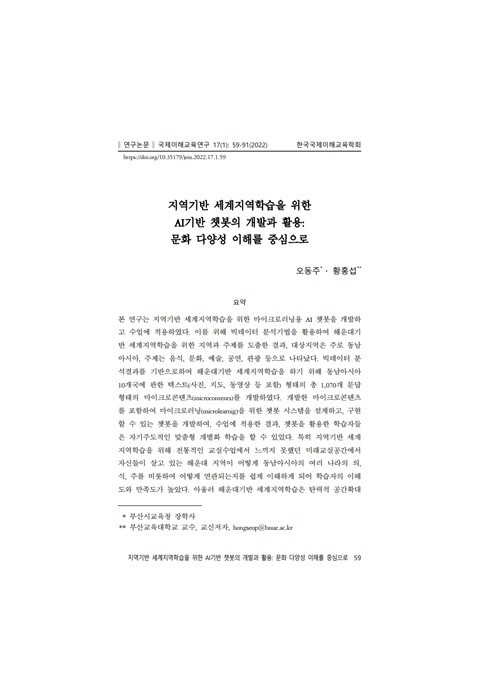 지역기반 세계지역학습을 위한 AI기반 챗봇의 개발과 활용: 문화 다양성 이해를 중심으로 (국제이해교육연구; Vol. 17, No. 1) سنة النشر: 2022 المؤلف: 오동주 | 황홍섭 المؤلف المؤسسي: 한국국제이해교육학회 본 연구는 지역기반 세계지역학습을 위한 마이크로러닝용 AI 챗봇을 개발하고 수업에 적용하였다. 이를 위해 빅데이터 분석기법을 활용하여 해운대기반 세계지역학습을 위한 지역과 주제를 도출한 결과, 대상지역은 주로 동남아시아, 주제는 음식, 문화, 예술, 공연, 관광 등으로 나타났다. 빅데이터 분석결과를 기반으로하여 해운대기반 세계지역학습을 하기 위해 동남아시아 10개국에 관한 텍스트(사진, 지도, 동영상 등 포함) 형태의 총 1,070개 문답형태의 마이크로콘텐츠(microcontents)를 개발하였다. 개발한 마이크로콘텐츠를 포함하여 마이크로러닝(microlearnig)을 위한 챗봇 시스템을 설계하고, 구현할 수 있는 챗봇을 개발하여, 수업에 적용한 결과, 챗봇을 활용한 학습자들은 자기주도적인 맞춤형 개별화 학습을 할 수 있었다. 특히 지역기반 세계지역학습을 위해 전통적인 교실수업에서 느끼지 못했던 미래교실공간에서 자신들이 살고 있는 해운대 지역이 어떻게 동남아시아의 여러 나라의 의, 식, 주를 비롯하여 어떻게 연관되는지를 쉽게 이해하게 되어 학습자의 이해도와 만족도가 높았다. 아울러 해운대기반 세계지역학습은 탄력적 공간확대 원리를 현장에 적용할 수 있어서 창의적 수업을 통해, 교과서의 한계를 잘 극복할 수 있게 해 주었다. 학습자들은 수업을 통하여 다문화적 관점에서 다름이라는 문화의 다양성과 글로벌 관점에서 유사함이라는 상호의존성을 통하여 함께 살아가는 세계시민성의 자질을 함양할 수 있었다.
 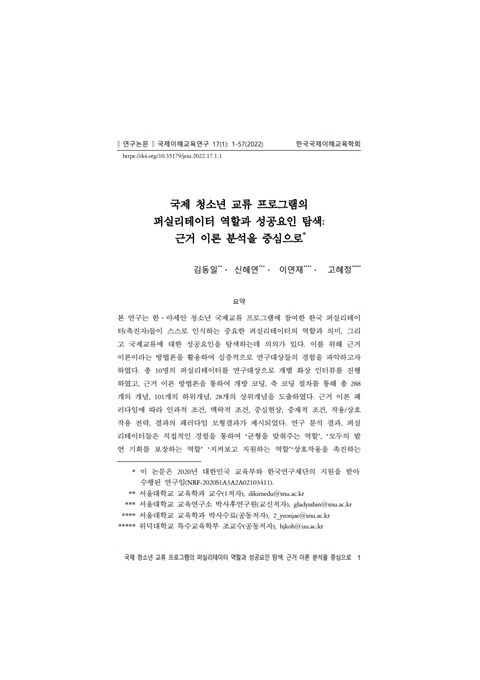 국제 청소년 교류 프로그램의 퍼실리테이터 역할과 성공요인 탐색: 근거 이론 분석을 중심으로 (국제이해교육연구; Vol. 17, No. 1) سنة النشر: 2022 المؤلف: 김동일 | 신혜연 | 이연재 | 고혜정 المؤلف المؤسسي: 한국국제이해교육학회 본 연구는 한․아세안 청소년 국제교류 프로그램에 참여한 한국 퍼실리테이터(촉진자)들이 스스로 인식하는 중요한 퍼실리테이터의 역할과 의미, 그리고 국제교류에 대한 성공요인을 탐색하는데 의의가 있다. 이를 위해 근거 이론이라는 방법론을 활용하여 심층적으로 연구대상들의 경험을 파악하고자 하였다. 총 10명의 퍼실리테이터를 연구대상으로 개별 화상 인터뷰를 진행하였고, 근거 이론 방법론을 통하여 개방 코딩, 축 코딩 절차를 통해 총 288개의 개념, 101개의 하위개념, 28개의 상위개념을 도출하였다. 근거 이론 패러다임에 따라 인과적 조건, 맥락적 조건, 중심현상, 중재적 조건, 작용/상호작용 전략, 결과의 패러다임 모형결과가 제시되었다. 연구 분석 결과, 퍼실리테이터들은 직접적인 경험을 통하여 ‘균형을 맞춰주는 역할’, ‘모두의 발언 기회를 보장하는 역할’ ‘지켜보고 지원하는 역할’‘상호작용을 촉진하는 역할’ 등으로 묘사하였고, 청소년을 대상으로 한 국제교류 프로그램 특성에 대해 성공요인을 ‘성공적인 문화적 교류’, ‘여러 국가 참가자들의 연대’, ‘유사한 예절과 가치관’, ‘청소년 시기의 시의적절한 경험’, ‘촉진자도 토론을 통한 긍정적인 경험’, ‘토론을 통한 의사 결정 능력 함양’ 등으로 표현하였다. 특히, 코로나19로 지속적인 온라인 학습 경험에 기반하여 국제교류 의미에 관한 의견이 도출되었으며, 차후 더 나은 온라인 국제교류를 위한 방안도 논의되었다. 본 연구는 한․아세안 청소년 국제교류 프로그램을 통해 퍼실리테이션의 역할, 방향성과 더불어 국제교류에 미치는 요소들를 비교 분석하였고, 앞으로 이러한 온라인 플랫폼과 퍼실리테이터들의 역할에 기여하는 요인을 구체적으로 제공하였기에 그 의의가 크다고 여겨진다.
 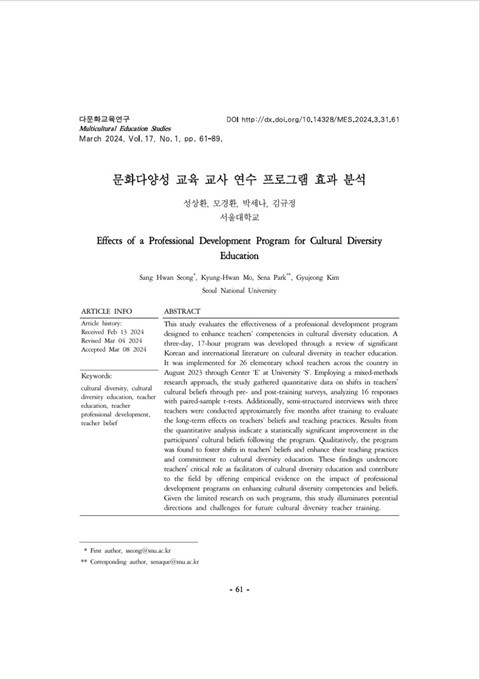 문화다양성 교육 교사 연수 프로그램 효과 분석 (다문화교육연구; Vol. 17, No. 1) سنة النشر: 2024 المؤلف: 성상환 | 모경환 | 박세나 | 김규정 المؤلف المؤسسي: 한국다문화교육학회 본 연구의 목적은 문화다양성 교육 역량 강화를 위한 교사 연수 프로그램의 효과를 분석하는 것이다. 이를 위해 문화다양성 교사 교육에 관한 국내외의 주요 선행 연구를 검토하여 2박 3일 17시간의 집합 연수 프로그램을 개발하였으며, 2023년 8월 S대학교 E연구원을 통해 전국 초등학교 교사 26명을 대상으로 연수를 실시하였다. 연수 프로그램의 효과 검증을 위해 혼합 연구 방법론을 활용하였다. 연수 사전과 사후에 설문조사를 실시하여 교사의 문화적 신념 변화에 관한 양적 자료를 수집하고 대응표본 t검정을 활용하여 총 16부의 응답을 분석하였으며, 연수 종료 약 5개월 후 3명의 교사와 반구조화된 면담을 진행하여 연수 프로그램이 교사의 문화적 신념과 교육 실천에 미치는 총체적 효과를 확인하였다. 정량적 분석 결과 연수에 참여한 교사들의 문화적 신념은 연수 이후 통계적으로 유의미하게 개선되었으며, 정성적 분석 결과 연수 프로그램은 교사들의 문화적 신념 변화를 촉진하고 현장에서의 교육 실천 및 의지 형성에 기여한 것으로 나타났다. 이러한 연구 결과는 문화다양성 교육 실행의 주체로서 교사의 역할을 강조하며, 문화다양성 교육 역량과 신념을 목표로 한 교사 교육 프로그램의 효과에 대한 실증적 자료를 제공한다. 문화다양성 교사 교육 프로그램 및 그 효과에 관한 연구가 드문 실정에서 본 연구는 문화다양성 교사 연수 프로그램의 가능성과 과제를 제시하며, 문화다양성 교육을 위한 교사 전문성 연구에 기여할 것이다.