
الموارد
استكشف مجموعة واسعة من الموارد القيمة حول تعليم المواطنة العالمية لتعميق فهمك وتعزيز البحث والمناصرة والتعليم والتعلم.
تم العثور على 2,781 نتيجة
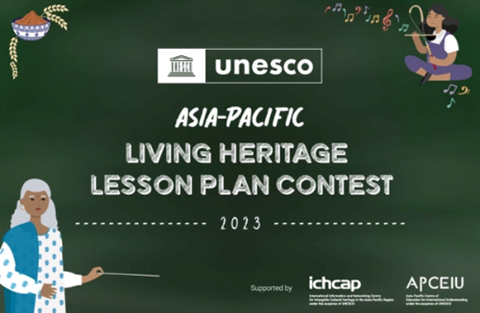 무형유산을 통해 키우는 세계시민성: 2023 아태지역 무형유산 교수학습계획안 سنة النشر: 2023 المؤلف المؤسسي: 유네스코 아시아태평양 국제이해교육원 | UNESCO Bangkok | 유네스코아태무형유산센터 유네스코 아태교육원은 2020년부터 유네스코 방콕사무소와 유네스코아태무형유산센터(ICHCAP)와 협력하여 「아시아태평양 교실에서 만나는 무형유산 사업」을 수행하였다. 이 사업의 일환으로, <2023 아태지역 무형유산 교수학습계획안 공모전 >을 개최하였으며, 총 10개국(네팔, 말레이시아, 베트남, 부탄, 싱가포르, 인도, 인도네시아, 중국, 필리핀, 한국)의 18개 교수학습계획안을 모범사례로 최종 선정하였다. 다음은 수상작 목록이다. - Saykha Offering (Subject: English), Tsirangtoe Central School, Bhutan- Setting Up a Herbarium, Learning about Medicinal Herbs and their Cultural and Traditional Uses in the Community (Subject: Science/Grades 7–9), Zilukha Middle Secondary School, Bhutan- Shamanistic Worship and Propitiation to the Spirits (Subject: Bhutan History and Civics and Citizenship Education/Grade 8), Bajothang Higher Secondary School, Bhutan- Beauty of Intangible Cultural Heritage (Subject: Foundations of College Art Education/ Freshman Year), Anhui Medical University, China- The Folk Custom of Building the Peace Kiln for the Mid-Autumn Festival in Jingdezhen (Subject: Mathematics/Grade 7), Jingdezhen No.13 Secondary School, China - When Xiabu Meets Batik (Subject: Art/Grade 5–6), ChongQing Shuren Primary School, China- Agricultural Practices (Subject: Biology/Grade 8), Paramita Heritage School, India- Living Heritage – Quilting in the Kalbelia Community of Rajasthan (Subject: Social Science/Grade 9), St. Stephen's Senior Secondary School, India- My City: Varanasi (Subject: Environmental Studies/Grade 2), Sunbeam School Lahartara, India - Bringing Back the Javanese Saka Calendar through Ethnomathematics (Subject: Mathematics/Grade 7–12), Binus School Bekasi, Indonesia- Song, Play, and Dance (Subject: Interdisciplinary for Indonesian Language, Balinese Culture, Music and Physical Education/Grade 3), Green School Bali, Indonesia- Teaching Sound Wave with Sundanese Traditional Instruments (Subject: Physics/Grade 8), Binus School Bekasi, Indonesia- Wau – The Malays Traditional Kite: Introduction, Wau Bulan Appreciation, Wau Making and Flying Workshop and Wau Corner (Subject: Traditional Games/Grades 4–5), SMU (A) Tarbiah Islamiah (SABK), Malaysia- Himalayan Aromatic Incense-Making and Meditation Workshop (Subject: Economics and Social Studies/ Grades 8–9, 11–12), Pragati Pathshala, Nepal- Influence of Biodiversity on the Stability of Ecosystems (Subject: Science/Grade 10), Philippine Normal University Mindanao, The Philippines- Understanding the Nature of Religion: From the Perspective of the Tripeople (Christians, Muslims, & Lumads) of Kidapawan City, North Cotabato (Subject: Humanities and Social Sciences/Grade 12), Kidapawan City National High School, The Philippines- Bongsan Talchum that Helps the Community Become More Sustainable (Subject: Korean Language and Literature, Social Studies, P.E., Arts/Grade 6), Kimje Buk Elementary School, Republic of Korea- Exploring Community Gardens – How and why are they so precious to humans? (Subject: Geography/Grade 9), Admiralty Secondary School, Singapore
  2022 다문화가정 대상국가와의 교육교류사업 성과분석: 포스트코로나 온라인 교육교류 추진방안 연구 سنة النشر: 2022 المؤلف: 박순용 | 차보은 المؤلف المؤسسي: 연세대학교 산학협력단 | 유네스코 아시아태평양 국제이해교육원 이 연구는 ‘다문화가정 대상국가와의 온라인 교육교류사업’의 사업성과를 점검하고 미래지향 적인 교육교류사업으로의 재구조화와 방향성 제시를 위해 진행되었다. 연구의 주요 내용은 온라인 교육교류 현황을 분석하고, 온라인 교육교류에 참여한 국내·외 참여교사의 경험을 인터뷰한후 면밀히 분석하여 포스트-코로나-19 온라인 교육교류 추진방안을 위한 방향과 과제를 모색하는 것이다. 이를 위해 문헌연구와 더불어 다수의 국내·외 참가교사들에 대해 대면 초점집단면담(FGI)과 비대면 1대1 온라인 심층면담을 진행하였고 온라인 교육교류사업의 보완과 개선에 대한 가감 없는 의견을 수집하였다. 수집된 질적 자료를 토대로 분석한 내용을 통해 향후 국제 교육교류사업이 소기의 목적을 달성하기 위해 적용이 권고되는 몇 가지 정책 제안을 하였다.
  2022 다문화가정 대상국가와의 교육교류사업 성과분석: 성과분석 및 성과측정도구 타당화 연구 سنة النشر: 2022 المؤلف: 박현정 | 박민호 | 신중휘 المؤلف المؤسسي: 유네스코 아시아태평양 국제이해교육원 이 연구는 ‘다문화가정 대상국가와의 교육교류사업’성과평가를 위하여 개발된 ‘글로벌 역량’ 측정 도구를 타당화하고, 측정 도구를 활용하여 성과를 분석하는 데 목적이 있다. 이 연구에 앞서 2020~2021년에 걸쳐 기존의 성과평가를 보다 효율적으로 운영할 수 있으며, 교육교류사업의 목적 및 성격이 잘 반영된 평가 지표를 개발하는 것을 목표로 먼저 문항을 개발하였 다.한편, 2020년에는 COVID-19 팬데믹으로 인하여 온라인 교류 사업만이 소규모로 진행되었고, 2021년 역시 COVID-19 팬데믹이 지속되어 교육교류사업이 온라인 교류 형태로 진행되었기에 온라인 교류의 맥락으로 성과측정 도구를 수정하였기 때문에 도구의 타당화는 제한 적인 상황이었다.따라서 2022년 연구에서는 온라인 교류에 참가한 교사 및 학생을 대상으로 지난 2년간 개발ˑ수정된 성과측정 도구를 최종적으로 타당화하고, 교육교류사업의 성과분석에 활용하였다.
 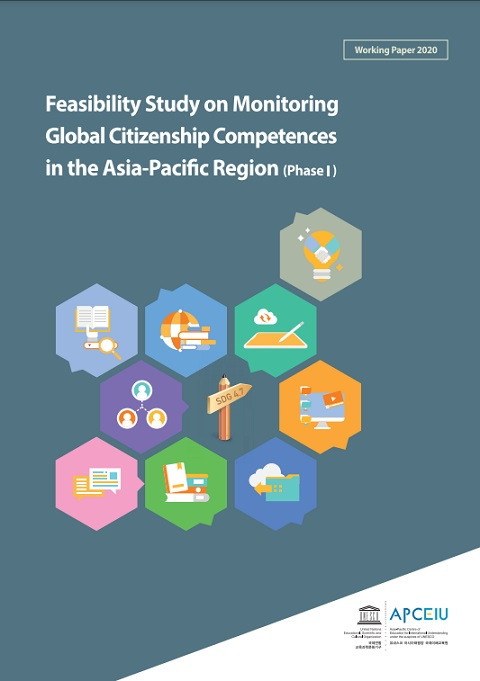 Feasibility Study on Monitoring Global Citizenship Competences in the Asia-Pacific Region (Phase I) سنة النشر: 2020 المؤلف: Aaron Benavot المؤلف المؤسسي: APCEIU In accordance with SDG 4.7, countries are promoting GCED and other aspects of Target 4.7. It is necessary to measure learner levels and progress in global citizenship competencies to assess the extent to which learners are acquiring knowledge, attitudes, and skills related to global citizenship.This report is organized into three substantive sections. Section II discusses existing definitions and conceptualization of GCED and GCC drawing on different sources. Section III describes which Asia-Pacific countries are included in this feasibility study and how relevant policy and curriculum documents are identified and analyzed. This section also discusses some common and share features of GCED that emerge from an analysis of country documents. Section IV briefly reviews existing measurement approaches of GCED or related concepts and then proposes a Measurement Framework of GCC for possible use in the A-P region. Section V of the report provides some forward-looking suggestions.
 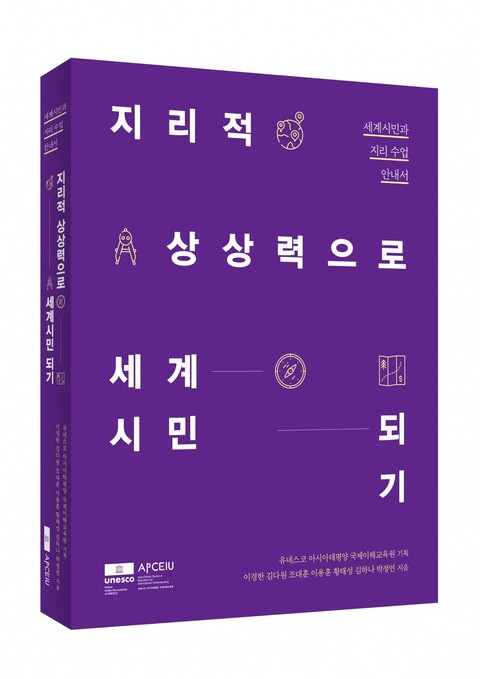 지리적 상상력으로 세계시민 되기 سنة النشر: 2024 المؤلف: 이경한 | 김다원 | 조대훈 | 이용훈 | 황태성 | 김하나 | 박정연 المؤلف المؤسسي: 유네스코 아시아태평양 국제이해교육원 유네스코 아시아태평양 국제이해교육원에서 기획한 『지리적 상상력으로 세계시민 되기: 세계시민과 지리 수업 안내서』가 출간되었다. 본 도서는 2022 개정 교육과정 (고등학교)에 신설된 <세계시민과 지리> 교과 및 세계시민교육 관련 수업을 구성하고 진행하는 데 활용할 수 있도록 개발되었다. GIS, 지정학, 인구, 음식, 초국적기업, 에너지, 기후위기, 국제개발협력과 같은 세계시민교육과 밀접한 여덟 가지 주제를 통해 학습자의 지리적 상상력을 자극하고 세계시민성을 함양하는 데 기여할 것으로 기대된다. 주제별로 구체적인 핵심활동과 활동지, 다채로운 참고자료를 제시하여 본 도서의 활용도를 높였다. * 본 단행본과 관련된 활동지는 유네스코 아시아태평양 국제이해교육원 홈페이지(https://www.unescoapceiu.org/post/5210)에서 다운 받으실 수 있습니다.
 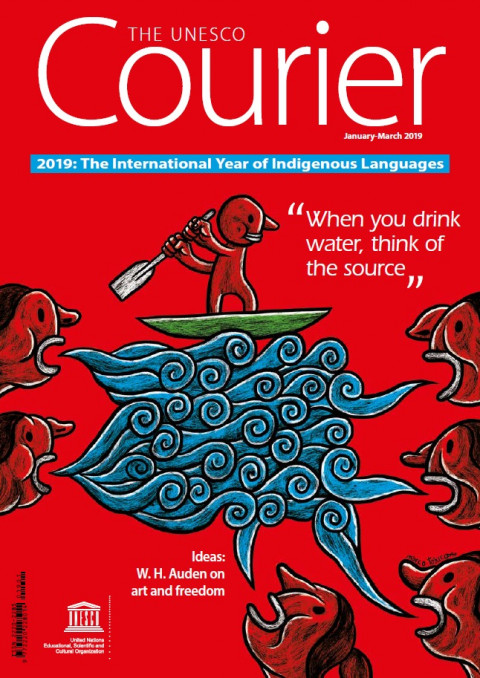 2019: The International Year of Indigenous Languages (The UNESCO Courier. January-March 2019) سنة النشر: 2019 المؤلف المؤسسي: UNESCO With the designation of 2019 as the International Year of Indigenous Languages (IYIL2019), officially launched at UNESCO on 28 January, the international community reaffirms its commitment to supporting indigenous peoples in their efforts to preserve their knowledge and enjoy their rights. Since the adoption of the Declaration on the Rights of Indigenous Peoples (link is external) by the United Nations General Assembly on 13 September 2007, considerable progress has been made in this regard. Nevertheless, indigenous peoples still have a long way to go before they emerge from marginalization and overcome the many obstacles they face. One-third of the world’s people living in extreme poverty belong to indigenous communities, just as in a number of countries, legislation that promotes the rights of indigenous peoples remains incompatible with other laws that deal with issues such as agriculture, land, conservation, forestry, mining and other industries, according to Victoria Tauli-Corpuz (link is external), United Nations Special Rapporteur on the Rights of Indigenous Peoples. The Wide Angle section in this issue of the Courier is dedicated to these indigenous peoples. It takes its title from the Chinese proverb: “When you drink water, think of the source”, to remind us that indigenous knowledge, the source of all knowledge, deserve a prominent place in modernity. The issue also marks the celebration of International Mother Language Day (link is external), 21 February. 2019 : Année internationale des langues autochtones سنة النشر: 2019 المؤلف المؤسسي: Organisation des Nations Unies pour l'éducation, la science et la culture (UNESCO) À une époque où la tension ne cesse de croître, où les droits de l'homme, la liberté d'expression, la paix et l'avenir de la planète semblent plus que jamais remis en question, le pouvoir de transformation véhiculé par l'éducation revêt une importance cruciale.Avec la désignation de 2019 comme Année internationale des langues autochtones(IYIL2019), lancée officiellement à l’UNESCO le 28 janvier, la communauté internationale réaffirme sa volonté de soutenir les peuples autochtones dans leurs efforts de préserver leurs savoirs et de jouir de leurs droits.Depuis l’adoption de la Déclaration sur les droits des peuples autochtones, par l’Assemblée générale des Nations Unies, le 13 septembre 2007, des avancées considérables ont été faites dans ce sens. Il n’en reste pas moins que les peuples autochtones ont encore un long chemin à parcourir avant de sortir de la marginalisation et de surmonter les nombreux obstacles auxquels ils doivent faire face. Un tiers des personnes qui vivent dans l’extrême pauvreté à travers le monde appartiennent à des communautés autochtones, de même que dans un bon nombre de pays, les législations en faveur des peuples autochtones demeurent incompatibles avec d’autres lois qui traitent notamment de l’agriculture, de la terre, de la conservation et des industries forestières ou minières, selon Victoria Tauli-Corpuz, Rapporteuse spéciale des Nations Unies sur les droits des peuples autochtones. Le dossier Grand angle de ce numéro du Courrier leur est consacré. Il emprunte son titre au proverbe chinois : « Quand tu bois de l’eau, pense à la source », pour rappeler que les savoirs autochtones, source de tous les savoirs, méritent une place prééminente dans la modernité. Il s’associe également à la célébration de la Journée internationale de la langue maternelle, le 21 février.
 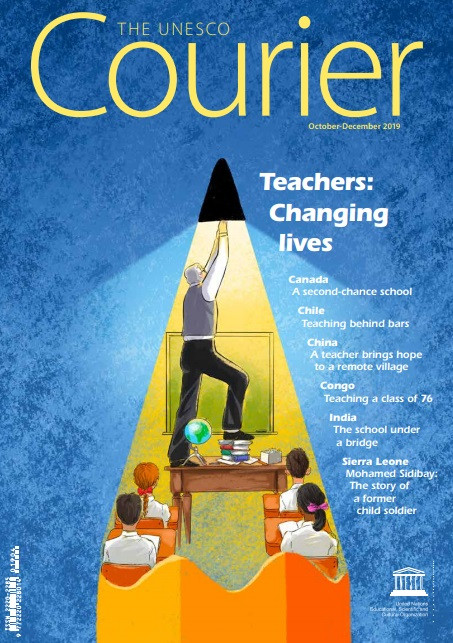 Teachers: changing lives (The UNESCO Courier no. 4, October-December 2019) سنة النشر: 2019 المؤلف المؤسسي: UNESCO Certainly, everyone recognizes the key role teachers play. On a personal level, we can all name at least one teacher who made a difference – sometimes to such an extent that it redirected our whole lives. At the international level, the United Nations Sustainable Development Goals (SDGs), Goal 4 in particular, recognize the importance of teachers in the implementation of the Sustainable Development Agenda by 2030. Yet, the profession is being undermined. The development of cognitive neuroscience and the many applications of new technologies in the field of education are forcing the profession to adapt and reinvent itself. Ces profs qui changent le monde (Le Courrier de l'UNESCO 4, octobre-décembre 2019) سنة النشر: 2019 المؤلف المؤسسي: Organisation des Nations Unies pour l'éducation, la science et la culture (UNESCO) Certes, tout le monde reconnaît le rôle clé que jouent les enseignants. À titre personnel, chacun peut citer le nom d’au moins un professeur qui a compté, parfois au point de réorienter une vie entière. Sur le plan international, les Objectifs de développement durable (ODD) des Nations Unies, en particulier l’Objectif no 4, reconnaissent l’importance des enseignants dans la mise en œuvre du Programme de développement durable à l’horizon 2030. Pourtant, la profession est mise à mal. Le développement des neurosciences cognitives, les multiples applications des nouvelles technologies dans le domaine de l’éducation obligent la profession à s’adapter, se réinventer. Docentes que cambian el mundo (El Correo de la UNESCO 4, Octubre-Diciembre 2019) سنة النشر: 2019 المؤلف المؤسسي: Organización de las Naciones Unidas para la Educación, la Ciencia y la Cultura (UNESCO) Sin duda, todo el mundo reconoce la función esencial que desempeñan los docentes. A título individual, cada uno de nosotros puede mencionar el nombre de al menos un maestro que le influyó decisivamente, a veces hasta el punto de reorientar toda su vida. En el ámbito internacional, los Objetivos de Desarrollo Sostenible (ODS) de las Naciones Unidas, en particular el ODS 4, destacan la importancia del profesorado en la consecución de la Agenda 2030 de desarrollo sostenible.Y, sin embargo, la profesión docente está en crisis. El desarrollo de la neurociencia cognitiva y las múltiples aplicaciones de las nuevas tecnologías en el sector educativo imponen al magisterio la necesidad de adaptarse, de reinventarse.