
الموارد
استكشف مجموعة واسعة من الموارد القيمة حول تعليم المواطنة العالمية لتعميق فهمك وتعزيز البحث والمناصرة والتعليم والتعلم.
تم العثور على 1,405 نتيجة
 How Does Peer-Mentoring Contribute to Education for Sustainable Development in Schools?: Study & Analysis; France سنة النشر: 2020 المؤلف: Carole Coupez | Jérémie Morfoisse المؤلف المؤسسي: Solidarité Laïque | Peerment | Erasmus+ This document reports the findings of a study surveying French teachers about practices in education for sustainable development within France’s formal education system, and the development of educational approaches to peer-mentoring. Comment le peermentoring contribue à l’Éducation au développement durable en milieu scolaire ?: Étude et Analyse; Volet France سنة النشر: 2020 المؤلف: Carole Coupez | Jérémie Morfoisse المؤلف المؤسسي: Solidarité Laïque | Peerment | Erasmus+ Ce document restitue un travail d’enquête et de réflexion mené auprès d’enseignants français, sur les pratiques d’éducation au développement durable dans l’enseignement formel, et le développement des approches pédagogiques en peermentoring.
  The Future of Education and Skills: Education 2030 سنة النشر: 2018 المؤلف المؤسسي: Organisation for Economic Co-operation and Development (OECD) The aim of OECD’s Education 2030: The Future of Education and Skills project is to support countries to find answers to two far-reaching questions: “What knowledge, skills, attitudes and values will today’s students need to shape and thrive their world in 2030?” and “How can instructional systems develop these knowledge, skills, attitudes and values effectively?” This OECD Education 2030 position paper considers the challenges that young people will face; suggests the importance of the concept of learner agency; proposes an overarching learning framework with transformative competencies; reviews the nature of the knowledge, skills, attitudes and values that young people will need; and ends with possible curriculum design principles. It encapsulates the key messages of the project so far. Le Futur de l’éducation et des compétences: Projet Éducation 2030 سنة النشر: 2018 المؤلف المؤسسي: Organisation for Economic Co-operation and Development (OECD) Le projet Le Futur de l’éducation et des compétences : Éducation 2030 a pour objectif d’aider les pays à trouver des réponses à deux questions d’une portée considérable : « De quelles connaissances, compétences, attitudes et valeurs les élèves d’aujourd’hui auront-ils besoin pour réussir leur vie et bâtir le monde de demain ? » et « Comment les systèmes éducatifs peuvent-ils transmettre ces connaissances, compétences, attitudes et valeurs de manière efficace ? » Cette note d’information sur le projet Éducation 2030 de l’OCDE étudie les défis auxquels les jeunes générations vont être confrontées, met en lumière l’idée de capacité d’agir des apprenants, propose un cadre d’apprentissage global reposant sur des compétences transformatives, revient sur la nature des connaissances, des compétences, des attitudes et des valeurs dont les jeunes auront besoin à l’avenir et se conclut par de possibles principes de conception des programmes scolaires. Les principaux messages tirés du projet jusqu’à présent sont également présentés. OECD学习框架 2030: 经济合作与发展组织 (OECD) سنة النشر: 2018 المؤلف المؤسسي: Organisation for Economic Co-operation and Development (OECD) "教育公平" "高质量的教育" "核心素养" "减负'等已成为流行热词,在新时代背景下实践者对 究竟要"教什么"需要再思考。经济合作与发展组织(简称经合组织 OECD) 2015 年启动了"教育2030: 未来 的教育与技能"项目,项目中启动了"面向 2030 的学习指南"讨论,旨在开发一种新的学习框架,描述需要用什 么样的能力来塑造未来的一代。学习框架包括知识、技能、态度和价值观,个人和社会的福祉 变革性能力,通 过反思、预期和行动的过程,调动知识 技能、态度和价值观,以便发展与世界接触所需的相互关联的能力.此 外, "教育与技能2030项目"专家组也提出了设计教育体系与课程改革的指导原则,包括概念、内容和主题设计 以及流程设计.
  Planetary Citizenship سنة النشر: 2016 المؤلف: Edgar Montiel The blog contains and article where many worldiwide problems that humans are facing are described, and it states that it is necessary to modifiy the way in which we live by adopting a practical education that will enable sustainable life in the planet as it would consider environmental sustainability and peaceful international cooperation from diverse perspectives. Ciudadanía Planetaria سنة النشر: 2016 المؤلف: Edgar Montiel El blog contiene un artículo donde se describen los problemas actuales que enfrenta la humanidad a escala planetaria y se arguye que se precisas modificar la forma en que vivimos adoptando una educación práctica de vida sostenible que tenga en cuenta el medio ambiente y la cooperación internacional pacífica desde la diversidad.
  SDG 4 - Policies for flexible learning pathways in higher education: Taking stock of good practices internationally (IIEP-UNESCO Working Papers) سنة النشر: 2020 المؤلف: Michaela Martin | Ana Godonoga المؤلف المؤسسي: UNESCO International Institute for Educational Planning (IIEP) This paper draws on country examples across different UNESCO regions to illustrate policy-relevant as well as practical approaches to developing flexible learning pathways in higher education. It shows that policies can facilitate flexible learning pathways include legislative and regulatory frameworks, articulation and transfer policies, and lifelong learning policies. It also presents a number of supportive policy instruments that can serve to bridge policy and practice, such as national qualifications frameworks, quality assurance and accreditation, credit accumulation and transfer systems, and information and guidance services. Finally, apart from discussing system-wide approaches, this paper also gives examples of more decentralized, institution-led practices that contribute to flexible learning pathways. This paper concludes that well-designed policy frameworks and instruments and targeted measures can create an enabling environment for flexible learning pathways, but their effectiveness requires strong administrative capacity and coordination, as well as the involvement of all relevant stakeholders, including those who design, implement, and benefit from policies. It is also essential that policies, instruments, and practices are in alignment with one another and work towards a common objective. Therefore, a holistic approach, comprising an adequate and well-coordinated mix of policies, instruments, and targeted measures, is required, in order to translate flexible learning pathways from a national priority into an institutionalized practice that reaches its intended beneficiaries.
 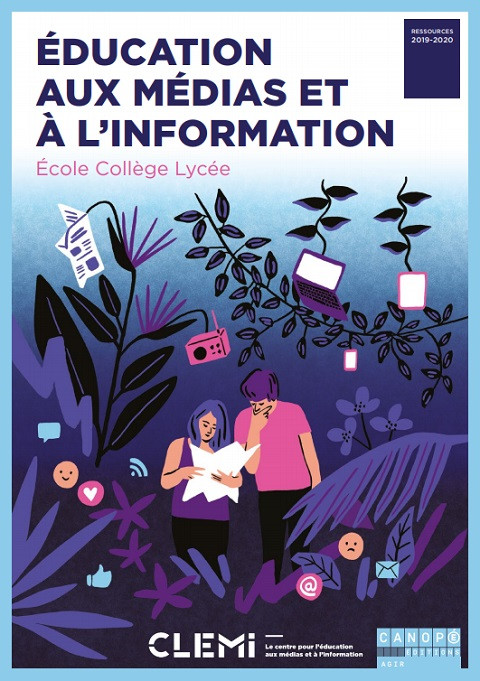 Éducation aux médias et à l’information: École collège lycée سنة النشر: 2019 المؤلف المؤسسي: Centre pour l’éducation aux médias et à l’information (CLEMI) | Réseau Canopé Cette édition 2019-2020 a été entièrement revue et augmentée afin d'approcher au mieux les besoin des nouveaux enseignants. Elle s'adresse aussi bien au 1er qu'au 2nd degré.Vous y trouverez notamment : Les informations pratiques (socle commun, textes réglementaires...) et les dispositifs du CLEMI (Semaine de la presse et des médias dans l'école, Concours Médiatiks, #ZéroCliché...), afin de présenter les enjeux de l'Éducation aux médias et à l'information et les moyens proposés par le CLEMI pour la mettre en œuvre .Le focus Déclic' Critique, qui présente des exemples d'ateliers proposés en classe par le CLEMI et explique comment utiliser ces séquences pour développer l'esprit critique des élèves.Une partie est consacrée aux médias scolaires, à la fois pour encourager cette pratique mais aussi mieux la valoriser.Dans la partie 1er degré, vous trouverez les ressources nécessaires pour découvrir la presse, vérifier les images sur internet ou encore analyser un journal télévisé.La partie 2nd degré va s'intéresser à la publicité cachée, au journalisme de vérification, mais aussi aux nouveaux formats de l'info, comme la «story».
  Les ODD comme nouvelle citoyenneté mondiale سنة النشر: 2018 المؤلف المؤسسي: UVED Cynthia Fleury, professeur au Conservatoire National des Arts et Métiers, titulaire de la Chaire « Humanités et Santé », et également professeur associée à PSL / Mines ParisTech, présente dans cette vidéo (10'27) les trois questions qui lui paraissent fondamentales pour la réalisation des Objectifs de Développement Durable : celle de l'état de droit, celle de la santé humaine entendue dans son sens le plus large et celle de la transition numérique, indissociable de la transition écologique.