
الموارد
استكشف مجموعة واسعة من الموارد القيمة حول تعليم المواطنة العالمية لتعميق فهمك وتعزيز البحث والمناصرة والتعليم والتعلم.
تم العثور على 2,661 نتيجة
 International Forum on AI and Education: Ensuring AI as a Common Good To Transform Education, 7–8 December 2021; Synthesis Report سنة النشر: 2022 المؤلف المؤسسي: UNESCO The ‘International Forum on AI and the Futures of Education: Ensuring AI as a Common Good to Transform Education’ was co-organized by UNESCO, the Ministry of Education of the People’s Republic of China, and the National Commission of the People’s Republic of China for UNESCO. Building on the previous ‘AI and the Futures of Education’ forums, held in 2019 and 2020, this 2021 forum set out to explore the importance and role of digital humanism in AI and education. With people and governments worldwide becoming increasingly aware of both the potential and the challenges of AI and education, the forum engaged participants in dialogue about how AI governance and innovation can be enhanced for the common good. Forum participants included government ministers and other high-level ministry officials from Member States, together with representatives of international organizations, NGOs and academic institutions.This synthesis report has been developed by drawing from the International Forum on AI and the Futures of Education held in Beijing and simultaneously online from 7 to 8 December 2021.
  World Programme for Human Rights Education, Fourth Phase: Plan of Action سنة النشر: 2022 المؤلف المؤسسي: Organización de las Naciones Unidas para la Educación, la Ciencia y la Cultura (UNESCO) | UN. Office of the Secretary-General’s Envoy on Youth | UN. Office of the United Nations High Commissioner for Human Rights (UN. OHCHR) Human rights education for youth, in both formal and non-formal settings, promotes a shared sense of humanity and fosters a common understanding that all human beings are equally deserving of dignity, respect and justice. It empowers youth to fulfil their role as active citizens, to take action and uphold their human rights and those of others, and to participate meaningfully in public affairs and democratic decision-making processes.In recognition of this, the United Nations Member States launched the fourth phase (2020–2024) of the World Programme for Human Rights Education to advance human rights education programming for youth at the national level. This focus also contributes to the achievement of the 2030 Agenda for Sustainable Development, particularly Goal 4 on Education and target 4.7, which touches upon the aims of education.
  2017 International Conference on Education and the Holocaust: Progress Report and Follow-up سنة النشر: 2018 المؤلف المؤسسي: UNESCO | United States Holocaust Memorial Museum (USHMM) From December 4-8 2017, UNESCO and the United States Holocaust Memorial Museum (USHMM) jointly organized the second International Conference on Education and the Holocaust (ICEH) in Washington, DC. The conference brought together 26 participants from 10 countries with the goal of strengthening their capacities to advance education about the Holocaust and genocide in their respective countries. Of great importance was the relevance of this education within the teams’ national contexts. The conference ultimately led to the development of 10 country-specific initiatives. The 2017 ICEH cohort comprises representatives of institutions from Argentina, Colombia, India, Indonesia, Kenya, Mexico, Namibia, South Africa, Tunisia and Ukraine.
  Online Antisemitism: A Toolkit for Civil Society سنة النشر: 2022 المؤلف المؤسسي: Institute for Strategic Dialogue (ISD) | B’nai B’rith International | UNESCO This guide looks to build literacy among Jewish professionals, lay leaders and community members at large – as well as wider allies from across civil society – to tackle antisemitism online. Recognising the enormous capacity for positive action that the digital space offers, it aims to consolidate knowledge and provide a wide range of policy and community avenues for action.The guide provides an assessment of the online antisemitism threat landscape, an overview of existing policy responses on an international and national level across a range of European countries, and, importantly, a broad set of recommendations for engagement with governments, platforms and within communities to address these issues.
 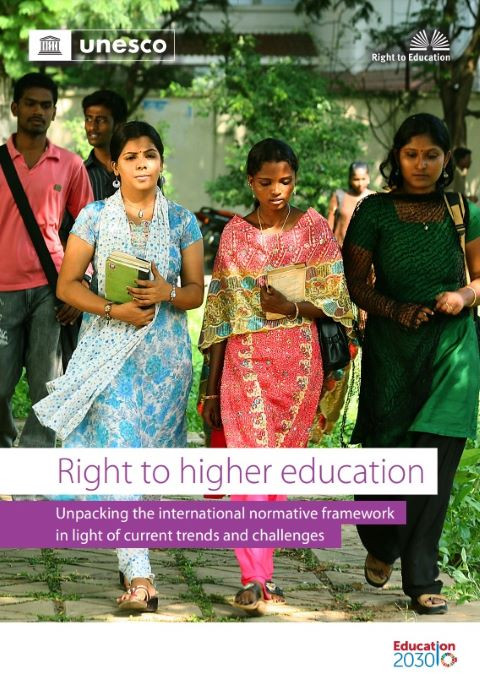 Right to Higher Education: Unpacking the International Normative Framework in Light of Current Trends and Challenges سنة النشر: 2022 المؤلف المؤسسي: UNESCO | Right to Education Initiative (UK) The right to higher education is well-established in international human rights law. It requires states to progressively introduce free higher education and ensure that all have access on the basis of capacity. Yet, access to education is unequal from the very early years, which together with deep-rooted discrimination in education as well as differences in upbringing, often result in unfair admission procedures when reaching higher education. Drastic changes worldwide, due to rising inequalities, human movement, growing digitalization and the effects of the COVID-19 pandemic, are further challenging how this right can be concretely implemented. This publication seeks to bring clarity not only to existing obligations and rights, but also to unravel what aspects of the right to higher education might require further explanation in light of new contexts and challenges. It provides policy recommendations to guide states in their endeavour to ensure effective equal opportunities to higher education for all.
  Citizenship Education in the Global Digital Age: Thematic Paper سنة النشر: 2022 المؤلف المؤسسي: UNESCO This document, prepared by UNESCO Section on Global Citizenship and Peace Education with the contribution of Laura Engel and Evelyne Koumtingue, is part of several thematic papers developed by UNESCO to inform the Revision of the 1974 Recommendation concerning education for international understanding, co-operation and peace. These papers focus on topics that are not currently covered in the Recommendation but that require greater attention in the revised version in view of ensuring it addresses contemporary challenges to lasting peace.
  Freedom of Expression, Media and Information Literacy and Digital Competencies to Support Peace and Human Rights: Thematic Paper سنة النشر: 2022 المؤلف المؤسسي: UNESCO This document is part of the thematic papers developed by UNESCO to inform the Revision of the 1974 Recommendation concerning education for international understanding, co-operation and peace. It focuses on Freedom of Expression, Media and Information Literacy and Digital Competencies that are not currently covered in the Recommendation but that require greater attention in the revised version in view of ensuring it addresses contemporary challenges to lasting peace.
  The Relevance and Contributions of Education for Health and Well-Being to the Advancement of Human Rights, Sustainable Development & Peace: Thematic Paper سنة النشر: 2022 المؤلف المؤسسي: UNESCO This document is part of the thematic papers developed by UNESCO to inform the Revision of the 1974 Recommendation concerning education for international understanding, co-operation and peace. This paper aims to provide a few recommendations for revising the 1974 Recommendation.
 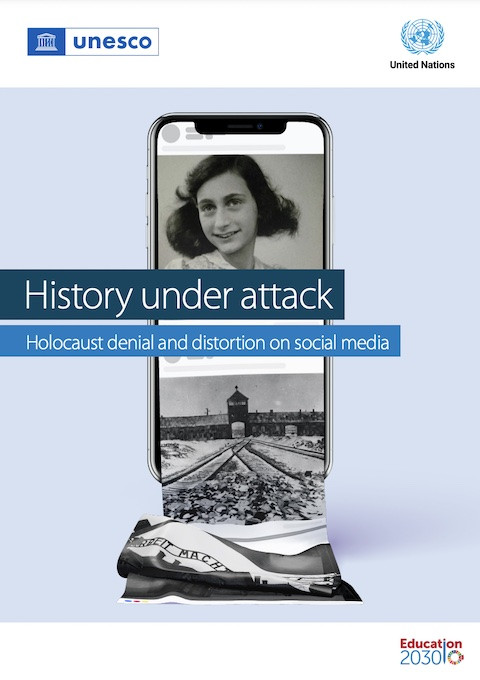 History Under Attack: Holocaust Denial and Distortion on Social Media سنة النشر: 2022 المؤلف المؤسسي: Организация Объединенных Наций по вопросам образования, науки и культуры (UNESCO) | United Nations (UN) Holocaust denial and distortion are dangerous. It is an attack on truth and knowledge. It feeds on and spreads antisemitic tropes and prejudices, and threatens our understanding of one of the most tragic and violent histories: The genocide of six million Jews by Nazi Germany, its allies and collaborators. In countries across Europe, people became complicit in the persecution and murder of their neighbours. Holocaust denial and distortion can prevent society from reckoning with this past. It impedes our comprehension of the causes and warning signs of genocide, and that might strengthen efforts for genocide prevention. It is insulting to the victims and survivors of the Holocaust, and risks the rehabilitation of violent, antisemitic ideologies. At its most extreme, it celebrates and glorifies this history, inciting violence against Jews and calling for another genocide. The United Nations and UNESCO condemn the rise of Holocaust denial and distortion online as a dangerous form of hatred, and commissioned this report in partnership with the World Jewish Congress to raise awareness of the forms and functions of Holocaust denial and distortion on social media, and determine a series of policy and educational responses. This report is a data-driven investigation into the extent and nature of Holocaust denial and distortion on online platforms. It is based on a manual review of almost 4,000 pieces of content collected in June and July 2021 that related to Jews, the Holocaust, antisemitism and Holocaust denial and distortion from five major online platforms and messenger apps. It looks at content posted on Facebook, Instagram, Telegram, TikTok and Twitter: some of the world’s largest online platforms and collectively home to billions of users. It addresses content in four different languages: English, French, Spanish and German, with the aim of providing a wide-ranging review that addresses multiple countries and contexts. This report aims to answer four questions:How much Holocaust-related content on social media either denies the Holocaust or distorts key elements of history?What are the key narratives in contemporary Holocaust denial and distortion?How are Holocaust denial and distortion communicated, and how are they situated within wider discourses and frames?What can online platform companies, policy-makers, educators and organizations promoting Holocaust remembrance, education and research do to tackle the problem? Based on the findings of this report, it provides a series of recommended actions that online platforms, policy-makers, civil society, researchers and educators can implement to prevent and counter Holocaust denial and distortion online.
 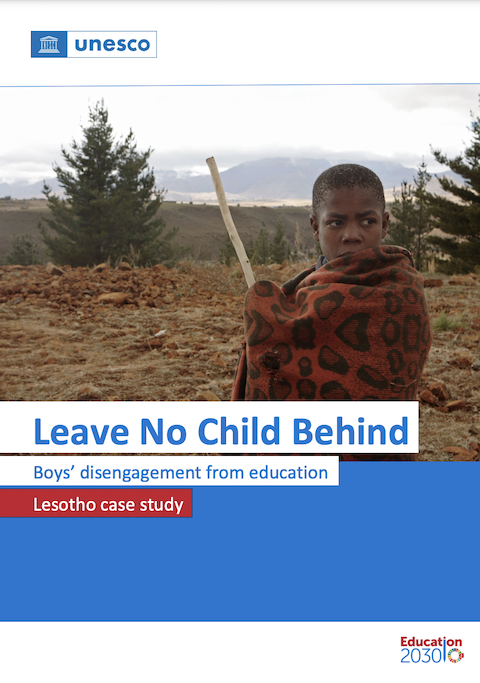 Leave No Child Behind: Boys’ Disengagement From Education; Lesotho Case Study سنة النشر: 2022 المؤلف: Paseka A. Mosia المؤلف المؤسسي: 유네스코 In the framework of its work gender equality in and through education better understand boys’ disengagement from education, UNESCO commissioned five country case studies to inform the publication “Leave no child behind: Global report on boys’ disengagement from education”. National research teams examined the situation in five countries – Fiji, Kuwait, Lesotho, Peru and the United Arab Emirates.This case study presents the results from Lesotho.