
الموارد
استكشف مجموعة واسعة من الموارد القيمة حول تعليم المواطنة العالمية لتعميق فهمك وتعزيز البحث والمناصرة والتعليم والتعلم.
تم العثور على 3,782 نتيجة
 [Резюме] Лидерство в образовании: Всемирный доклад по мониторингу образования за 2024/5 годы سنة النشر: 2024 المؤلف المؤسسي: Global Education Monitoring Report Team Всемирный доклад по мониторингу образования за 2024/2025 годы содержит подробный анализ прогресса в достижении к 2030 году запланированных целей, а также указывает на то, что несмотря на небывалые показатели охвата школьным образованием и показатели завершения полного цикла обучения в средней школе во многих аспектах сферы образования наблюдаются застойные тенденции. Важнейшей предпосылкой их преодоления является развитие образовательного лидерства. Нет таких школ, которым удалось бы улучшить образовательные достижения своих учащихся в отсутствие эффективного лидера, способного повести за собой. На основе обзора нормативных и регламентирующих документов, касающихся отбора, профессиональной подготовки и условий работы директоров школ в 211 системах образования, авторы доклада анализируют политические рычаги, которые обеспечат привлечение и удержание талантливых руководителей.Потенциал лидерства не ограничивается школьными руководителями: он распространяется и на людей, занимающих должности в других частях системы образования, а также за ее пределами, начиная с заместителей директоров школ, педагогов и учащихся, так называемого совместного руководства, и заканчивая политическими руководителями, гражданским обществом, международными организациями, профсоюзами и средствами массовой информации, готовыми содействовать в определении целей образования.В докладе содержится призыв предпринять шаги, направленные на профессиональное совершенствование лидеров в сфере образования в четырех принципиально важных компонентах лидерства, таких как формулирование видения в отношении перспектив, акцент на обучении, поощрение взаимодействия и содействие профессиональному росту. Для успешной реализации этих задач необходимо, чтобы лица, занимающие руководящие позиции в сфере образования, пользовались доверием и были наделены соответствующими полномочиями, прошли адекватную процедуру отбора, получили необходимые профессиональные навыки и поощрялись к формированию культуры коллективного лидерства. Кроме того, в докладе содержится призыв содействовать повышению профессиональных компетенций должностных лиц, работающих на руководящих постах в системе образования, с уделением особого внимания вопросам руководства учебным процессом и обеспечения качества образования.
  [الملخص] التقرير العالمي لرصد التعليم 2024/5: مهارات القيادة في مجال التعليم والقيادة الجيدة من أجل تعزيز التعلّم سنة النشر: 2024 المؤلف المؤسسي: Global Education Monitoring Report Team ويهدف التقرير العالمي لرصد التعليم لعام 5/2024 إلى تقييم التقدم المحرز على صعيد تحقيق أهداف خطة عام 2030. ويُستشَفّ من النتائج التي خلص إليها التقرير أن عدد الأطفال الملتحقين بالمدارس والذين يكملون تعليمهم الثانوي أعلى من أي وقت مضى، ولكن قطاع التعليم لا يزال يشهد ركوداً في العديد من المجالات. وتكتسي مهارات القيادة أهمية حاسمة للتصدي لهذه المشكلة. فلا يمكن للمدرسة أن تحسّن نتائج الطلاب إذا لم يكن على رأسها قائد كفؤ يرشدها إلى الطريق.واستناداً إلى استعراض أجري للتشريعات والسياسات المطبقة في اختيار المدراء، وإعدادهم، وظروف عملهم، في 211 مؤسسة تعليمية، يبحث التقرير في أدوات السياسة العامة الكفيلة باستقطاب القادة الموهوبين والاحتفاظ بهم.ولا تقتصر مهارات القيادة على مدراء المدارس فحسب، بل تشمل أيضاً الأفراد الذين يشغلون مناصب أخرى في مجال التربية والتعليم وخارجه، مثل المديرين المساعدين والمعلّمين والطلاب. وإذا كانت القيادة مشتركة، فتمتد هذه القدرات لتشمل الزعماء السياسيين والمجتمع المدني والمنظمات الدولية والنقابات ووسائل الإعلام، الذين يساعدون على تحديد أهداف التعليم.ويدعو التقرير إلى بذل الجهود الرامية إلى تعزيز قدرات القادة وفقاً لأربعة أبعاد رئيسية خاصة بمهارات القيادة، وذلك للتمكن من تحديد التوقعات والتركيز على التعلم وتعزيز التعاون وتنمية مهارات الأفراد. ولكي تؤتي هذه الأبعاد ثمارها، ينبغي أن يحظى الأشخاص الذين يشغلون مناصب قيادية بالثقة، وأن تُعزَّز قدراتهم، وأن يتم توظيفهم من خلال إجراءات توظيف عادلة، وأن يتم دعمهم في تعزيز مهاراتهم، وتشجيعهم على إرساء ثقافة للتعاون.كما يدعو التقرير إلى تعزيز قدرة المسؤولين عن التعليم على أداء مهامهم بصفتهم قادة لنُظم التعليم.
  [摘要] 全球教育监测报告摘要, 2024/5年: 教育领导力: 引领学习 سنة النشر: 2024 المؤلف المؤسسي: Global Education Monitoring Report Team 《2024/5年全球教育监测报告》对实现2030年具体目标的进展情况进行了评估。报告显示,虽然入学儿童和完成中学教育的儿童比以往任何时候都多,但在多个领域,进展陷入停滞。领导力是解决这一问题的核心。若无优秀的领导者指明方向,任何学校都无从改善学习成果。本报告在对211个教育系统中有关校长遴选、培训和工作条件的法律法规和政策加以审查的基础上,就吸引和留住优秀领导人才的政策手段进行了探讨。领导力潜力并非仅限于学校领导者而言:亦延及教育系统内外其他岗位上的个人,从共享领导力模式下的副校长、教师和学生,到助力制定教育目标的政治领导者、民间社会、国际组织、工会和媒体。报告呼吁努力从四个关键的领导力维度培养领导者,使他们能够设定期望、关注学习、促进协作和支持员工发展。要实现这些维度的领导力,则应信任并赋权担任领导职务的人员;通过公平的招聘做法进行征聘;支持他们成长;鼓励他们厚植协作式文化。报告还呼吁投资于教育官员担任系统领导者的能力,特别是要侧重于教学领导和质量保证。
  Exploring ICCS 2016 to measure progress toward target 4.7 سنة النشر: 2018 المؤلف: Sandoval-Hernández.Andrés, Miranda.Daniel المؤلف المؤسسي: Global Education Monitoring Report Team The objective of this report is to analyse data from the last cycle of the International Civic and Citizenship Study (ICCS 2016) (Schulz et al., 2017)in order to demonstrate its potential for monitoring specific aspects of the SDG target 4.7. Furthermore, given the theme of the 2019 Global Education Monitoring (GEM) Report, this document will pay special attention to those questions addressed to students, teachers and school principals that are directly related to immigration.
 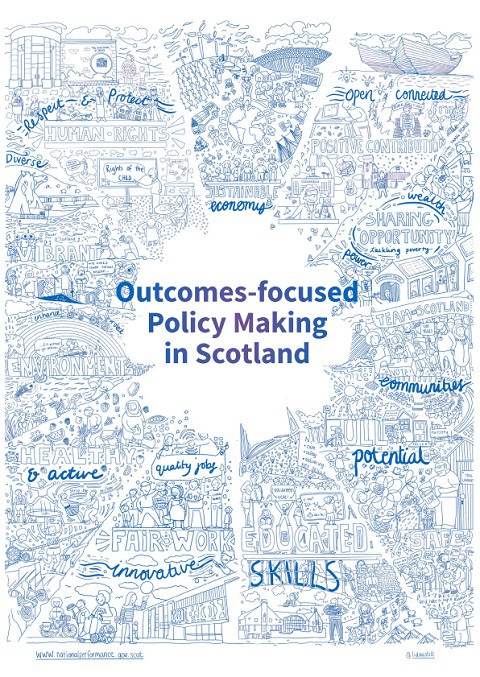 Outcomes-Focused Policy Making in Scotland سنة النشر: 2021 المؤلف المؤسسي: Government of Scotland | Scotland's International Development Alliance | SDG Network Scotland | Oxfam Scotland | International Development Education Association Scotland (IDEAS) | Bridge 47 Scotland’s International Development Alliance has co-created a new Scottish policy making guide focused on the Sustainable Development Goals (SDGs) and the National Performance Framework (NPF). The guide supports holistic policy making that reflects our interconnected world & addresses the need to better navigate its complexities.The resource is the result of a partnership between the Scottish Government’s National Performance Framework team, the International Development Education Association of Scotland (IDEAS) Network, Scotland’s International Development Alliance, the SDG Network Scotland and Oxfam Scotland. The partnership was initiated, supported and funded by the Bridge 47 – Building Global Citizenship project and special thanks go to Northern Star Associates for their work developing the content.What is the resource?The National Performance Framework (NPF) is Scotland’s way of localising the Sustainable Development Goals (SDGs). The 17 different goals and 11 NPF National Outcomes are key measures of how Scotland can move towards a more just and sustainable future. The resource has two main parts. The first half features a general overview of the United Nations Sustainable Development Goals (SDGs), Scotland’s National Performance Framework (NPF) and how the two are interlinked. The second half provides practical, interactive activities to explore how to apply the NPF and SDGs in the policy making process.Why is this resource important?Policy is a mechanism for creating change. Ensuring that the policy produced in Scotland is inclusive and takes a holistic view of systemic problems will have a positive impact for both people and planet.This resource comes at a critical juncture. The Covid-19 pandemic has emphasised local-global interconnections and the difficulties posed by complex global problems. They require us to be holistic in our policy making and understand we are part of a bigger system, where the decisions we make and the actions we take have an impact on others locally and globally, now and in the future.How was the resource created?The guide was co-created by a partnership between the NPF team at the Scottish Government and civil society stakeholders including the SDG Network Scotland, Scotland’s International Development Alliance and the EU project, Bridge 47. The development of the resource was funded through the Bridge 47 – Building Global Citizenship project, which is based at the International Development Education Association of Scotland (IDEAS) network. As a project, Bridge 47 supports building partnerships across different sectors with the aim of raising awareness of the SDGs and the transformative power of education as outlined in SDG Target 4.7.
 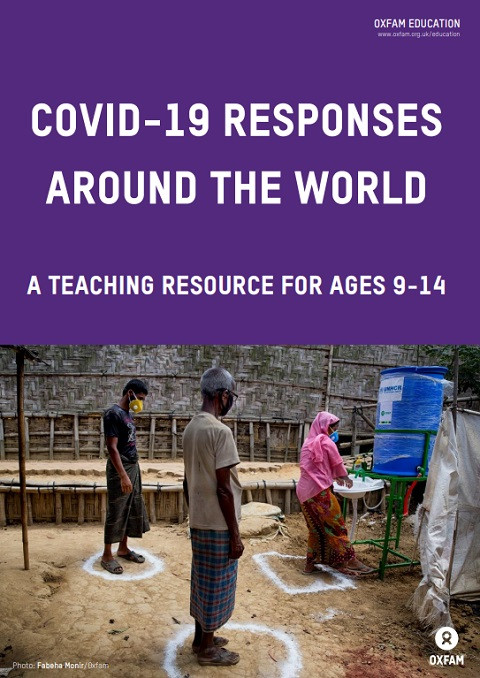 COVID-19 Responses Around the World: A Teaching Resource for Ages 9-14 سنة النشر: 2021 المؤلف المؤسسي: Oxfam GB This resource helps learners to discuss their thoughts and feelings about the pandemic with others. Learners will also find out about ways to stop the current ‘infodemic’ – the rapid spread of misinformation and disinformation about COVID-19.This material will help learners to:discuss their thoughts and feelings about COVID-19.investigate some of the incredible ways in which people have been responding to this crisis.understand the difference between information, disinformation and misinformation.consider their own responses to the pandemic and possible actions that they might take to manage their own wellbeing and support others.
  Transformative Learning Journeys: Venturing Into the Wilds of Global Citizenship Education سنة النشر: 2021 المؤلف المؤسسي: Bridge 47 With the intensive courses of the Transformative Learning Journey, Bridge 47 created experimental learning spaces for communities of practitioners, researchers and activists of transformative education from around the world.The courses endeavored to challenge common concepts of Global Citizenship Education, to explore questions like those below and to experiment with different, holistic and potentially more transformative, practices of learning and co-creating.What are the (cultural) root causes of the global multi-crisis?How to decolonize and transform a modern system that is broken beyond fixing?What do we have to learn, unlearn or let go of- individually and collectively - in order to allow, embrace and foster real change? What characterizes transformative learning, and how can education create holistic spaces to trigger, support and accompany such learning processes? How transformative is our own organizational and educational practice?Do we have to re-imagine education and activism and become more radical? Are we asking the right questions?Based on the positive resonance, Bridge 47 wants to share some of the learnings through this publication. The book gives insights into the design, content and methodology of the course. Featuring diverse contributions from participants, it is a mosaic of perspectives and experiences of transformation, decolonization and learning. It also comprises some tools and invitations for reflection. It is not a cohesive prescription of how to facilitate transformative learning – as there is none - but an invitation to relate to and play."This book is dedicated to all the curious people out there who are passionate about education in caring for our world and each other - the dreamers, the healers, the lovers, the teachers for a different future to emerge. It goes to the fighters who are desperate and overwhelmed in face of complex challenges and are worn out by their struggle for justice and change – to find inspiration, energy and courage to treat ourselves gently, to let go and to make space for new things to emerge."
  Gender, migration and non-formal learning for women and adolescent girls سنة النشر: 2019 المؤلف: Amy North المؤلف المؤسسي: Global Education Monitoring Report Team Processes of international migration and displacement are highly gendered. Who migrates, and how they experience migration and displacement, is affected by gender norms and relations in both in countries of origin and countries of settlement, the gendered dynamics of conflict and violence, and the gendered nature of global and local labour markets. These gendered dynamics of migration both affect and are affected by education in often complex ways, as education may both facilitate processes of migration, and be enabled or limited by them, and as gendered engagements with education prior to and during migration and settlement may have a significant influenced on how these processes are experienced. This paper is concerned with exploring this gender-migration- education nexus through a focus on the educational engagements and experiences of migrant and refugee women and adolescent girls. It first considers the wider body of research that has explored the relationship between gender, migration and displacement, particularly in relation to the experiences of migrant women and girls, before drawing out some of the key conceptual ideas from this, considering their implications for education, and presenting a conceptual diagram to represent this relationship. It then focuses more specifically on experiences of non-formal education for women and adolescent girls in refugee contexts and in host countries. Finally it identifies a number of key issues and recommendations emerging from this research.
  Global Education Monitoring Report 2024/5: Leadership in Education; Lead for Learning سنة النشر: 2024 المؤلف المؤسسي: Global Education Monitoring Report Team Leadership matters in education. Strong leaders are needed to help institutions, systems and societies change for the better. Strong leaders work in collaboration with other actors towards the same goals. At the school level, they are the principals but also those who surround them, in the school and in the community, in positions of responsibility. At the system level, they are civil servants working as district officers, supervisors or planners. At the societal level, they are political leaders, as well as a very broad range of actors who help shape education goals, from unions and researchers to civil society and the media.Entitled Lead for learning, this report argues that, in pursuing specific goals, education leaders are more than just managers. They are change agents, who need the time, trust and support to focus on setting a vision and developing the people they serve and work with. The report calls for investment in and empowerment of school and system leaders. There should be fair hiring processes and growth opportunities that recognize the full scope of leaders’ roles. Moreover, leadership works best when it is shared, empowering others to lead as they can within their roles.There is no one leadership style that works. Different contexts, capacities and personalities mean that styles vary, and rightfully so. This, combined with the different goals that each leader is trying to achieve, means that their impact is hard to fully assess. Yet, all research points towards the critical need for strong leaders to continuously improve education quality. School leaders are second only to teachers for transforming student outcomes. Meanwhile, politicians wield huge influence in making equitable and inclusive education a national priority.Supporting this seventh Global Education Monitoring Report is a new series of country profiles on PEER, an online resource supporting policy dialogue and describing policies and regulations on school principal selection, preparation and development in the world’s education systems.
 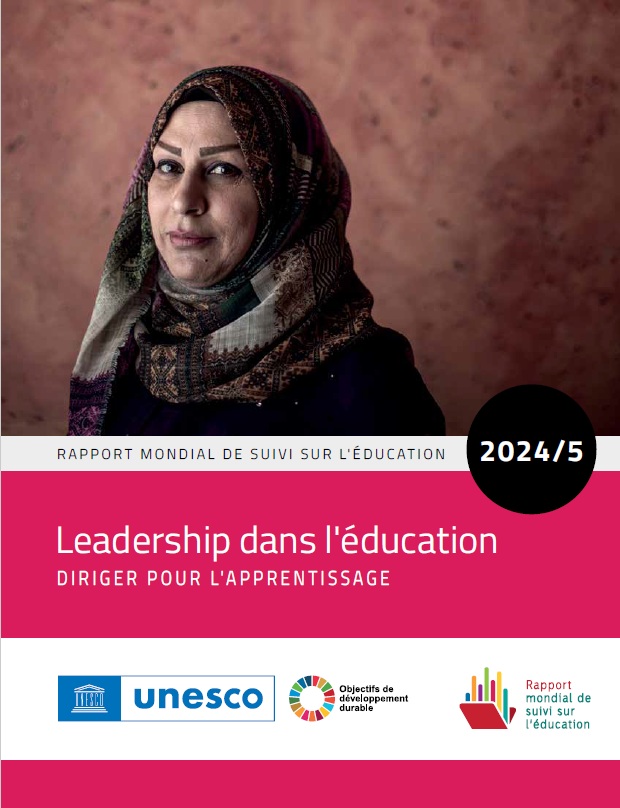 Rapport mondial de suivi sur l'éducation 2024/5, Leadership dans l'éducation : diriger pour apprendre سنة النشر: 2025 المؤلف المؤسسي: Global Education Monitoring Report Team Le Rapport mondial de suivi sur l'éducation 2024/5 évalue les progrès accomplis dans la réalisation des objectifs du Programme 2030 et montre que, si le nombre d'enfants scolarisés et achevant l'enseignement secondaire n'a jamais été aussi élevé, de nombreux domaines connaissent une stagnation. Le leadership joue un rôle central pour y remédier. Aucune école n’améliore les résultats des élèves sans un bon leader pour montrer la voie. Sur la base d’un examen des lois et politiques concernant la sélection, la préparation et les conditions de travail des chefs d'établissement de 211 systèmes éducatifs, le rapport analyse les leviers stratégiques permettant d'attirer et de retenir des leaders de talent.Les possibilités d’exercer un leadership ne se limitent pas aux dirigeants des écoles, elles s’étendent à des personnes qui occupent d’autres postes dans le système éducatif et en dehors de celui-ci, telles que les directeurs adjoints, les enseignants et les élèves lorsque le leadership est partagé, les responsables politiques, la société civile, les organisations internationales, les syndicats et les médias, qui contribuent à définir les objectifs en matière d’éducation.Le rapport préconise que des efforts soient faits pour former des leaders dans quatre dimensions essentielles : fixer des objectifs, donner la priorité à l’apprentissage, encourager la collaboration et faire évoluer les personnes. Pour que ces dimensions se concrétisent, il faut faire confiance aux personnes occupant des postes de direction et leur donner les moyens d’agir ; il faut les recruter grâce à des pratiques d’embauche équitables ; les soutenir dans leur évolution ; et les encourager à mettre en place une culture de collaboration. Le rapport appelle également à investir dans la capacité des responsables de l'éducation à jouer un rôle de leader au sein du système, en mettant particulièrement l'accent sur la direction pédagogique et l'assurance qualité