
الموارد
استكشف مجموعة واسعة من الموارد القيمة حول تعليم المواطنة العالمية لتعميق فهمك وتعزيز البحث والمناصرة والتعليم والتعلم.
تم العثور على 2,775 نتيجة
 [Resumen] Reimaginar juntos nuestros futuros: Un nuevo contrato social para la educación سنة النشر: 2021 المؤلف المؤسسي: International Commission on the Futures of Education | UNESCO La humanidad y el planeta Tierra se encuentran en peligro. Tenemos que adoptar medidas consensuadas de forma urgente para cambiar de rumbo y replantearnos nuestros futuros. En el plano educativo, que desde antaño se reconoce como un importante motor que propicia cambios positivos, se nos plantean desafíos nuevos, urgentes e importantes. Este informe de la Comisión Internacional sobre Los futuros de la educación, que se ha nutrido de un proceso mundial de consultas en el que han participado aproximadamente 1 millón de personas, insta a los gobiernos, las instituciones, las organizaciones y los ciudadanos de todo el mundo a preparar un nuevo contrato social en materia educativa que nos permita colaborar con el objetivo de forjar futuros pacíficos, justos y sostenibles para todas las personas. En el informe se abordan de forma detallada las tecnologías digitales, el cambio climático, el retroceso democrático y la polarización social, y el incierto futuro de la esfera laboral. Mediante este documento, no solo se pretende contribuir a que todas las personas participen en la conversación sobre la educación y promover la reflexión, sino también instar a todos los individuos a actuar. Según la tesis fundamental del informe, a través de millones de actos individuales y colectivos caracterizados por su valentía, liderazgo, resistencia, creatividad y atención, cambiaremos de rumbo y transformaremos el ámbito educativo a fin de forjar futuros justos, equitativos y sostenibles.
  함께 그려보는 우리의 미래 - 교육을 위한 새로운 사회계약 سنة النشر: 2021 المؤلف المؤسسي: International Commission on the Futures of Education | 유네스코 우리의 인류와 지구는 위협을 받고 있습니다. 전염병은 우리의 연약함과 상호 연결성을 증명하는 역할을 했을 뿐입니다. 이제 방향을 바꾸고 우리의 미래를 재창조하기 위해 함께 취하는 긴급 조치가 필요합니다. 국제미래교육위원회는 심오한 변화를 가져오는 교육의 힘을 인정합니다. 우리는 모든 어린이, 청소년 및 성인을 위한 양질의 교육에 대한 권리를 보장하고 지속 가능한 집합적 미래를 위한 경로로서 교육의 변혁적 잠재력을 완전히 실현하겠다는 약속을 이행해야 하는 이중 과제에 직면해 있습니다. 이를 위해서는 불의를 바로잡으면서 미래를 변화시킬 수 있는 교육을 위한 새로운 사회계약이 필요합니다.이 새로운 사회 계약은 인권에 기초해야 하고 비차별, 사회 정의, 생명 존중, 인간 존엄성 및 문화적 다양성의 원칙에 기초해야 합니다. 그것은 배려, 호혜주의, 연대의 윤리를 포함해야 합니다. 공공의 노력과 공동선으로서의 교육을 강화해야 합니다.작성 기간이 2년이고 약 100만 명이 참여하는 글로벌 협의 프로세스를 기반으로한 이 보고서는 우리가 모두를 위해 평화롭고 정의로우며 지속 가능한 미래를 건설하는 데 도움이 될 교육을 위한 새로운 사회 계약을 맺도록 전 세계의 정부, 기관, 조직 및 시민을 초대합니다.여기에 제시된 비전, 원칙 및 제안은 단지 출발점일 뿐입니다. 그것들을 번역하고 맥락화하는 것은 공동의 노력입니다. 많은 밝은 점이 이미 존재합니다. 이 보고서는 이를 캡처하고 구축하려고 시도합니다. 매뉴얼도 청사진도 아닌 중요한 대화의 시작입니다.
  Sub-Education Policy Review Report: Inclusive Education سنة النشر: 2021 المؤلف المؤسسي: UNESCO Inclusion highlights opportunities for an equal involvement of individuals with disabilities (physical, social, and emotional) when possible into typical education, but leaves accessible the probability of individual selections and possibilities for special aid and accommodations for persons who need it. This review was initiated by UNESCO to inform the ongoing discourse about inclusive education within Malaysia, Indonesia, Brunei, Philippine and Timur-Leste. Sustainable Development Goal 4 (SDG 4) reinforces the importance of inclusive education which adheres nations to adopt the framework of action in providing inclusion and equity through education of children with perceived differences. The review contributes to the body of literature on inclusive education by synthesizing policy recommendations and evaluations and identifying contradictions and overlaps in those policies. This review draws upon UNESCO reports pertaining to inclusive education policies and initiatives. In addition, a systematic review of empirical studies on inclusive education policy (2010-2020) identified from related and major databases (Eric) is conducted. Both the UNSECO reports and empirical studies are analyzed based on the SDG4 and its targets pertaining to inclusion policy.
 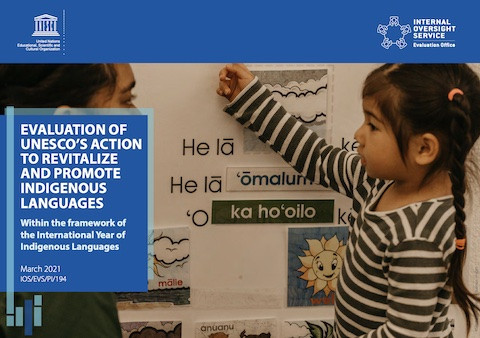 Evaluation of UNESCO’s Action to Revitalize and Promote Indigenous Languages: Within the Framework of the International Year of Indigenous Languages سنة النشر: 2021 المؤلف: Claire Thomas | Lydia van de Fliert | Oliver Loode | Silvia Quattrini | Mihaela Cojocaru المؤلف المؤسسي: UNESCO To draw attention to the critical loss of indigenous languages and the urgent need to preserve, revitalize and promote them and to take further urgent steps at the national and international levels, in 2016 the United Nations General Assembly in its resolution 71/178 proclaimed the year beginning on 1 January 2019 the International Year of Indigenous Languages (hereafter the IYIL2019). UNESCO was invited to serve as the lead agency for the Year and the coordination role was internally assigned to the Communication and Information Sector. UNESCO requested an evaluation of its action within the IYIL2019 with a view to learning from its experience during 2019 and further strengthening its coordination and implementation role during the upcoming Decade of Indigenous Languages (2022-2032).As the lead agency for the IYIL2019, UNESCO played a key role raising awareness of not only the critical loss of indigenous languages, but also the positive value and meanings that indigenous languages provide to Indigenous Peoples and humanity at large. The evaluation found that UNESCO led the development of an ambitious and relevant Action Plan for the Year. It also succeeded in setting up an 18-member Steering Committee composed of representatives of Member States, Indigenous Peoples and the UN three-party indigenous mechanisms. UNESCO staff implemented more than 80 activities around the world, with three-quarters of these at the global level and the majority of national events in Latin America and the Caribbean region. It also maintained an interactive website, which registered more than 880 events around the world.Leading and coordinating the IYIL2019 was not without its challenges, particularly as UNESCO was asked to lead this effort within existing resources and relying on a very small core team. Its programme sectors found creative solutions for indigenous language programming, but without a budget for intersectoral activities, collaboration between sectors was limited to information sharing and activities in Africa and the Arab States were few. The evaluation also found that the Action Plan lacked a meaningful results framework and thereby did not facilitate the monitoring of the IYIL2019. Partnerships with UNESCO networks and the wider UN system were underutilized and many opportunities for future collaboration have been highlighted for the upcoming Decade.
 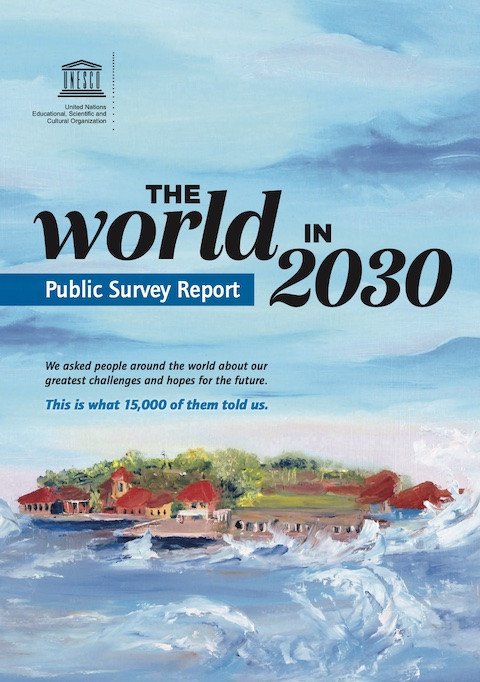 The World in 2030: Public Survey Report سنة النشر: 2021 المؤلف المؤسسي: UNESCO This report presents the results of the World in 2030 Survey, launched by UNESCO in May 2020 to provide a platform for people to share their views on our world’s most pressing challenges, including what specifically they are worried about, and, most importantly, what solutions they feel are mostneeded. The results of this survey present a clear and systematic framework for action, one that can enrich global reflection over the coming decade as part of a renewed push to achieve the Sustainable Development Goals of the UN 2030 Agenda.Over 15,000 respondents from all regions of the world responded to the survey, providing a clear snapshot of global per- spectives. This survey received particular participation from women and young people. A majority of respondents had a university education, and the top region from which participants hailed was Latin America and the Caribbean.Responses to the World in 2030 Survey indicate clear trends in the concerns felt by global citizens. According to survey respondents, the top challenge facing peaceful societies in the lead up to 2030 was, by far, climate change and loss of biodiversity, ranking in the top four challenges of 67% of respondents, and coming out on top for all regions and demographics. When examining this challenge, people were most concerned about increasing natural disasters and extreme weather, loss of biodiversity and its impact on people, pollution of the ocean and rising sea levels, and risk of conflict or violence. The top proposed solutions were investing in green energy and sustainable economies, teaching sustainability through education, effective international cooperation, and building trust in science and science-based decisions.The next four most highlighted global challenges were violence and conflict (44%), discrimination and inequality (43%), lack of food, water and housing (42%), and health and disease (37%). There was some limited variation in the rankings of the relative importance of these four challenges across regions and demographics. For example, women and minority group respondents both ranked discrimination and inequality as the second most important global challenge, following climate change and biodiversity loss, rather than third, while respondents from indigenous communities and from Asia and the Pacific ranked health and disease as the second most important global challenge, rather than fifth. The World in 2030 survey was an open online questionnaire held from May to September 2020. It was made available in more than 25 languages. This report also analyses results along regional, gender, age and other demographic lines, presenting a complex and valuable portrait of global sentiment on these key issues.
 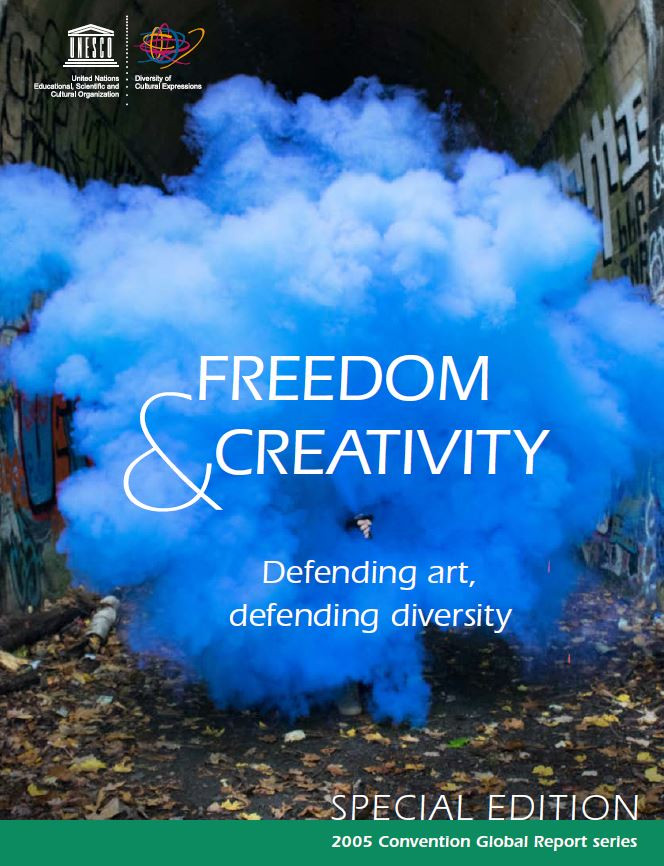 Freedom & Creativity: Defending Art, Defending Diversity; Special Edition سنة النشر: 2020 المؤلف: Laurence Cuny المؤلف المؤسسي: UNESCO In anticipation of the third edition of Re|Shaping Cultural Policies, this special edition of the Global Report series that monitors the implementation of the 2005 Convention on the Protection and Promotion of the Diversity of Cultural Expressions, focuses on one of the Convention’s overarching goals: the promotion of human rights and fundamental freedoms and, in particular, artistic freedom. Freedom of expression, information and communication, as well as the ability of individuals to choose cultural expressions is a prerequisite for the protection and promotion of the diversity of cultural expressions.Building on the recommendations put forth in the 2018 Global Report, this special edition provides an overview of current advances and challenges in the legal protection of artistic freedom, the protection of the social and economic rights of artists and cultural professionals and the monitoring of artistic freedom at the national, regional and international levels.By producing new evidence and valuable analysis, the 2005 Convention Global Report series is intended as a reference tool for cultural policymaking and advancing creativity for development. Libertad & creatividad: defender el arte, defender la diversidad; edición especial سنة النشر: 2020 المؤلف: Laurence Cuny المؤلف المؤسسي: Organización de las Naciones Unidas para la Educación, la Ciencia y la Cultura (UNESCO) Como anticipo de la tercera edición de Re|Pensar las políticas culturales, esta edición especial de la serie de Informes Mundiales, que examina la aplicación de la Convención de 2005 sobre la Protección y Promoción de la Diversidad de las Expresiones Culturales, se centra en uno de los objetivos principales de la Convención: la promoción de los derechos humanos y las libertades fundamentales y, en particular, la libertad artística. Libertad de expresión, información y comunicación, así como la capacidad de las personas para elegir las expresiones culturales es un requisito previo para la protección y promoción de la diversidad de las expresiones culturales.Apoyándose en las recomendaciones formuladas en el Informe Mundial de 2018, esta edición especial ofrece una visión general de los avances y desafíos actuales en la protección jurídica de la libertad artística, la protección de los derechos sociales y económicos de los artistas y profesionales de la cultura y la supervisión de la libertad artística a nivel nacional, regional e internacional.Con su aporte de nuevas pruebas y valiosos análisis, la serie de Informes Mundiales de la Convención de 2005 está pensada como un instrumento de referencia para la formulación de políticas culturales y el fomento de la creatividad para el desarrollo.
  COVID 19, Technology-Based Education and Disability: The Case of Bangladesh; Emerging Practices in Inclusive Digital Learning for Students With Disabilities سنة النشر: 2021 المؤلف: Vashkar Bhattacharjee | Shahriar Mohammad Shiblee المؤلف المؤسسي: UNESCO This study sheds light on Bangladesh’s initiatives in the area of disability-inclusive education. The particu- lar focus is on the role of its Accessible Reading Materials (ARM) initiative and how this has contributed to ensuring disability-inclusive and accessible education during the COVID-19 pandemic in Bangladesh. ARM is a government-led initiative that was launched in 2014 by the then Access to Information (a2i) programme of the Prime Minister’s Office, now the Aspire to Innovate Programme of the Information and Communica- tion Technology (ICT) Division of the Government of Bangladesh. It was launched in recognition of the need for solutions to ensure virtual, as well as regular reading access for all students, including children and young people with barriers to reading. ARM is aimed at satisfying the educational needs of all students including students with print and learning disabilities.
 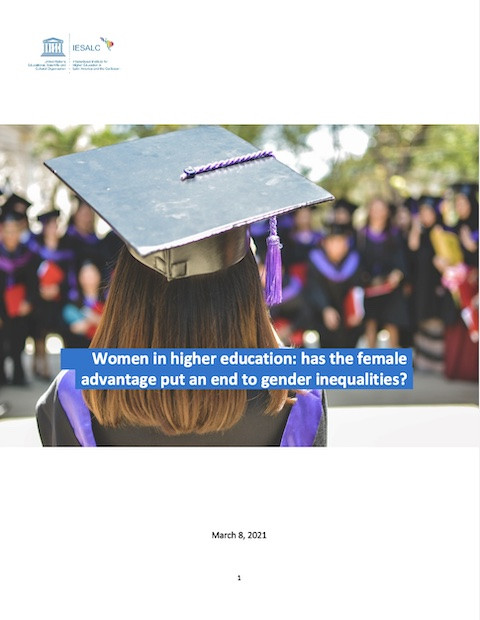 Women in Higher Education: Has the Female Advantage Put an End to Gender Inequalities? سنة النشر: 2021 المؤلف: Daniele Vieira do Nascimento | Takudzwa Mutize | Jaime Felix Roser Chinchilla المؤلف المؤسسي: UNESCO Regardless of encouraging statistics on women access to higher education, women still encounter obstacles when seeking to occupy key academic positions in universities, to be involved with relevant research, and to take leadership roles.Women are overrepresented among teaching staff at lower education levels, while their presence is markedly lower in tertiary education (vertical segregation). The same is true in school management and education policymaking. Women are also still underrepresented as senior faculty and in higher education decision-making bodies in many countries.In the area of research, men publish on average more articles than women showing there is a gender publication gap. Differences in men ́s and women ́s academic publication persist and are most pronounced for publications in top journals.STEM (science, technology, engineering, and mathematics) areas of study show a heavy underrepresentation of female students in most countries. This underrepresentation of female students is closely linked to the underrepresentation of female researchers in those areas. Globally, the percentage of females studying engineering, manufacturing and construction or ICT (information and communications technology) is below 25% in over two- thirds of countries.During the first wave of the COVID-19 pandemic, although submission of academic papers for publication increased in all months during the lockdown period, the rate of increase in submissions by female researchers was significantly less than those by male researchers. This deficit was also found to be especially pronounced among younger cohorts of female academics. Mujeres en la educación superior: ¿la ventaja femenina ha puesto fin a las desigualdades de género? سنة النشر: 2021 المؤلف: Daniele Vieira do Nascimento | Takudzwa Mutize | Jaime Felix Roser Chinchilla المؤلف المؤسسي: UNESCO Aunque son alentadoras las estadísticas sobre el acceso de las mujeres a la enseñanza superior, las mujeres siguen topándose con obstáculos cuando intentan ejercer puestos académicos clave en las universidades, participar en investigaciones relevantes y asumir funciones de liderazgo.Las mujeres están sobrerrepresentadas entre el personal docente de los niveles educativos inferiores, mientras que su presencia es notablemente menor en la enseñanza superior (segregación vertical). Lo mismo ocurre en los puestos de dirección de centros educativos y en la elaboración de las políticas educativas. En muchos países, las mujeres siguen estando infrarrepresentadas en los niveles superiores del profesorado y en los órganos de decisión de la enseñanza superior.En el ámbito de la investigación, los hombres publican en promedio más artículos que las mujeres, lo que demuestra que existe una brecha de publicación entre ambos sexos. Las diferencias entre la cantidad de publicaciones académicas de hombres y la de mujeres persisten y son más acentuadas cuando se trata de publicaciones en las revistas más destacadas. En las áreas de estudio STEM (ciencia, tecnología, ingeniería y matemáticas) se observa una fuerte infrarrepresentación de las estudiantes en la mayoría de los países. Esta infrarrepresentación de las estudiantes guarda estrecha relación con la infrarrepresentación de las investigadoras en esas áreas. A escala mundial, el porcentaje de mujeres que estudian ingeniería, industria y construcción o tecnologías de la información y la comunicación (TIC) se ubica por debajo del 25 % en más de dos tercios de los países.