
الموارد
استكشف مجموعة واسعة من الموارد القيمة حول تعليم المواطنة العالمية لتعميق فهمك وتعزيز البحث والمناصرة والتعليم والتعلم.
تم العثور على 1,443 نتيجة
 Proceedings of the thematic session on education for sustainable development: towards effective disaster reduction and enhancing human security; cluster 3: knowledge, innovation and education to build a culture of safety and resilience سنة النشر: 2005 المؤلف: Rajib Shaw | Badaoui Rouhban المؤلف المؤسسي: Kyoto University. Graduate School of Global Environmental Studies | Global Alliance for Disaster Reduction | Global Open Learning Forum on Risk Education | Disaster Reduction Alliance | International Institute of Earthquake Engineering and Seismology Ten years ago, the city of Kobe and its adjoining areas in Hyogo prefecture of Japan were hit by a strong earthquake, leaving behind a trail of death and destruction. This earthquake was a turning point in disaster reduction initiatives in Japan, resulting in two prominent changes: 1) a blending of technological and social issues in the field of research and application, and 2) an enhanced participation of civil society in disaster reduction Initiatives. Since Japan had long been one of the most developed countries in the field of earthquake engineering, the tragedy in Kobe posed a daunting question: 'how to fill the gap between knowledge and practice?' This question is not only for Japan, but is pertinent to many other countries. With the advancement of technology, the knowledge base is growing, and it is now time to tackle this question in order to save lives and properties from natural disasters. The World Conference on Disaster Reduction (WCDR), at the 10th anniversary of the Kobe earthquake, is therefore of special significance, providing an excellent platform to share experiences, expertise, and lessons from different parts of the world. The year 2005 is also the beginning of the United Nations Decade of Education for Sustainable Development (DESD: 2005-2014) which is led by UNESCO. Compte rendu de la session thématique sur l'éducation pour le développement durable: vers une réduction efficace des catastrophes et le renforcement de la sécurité humaine; groupe 3: la connaissance, l'innovation et l'éducation pour instaurer une culture de la sécurité et de résilience سنة النشر: 2005 المؤلف: Rajib Shaw | Badaoui Rouhban المؤلف المؤسسي: Kyoto University. Graduate School of Global Environmental Studies | Global Alliance for Disaster Reduction | Global Open Learning Forum on Risk Education | Disaster Reduction Alliance | International Institute of Earthquake Engineering and Seismology Il y a dix ans, la ville de Kobe et ses zones adjacentes dans la préfecture de Hyogo du Japon ont été touchés par un fort tremblement de terre, laissant derrière lui une traînée de mort et de destruction. Ce tremblement de terre a été un point tournant dans les initiatives de prévention des catastrophes au Japon, ce qui entraîne deux changements importants: 1) un mélange de questions technologiques et sociales dans le domaine de la recherche et de l'application, et 2) une participation accrue de la société civile dans les initiatives de prévention des catastrophes. Depuis que le Japon a longtemps été l'un des pays les plus développés dans le domaine de l'ingénierie des tremblements de terre, la tragédie de Kobe a posé une question de taille:? Comment combler le fossé entre les connaissances et la pratique ' Cette question est non seulement pour le Japon, mais est pertinent pour de nombreux autres pays. Avec l'avancement de la technologie, la base de connaissances est en croissance, et il est maintenant temps d'aborder cette question dans le but de sauver des vies et des propriétés des catastrophes naturelles. La Conférence mondiale sur la prévention des catastrophes (CMPC), au 10e anniversaire du tremblement de terre de Kobe, est donc d'une importance particulière, en fournissant une excellente plateforme pour partager des expériences, des compétences et des leçons de différentes parties du monde. L'année 2005 est aussi le début de la Décennie des Nations Unies pour l'éducation pour le développement durable (DEDD: 2005-2014) qui est dirigé par l'UNESCO.
  The Comprehensive Learning Diagnosis: Chile’s approach to assess socio-emotional learning in schools سنة النشر: 2023 المؤلف: José Weinstein | Juan Bravo المؤلف المؤسسي: Center for Universal Education at Brookings Education in Chile has important challenges of quality, equity, and social integration. For decades, policies tried to respond to these concerns with a high-stakes accountability institutional framework, which has not had success. The underlying vision of educational quality was limited. The assessment system in place privileged cognitive and academic dimensions of educational results. Socio-emotional learning had been neglected or considered secondary, without an infrastructure of assessment tools that allowed teachers and principals to diagnosis students’ situations and monitor their progress. The COVID-19 crisis was an opportunity for change: Students’ socioemotional needs were a main concern for schools and society, and the regular accountability system based on standardized tests was interrupted. Subsequently, the Comprehensive Learning Diagnosis (DIA) was launched by the Education Quality Agency. The DIA is a voluntary assessment tool made available to all Chilean schools. The DIA promotes the comprehensive development of students, providing timely information and guidance to internally monitor students’ learning in the academic and socio-emotional domains at several points during the school year. Specifically, with respect to socio-emotional learning, three areas were considered: personal, community, and citizenship. In each of these areas, a set of socioemotional skills were defined, operationalized, and became possible to monitor by school communities. The DIA also collects students’ opinions of school management practices regarding socio-emotional skills. The DIA has received a wide acceptance in school communities. Despite being voluntary, an ample majority of schools decided to participate. The information collected from the DIA allows for practical use by principals and teachers. Moreover, the DIA provides the opportunity for students to inform school management. The new Chilean government has decided to strengthen DIA as an important component in a four-year national plan for reactivating academic and socio-emotional learning in schools. The previous high-stakes accountability system, which involved external assessments, has been suspended and is under discussion. The DIA experience has shown that critical social and educational situations can provide fertile ground to motivate deep and rapid transformation, if an educational actor (in this case the Education Quality Agency) is capable of enacting a pertinent, timely, and practical response to school needs. The DIA is not only an example of productive uses of students´ assessment by schools, but also a demonstration that it is possible to build an institutional arrangement among local, intermediate, and national levels of school systems, where a vertical hierarchy is changed by a collaborative relationship based on local agency, mutual trust, and differentiated technical contributions.
 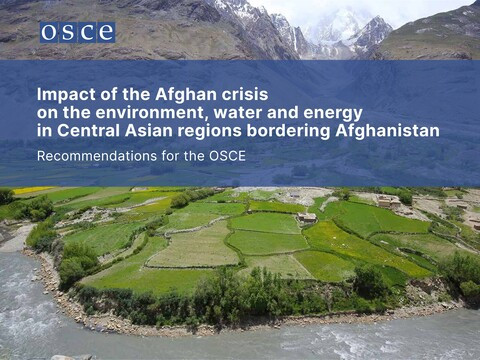 Impact of the Afghan Crisis on the Environment, Water and Energy in Central Asian Regions Bordering Afghanistan سنة النشر: 2023 المؤلف المؤسسي: Organization for Security and Co-operation in Europe (OSCE) Development projects in Central Asia are diverse. In 2021, the Interstate Commission on Sustainable Development of Central Asia adopted the Central Asian Sustainable Development Program till 2030, while a regional climate adaptation strategy is being developed. Afghanistan is not involved in regional environmental and water processes. The results and lessons from the development projects could be useful in tackling the effects of the Afghan crisis. Исследование влияния кризиса в Афганистане на экологическую, водную и энергетическую ситуацию в приграничных областях Центральной Азии سنة النشر: 2023 المؤلف المؤسسي: Organization for Security and Co-operation in Europe (OSCE) В странах Центральной Азии также реализуются проекты развития в различных сферах. Для целей охраны природы на региональном уровне в 2021 г. МКУР принята центрально-азиатская программа устойчивого развития до 2030 г., и разрабатывается региональная стратегия адаптации к изменению климата, но Афганистан в региональных экологических и водных процессах не участвует. Результаты и наработки проектов могут оказаться полезными для обмена опытом и масштабирования, в том числе для смягчения кризиса в Афганистане.
  Statistics of the Sustainable Development Goals in Kazakhstan سنة النشر: 2023 المؤلف المؤسسي: ООН-женщины | Бюро национальной статистики Агентства по стратегическому планированию и реформам Республики Казахстан The publication reflects data on the current state and progress in the field of sustainable development based on available official data and statistics on the SDGs, taking into account gender aspects. The collection was presented at the national seminar on the dissemination of official statistics organized by the Bureau of National Statistics of Kazakhstan and the United Nations Economic Commission for Europe (UNECE) on October 19-21, 2022.
  Inclusion of Women and Girls and Ensuring Their Rights: A Toolkit for Arab Cities سنة النشر: 2023 المؤلف المؤسسي: UNESCO Cairo | European Training and Research Centre for Human Rights and Democracy (Austria) Even though women and girls represent close to or more than half of the population of most Arab cities, they are one of the groups that are historically and structurally excluded from decision-making and development planning in the cities. They face many barriers in accessing cities services, and inequality participating in cities activities. Developed on the basis of a virtual regional consultation workshop, as well as in-depth interviews with cities officials and representatives from the Coalition of Arab Cities against Racism, Discrimination, Xenophobia and Intolerance, this Toolkit provides tools and practical advice to enable Arab cities achieve a better inclusion of women and girls, and ensure their full right to benefit from local development programs. The toolkit mainly targets local authorities in Arab cities including Mayors, Members of Municipality Councils, Municipal executives, and Entities concerned with the design, implementation, follow-up, and evaluation of local projects and programs. “Since wars begin in the minds of men andwomen it is in the minds of men and womenthat the defences of peace must be constructed”Inclusion of women and girls in Arab cities: challenge or opportunity?This publication is the result of a joint effort involving the European Training and Research Centre for Human Rights and Democracy in Graz, UNESCO Coalition of Arab Cities against Racism, Discrimination, Xenophobia and Intolerance, and UNESCO Cairo Office. إدماج وضمان حقوق النساء والفتيات: دليل المدن العربية سنة النشر: 2023 المؤلف المؤسسي: UNESCO Cairo | European Training and Research Centre for Human Rights and Democracy (Austria) إدماج النساء والفتيات في المدن العربية، تح ٍد أم فرصة؟يشكل إدماج النساء والفتيات عنصرا محوريا في مسألة الإدماج الحضري. فعلى الرغم من أن النساء والفتياتي مثلن ما يقرب من أو يزيد عن نصف السكان في أغلب المدن العربية، فإنهن من أكثرالفئات المستبعدة تاريخيا وهيكلًيا من عملية صنع القرار والتخطيط الإنمائي في المدن العربية. ويواجهن العديد من العوائقل لاستفادة من خدمات المدن ويعانين من عدم المساواة فيفرص المشاركة في أنشطتها.كان إعداد هذا الدليل على أساس ورشة عمل استشارية إقليمية افتراضية، بالإضافة إلى مقابلات متعمقة مع مسؤولي المدن وممثلي تحالف المدن العربية ضد العنصرية والتمييز وكراهية الأجانب والتعصب. ويوفر الدليل أدوات ونصائح عملية لتمكين المدن العربية من تحقيق إدماج النساء والفتيات بشكل أفضل، وضمان حقهن الكامل في الاستفادة من برامج التنمية المحلية.يستهدف هذا الدليل بشكل أساسي السلطات المحلية في المدن العربية بما في ذلك رؤساء البلديات وأعضاء المجالس البلدية والمديرين التنفيذيين في البلديات والهيئات المعنية بتصميم المشاريع والبرامج المحلية وتنفيذها ومتابعتها وتقييمها.يأتي هذا المنشور نتيجة جهد مشترك ساهم فيه كل من المركز الأوروبي للتدريب والبحوث لحقوق الإنسان والديمقراطية في جراتس، وتحالف اليونسكو للمدن العربية ضد العنصرية والتمييز وكراهية الأجانب والتعصب، ومكتب اليونسكو بالقاهرة.
  Forum panafricain: sources et ressources pour une culture de la Paix سنة النشر: 2013 المؤلف المؤسسي: African Union The Pan-African Forum “ Sources and resources for a culture of peace” was held in Luanda, Angola, from 26 to 28 March 2013, and was jointly organized by UNESCO, the African Union and the Government of Angola, under the High Patronage of H. E. Mr José Eduardo dos Santos, President of the Republic of Angola. This forum was the result of a close cooperation between UNESCO and the African Union, one of their main objectives being building peace in Africa, through the promotion of a culture of peace based on the intrinsic values of African societies. The Republic of Angola Government, through its President of the Republic H. E. Mr José Eduardo dos Santos, resolutely engaged in this process with major financial and technical support for the organization of the Forum in the Angolan capital city. As indicated in the Action Plan adopted by the participants in plenary (Annex I), recommendations made during the Forum are directed at all components of African society : political leaders, national and regional institutions, civil society, community associations, youth movements and women’s organizations, religious and traditional leaders, entrepreneurs and leaders from the private sector, etc. The implementation of the Action Plan will be continuously monitored by the two institutions that jointly organized the Luanda Forum, the African Union and UNESCO. Representatives from the 55 African countries participating in the Forum will both contribute to the proposal for action by bringing their national experience and take the lead in the follow‐up of the recommendations made at country level. In order to ensure this follow‐up it will be important to link together the participants by the creation of an African Network for the Promotion of a Culture of Peace and Non‐violence. The representatives of African countries will play the role of focal points of the awareness campaign at the national level. Finally, the agenda of the Forum includes a plan to hold a roundtable on the establishment of a multi-stakeholder partnership for action. Organized with the participation of regional institutions, public and private economic actors as well as representatives of Governments and Civil Society, this session will be the occasion to launch a continental and lasting Movement for the promotion of a culture of peace. For this round table and for the Campaign, the stakeholders can now witness the action as their Foundation / Company / Institution / Organization leads to help in building the defence of peace in the minds of men and women and ensure that peace is a reality: "Make Peace Happen".
  Summit of the Future Outcome Document: Pact for the Future, Global Digital Compact, and Declaration on Future Generations سنة النشر: 2024 المؤلف المؤسسي: United Nations (UN) At the Summit of the Future on 22 September 2024, world leaders adopted a Pact for the Future that includes a Global Digital Compact and a Declaration on Future Generations. This Pact is the culmination of a years-long process to adapt international cooperation to the realities of today and the challenges of tomorrow. The hard work of implementation begins immediately. The adoption of the Pact demonstrates that countries are committed to an international system with the United Nations at its center. Leaders set out a clear vision of a multilateralism that can deliver on its promises, is more representative of today’s world and draws on the engagement and expertise of governments, civil society and other key partners.