
الموارد
استكشف مجموعة واسعة من الموارد القيمة حول تعليم المواطنة العالمية لتعميق فهمك وتعزيز البحث والمناصرة والتعليم والتعلم.
تم العثور على 1,471 نتيجة
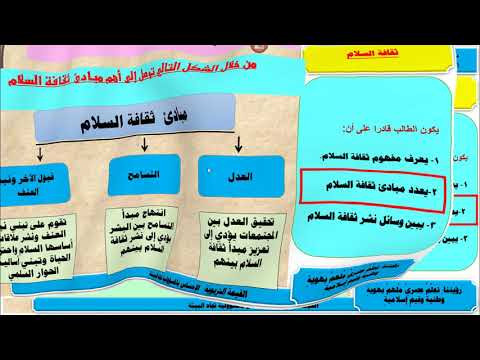 مواطنة ثقافة السلام سنة النشر: 2021 المؤلف: Graeme Simpson المؤلف المؤسسي: AL-andalus Educational Complex الفيديو عبارة عن حصة تدريسية من كتاب الدراسات الاجتماعية للصف العاشر بدولة قطر. يشرح المعلم فيها المواطنة من أجل السلام ونشرها. يبدأ المعلم بشرح مفهوم ثقافة السلام ويستطرد في مبادئ السلام وأسس نشره. الحصة مناسبة للطلبة العرب عموما في فهم ماهية السلام وسبل نشره.
 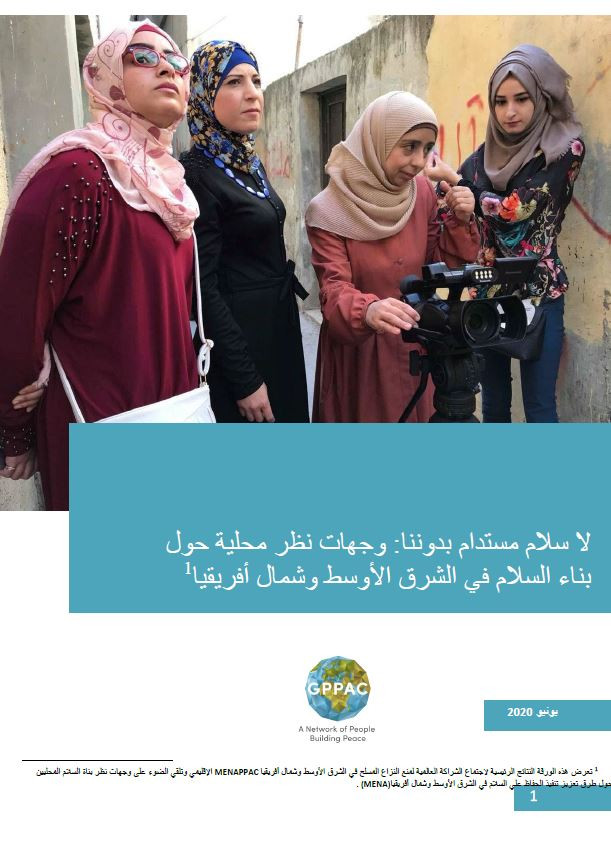 No Sustainable Peace Without Us: Local Perspectives on Peacebuilding in the Middle East and North Africa سنة النشر: 2020 المؤلف المؤسسي: Global Partnership for the Prevention of Armed Conflict (GPPAC) This paper presents the main outcomes of the Global Partnership for the Prevention of Armed Conflict in the Middle East and North Africa meeting. The paper sheds light on the perspectives of local peacebuilders on ways to promote peacekeeping in the Middle East and North Africa region. لا سلام مستدام بدوننا: وجهات نظر محلية حول بناء السلام في الشرق الأوسط وشمال أفريقيا سنة النشر: 2020 المؤلف المؤسسي: Global Partnership for the Prevention of Armed Conflict (GPPAC) تعرض هذه الورقة النتائج الرئيسية لاجتماع الشراكة العالمية لمنع النزاع المسلح في الشرق الأوسط وشمال أفريقيا. وتلقي الورقة الضوء على وجهات نظر بناة السلام المحليين حول طرق تعزيز الحفاظ على السلام في منطقة الشرق الأوسط وشمال أفريقيا.
 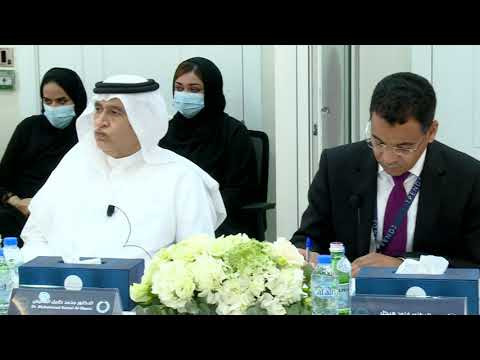 Spreading a Culture of Peace and Tolerance in the World: What Should We Do? سنة النشر: 2021 المؤلف المؤسسي: TRENDS Research & Advisory The video is a symposium, moderated by Emirati researcher and writer Mohammed Khalfan Al Sawafi. The symposium focuses on six main axes: “Religious discourse and the importance of confronting hate speech and extremism, the Human Fraternity Document as a framework for promoting the values of peace and tolerance around the world, and human rights as an entry point for promoting a culture of tolerance and peace, making it an entry point to confront the conflicts of the world and the region, and ways to strengthen it in the region and the world, and toward a vision common for a more peaceful and tolerant world. The video interviews a group of specialists. نشر ثقافة السلام والتسامح في العالم: ما الذي ينبغي علينا فعله؟ سنة النشر: 2021 المؤلف المؤسسي: TRENDS Research & Advisory الفيديو عبارة عن ندوة أدراها الباحث والكاتب الإماراتي محمد خلفان الصوافي. تركز الندوة على ستة محاور رئيسية هي "الخطاب الديني وأهمية مواجهة خطابات الكراهية والتطرف، ووثيقة الأخُوَّة الإنسانية كإطار لتعزيز قيم السلام والتسامح حول العالم، وحقوق الإنسان كمدخل لتعزيز ثقافة التسامح والسلام، وجعلها مدخلاً لمواجهة صراعات العالم والمنطقة، وسبل تعزيزها في المنطقة والعالم، ونحو رؤية مشتركة لعالم أكثر سلاماً وتسامحاً". الفيديو يتحاور فيه مجموعة من المختصين.
  Declaration on a Culture of Peace سنة النشر: 1999 المؤلف المؤسسي: United Nations (UN) Solemnly proclaims the present Declaration on a Culture of Peace to the end that Governments, international organizations and civil society may be guided in their activity by its provisions to promote and strengthen a culture of peace in the new millennium.
  Fórum Panafricano: fundamentos e recursos para uma cultura de paz سنة النشر: 2013 المؤلف المؤسسي: African Union The Pan-African Forum “ Sources and resources for a culture of peace” was held in Luanda, Angola, from 26 to 28 March 2013, and was jointly organized by UNESCO, the African Union and the Government of Angola, under the High Patronage of H. E. Mr José Eduardo dos Santos, President of the Republic of Angola. This forum was the result of a close cooperation between UNESCO and the African Union, one of their main objectives being building peace in Africa, through the promotion of a culture of peace based on the intrinsic values of African societies. The Republic of Angola Government, through its President of the Republic H. E. Mr José Eduardo dos Santos, resolutely engaged in this process with major financial and technical support for the organization of the Forum in the Angolan capital city. As indicated in the Action Plan adopted by the participants in plenary (Annex I), recommendations made during the Forum are directed at all components of African society : political leaders, national and regional institutions, civil society, community associations, youth movements and women’s organizations, religious and traditional leaders, entrepreneurs and leaders from the private sector, etc. The implementation of the Action Plan will be continuously monitored by the two institutions that jointly organized the Luanda Forum, the African Union and UNESCO. Representatives from the 55 African countries participating in the Forum will both contribute to the proposal for action by bringing their national experience and take the lead in the follow‐up of the recommendations made at country level. In order to ensure this follow‐up it will be important to link together the participants by the creation of an African Network for the Promotion of a Culture of Peace and Non‐violence. The representatives of African countries will play the role of focal points of the awareness campaign at the national level. Finally, the agenda of the Forum includes a plan to hold a roundtable on the establishment of a multi-stakeholder partnership for action. Organized with the participation of regional institutions, public and private economic actors as well as representatives of Governments and Civil Society, this session will be the occasion to launch a continental and lasting Movement for the promotion of a culture of peace. For this round table and for the Campaign, the stakeholders can now witness the action as their Foundation / Company / Institution / Organization leads to help in building the defence of peace in the minds of men and women and ensure that peace is a reality: "Make Peace Happen".
 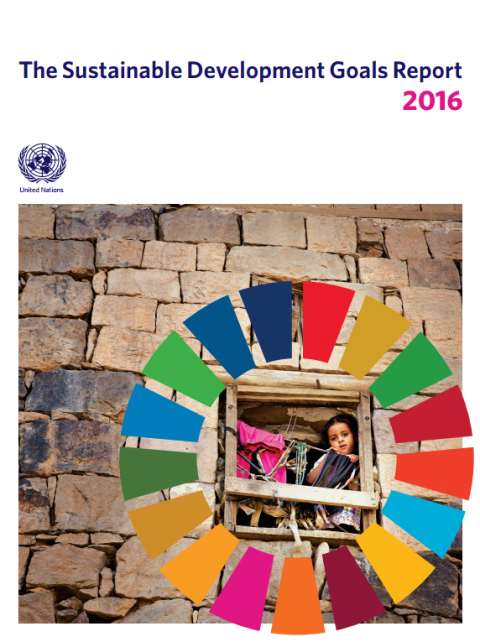 The Sustainable development goals report 2016 سنة النشر: 2016 المؤلف المؤسسي: United Nations (UN) This inaugural report on the global Sustainable Development Goals (SDGs) is a first accounting of where the world stands at the start of our collective journey to 2030. The report analyses selected indicators from the global indicator framework for which data are available as examples to highlight some critical gaps and challenges. The list of SDG indicators agreed upon by the UN Statistical Commission in March 2016 will be subject to refinements and improvements as methods and data availability improve. Every journey has a beginning and an end. Plotting that journey and establishing key milestones along the way requires accessible, timely and reliable disaggregated data. The data requirements for the global indicators are almost as unprecedented as the SDGs themselves and constitute a tremendous challenge to all countries. Nevertheless, fulfilling these requirements through building national statistical capacity is an essential step in establishing where we are now, charting a way forward and bringing our collective vision closer to reality
 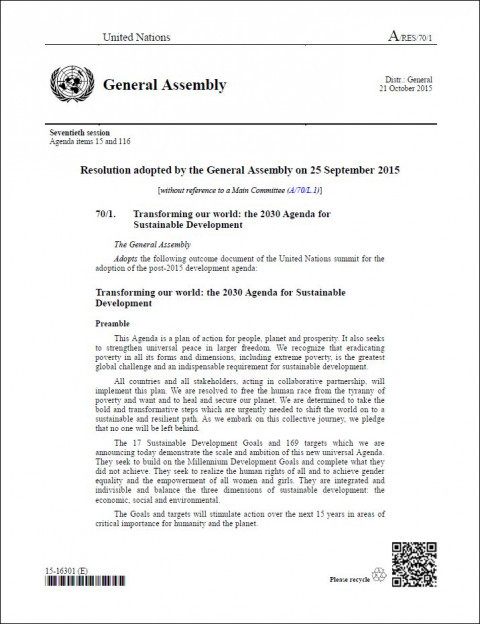 Transforming our world: the 2030 Agenda for Sustainable Development سنة النشر: 2015 المؤلف المؤسسي: United Nations (UN) This Agenda is a plan of action for people, planet and prosperity. It also seeks to strengthen universal peace in larger freedom. We recognize that eradicating poverty in all its forms and dimensions, including extreme poverty, is the greatest global challenge and an indispensable requirement for sustainable development. All countries and all stakeholders, acting in collaborative partnership, will implement this plan. We are resolved to free the human race from the tyranny of poverty and want and to heal and secure our planet. We are determined to take the bold and transformative steps which are urgently needed to shift the world on to a sustainable and resilient path. As we embark on this collective journey, we pledge that no one will be left behind.The 17 Sustainable Development Goals and 169 targets which we are announcing today demonstrate the scale and ambition of this new universal Agenda. They seek to build on the Millennium Development Goals and complete what they did not achieve. They seek to realize the human rights of all and to achieve gender equality and the empowerment of all women and girls. They are integrated and indivisible and balance the three dimensions of sustainable development: the economic, social and environmental. The Goals and targets will stimulate action over the next 15 years in areas of critical importance for humanity and the planet.
 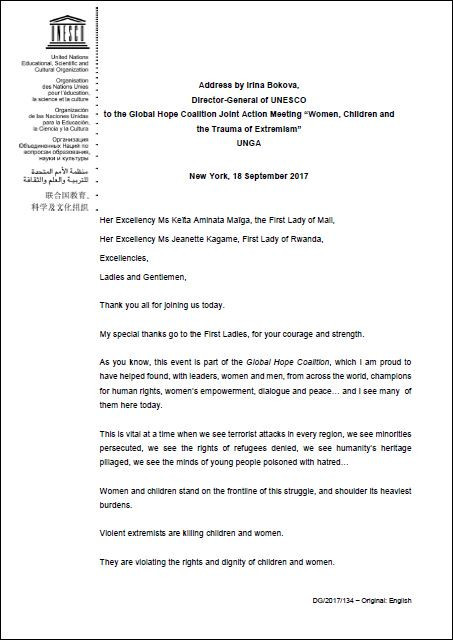 Address by Irina Bokova, Director-General of UNESCO, to the Global Hope Coalition Joint Action Meeting: Women, Children and the Trauma of Extremism سنة النشر: 2017 المؤلف المؤسسي: UNESCO. Director-General, 2009-2017 (Bokova, I.G.) This address was delivered by Irina Bokova, Director-General of UNESCO, to the Global Hope Coalition Joint Action Meeting: Women, Children and the Trauma of Extremism; UNGA, New York, 18 September 2017.