
الموارد
استكشف مجموعة واسعة من الموارد القيمة حول تعليم المواطنة العالمية لتعميق فهمك وتعزيز البحث والمناصرة والتعليم والتعلم.
تم العثور على 3,385 نتيجة
 국제이해교육 사진교실 개선 방안 연구 سنة النشر: 2020 المؤلف: 박순용 | 김종훈 المؤلف المؤسسي: 유네스코 아시아태평양 국제이해교육원 본 연구는 아태교육원이 운영한 국제이해교육 사진교실 (EIU Photo Class)의 역사와 기록들을 되짚어보며 청소년의 세계시민교육 함양 및 글로벌 역량 강화를 위해 나아갈 방향과 개선점을 모색하는데 그 목적이 있다. 본 연구에서는 관련 아카이브 자료를 검토 및 분석하고, 그동안 사진교실에 참가하였던 아시아·태평양 지역의 학생, 작가, 주최·협력기관 관계자들과의 면담을 실시하였으며, 사진교실을 통해 세계시민교육의 취지가 어떻게 구현되었는가와 앞으로의 진행방향을 청소년 및 교육관계자들의 관점에서 점검하였다.
 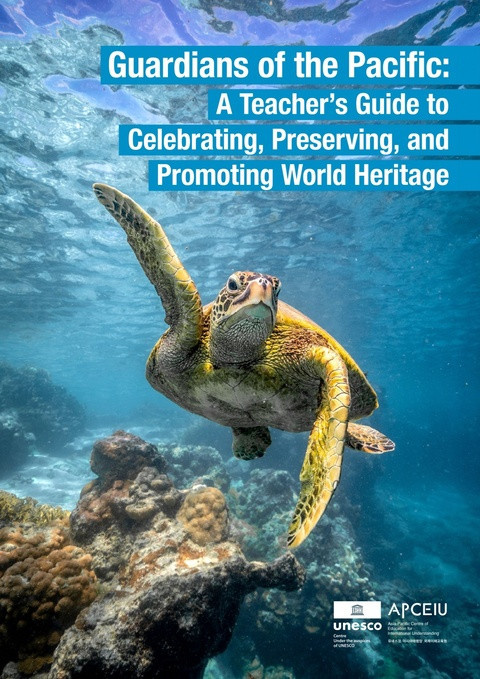 Guardians of the Pacific: A Teacher’s Guide to Celebrating, Preserving, and Promoting World Heritage سنة النشر: 2024 المؤلف: Karena Menzie-Ballantyne | Nanise J. Young Okotai | Adi Meretui Tuvou Ratunabuabua المؤلف المؤسسي: APCEIU Guardians of the Pacific: A Teacher’s Guide to Celebrating, Preserving, and Promoting World Heritage is an APCEIU initiative dedicated to advancing Global Citizenship Education (GCED) worldwide. Anchored in the principles of the Sustainable Development Goals (SDGs) and UNESCO World Heritage, the guide places a special emphasis on the rich and diverse heritage of the Pacific region. This Guide reflects GCED’s integrative approach, which encompasses three interconnected dimensions of learning: cognitive, socio-emotional, and behavioral. It encourages critical thinking about heritage and sustainability, fosters empathy by deepening understanding of the Pacific's unique cultural and natural environments, and inspires meaningful actions to protect and preserve local heritage. Tailored for educators working with students in upper primary (grades 4–6) and lower secondary (grades 7–9), the Guide provides step-by-step instructions and practical resources for incorporating Pacific World Heritage into classroom lessons and extracurricular activities. It is a valuable tool for nurturing awareness, appreciation, and stewardship of the Pacific region’s irreplaceable heritage in schools worldwide. <Table of Contents>ForewordHow to Use This GuideSection 1. Learning Framework Rationale Section 2. What Makes a Place Special?Section 3. The 2030 Agenda, Five Pillars and SDGsSection 4. Protecting People: Levuka Historical Port Town (Cultural Site)Section 5. Preserving the Planet: Phoenix Islands Protected Area (Natural Site)Section 6. Ensuring Prosperity: Rock Islands Southern Lagoon (Mixed Site)Section 7. Promoting Peace: Bikini Atoll Nuclear Test Site (Cultural Site)Section 8. Partnerships to Protect the Environment: East Rennell (Natural Site)Section 9. Taking Action to Promote and Protect a Special PlaceReferences WorksheetsPhoto Cards
  지리적 상상력으로 세계시민 되기 سنة النشر: 2024 المؤلف: 이경한 | 김다원 | 조대훈 | 이용훈 | 황태성 | 김하나 | 박정연 المؤلف المؤسسي: 유네스코 아시아태평양 국제이해교육원 유네스코 아시아태평양 국제이해교육원에서 기획한 『지리적 상상력으로 세계시민 되기: 세계시민과 지리 수업 안내서』가 출간되었다. 본 도서는 2022 개정 교육과정 (고등학교)에 신설된 <세계시민과 지리> 교과 및 세계시민교육 관련 수업을 구성하고 진행하는 데 활용할 수 있도록 개발되었다. GIS, 지정학, 인구, 음식, 초국적기업, 에너지, 기후위기, 국제개발협력과 같은 세계시민교육과 밀접한 여덟 가지 주제를 통해 학습자의 지리적 상상력을 자극하고 세계시민성을 함양하는 데 기여할 것으로 기대된다. 주제별로 구체적인 핵심활동과 활동지, 다채로운 참고자료를 제시하여 본 도서의 활용도를 높였다. * 본 단행본과 관련된 활동지는 유네스코 아시아태평양 국제이해교육원 홈페이지(https://www.unescoapceiu.org/post/5210)에서 다운 받으실 수 있습니다.
 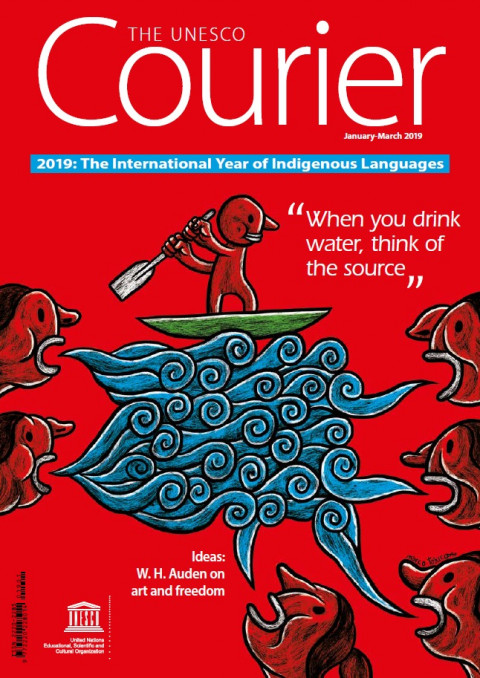 2019: The International Year of Indigenous Languages (The UNESCO Courier. January-March 2019) سنة النشر: 2019 المؤلف المؤسسي: UNESCO With the designation of 2019 as the International Year of Indigenous Languages (IYIL2019), officially launched at UNESCO on 28 January, the international community reaffirms its commitment to supporting indigenous peoples in their efforts to preserve their knowledge and enjoy their rights. Since the adoption of the Declaration on the Rights of Indigenous Peoples (link is external) by the United Nations General Assembly on 13 September 2007, considerable progress has been made in this regard. Nevertheless, indigenous peoples still have a long way to go before they emerge from marginalization and overcome the many obstacles they face. One-third of the world’s people living in extreme poverty belong to indigenous communities, just as in a number of countries, legislation that promotes the rights of indigenous peoples remains incompatible with other laws that deal with issues such as agriculture, land, conservation, forestry, mining and other industries, according to Victoria Tauli-Corpuz (link is external), United Nations Special Rapporteur on the Rights of Indigenous Peoples. The Wide Angle section in this issue of the Courier is dedicated to these indigenous peoples. It takes its title from the Chinese proverb: “When you drink water, think of the source”, to remind us that indigenous knowledge, the source of all knowledge, deserve a prominent place in modernity. The issue also marks the celebration of International Mother Language Day (link is external), 21 February. 2019 : Année internationale des langues autochtones سنة النشر: 2019 المؤلف المؤسسي: Organisation des Nations Unies pour l'éducation, la science et la culture (UNESCO) À une époque où la tension ne cesse de croître, où les droits de l'homme, la liberté d'expression, la paix et l'avenir de la planète semblent plus que jamais remis en question, le pouvoir de transformation véhiculé par l'éducation revêt une importance cruciale.Avec la désignation de 2019 comme Année internationale des langues autochtones(IYIL2019), lancée officiellement à l’UNESCO le 28 janvier, la communauté internationale réaffirme sa volonté de soutenir les peuples autochtones dans leurs efforts de préserver leurs savoirs et de jouir de leurs droits.Depuis l’adoption de la Déclaration sur les droits des peuples autochtones, par l’Assemblée générale des Nations Unies, le 13 septembre 2007, des avancées considérables ont été faites dans ce sens. Il n’en reste pas moins que les peuples autochtones ont encore un long chemin à parcourir avant de sortir de la marginalisation et de surmonter les nombreux obstacles auxquels ils doivent faire face. Un tiers des personnes qui vivent dans l’extrême pauvreté à travers le monde appartiennent à des communautés autochtones, de même que dans un bon nombre de pays, les législations en faveur des peuples autochtones demeurent incompatibles avec d’autres lois qui traitent notamment de l’agriculture, de la terre, de la conservation et des industries forestières ou minières, selon Victoria Tauli-Corpuz, Rapporteuse spéciale des Nations Unies sur les droits des peuples autochtones. Le dossier Grand angle de ce numéro du Courrier leur est consacré. Il emprunte son titre au proverbe chinois : « Quand tu bois de l’eau, pense à la source », pour rappeler que les savoirs autochtones, source de tous les savoirs, méritent une place prééminente dans la modernité. Il s’associe également à la célébration de la Journée internationale de la langue maternelle, le 21 février.
 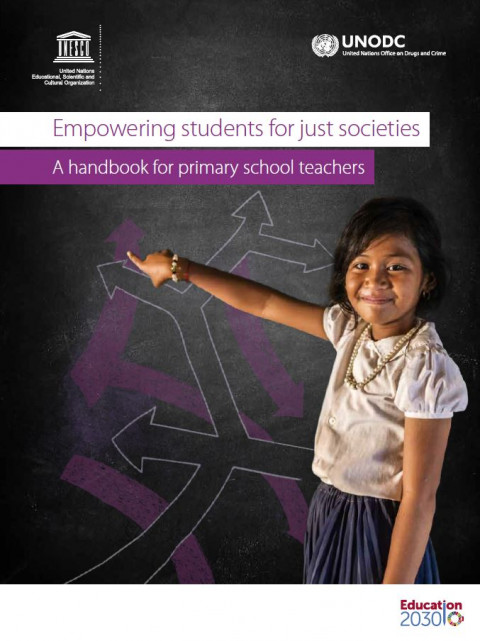 Empowering Students for Just Societies: A Handbook for Primary School Teachers سنة النشر: 2019 المؤلف المؤسسي: UNESCO | UN. Office on Drugs and Crime (UNODC) The purpose of the handbook is to: Provide teachers with a selection of relevant and accessible in-classroom and out-of-classroom educational resources (summaries of short activities, lessons, units) that aim to instil the principles of the RoL among primary school students. Assist teachers in applying the teaching resources to their local educational settings by providing ideas for adaptation for a variety of learning environments. This handbook provides: Summaries of existing teaching resources selected from UN agencies, INGOs, NGOs, and ministries that work to meet the learning outcomes on GCED for the RoL. Links to the original resource that offers additional learning opportunities. Tips and suggestions for adaptation, extension and cross-references of teaching resources; and Suggestions for learning assessment. This handbook can be useful for: Teachers and teacher trainers in formal school settings at the primary school level. It encourages teachers to strengthen the RoL through education by integrating it into their lessons and planning. Professionals working in non-formal education or engaging with young people, for example, in sports associations, community organizations, social work and the justice sector. Parents seeking to raise empowered young citizens who actively contribute to peace and justice. Empoderar a los alumnos para crear sociedades justas: manual para docentes de educación primaria سنة النشر: 2019 المؤلف المؤسسي: Organización de las Naciones Unidas para la Educación, la Ciencia y la Cultura (UNESCO) | UN. Office on Drugs and Crime (UNODC) ¿Cuál es el objetivo de este manual? Su finalidad es: Proporcionar a los docentes diversos recursos educativos relevantes y accesibles que pueden usarse tanto dentro como fuera del aula (resúmenes de actividades breves, planes de clase) dirigidos a transmitir los principios del estado de derecho a los alumnos de educación primaria. Ayudar a los docentes en la aplicación de los materiales didácticos a su contexto educativo local ofreciendo ideas de adaptación para diversos entornos de aprendizaje. El presente manual ofrece: Resúmenes de materiales didácticos procedentes de organismos de las Naciones Unidas, ONG, ONGI y ministerios encargados de lograr resultados educativos en materia de promoción del estado de derecho para la educación para la ciudadanía mundial; Enlaces a los recursos originales, donde pueden consultarse opciones de aprendizaje adicionales; Consejos y sugerencias para la adaptación y ampliación de los recursos didácticos, así como su cotejo con otros materiales; y Sugerencias para evaluar el aprendizaje. Puede resultar de utilidad a: Docentes y formadores de docentes en entornos educativos formales de educación primaria. Anima a los docentes a fortalecer el estado de derecho a través de la educación intergrandolo en sus clases y planificaciones; Profesionales que trabajan en contextos educativos no formales o que están implicados con los jóvenes, por ejemplo, en asociaciones deportivas, en organizaciones comunitarias, que hacen trabajo social y en el sector de justicia; Padres que desean criar a ciudadanos empoderados que contribuyan de forma activa a la paz y la justicia. 为学生赋能,建设公正社会: 小学教师手册 سنة النشر: 2019 المؤلف المؤسسي: 联合国教科文组织 (UNESCO) | UN. Office on Drugs and Crime (UNODC) 该文件为小学阶段的教师提供一个公民教育指导手册,包含众多易于获取的教育资源,用于进行青少年公民教育。
  Strengthening accountability in the implementation of SDG4 - Education 2030 سنة النشر: 2017 المؤلف المؤسسي: UNESCO SDG4-Education 2030 is a renewed commitment to ensure the right to quality education and the promotion of lifelong learning opportunities, as the foundation for sustainable development. As outlined in the 2015 Incheon Declaration and the 2030 Framework for Action (FfA), strengthened governance, partnerships and accountability are essential in translating global education targets and commitments into effective policy and practice at the national level. The range of partners engaged in education - whether government, schools and teachers, families and communities, civil society organizations, or the business sector – have important roles in this collective societal endeavor. They also each have important responsibilities for which they must be accountable in the collective effort to realize the global commitment to ensure the right to quality education for all. As duty bearers, governments have the primary responsibility to deliver on the right to education, and a central role as custodians of efficient, equitable and effective management and financing of public education. Renforcer l'obligation de rendre des comptes dans le cadre de la mise en oeuvre de l'ODD 4 - Education 2030 سنة النشر: 2017 المؤلف المؤسسي: Organisation des Nations Unies pour l'éducation, la science et la culture (UNESCO) L’ODD 4 - Éducation 2030 réaffirme l’engagement mondial garantissant le droit à l’éducation et à l’apprentis-sage tout au long de la vie, qui sert de base au développement durable. Comme le soulignent la Déclaration d’Incheon et le Cadre d’action Éducation 2030 adoptés en 2015, il est indispensable de renforcer la gouver-nance, les partenariats et l’obligation redditionnelle pour concrétiser, dans des pratiques et des politiques nationales, les cibles et les engagements mondiaux relatifs à l’éducation. Qu’il s’agisse de gouvernements, d’établissements scolaires et d’enseignants, de familles et de citoyens, d’organisations de la société civile ou encore du secteur privé, les différents partenaires engagés au service de l’éducation ont un rôle important à jouer dans cette entreprise sociétale collective. Chacun d’entre eux a également d’importantes responsabili-tés dans les efforts menés collectivement pour tenir l’engagement mondial qui vise à garantir à tous le droit à une éducation de qualité, et est à ce titre tenu de rendre des comptes. Porteurs de devoirs, les gouverne-ments sont responsables au premier chef de l’application du droit à l’éducation et ils jouent un rôle central en tant que garants de la gestion et du financement rationnels, équitables et efficaces de l’enseignement public.