
الموارد
استكشف مجموعة واسعة من الموارد القيمة حول تعليم المواطنة العالمية لتعميق فهمك وتعزيز البحث والمناصرة والتعليم والتعلم.
تم العثور على 1,727 نتيجة
 Informe de políticas y recomendaciones en Educación para la Ciudadanía Mundial: Reflexiones y propuestas para la región SICA سنة النشر: 2021 المؤلف: Daniel Abreu المؤلف المؤسسي: Central America Coordination Bureau for Education and Culture (CECC) | Central American Integration System El Consejo de Ministros de la CECC/SICA ha propuesto a los Ministerios de Educación, en el Plan de Contingencia para la región SICA, la priorización de algunos enfoques y áreas de contenido. Un área de particular relevancia es la educación para el ejercicio de la ciudadanía, dimensión especialmente desafiada en estos tiempos donde los ciudadanos han visto sus principios, valores y prácticas cotidianas críticamente exigidos por las especiales circunstancias del vivir juntos en la sociedad.El Informe explica cómo la Educación para la Ciudadanía Mundial se implemen- ta en los países del SICA y brinda recomendaciones para su fortalecimiento en distintos aspectos de las políticas y la práctica docente.
  지속가능한 미래를 위한 대한민국 환경교육 سنة النشر: 2020 المؤلف المؤسسي: 대한민국 환경부 본 자료는 환경부에서 2020 대한민국 환경교육 정책 및 환경교육 종합계획을 소개하고자 하는 목적으로 발행하였다.본 저작물은 대한민국 환경부에서 2020년 작성하여 공공누리 제 4유형으로 개방한 ‘지속가능한 미래를 위한 대한민국 환경교육’ 를 이용하였으며 해당 저작물은 환경교육포털 (www.keep.go.kr)에서 무료로 다운받으실 수 있습니다.
  Policy Brief: Talking Across Generations on Education; #TAGe Bujumbura: Youth, Social and Emotional Education and the Prevention of Violent Extremism سنة النشر: 2020 المؤلف المؤسسي: Mahatma Gandhi Institute of Education for Peace and Sustainable Development (MGIEP) With the aim to mainstream the voices of Burundi youth and include them in the policymaking process in the areas of education for peace, sustainable development and global citizenship, UNESCO MGIEP, YELI-Burundi (Youth Empowerment and Leadership Initiative Burundi) and the Government of Burundi organised a series of high-level #TAGeBujumbura dialogues. These were an integral part of the Annual Prevention of Violent Extremism (PVE) Youth Blast, which was organised by YELI-Burundi on September 16-17, 2019 in Bujumbura, Burundi. H.E Everlyne Butoyi, Minister of Youth, IT and Posts, inaugurated the event. The theme of the main TAGe plenary was The Place of the Youth and Social and Emotional Learning for the Prevention of Violent Extremism – within the broader context of United Nations Security Council Resolution 2250.This unique UNESCO MGIEP TAGe modality for actionable dialogue comprised the following components – month-long online discussions, live TAGe and actionable outputs. The preceding online discussion had over 1,000 participants, and witnessed rich discussion threads being compressed into insightful, actionable ideas. Subsequently, based on the online engagement and the on-ground work done, six representatives were chosen from these participants to represent the collective voices of the youth. They were joined by three distinguished senior decision-makers (from the Government of Burundi and civil society) in a live TAGe exchange, where they delved into issues and unearthed creative solutions in front of an audience of over 200.
  Tandems solidaires: Un dispositif d’éducation à la citoyenneté mondiale au service des territoires; Guide à destination des collectivités territoriales de Bourgogne-Franche-Comté سنة النشر: 2021 المؤلف المؤسسي: Bourgogne-Franche-Comté International Il s'agit d'un guide d'engagement dans le dispositif Tandems Solidaires à destination des collectivités territoriales de Bourgogne-Franche-Comté : la région académique Bourgogne-Franche-Comté, la région Bourgogne-Franche-Comté, le département du Jura, le département de la Territoire de Belfort, la Ville de Belfort, la Ville de Besançon, la Ville de Dijon et la Ville de Nevers.Toutes les collectivités territoriales peuvent mettre en place une politique publique locale d'éducation à la citoyenneté mondiale, afin d'agir à leur échelle en faveur de l'éducation, de l'information et de la sensibilisation des habitants, et plus particulièrement des jeunes générations. Le dispositif « clé en main » des Tandems Solidaires permet aux collectivités de s'engager efficacement dans cette voie, en donnant aux élèves de la maternelle au lycée la possibilité de participer activement à un projet d'éducation à la citoyenneté mondiale dans la région aux côtés d'une association régionale qui travaille dans ce domaine.
  Éducation aux médias et à l’information (Édition 2021-2022) سنة النشر: 2021 المؤلف المؤسسي: Centre pour l’éducation aux médias et à l’information (CLEMI) | Réseau Canopé Cette édition 2021-2022 s'est enrichie de nouvelles fiches pédagogiques, pour le 1er comme pour le 2nd degré. Vous y trouverez notamment :Les informations pratiques (socle commun, textes réglementaires...) et les dispositifs du CLEMI (Semaine de la presse et des médias dans l'école, Concours Médiatiks, #ZéroCliché, Classe investigation...), afin de présenter les enjeux de l'Éducation aux médias et à l'information et les moyens proposés par le CLEMI pour la mettre en œuvre.Le focus Déclic' Critique, qui présente des exemples d'ateliers proposés en classe par le CLEMI et explique comment utiliser ces séquences pour développer l'esprit critique des élèves.Une partie est consacrée aux médias scolaires, à la fois pour encourager cette pratique mais aussi mieux la valoriser.Dans la partie 1er degré, vous trouverez deux nouvelles fiches pédagogiques organisées en séquence sur le dessin de presse et la liberté d'expression. Et toujours les ressources nécessaires pour découvrir la presse, vérifier les images sur internet ou encore analyser un journal télévisé.La partie 2nd degré va s'intéresser elle aussi à la liberté d'expression et son expérimentation en classe, ainsi qu'à la question du complotisme, mais aussi à l'évaluation des discours scientifiques sur YouTube, aux biais cognitifs, ou encore la représentation des datas en photo et vidéo.
  AI in Education: Change at the Speed of Learning سنة النشر: 2020 المؤلف: Steven Duggan المؤلف المؤسسي: UNESCO Institute for Information Technologies in Education (IITE) The policy brief “AI in Education: Change at the Speed of Learning” published by the UNESCO Institute for Information Technologies in Education (UNESCO IITE) opens a new series of publications “Digital Transformation of Education”. The new publication describes the advancements in technology, including data, analytics and personalized learning, Artificial Intelligence (AI), cloud computing and machine learning, and explores the promises of AI for students, teachers, school leaders, parents and education administrators. The publication also highlights the ethical aspects of AI implementation and challenges that it might bring. Искусственный интеллект в образовании: Изменение темпов обучения سنة النشر: 2020 المؤلف: Steven Duggan المؤلف المؤسسي: UNESCO Institute for Information Technologies in Education (IITE) Аналитическая записка «Искусственный интеллект в образовании: Изменение темпов обучения», опубликованная Институтом ЮНЕСКО по информационным технологиям в образовании (ИИТО ЮНЕСКО), открывает издание новой серии публикаций «Цифровая трансформация образования». В новой публикации представлены достижения в области технологий, включая данные, аналитику и персонализированное обучение, искусственный интеллект (ИИ), облачные вычисления и машинное обучение, а также рассматриваются многообещающие возможности ИИ для учащихся, педагогов, родителей, руководителей учебных заведений и администраторов системы образования. В публикации также обозначены этические аспекты и вызовы, связанные с применением ИИ.
 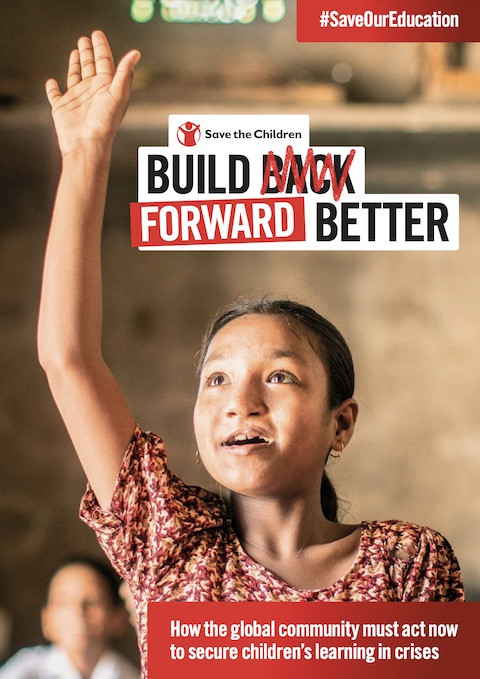 Build Forward Better: How the Global Community Must Act Now to Secure Children’s Learning in Crises سنة النشر: 2021 المؤلف: Emma Wagner المؤلف المؤسسي: Save the Children ‘Build back better’ has long been a rallying cry of crisis responses – and is being used frequently today. However, given the scale of the global learning crisis even before the Covid-19 pandemic – with one child in six denied their right to education – it’s vital we don’t limit our ambition to building ‘back’ to how things were. Now it’s imperative we build forward better – and differently.There’s no denying the scale of the challenge. But there’s also cause for hope. The global reach of the Covid-19 crisis has generated a shared understanding of the impact of crisis on children’s right to education. This understanding can be used to build forward better – and radically transform children’s chances.Build Forward Better presents new analysis on which countries’ school systems are most vulnerable to existing risks and future crises. And it sets out what the global community needs to do to support ministries of education in those countries to prepare now. So that, even during emergencies, education systems can provide all children with good-quality, safe and inclusive opportunities to learn.
 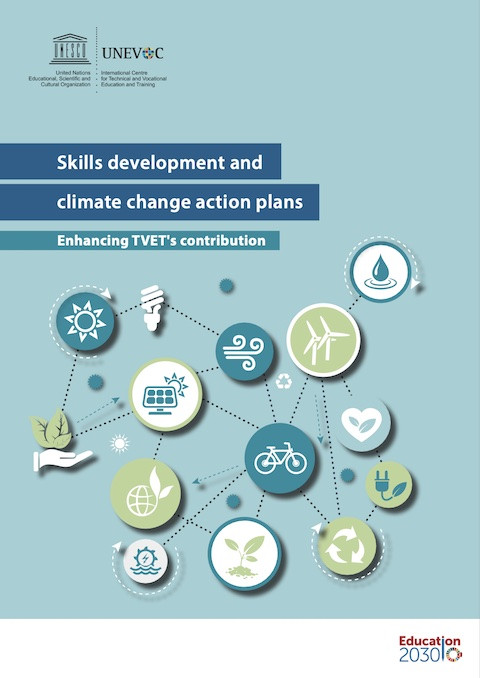 Skills Development and Climate Change Action Plans: Enhancing TVET's Contribution سنة النشر: 2021 المؤلف المؤسسي: UNESCO International Centre for Technical and Vocational Education and Training (UNEVOC) Climate change is an ongoing process that, at the current pace of such activities, cannot be avoided. Tools have been proposed to deal with climate change focus on adaptation and mitigation. Strengthening national and international awareness of and commitment to reducing the impact of climate change has become the only viable option to ensure the sustainability of life on Earth.The Paris Agreement entered into force in 2016 with the aim of bringing all nations together in a common goal of combating climate change and adapting to its impacts. According to the Agreement, every party should submit a climate plan laying out its adaptation and mitigation targets. Technical and vocational education and training (TVET) has the potential to play significant roles in these plans. The smooth transition to green societies and economies relies on amongst others the knowledge, skills and competencies to promote sustainable development. Effective education and training for sustainable development pivots on governance and vision, and the ability to empower people in an inclusive manner to act in favour of sustainable development. It also relies on the ability to train, upskill, reskill and empower those that can take advantage of the job growth and job creation potential in a changing economy.This discussion paper compiles and reviews relevant information regarding the country submissions (Nationally Determined Contributions and National Communications) which lay out adaptation plans and the policies created in fifty-seven selected countries. The aim is to summarize key information that can help assess the ongoing and potential contribution of TVET to the realization of these plans. The analysis made through this discussion paper has helped to generate a set of approaches for climate change adaption, through the education and training lens. These approaches can be used to advance the discussion in strengthening the technical and vocational skills development component in country climate adaptation plans.
 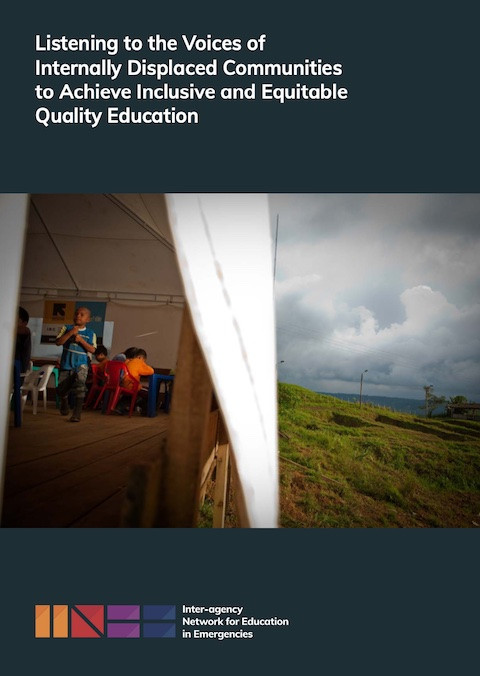 Listening to the Voices of Internally Displaced Communities to Achieve Inclusive and Equitable Quality Education سنة النشر: 2021 المؤلف: Caroline Keenan المؤلف المؤسسي: Inter-agency Network for Education in Emergencies (INEE) This paper outlines the real-life day-to-day challenges young IDPs experience when seeking access to quality education, which is fundamental to their healthy development and future life chances. It reflects the perspectives of teachers who have been displaced, and the challenges they have faced both personally and professionally in attempting to support the learning of children and young people in their communities. Young IDPs and internally displaced teachers shared these experiences in a series of five roundtable events hosted by the Inter-agency Network for Education in Emergencies (INEE) in March and April 2021. The paper also provides insights from other roundtable participants, including education in emergencies (EiE) practitioners, government representatives, United Nations (UN) staff, members of international non-governmental organizations (INGOs) and local civil so- ciety, and other stakeholders who are working to support access to education in displaced communities. They all are calling for taking urgent and concrete action to ensure access to quality education for internally displaced children and young people. The United Nations Secretary-General’s High-Level Panel has a unique opportunity to influence the changes needed to achieve this. The recommendations made in the panel’s final report to the Secretary-General and United Nations Member States will be critical to the future outcomes of millions of children and young people around the world.