
الموارد
استكشف مجموعة واسعة من الموارد القيمة حول تعليم المواطنة العالمية لتعميق فهمك وتعزيز البحث والمناصرة والتعليم والتعلم.
تم العثور على 3,441 نتيجة
 教育技术观念的变迁和发展 سنة النشر: 2020 المؤلف: 王婉婉 随着西方科学技术在教学中的应用,教育技术观念经过时间的流逝在不断发展和充实。现在教育技术的内涵和概念界定已经基本明确,它在教学理论上不断深入和发展,在技术实践上不断取得突破,对教育技术观念起着引领性作用。国内外都是先有教育技术的产生,随后开始研究教育技术,所以后来才有了教育技术观念的变迁和发展。欧美国家的教育技术的发展较国内相比是比较快的,在教育技术观念的变迁中,国内在借鉴欧美国家的理论和技术的基础上也取得了长足的发展。21世纪以来,信息技术更是潜移默化的渗透到教育教学当中,让教师教学和学生学习都更加方便快捷,这都使得人们对教育技术改观并且重视教育技术的发展,这些都影响着教育技术观念的变迁和发展。
  新技术背景下传统经济学课程课程改革探索: 以财政学线上教学为例 سنة النشر: 2023 المؤلف: 陈婷秀 随着计算机技术、移动便携设备、大数据、云计算、人工智能等现代信息技术和设备的高速发展,信息化、便捷化、智能化进程不断推进,高等教育的信息化也在不断深化,朝着更加便捷、更加高效的方向发展,教学模式正在发生巨大、深刻的变革。本文立足新技术背景条件下,掌握了解传统经济学课程改革的需求,探讨传统经济学课程改革的思路,拓展教学模式新的途径方法。结合课程改革实践经验和特点,对照传统教学模式,从教学模式、教学内容、课堂形式、课程考核规划等方面提出了课程改革的具体举措。
  关于新媒体技术在幼儿园综合活动中的应用 سنة النشر: 2022 المؤلف: 曹思圆 随着互联网的深入和普及,信息化技术的发展领域也开始不断的扩大,已经逐渐发展为课堂中最受欢迎的教学模式之一,为教育教学的发展迎来了一个新的开端。幼儿时期具有极高的可塑性,他们对整个世界充满了好奇,遇到问题总爱问个为什么,在这个时期如果加以正确的引导,就会使他们的创新精神得到培养,创造力得到发挥。而新媒体技术的采用对培养孩子们的创新精神有着积极的作用。新媒体技术具有集图像、声音、动画、文字于一体的多种信息功能,向幼儿提供多种刺激,以生动直观、形象逼真的方式向幼儿呈现知识,能引起幼儿的注意力,引发幼儿的好奇心,激发幼儿的学习兴趣,使幼儿处于惊奇、探索的学习氛围中,既可激活幼儿的思维,又有利于发挥幼儿的创造力和想象力。
  미래교육시대의 인간교사와 인공지능(AI) 교사의 역할 및 기능 정립 방향 탐색 연구 سنة النشر: 2021 المؤلف: 전제상 المؤلف المؤسسي: 한국교육정책연구소 이 연구는 인공지능의 급격한 발전과 사회의 변화로 교육 현장에 점차 도입될 인공지능이 어떤 모습으로 존재해야 하는지 그리고 어떤 방식으로 학생들에게 도움을 줄 수 있는지 길을 찾고자 하였다. 이를 위하여 인공지능의 현재 상황과 선행연구를 분석하는 것으로 시작하여 인공지능(AI) 교사에 대한 현장 교사들의 인식을 양적, 질적으로 살펴보았다. 이를 토대로 미래교육시대의 교사와 인공지능(AI) 교사의 역할과 기능을 정립하고 상호보완적인 협업 방안을 모색한 후 인공지능(AI) 교사 도입에 따른 제도적, 법적, 윤리적 기준을 확인하였다.인공지능 기반의 미래 사회가 도래했다고 하여 인간교사의 역할이 크게 바뀌지는 않는다. 기존의 해오던 여러 수업과 업무 중에 우선순위의 변화가 생길 수 있고, 수업보다 행정에 할애했던 시간을 수업과 학생지도, 상담 등에 집중할 수 있게 될 것으로 기대한다. 다만 인공지능(AI) 교사 도입에 따라 야기될 윤리적 문제를 해결하기 위해서는 도입 단계부터 준비하여 지속적인 확인과 점검, 성찰을 통해 협업 과정이 목적에 알맞게 기능하도록 모든 요소에 대해 철저하게 대비하고 점검하여야 한다.
  Opportunities for Media and Information Literacy in the Middle East and North Africa: Yearbook 2016 سنة النشر: 2016 المؤلف: Magda Abu-Fadil | Jordi Torrent | Alton Grizzle المؤلف المؤسسي: International Clearinghouse on Children, Youth and Media (Sweden) Opportunities for Media and Information Literacy in the Middle East and North Africa is the seventeenth Yearbook published by the Clearinghouse and fills a gap in the existing body of literature about the progress of media and information literacy work in different parts of the world. This book also helps educators in the Middle East and North Africa region looking for opportunities to bring to their classrooms elements of MIL education.
  Continental Overview: Bridging CESA and SDG 4 in Africa; Africa Regional Report سنة النشر: 2021 المؤلف المؤسسي: UNESCO Institute for Statistics (UIS) Monitoring progress toward Sustainable Development Goal 4 for education (SDG 4) is crucial to ensuring that children around the world have access to a quality education where they can learn and gain the skills they need to meet their full potential. SDG 4 indicators are organized with a view to global, thematic, regional and national targets.This report by the UNESCO Institute for Statistics (UIS) is the first in a series intended to bring a regional focus to SDG 4 monitoring, highlight the work being done in the regions and compare SDG 4 targets with those established by regional bodies.This new series of regional reports serve two purposes. Firstly, to map regional and SDG 4 targets to provide an overview of the symmetries between the two. Continental Overview: Bridging CESA and SDG 4 in Africa looks at how the strategic objectives of the Continental Education Strategy for Africa (CESA) compares with SDG 4 targets. Secondly, it analyses progress towards these objectives by African sub-regions.
 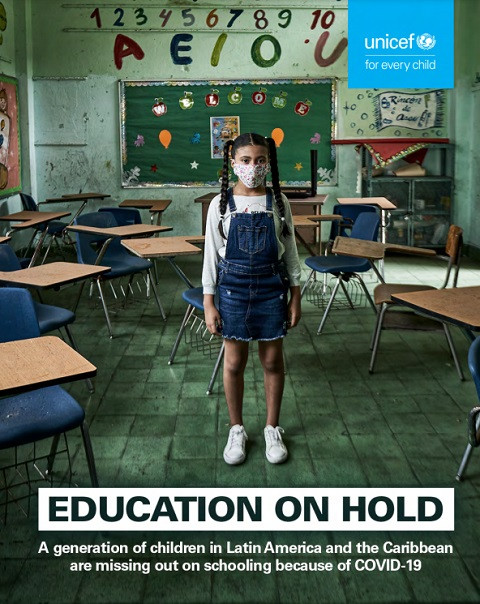 Education on Hold: A Generation of Children in Latin and the Caribbean Are Missing Out on School Because of COVID-19 سنة النشر: 2020 المؤلف: Laura Andreea Seusan | Rocío Maradiegue المؤلف المؤسسي: United Nations Children's Fund (UNICEF) More than seven months into the pandemic, COVID-19 is putting education on hold for more than 137 million children in Latin America and the Caribbean. This is according to a new UNICEF report about the devastating impacts of COVID-19 on education. The report also finds that COVID-19 has further widened the education gaps between rich and poor families in Latin America and the Caribbean. New UNICEF data shows that the percentage of children not receiving any form of education across the region has soared dramatically, from 4 to 18 per cent in the past few months. UN projections reveal that COVID-19 may push up to 3 million additional children out of school in Latin America and the Caribbean. Educación en Pausa: Una generación de niños y niñas en América Latina y el Caribe está perdiendo la escolarización debido al COVID-19 سنة النشر: 2020 المؤلف: Laura Andreea Seusan | Rocío Maradiegue المؤلف المؤسسي: United Nations Children's Fund (UNICEF) Más de siete meses después de que iniciara la pandemia, el COVID-19 está poniendo la educación en pausa de más de 137 millones de niños, niñas y adolescentes en América Latina y el Caribe, según un nuevo informe de UNICEF acerca de los devastadores impactos del COVID-19 en la educación.El informe encuentra también que el COVID-19 ha ampliado aún más las brechas educativas entre las familias ricas y las pobres en América Latina y el Caribe. Los nuevos datos de UNICEF muestran que el porcentaje de niños, niñas y adolescentes que no reciben ninguna forma de educación en la región se ha disparado drásticamente, del 4 al 18 por ciento en los últimos meses. Las proyecciones de la ONU revelan que el COVID-19 podría sacar de la escuela hasta 3 millones de niños más en América Latina y el Caribe.
  Mapping of Media Literacy Practices and Actions in EU-28 سنة النشر: 2016 المؤلف المؤسسي: European Audiovisual Observatory | Council of Europe A project conducted by the European Audiovisual Observatory and financed by the European Commission This study aims at analysing the various media literacy initiatives on a national or regional level in order to provide an overview of what is currently being undertaken. This is the first major mapping exercise to survey the field in Europe. Although this study does not aim at covering the entire media literacy initiatives, it provides a detailed overview of the main trends, coming out of a selection of 547 featured projects involving 939 stakeholders across the European Union, which were identified through a questionnaire addressed at national experts from the different EU-28 member states. So what is Europe doing to encourage our media literacy? What measures are being taken at national and European levels to foster our critical appreciation and understanding of the mass media? The results of this study can be found in a general report accompanied by 4 annexes: Annex 1 provides national summaries showing the findings of the responses concerning each of the 28 EU member states; Annex 2 contains the list of the 547 featured projects; Annex 3 summarises the 145 case-study projects; Annex 4 contains the original responses from the 29 national experts, which are accessible in separate files available on the website of the European Commission.
 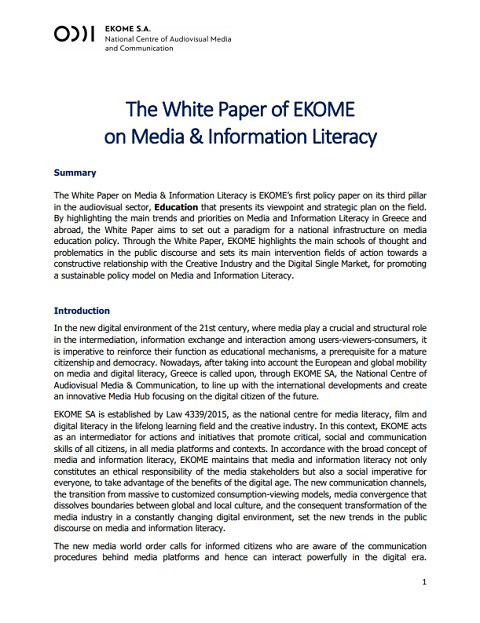 The White Paper of EKOME on Media & Information Literacy سنة النشر: 2018 المؤلف المؤسسي: EKOME S.A. EKOME is concluding 2018 Global UNESCO Media and Information Literacy Week celebrations with the launch of the White Paper on Media & Information Literacy available in Greek & English.The White Paper is EKOME’s viewpoint on the third pillar, Education, setting out a paradigm for a national infrastructure on media and information literacy. By highlighting the main priorities in the field, the White Paper of EKOME aims to contribute to a national strategic plan and build a constructive relationship with the creative industry.