
الموارد
استكشف مجموعة واسعة من الموارد القيمة حول تعليم المواطنة العالمية لتعميق فهمك وتعزيز البحث والمناصرة والتعليم والتعلم.
تم العثور على 3,790 نتيجة
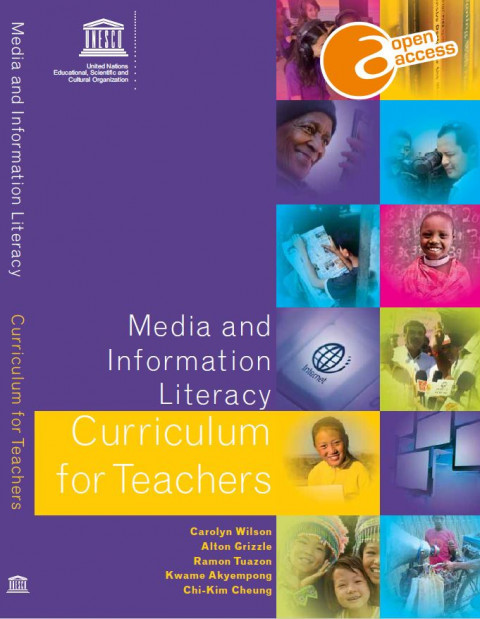 Education aux médias et à l'information: programme de formation pour les enseignants سنة النشر: 2011 المؤلف: Carolyn Wilson | Alton Grizzle | Ramon Tuazon | Kwame Akyempong | Chi Kim Cheung المؤلف المؤسسي: Organisation des Nations Unies pour l'éducation, la science et la culture (UNESCO) Nous vivons dans un monde où la qualité de l’information que nous recevons détermine largement nos choix et nos actions et en particulier, notre capacité à pro ter des libertés fondamentales et notre possibilité d’autodétermination et de développement. Ce programme d’éducation aux médias et à l’information pour les enseignants est une ressource importante pour les États membres de l’UNESCO et une publication expérimentale. Elle est prospective et s’efforce de réaliser la convergence de la radio, la télévision, l’Internet, les journaux, les livres, les archives numériques et les bibliothèques sur une même plate-forme. Elle est aussi spécialement conçue pour permettre l’intégration de ce programme dans le système formel de formation des enseignants. L’UNESCO croit que ce programme sera une étape importante d’innovation et de progrès pour tous les niveaux d’éducation. Медийная и информационная грамотность: программа обучения педагогов سنة النشر: 2011 المؤلف: Carolyn Wilson | Alton Grizzle | Ramon Tuazon | Kwame Akyempong | Chi Kim Cheung المؤلف المؤسسي: Организация Объединенных Наций по вопросам образования, науки и культуры (UNESCO) Данная программа обучения педагогов медийной и информационной грамотности — важный источник информации для государств-членов ЮНЕСКО, призванный содействовать их усилиям по достижению целей, сформулированных в Грюнвальдской декларации (1982 г.), Александрийской декларации (2005 г.) и Парижской повесткой дня (2007 г.), имеющих прямое отношение к медийной и информационной грамотности (МИГ). Данное издание состоит из двух частей. Часть 1 содержит описание программы обучения и системы компетенций МИГ. В ней описываются логика, структура и основные темы програм-мы. Она дополняет «Структуру ИКТ-компетентности учителей» (ICTs Competency Framework for Teachers), подготовленную ЮНЕСКО в 2008 г. Часть 2 включает в себя подробное описание базовых и дополнительных модулей учебной программы. Программа обучения учителей медийной и информационной грамотности переведена на арабский, французский, русский и испанский языки.
 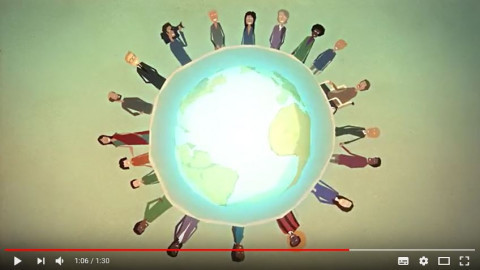 [Video] Global Citizenship Education to Prevent Violent Extremism سنة النشر: 2016 المؤلف المؤسسي: UNESCO The UNESCO video on “Global Citizenship Education to prevent violent extremism” explains how education can prevent violent extremism through equipping young people with the skills to dialogue and think critically, and engage meaningfully with others and their communities in order to build peaceful societies.
 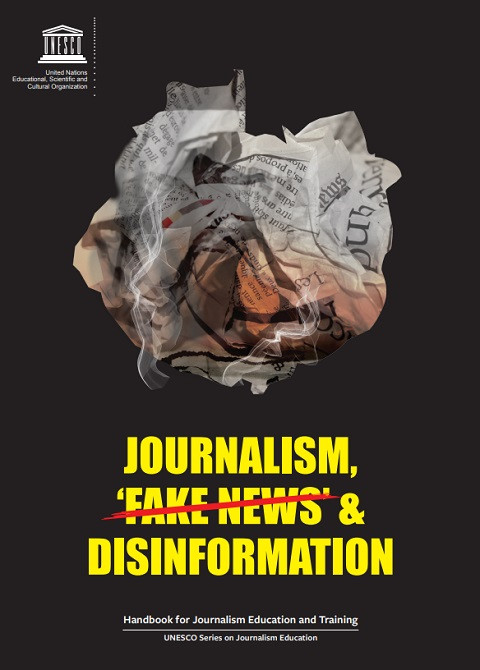 Journalism, Fake News & Disinformation: Handbook for Journalism Education and Training سنة النشر: 2018 المؤلف: Julie Posetti | Cherilyn Ireton | Claire Wardle | Hossein Derakhshan | Alice Matthews | Magda Abu-Fadil | Tom Trewinnard | Fergus Bell | Alexios Mantzarlis المؤلف المؤسسي: UNESCO This handbook seeks to provide an internationally-relevant model curriculum, open to adoption or adaptation, which responds to the emerging global problem of disinformation that confronts societies in general, and journalism in particular. Serving as a model curriculum, the publication is designed to give journalism educators and trainers a framework and lessons to help students and practitioners of journalism to navigate the issues associated with ‘fake news’.The contents draw together the input of leading international journalism educators, researchers and thinkers who are helping to update journalism method and practice to deal with the challenges of misinformation and disinformation. The lessons are contextual, theoretical and in the case of online verification, extremely practical. Used together as a course, or independently, they can help refresh existing teaching modules or create new offerings.It is part of the “Global Initiative for Excellence in Journalism Education”, which is a focus of UNESCO’s International Programme for the Development of Communication (IPDC). The Initiative seeks to engage with teaching, practising and researching of journalism from a global perspective, including sharing international good practices. Media and Information Literacy Curriculum for Teachers سنة النشر: 2011 المؤلف: Carolyn Wilson | Alton Grizzle | Ramon Tuazon | Kwame Akyempong | Chi Kim Cheung المؤلف المؤسسي: UNESCO We live in a world where the quality of information we receive largely determines our choices and actions, including our capacity to enjoy fundamental freedoms and the ability for self-determination and development. This Media and Information Literacy Curriculum for Teachers is an important resource for UNESCO Member States and a pioneering publication.First, it is forward looking, drawing on present trends toward the convergence of radio, television, Internet, newspapers, books, digital archives and libraries into one platform. Second, it is specifically designed for integration into the formal teacher education system.UNESCO believes that, ultimately, this curriculum will contribute to innovation and improvement in all levels of education.
 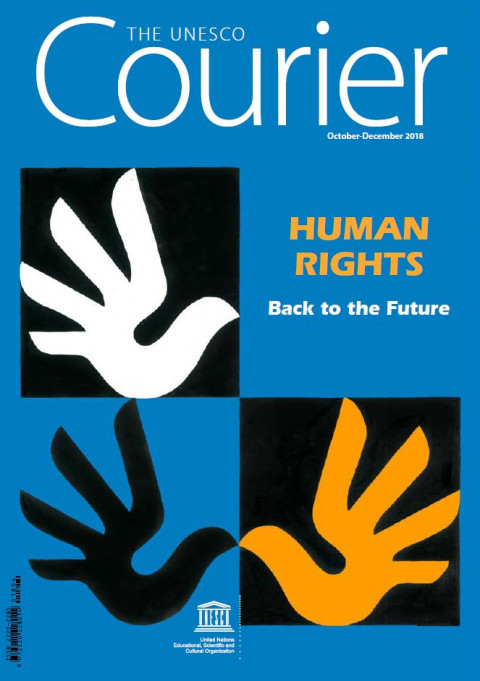 Human Rights: Back to the Future (The UNESCO Courier no. 4, October-December 2018) سنة النشر: 2018 المؤلف المؤسسي: UNESCO Benedetto Croce, Aldous Huxley, Humayun Kabir, Harold J. Laski, Lo Chung-Shu, Salvador de Madariaga, Jacques Maritain, F.S.C. Northrop, Arnold Schoenberg, Pierre Teilhard de Chardin – these are some of the contributors to this issue of the Courier. To mark the seventieth anniversary of the Universal Declaration on Human Rights, adopted on 10 December 1948, we decided to take a detour into the past to enable us to better orient ourselves in the future. This explains the title of this issue: “Back to the Future”. Travelling back to 1946, when the world was grappling with the aftermath of the Second World War, “what kind of moral statement could the international community make that would adequately express its collective outrage and hope, however utopian, for a better future?” Mark Goodale discusses this massive international effort in his introductory article for our Wide Angle section, which he also guest-edited. The series of articles in this section uncovers a hitherto little-known part of the history of the Universal Declaration on Human Rights – the inquiry into the origins and philosophic bases of human rights. This initiative was decided upon during the first UNESCO General Conference (November-December 1946) and launched the following year by the Organization’s first Director-General, Julian Huxley. It was coordinated by the young French philosopher, Jacques Havet. For this project, UNESCO brought together leading intellectual figures of the post-war world, thus making an essential contribution to the reflection on human rights at the time. It remains amazingly relevant today. Equally relevant today are the drawings of Our Guest, the Peruvian artist Fernando Bryce, who derives his inspiration from this historic period “when the idea of progress was genuinely linked to a whole new perspective”. His series, The Book of Needs – which takes pages of the Courier between 1948 and 1954 and transforms them into works of art – is featured as a supplement in this issue. Droits de l’homme : retour vers le futur (Le Courrier de l’UNESCO no. 4, octobre-décembre 2018) سنة النشر: 2018 المؤلف المؤسسي: Organisation des Nations Unies pour l'éducation, la science et la culture (UNESCO) Benedetto Croce, Aldous Huxley, Humayun Kabir, Harold J. Laski, Lo Chung-Shu, Jacques Maritain, F. S. C. Northrop, Arnold Schoenberg, Pierre Teilhard de Chardin : voici quelques-uns des contributeurs de ce numéro du Courrier. Pour marquer le soixante-dixième anniversaire de la Déclaration universelle des droits de l’homme, adoptée le 10 décembre 1948, nous avons décidé de faire un détour par le passé, afin de mieux nous orienter dans l’avenir. Ce qui explique le titre de ce numéro : « Retour vers le futur ». Nous sommes donc en 1946. Alors que le spectre de la guerre totale hante tous les esprits, « la communauté internationale a besoin de formuler un énoncé moral qui exprime adéquatement son indignation collective et son espoir (pour utopique qu'il fût) d'un avenir meilleur », explique Mark Goodale, auteur de l’article introductif et consultant pour Grand angle. Un dossier qui dévoile tout un pan méconnu de l’histoire de la Déclaration universelle des droits de l’homme : l’enquête mondiale sur les fondements philosophiques des droits de l’homme, décidée lors de la première Conférence générale de l’UNESCO (novembre-décembre 1946), lancée l’année suivante par le premier Directeur général, Julian Huxley, et coordonnée par le jeune philosophe français Jacques Havet. L’UNESCO a réuni autour de ce projet l’élite intellectuelle du monde de l'après-guerre et apporté ainsi une contribution essentielle à la réflexion sur les droits de l’homme. Elle demeure aujourd’hui d’une étonnante actualité. Tout aussi actuels sont les dessins de Notre invité, l’artiste péruvien Fernando Bryce qui puise son inspiration dans cette période historique « où l'idée de progrès ouvrait réellement de multiples perspectives ». Sa série The Book of Needs (Le livre des nécessités), qui transfigure en œuvres d’art des pages du Courrier des années 1948 - 1954, fait l’objet du supplément à ce numéro. Derechos humanos: regreso al futuro (El Correo de la UNESCO no. 4, Octubre-Diciembre 2018) سنة النشر: 2018 المؤلف المؤسسي: Organización de las Naciones Unidas para la Educación, la Ciencia y la Cultura (UNESCO) Benedetto Croce, Aldous Huxley, Humayun Kabir, Harold J. Laski, Lo Chung-Shu, Salvador de Madariaga, Jacques Maritain, F. S. C. Northrop, Arnold Schoenberg, Pierre Teilhard de Chardin: estos son algunos de los colaboradores de este número de El Correo. Para conmemorar el 70 aniversario de la Declaración universal de los derechos humanos, adoptada el 10 de diciembre de 1948, decidimos hacer un recorrido por el pasado para orientarnos mejor en el futuro, lo cual explica el título de este número: “Regreso al futuro”. Nos encontramos pues en 1946. Mientras el espectro de la guerra mundial atormenta todas las conciencias, “la comunidad internacional necesita formular un enunciado moral que exprese adecuadamente su indignación colectiva y su esperanza (por utópica que fuese) de un futuro mejor”, explica Mark Goodale, autor del artículo introductorio y consultor para nuestra sección Gran angular. Una sección que desvela toda una parte desconocida de la historia de la Declaración universal de los derechos humanos: la encuesta mundial sobre los fundamentos filosóficos de los derechos del hombre, decidida durante la primera Conferencia General de la UNESCO (noviembre-diciembre de 1946), enviada el año siguiente por el primer Director General, Julian Huxley, y coordinada por el joven filósofo francés Jacques Havet. La UNESCO reunió en torno a este proyecto a la élite intelectual del mundo de la posguerra y aportó así una contribución fundamental a la reflexión sobre los derechos humanos. Una encuesta que aún hoy resulta de sorprendente actualidad. Igual de actuales son los dibujos de Nuestro invitado, el artista peruano Fernando Bryce, que encuentra su inspiración en este período histórico “donde la idea de progreso abría realmente múltiples perspectivas”. Su serie The Book of Needs (El libro de las necesidades), que transfigura en obras de arte algunas páginas de El Correo de los años 1948 - 1954, es objeto del suplemento de este número.
 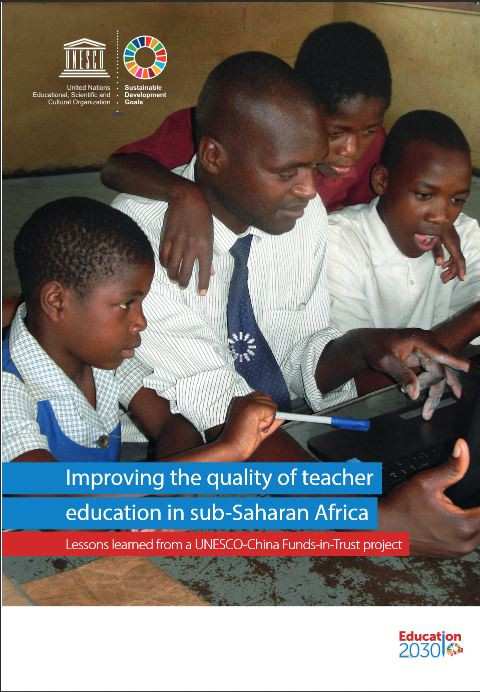 Improving the quality of teacher education in Sub-Saharan Africa: lessons learned from a UNESCO-China Funds-in-Trust project سنة النشر: 2018 المؤلف المؤسسي: UNESCO The booklet describes how the project started, the choice of beneficiary countries, the implementation strategies and its achievements. The different sections numbered one to four describe particular aspects of the project, using country cases to illustrate how the success of the project was due to strong country ownership and leadership. UNESCO, in partnership with the Government of the People’s Republic of China, initiated the project to enhance the institutional capacity and the professional development of teacher educators through ICT-supported learning, teaching and research. This technology aided the transformation of capacity teacher training through digitalization of instructional materials.
  Global Citizenship Education for the Rule of Law: Doing the Right Thing سنة النشر: 2018 المؤلف المؤسسي: UNESCO | UN. Office on Drugs and Crime (UNODC) UNESCO and UNODC have established a partnership to promote the rule of law and a culture of lawfulness through education. Combining their resources and expertise, they are seeking to build the capacities of educators, teachers and policy-makers to plan and undertake educational activities that empower learners to take constructive and ethically responsible decisions in their daily lives that support justice, human rights and strong institutions to defend them.