
الموارد
استكشف مجموعة واسعة من الموارد القيمة حول تعليم المواطنة العالمية لتعميق فهمك وتعزيز البحث والمناصرة والتعليم والتعلم.
تم العثور على 97 نتيجة
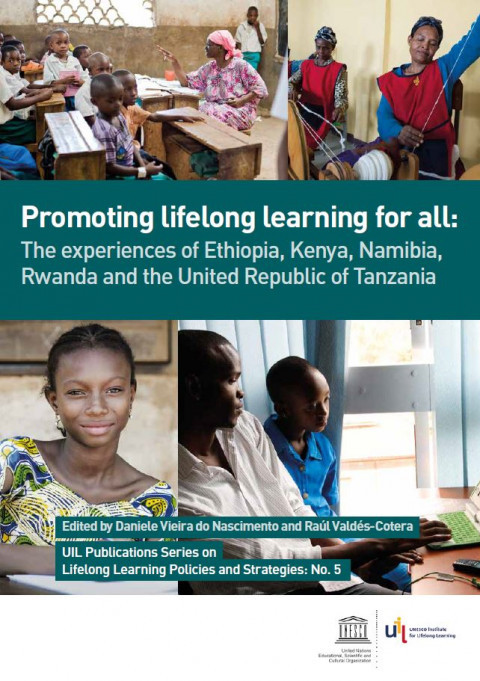 Promoting Lifelong Learning for All: The Experiences of Ethiopia, Kenya, Namibia, Rwanda and the United Republic of Tanzania سنة النشر: 2018 المؤلف المؤسسي: UNESCO Institute for Lifelong Learning (UIL) This report is an outcome of a project supporting the promotion of lifelong learning for all in selected African countries. The project aims to increase the capacity of policy-makers and researchers to develop national policies and strategies that will establish lifelong learning systems in Africa, ultimately contributing to the 2030 Agenda for Sustainable Development.This publication showcases the advancements made by five African countries in promoting and implementing lifelong learning as per the recommendations outlined in Key Issues and Policy Considerations in Promoting Lifelong Learning in Selected African Countries: Ethiopia, Kenya, Namibia, Rwanda and Tanzania (UIL, 2014). This continuous assessment and review of the countries’ progress can help monitor the reforms and developments taking place, and can contribute to the sharing of promising practices. The four main sections of the report include an introduction with the background to and methodology of the study; the origin, essence and benefits of lifelong learning; a compendium of good practices in promoting lifelong learning for all; and a conclusion comprising reflections on how progress can be accelerated in the region as well as potential collaboration opportunities with the UNESCO Institute for Lifelong Learning (UIL).Attempts to implement lifelong learning concepts in the five African countries has seen mixed results, but advancements are being made. It is hoped that this synthesis report will help foster the exchange of successful practices among the countries and the further development of lifelong learning policies and strategies across the African continent.
 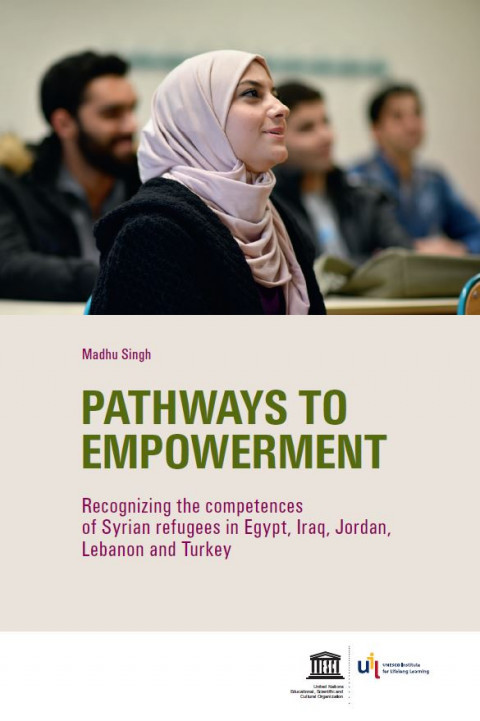 Pathways to Empowerment: Recognizing the Competences of Syrian Refugees in Egypt, Iraq, Jordan, Lebanon and Turkey سنة النشر: 2018 المؤلف: Madhu Singh المؤلف المؤسسي: UNESCO Institute for Lifelong Learning (UIL) For Syrian refugees living in Egypt, Iraq, Jordan, Lebanon and Turkey, recognition is a transformative mechanism that can help them enter or re-enter education, integrate into the world of work and participate fully in their host communities. However, while policy-makers in the region have prioritized the recognition, validation and accreditation of non-formal and informal learning, it remains a major challenge to develop systems that do this effectively. Pathways to Empowerment lays the essential groundwork for such a system, urging governments to develop comprehensive national strategies rather than ad hoc projects to recognize the competences of Syrian refugees. Its recommendations will contribute to dialogue between national authorities and social partners, and guide policy actions and RVA practices both in the region and in other parts of the world where recognition of refugees’ learning is a critical issue.
  Recognition, Validation and Accreditation of Youth and Adult Basic Education as a Foundation of Lifelong Learning سنة النشر: 2018 المؤلف المؤسسي: UNESCO Institute for Lifelong Learning (UIL) Since its 2005 General Conference, UNESCO has supported the recognition, validation and accreditation (RVA) of the outcomes of nonformal and informal learning for youth and adults and acknowledged the importance of RVA in the development of lifelong learning systems. More recently, the UNESCO Institute for Lifelong Learning, in partnership with UNESCO’s Section of Partnerships, Cooperation and Research, has undertaken a number of comprehensive analyses of policy and practice in this area. These studies have highlighted the need to focus on the RVA of non-formal basic education.Globally, the scale of need is enormous. There are significant challenges in integrating the recognition, validation and accreditation of the outcomes of non-formal and informal learning at the basic education level into existing RVA systems and in enabling young people and adults without basic education to complete such processes successfully.This report summarizes the research and policy dialogue of an international expert group invited by UNESCO to three meetings in 2016. It focuses on three themes – principles, policy and practice – and provides examples of how the issue is being approached across the world. It offers 12 conclusions, based on the evidence considered by the expert group, and proposes a number of key messages for stakeholders in Member States, including policy-makers and the research community.
 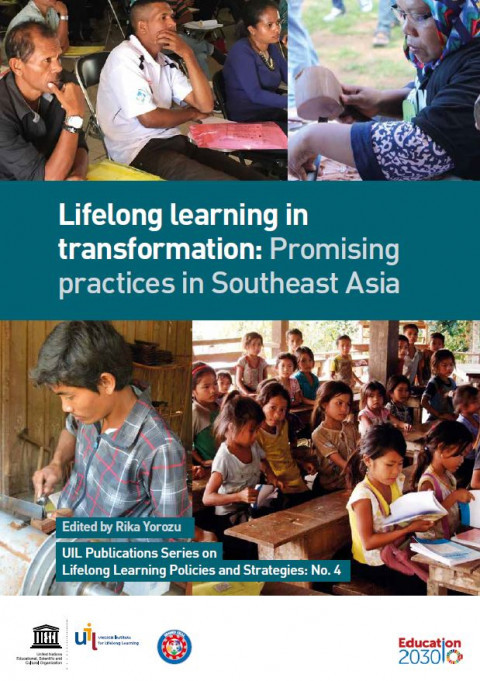 Lifelong Learning in Transformation: Promising Practices in Southeast Asia سنة النشر: 2017 المؤلف: Rika Yorozu المؤلف المؤسسي: UNESCO Institute for Lifelong Learning (UIL) This report is an outcome of a project on building a lifelong learning agenda in Southeast Asian countries, which aims to address the region’s remaining educational challenges in ensuring ‘inclusive and equitable quality education and promot[ing] lifelong learning opportunities for all’ (Goal 4 of the 2030 Agenda for Sustainable Development). By sharing promising policies and practices in implementing integrated lifelong learning from different perspectives, countries can learn from one another and move their visions for lifelong learning fully into practice. The publication documents a variety of promising practices from 11 countries, focusing particularly on the features critical to the promotion of lifelong learning for all; namely, inclusive and gender-responsive teaching and learning practices, recognition of learning outcomes from non-formal and informal learning, collaboration between social and economic development sectors and coherent national government policies and strategies. The report comprises three main sections: a reflection on lifelong learning in international and national documents, a collection of good practice drawn from their national reports, and a set of recommendations for policies and programmes promoting lifelong learning. It is hoped that these recommendations will stimulate discussion and new developments, in both policy and practice, in the region.
  CONFINTEA VI Mid-Term Review: Report of the Conference سنة النشر: 2017 المؤلف: Clinton Robinson المؤلف المؤسسي: UNESCO Institute for Lifelong Learning (UIL) The Sixth International Conference on Adult Education (CONFINTEA VI), held in Brazil in 2009, closed with the adoption of the Belem Framework for Action (BFA), which recorded the commitments of Member States and presented a strategic guide for the global development of adult learning and education. The third Global Report on Adult Learning and Education (GRALE 3), published in 2016, drew on survey data to evaluate progress made by countries in fulfilling the commitments made in Brazil.The CONFINTEA VI Mid-Term Review, held in Suwon, Republic of Korea, in October 2017, took stock of progress made by Member States in the past eight years, looking ahead to GRALE 4 in 2019 and CONFINTEA VII in 2021.This report summarizes the discussions that animated the Mid-Term Review conference and gives readers a brief survey of the key issues concerning progress against the BFA, across all world regions.
  Inclusive Lifelong Learning in Cities: Policies and Practices for Vulnerable Groups سنة النشر: 2021 المؤلف المؤسسي: UNESCO Institute for Lifelong Learning (UIL) This publication features chapters on learning cities’ endeavours to promote inclusive lifelong learning for vulnerable groups. It is based on research papers prepared for the fourth International Conference on Learning Cities, which took place in 2019 in Medellín, Colombia, under the theme ‘Inclusion – A principle for lifelong learning and sustainable cities’ and hence marks a transition between the learning city conferences of 2019 and 2021.
  From Emergency to Resilience: Building Healthy and Resilient Cities Through Learning; Fifth International Conference on Learning Cities, Yeonsu, Republic of Korea, 27 to 30 October 2021 سنة النشر: 2022 المؤلف المؤسسي: UNESCO Institute for Lifelong Learning (UIL) Responding to and recovering from the COVID-19 pandemic remains an enormous challenge for cities worldwide. Lifelong learning lays the foundation for healthy and resilient cities. Hence, these municipalities are working hard to promote learning for health, and to build long-term resilience among their local populations so that they can deal both with the pandemic and with future emergencies, including those caused by climate change.The fifth International Conference on Learning Cities (ICLC 5) was hosted by UIL in collaboration with Yeonsu City, Republic of Korea, and took place from 27 to 30 October 2021. Entitled ‘From emergency to resilience: Building healthy and resilient cities through learning’, the conference attracted over 2,000 participants, who attended either online or in-person. This was an opportunity for cities to come together and share their responses to the COvID-19 pandemic.
  Lifelong Learning Opportunities for All: Medium-Term Strategy 2022–2029 سنة النشر: 2022 المؤلف المؤسسي: UNESCO Institute for Lifelong Learning (UIL) The 2021 Futures of Education report calls for a new social contract for education, with recognition of an extended right to education throughout life. It represents an important restatement of the principles of UNESCO, and particularly its historic focus on our shared humanity, the universal right to education and its rich potential in addressing social, economic and political challenges. The need for a formal recognition of a universal entitlement to lifelong learning was also highlighted in the United Nations Secretary General’s Common Agenda report (also published in 2021) and is increasingly an avowed priority of the global development agenda for education, labour, human rights and sustainability. It is in this context that the UNESCO Institute for Lifelong Learning (UIL) advances its strategy for the next eight years. With this new Medium-Term Strategy (MTS), UIL aims to strike a balance between priorities rooted in the challenges faced by the global community and this new and emerging thinking about – and interest in – lifelong learning. The world must embrace lifelong learning if we are to build fairer societies and a sustainable world.
  ESD Implementation in Learning Cities سنة النشر: 2021 المؤلف المؤسسي: UNESCO Institute for Lifelong Learning (UIL) This publication aims to share the best practice cases from nine cities on ESD implementation (policy and practice) following a lifelong learning approach. These cases showcase innovative local initiatives that have embedded ESD into lifelong learning systems through policy/ strategy development or project implementation, focusing on the following priority areas of action and local activities laid down in the ESD for 2030 roadmap: Local policy/strategy development on ESD: The development of an action plan that determines how the community as a whole can become a learning laboratory for sustainable development. Capacity-building for educators and local authorities: Lifelong learning initiatives for systematic and comprehensive ESD capacity development for educators in the formal and non-formal education sectors, and for local government officials. Efforts to foster engagement with local communities, including: • formal education institutions’ engagement with local communities for the promotion of ESD; • non-formal education institutions (e.g. community learning centres) serving as a hub for lifelong learning on ESD in their communities. Empowerment and mobilization of youth: Lifelong learning initiatives for ESD that focus on young people. Innovative use of local spaces for ESD: Designated areas or spaces that inspire learning and host projects that promote sustainability. In addition to the five priority areas listed above, the case studies share one cross-cutting theme: • Multi-stakeholder approach: How people from different walks of life or professional sectors come together to contribute to local ESD initiatives at either the policy or the project level.
 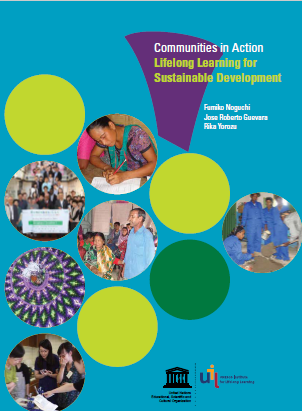 Communities in action: lifelong learning for sustainable سنة النشر: 2015 المؤلف: Fumiko Noguchi | Jose Roberto Guevara | Rika Yorozu المؤلف المؤسسي: UNESCO Institute for Lifelong Learning (UIL) This handbook identifies principles and policy mechanisms to advance community-based learning for sustainable development based on the commitments endorsed by the participants of the Kominkan-CLC International Conference on Education for Sustainable Development, which was in Okayama City, Japan, in October 2014. To inform policymakers and practitioners new to this field, the handbook clarifies the international vision and goals for sustainable development and Education for Sustainable Development, and identifies the potential contributions of community-based learning centres and organizations. It documents both policy and practice from different regions and concludes with a summary of principles and policy support mechanisms.