
الموارد
استكشف مجموعة واسعة من الموارد القيمة حول تعليم المواطنة العالمية لتعميق فهمك وتعزيز البحث والمناصرة والتعليم والتعلم.
تم العثور على 1,443 نتيجة
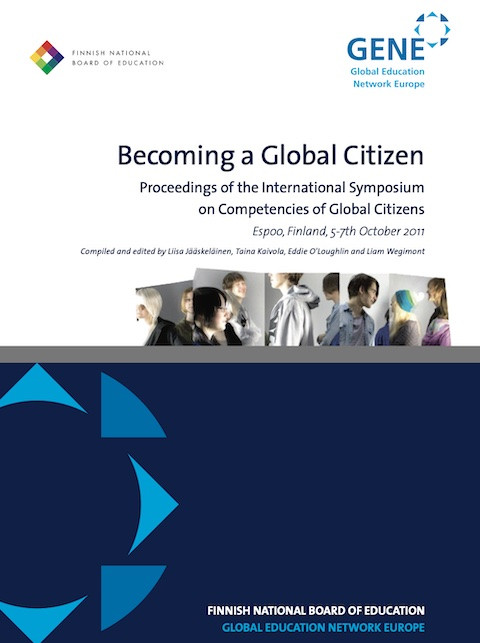 Becoming a Global Citizen: Proceedings of the International Symposium on Competencies of Global Citizens (Espoo, Finland, 5-7th October 2011) سنة النشر: 2011 المؤلف: Liisa Jääskeläinen | Taina Kaivola | Eddie O’Loughlin | Liam Wegimont المؤلف المؤسسي: Global Education Network Europe (GENE) | Finnish National Board of Education (FNBE) The international symposium on competences of global citizens, entitled Becoming a Global Citizen, was held in Espoo, Finland on 5 – 7. October, 2011. The symposium was organized by the Finnish National Board of Education (FNBE), the Finnish Ministry for Foreign Affairs, GENE (Global Education Network Europe) and the Hanasaari Swedish- Finnish Cultural Centre.The symposium focused on three main questions, namely:• what is global education?• what are key competences of global citizens in general education?• how can the priorities of global education be supported nationally?This publication contains the proceedings and main information gathered in the symposium. From Finland’s point of view the Symposium provided a substantial contribution to the publication called Schools Reaching out to a Global World. The publication comprises several articles on competencies of global citizens serving the next curricular reform of the entire general education sector for Finland, to be fully implemented by 2016. From the international perspectives the Symposium meant a most relevant input into the pan-European debate on perspectives for Global Education.
 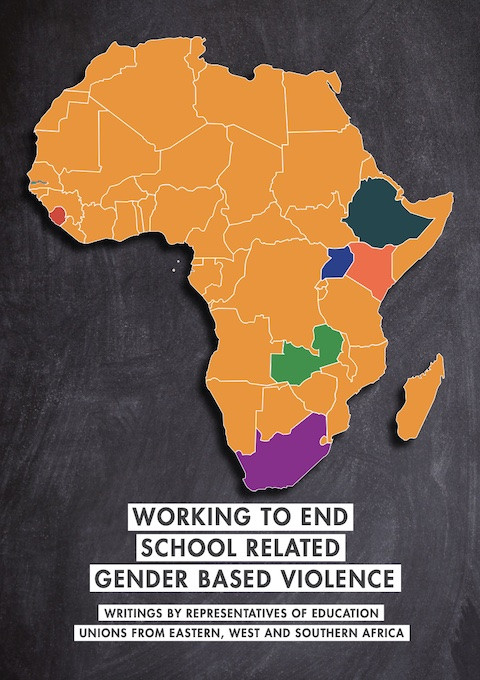 Trabajando para acabar con la violencia de género en el ámbito escolar: Ensayos por representantes de sindicatos de la educación de África Oriental, Occidental y Austral سنة النشر: 2019 المؤلف: Shamim Meer المؤلف المؤسسي: Gender at Work | Labour Research Service (LRS) | Global Affairs Canada (GAC) | United Nations Girls' Education Initiative (UNGEI) | Education International (EI) La Violencia de Género en el Ámbito Escolar (VGAE) es una forma de violencia que menoscaba la integridad corporal, los derechos humanos y la igualdad de género de todas las personas involucradas, pero especialmente de los niños y niñas escolares. En 2016, 7 docentes sindicales - SADTU y NAPTOSA de Sudáfrica, BETUZ y ZNUT de Zambia, UNATU de Uganda, ETA de Etiopía y KNUT de Kenia y en 2018, SLTU de Sierra Leona, GTU de Gambia y el personal de la Oficina Regional de África de la Internacional de la Educación con base en Ghana – participaron activamente en Gender at Work (G@W) – Proceso de Acción de Aprendizaje en Género (GAL, por sus siglas en inglés). El objetivo principal de este proceso GAL específico fue crear un programa piloto participativo de la IE en África, oriental, occidental y del sur enfocado en la capacidad de docentes individuales y sindicatos de docentes para abordar la VGAE. Con el apoyo de facilitadoras de Gender at Work, las y los participantes fortalecieron su comprensión de la desigualdad de género y la violencia basada en el género en el contexto escolar. A lo largo del proceso GAL, las y los participantes hablaron con el corazón, compartiendo historias inspiradoras sobre el cambio. Oeuvrer pour mettre un terme à la violence liée au genre en milieu scolaire: Écrits de représentantes et représentants de syndicats de l’enseignement en Afrique de l’est, Afrique de l’ouest et Afrique australe سنة النشر: 2019 المؤلف: Shamim Meer المؤلف المؤسسي: Gender at Work | Labour Research Service (LRS) | Global Affairs Canada (GAC) | United Nations Girls' Education Initiative (UNGEI) | Education International (EI) La violence liée au genre en milieu scolaire (VGMS) est un type de violence qui porte atteinte à l’intégrité physique, aux droits humains et à l’égalité entre tous les acteurs de la vie de l’école, mais avant tout à ceux de l’enfant scolarisé.En 2016, sept syndicats d’enseignants, le SADTU et la NAPTOSA d’Afrique du Sud, le BETUZ et la ZNUT de Zambie, l’UNATU d’Ouganda, l’ETA d’Éthiopie et le KNUT du Kenya, puis en 2018, le SLTU de la Sierra Leone, le GTU de Gambie, ainsi que les collaborateurs et collaboratrices du Bureau régional Afrique de l’Internationale de l’Éducation sis au Ghana, se sont activement engagés dans un programme de Gender at Work, le processus d’apprentissage par l’action en genre.Ce processus spécifique visait à créer un programme pilote participatif de l’IE en Afrique de l’Est, de l’Ouest et australe qui porterait sur la capacité individuelle des enseignants et enseignantes et sur celle de leurs syndicats à affronter la violence fondée sur le genre. Avec l’appui des animatrices de Gender at Work, les participants et participantes ont pu comprendre de façon plus approfondie l’inégalité entre les genres et la violence liée au genre en milieu scolaire. Tout au long de ce processus d’action-apprentissage, les participants et participantes ont été en mesure de parler à coeur ouvert et de partager des histoires de changement inspirantes.
 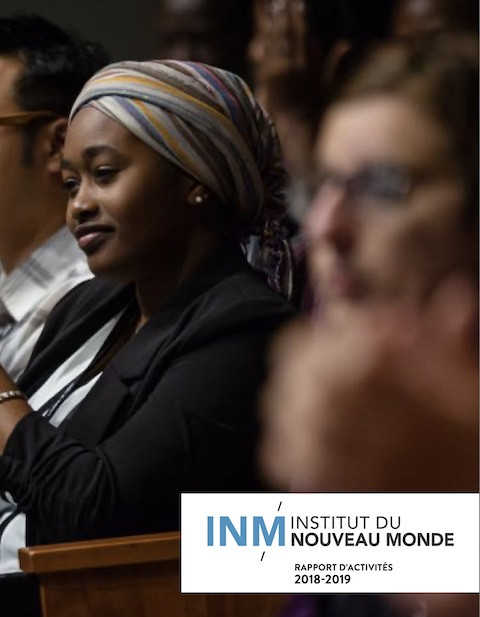 Institut du Nouveau Monde (INM): Rapport d'activités 2018-2019 سنة النشر: 2019 المؤلف المؤسسي: Institut du Nouveau Monde (INM) Le 15e anniversaire de l’INM a été une année très occupée. L’équipe à mis la main à la pâte afin de permettre à plus de 20 200 citoyennes et citoyens d’être consultés et de participer à l’une des 266 activités auxquelles l’INM a contribué. En pleine année électorale provinciale et à l’approche des élections fédérale, les activités de l’INM présentées dans ce bilan soutiennent, plus que jamais, que la participation citoyenne renforce la démocratie.
 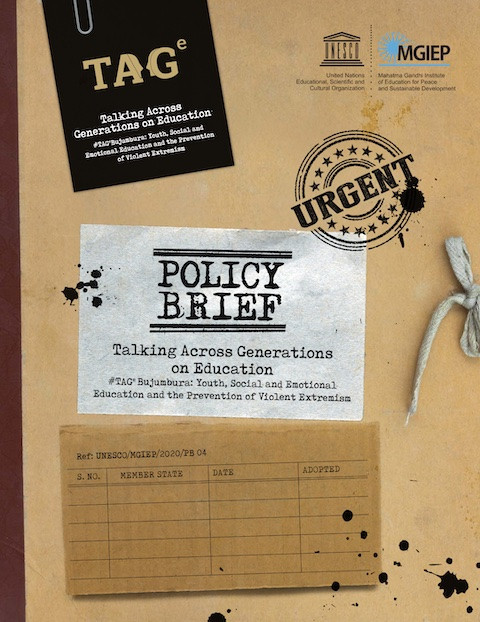 Policy Brief: Talking Across Generations on Education; #TAGe Bujumbura: Youth, Social and Emotional Education and the Prevention of Violent Extremism سنة النشر: 2020 المؤلف المؤسسي: Mahatma Gandhi Institute of Education for Peace and Sustainable Development (MGIEP) With the aim to mainstream the voices of Burundi youth and include them in the policymaking process in the areas of education for peace, sustainable development and global citizenship, UNESCO MGIEP, YELI-Burundi (Youth Empowerment and Leadership Initiative Burundi) and the Government of Burundi organised a series of high-level #TAGeBujumbura dialogues. These were an integral part of the Annual Prevention of Violent Extremism (PVE) Youth Blast, which was organised by YELI-Burundi on September 16-17, 2019 in Bujumbura, Burundi. H.E Everlyne Butoyi, Minister of Youth, IT and Posts, inaugurated the event. The theme of the main TAGe plenary was The Place of the Youth and Social and Emotional Learning for the Prevention of Violent Extremism – within the broader context of United Nations Security Council Resolution 2250.This unique UNESCO MGIEP TAGe modality for actionable dialogue comprised the following components – month-long online discussions, live TAGe and actionable outputs. The preceding online discussion had over 1,000 participants, and witnessed rich discussion threads being compressed into insightful, actionable ideas. Subsequently, based on the online engagement and the on-ground work done, six representatives were chosen from these participants to represent the collective voices of the youth. They were joined by three distinguished senior decision-makers (from the Government of Burundi and civil society) in a live TAGe exchange, where they delved into issues and unearthed creative solutions in front of an audience of over 200.
 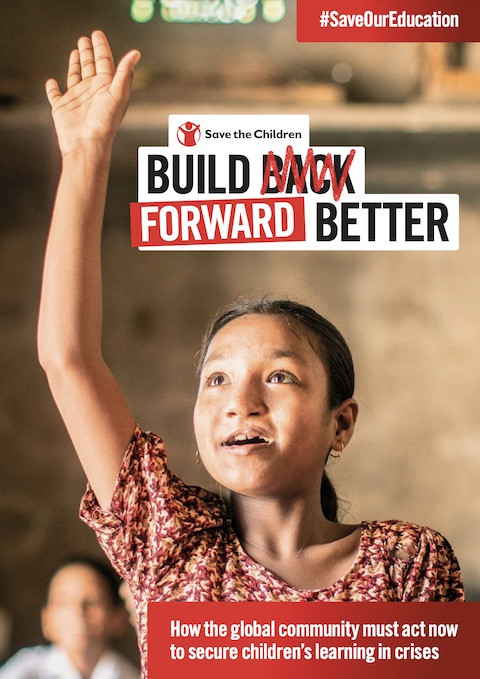 Build Forward Better: How the Global Community Must Act Now to Secure Children’s Learning in Crises سنة النشر: 2021 المؤلف: Emma Wagner المؤلف المؤسسي: Save the Children ‘Build back better’ has long been a rallying cry of crisis responses – and is being used frequently today. However, given the scale of the global learning crisis even before the Covid-19 pandemic – with one child in six denied their right to education – it’s vital we don’t limit our ambition to building ‘back’ to how things were. Now it’s imperative we build forward better – and differently.There’s no denying the scale of the challenge. But there’s also cause for hope. The global reach of the Covid-19 crisis has generated a shared understanding of the impact of crisis on children’s right to education. This understanding can be used to build forward better – and radically transform children’s chances.Build Forward Better presents new analysis on which countries’ school systems are most vulnerable to existing risks and future crises. And it sets out what the global community needs to do to support ministries of education in those countries to prepare now. So that, even during emergencies, education systems can provide all children with good-quality, safe and inclusive opportunities to learn.
 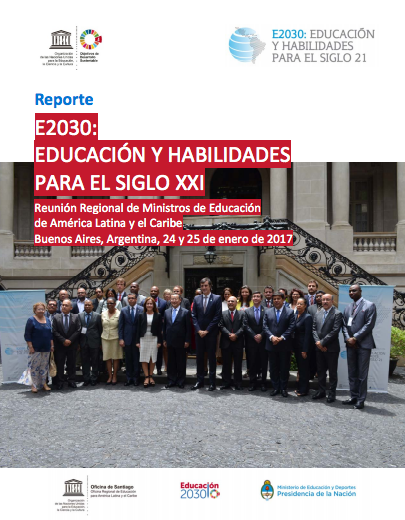 E2030: education and skills for the 21st century, report سنة النشر: 2017 المؤلف المؤسسي: UNESCO Santiago The UNESCO Regional Bureau for Education in Latin America and the Caribbean, OREALC/UNESCO Santiago, in collaboration with the Ministry of Education and Sport of the Republic of Argentina, organized the Regional Meeting of Ministers of Education of Latin America and the Caribbean – “E2030: Education and skills for the 21st century”. Ministers of Education and high-level representatives of the education sector of the Member States of LAC; bilateral, regional and multilateral organizations; United Nations agencies; representatives of civil society; stakeholders and UNESCO experts participated in the meeting, which was held on 24-25 January 2017 in Buenos Aires, Argentina. This was the first ministerial meeting to be organized within the framework of the 2030 Agenda for Sustainable Development and its 17 Sustainable Development Goals (SDGs), in particular SDG 4 – “Ensure inclusive and quality education for all and promote lifelong learning”. It provided a space for dialogue between ministers of education and other stakeholders to debate SDG 4 in the context of the 2030 SDG Agenda. Discussions and information sharing on various topics related to the SDG 4 targets, and on the coordination mechanisms and monitoring instruments conducive to the achievement of E2030 enabled LAC Member States to reach a common vision and understanding of E2030 in the region. This joint approach on E2030 for the region is laid down in the Declaration of Buenos Aires, which ministers adopted at the end of the meeting.
  Building Knowledge Exchange Partnerships: Dialogues Across Europe سنة النشر: 2020 المؤلف المؤسسي: Bridge 47 This publication ‘Building Knowledge Exchange Partnerships Dialogues Across Europe’ shares some of the experiences learned from this area of the Bridge 47 project.The Knowledge Exchange Partnerships hosted expert events, on site and online, carried on networking and exchange, disseminated information about GCE on other platforms and collectives, and came together for specific activities, such as workshops, webinars, publications, with the support of the larger Bridge 47 network.
 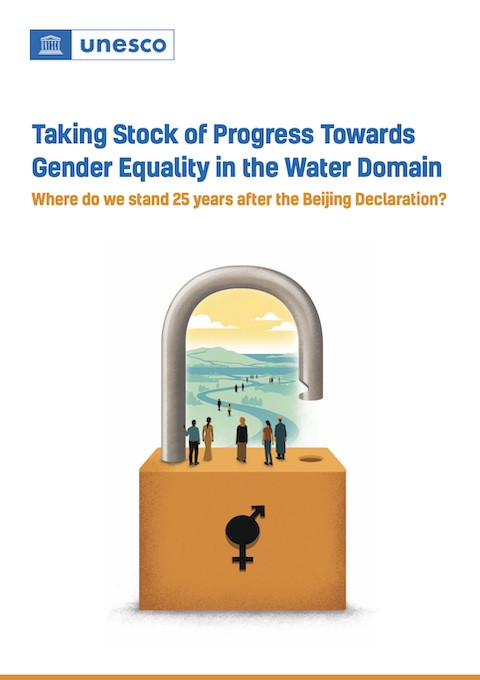 Taking Stock of Progress Towards Gender Equality in the Water Domain: Where Do We Stand 25 Years After the Beijing Declaration? سنة النشر: 2021 المؤلف المؤسسي: UNESCO World Water Assessment Programme (WWAP) Women are not only the main persons responsible for water collection in many parts of the world, but they also possess invaluable knowledge with regard to water resources and play a key role in water and sanitation management at the local and community levels. Accordingly, women must be able to enjoy equal access to water and also have an equal say in the management and governance of water resources. Twenty-five years after the Beijing Declaration and Platform for Action, progress towards gender equality through the fulfilment of the basic right to water and sanitation is clearly off track.Despite advances at the policy level in acknowledging the need to progress towards gender equality in the water sector – and the resulting benefits – large gender inequalities persist in practice. Women are generally under-represented in terms of participation at all levels: from institutional bodies that manage national or transboundary waters, to water-related institutions such as governmental water agencies and water utilities, to local water management institutions.This report provides a detailed overview of the existing and emerging challenges to gender equality in the water domain with a particular focus on: access to water, sanitation and hygiene (WASH), health, employment,climate change management, water governance, education and training, and data collection and funding. Systematic and sustained efforts to eliminate these inequalities are essential to achieve meaningful and lasting gender equality in the water sector, and to promote sustainable development in general.Governments, international organizations, professionals and policy-makers in the water sector, academia and NGOs are invited to join forces to accelerate the achievement of gender equality in water for a more just, sustainable and peaceful future.
 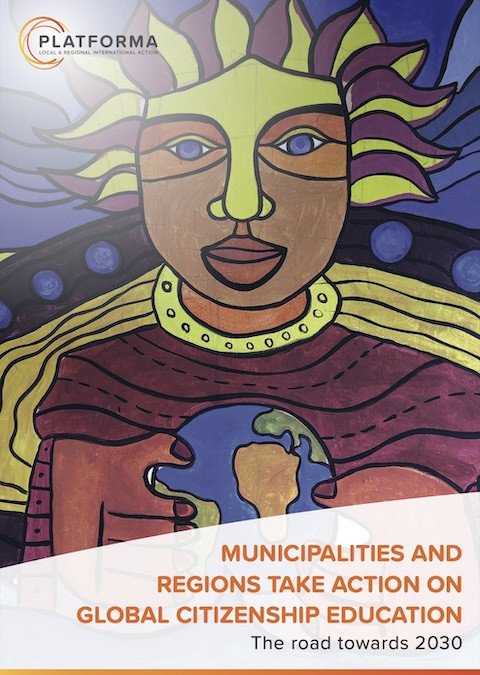 Municipalities and Regions Take Action on Global Citizenship Education: The Road Towards 2030 سنة النشر: 2021 المؤلف: Aurèle Destrée | Tereza Čajková المؤلف المؤسسي: PLATFORMA | European Union (EU) Development Education and Awareness Raising (DEAR)/Global Citizenship Education (GCE) can cultivate the spirit of the 2030 Agenda because it helps acquiring missing knowledge on global interconnections and creates spaces for enquiries.Whilst old constraints still remain and new challenges are appearing, local and regional governments continue to innovate, experiment and work hand in hand with key partners, including with their peers across the globe, to find new solutions and achieve their ambitions.Discover in this publication how local and regional governments are active in supporting learning and fostering changes in a context of socio-economic recovery plans.