
الموارد
استكشف مجموعة واسعة من الموارد القيمة حول تعليم المواطنة العالمية لتعميق فهمك وتعزيز البحث والمناصرة والتعليم والتعلم.
تم العثور على 3,385 نتيجة
 The Socio-Cultural Impact of COVID-19: Exploring the Role of Intercultural Dialogue in Emerging Responses سنة النشر: 2020 المؤلف: Fethi Mansouri المؤلف المؤسسي: UNESCO This brief illustrates, proponents and practitioners of ICD were quick to adapt to this crisis situation and shifted much of their activities online in order to mitigate the negative impacts of the pandemic. The shift has ensured that cross-cultural exchange, mutual support and intergroup solidarity, all key dimensions of the ICD approach, can be maintained in safe online contexts and thus continue to play a key role within the socio-cultural response to COVID-19.Through inductive exploration of authentic, local, community responses to the COVID-19 crisis, this brief aims to shed light on the new context in which the ICD agenda is being pursued, complementing the many existing quantitative analyses of the socio-cultural impact of the pandemic.
  Balancing Act: Countering Digital Disinformation While Respecting Freedom of Expression سنة النشر: 2020 المؤلف: Kalina Bontcheva | Julie Posetti المؤلف المؤسسي: UNESCO | Broadband Commission for Sustainable Development. Working Group on AI Capacity Building | International Telecommunication Union (ITU) This report provides stakeholders with a rich suite of sector-specific recommendations, as well as a helpful 23-point framework that can be used for assessing any particular response to disinformation in the context of freedom of expression challenges. This research will help the widest range of key actors to better understand this phenomenon, and especially the way the world is responding to it, and where the gaps are.At the heart of this knowledge product is the need to balance responses to disinformation with respect for freedom of expression. The research shows us that this can be done.
 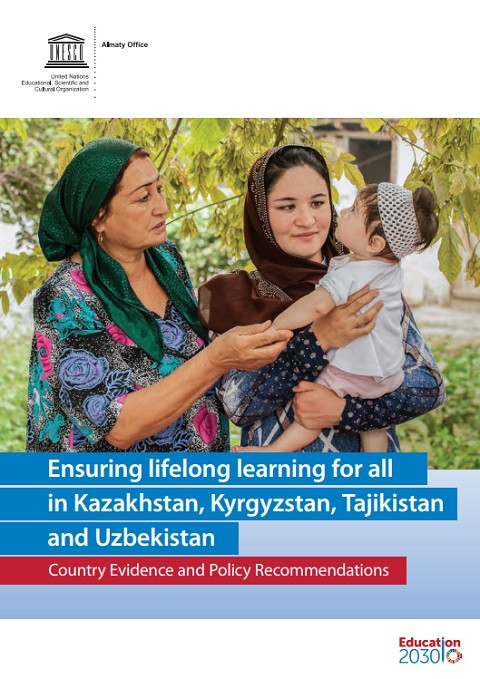 Ensuring Lifelong Learning for All in Kazakhstan, Kyrgyzstan, Tajikistan and Uzbekistan: Country Evidence and Policy Recommendations سنة النشر: 2020 المؤلف: Arne Carlsen المؤلف المؤسسي: UNESCO Lifelong Learning is at the heart of the 2030 Agenda for Sustainable Development and its 17 goals. More speci¬cally, Sustainable Development Goal 4 is devoted to ensuring quality education and lifelong learning opportunities for all. As the lead agency for education, UNESCO is mandated to support Member States in implementing SDG 4 through the Education 2030 Framework for Action. Central Asian countries – Kazakhstan, Kyrgyzstan, Tajikistan and Uzbekistan – have all shown their commitment to achieving the SDGs by 2030, including SDG 4, and have taken several actions in this regard. This sub-regional study aims to provide a broader picture of lifelong learning in Central Asia, supported by evidence and policy recommendations in order to propose a systemic approach for future education reforms. Обеспечение возможности обучения на протяжении всей жизни для всех в Казахстане, Кыргызстане, Таджикистане и Узбекистане: Опыт отдельных стран и рекомендации по вопросам политики سنة النشر: 2020 المؤلف: Arne Carlsen المؤلف المؤسسي: Организация Объединенных Наций по вопросам образования, науки и культуры (UNESCO) Обучение на протяжении всей жизни лежит в основе Глобальной программы устойчивого развития, состоящей из 17 целей. Суть Цели 4 в области устойчивого развития заключается в «Обеспечении всеохватного и справедливого качественного образования и поощрение возможности обучения на протяжении всей жизни для всех». ЮНЕСКО, как специализированному учреждению ООН по вопросам образования, было поручено оказывать государствам-членам содействие в достижении ЦУР 4 через выполнение Рамочной программы действий в области образования до 2030 года.Страны Центральной Азии – Казахстан, Кыргызстан, Таджикистан и Узбекистан – выразили заинтересованность в достижении к 2030 году всех ЦУР, включая ЦУР 4, и уже предприняли ряд действий в этом направлении. Цель настоящего субрегионального исследования состоит в предоставлении более точной картины положения дел в области обучения на протяжении всей жизни в Центральной Азии, подкрепленной фактическим материалом и рекомендациями по вопросам политики, для подготовки предложений по системному подходу к будущим реформам образования.
 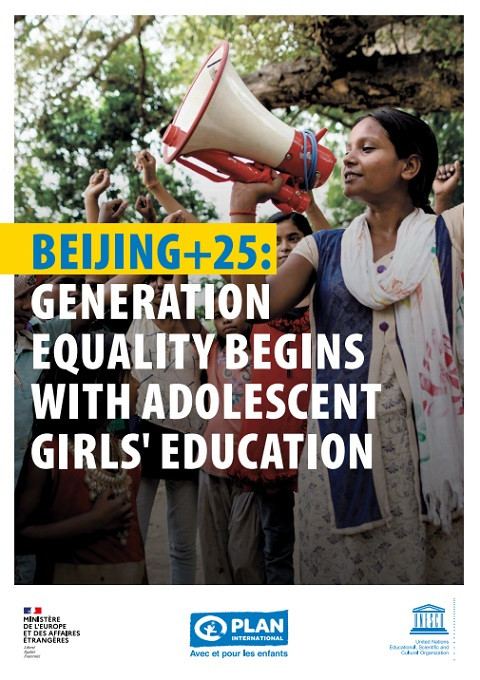 Beijing+25: Generation Equality Begins With Adolescent Girls' Education سنة النشر: 2020 المؤلف المؤسسي: Plan International France | France. Ministry for Europe and Foreign Affairs | UNESCO This publication examines progress and persistent gaps in our efforts to achieve gender equality in and through education since the adoption of the Beijing Platform for Action 25 years ago. In 2018, 130 million girls worldwide were out of school, and only two out of three girls were enrolled in secondary education. The crisis related to the COVID-19 pandemic is likely to further widen these gaps and threatens to interrupt the education of more than 11 million girls.This publication demonstrates the importance of adolescent girls' education for the advancement of the Beijing Platform for Action’s visionary agenda, and the achievement of the Sustainable Development Goals.It provides recommendations to fast-track investments and action on adolescent girls’ education during the 2021 Generation Equality Forum, and the related Action Coalitions aiming to accelerate progress for gender equality. It promotes intersectoral approaches and multi-stakeholder partnerships, and focuses on three ‘levers of action’: comprehensive sexuality education, the involvement of adolescent girls in science, technology, engineering and mathematics education, and the development of adolescent girls’ leadership. It shares adolescent girls’ own priorities and expectations, and their vision of what is needed for an equal future for us all. Pékin+25 : La Génération Égalité commence par l’éducation des adolescentes سنة النشر: 2020 المؤلف المؤسسي: Plan International France | France. Ministry for Europe and Foreign Affairs | Organisation des Nations Unies pour l'éducation, la science et la culture (UNESCO) Cette publication examine les progrès et les lacunes persistantes dans nos efforts pour parvenir à l'égalité des genres dans et par l'éducation depuis l'adoption du Programme d'action de Pékin il y a 25 ans. En 2018, 130 millions de filles dans le monde n'étaient pas scolarisées et seules deux filles sur trois étaient inscrites dans l'enseignement secondaire. La crise liée à la pandémie de COVID-19 est susceptible d'élargir encore ces écarts et menace d'interrompre l'éducation de plus de 11 millions de filles.Cette publication démontre l'importance de l'éducation des adolescentes pour l'avancement de l’agenda visionnaire du Programme d'action de Pékin et la réalisation des objectifs de développement durable.Elle formule des recommandations pour accélérer les investissements et les actions en faveur de l’éducation des adolescentes lors du Forum Génération Égalité de 2021 et des coalitions d’action qui seront lancées visant à accélérer les progrès en faveur de l’égalité des genres. Elle promeut des approches intersectorielles et des partenariats multipartites et se concentre sur trois « leviers d'action »: une éducation complète à la sexualité, la participation des adolescentes aux sciences, à la technologie, à l'ingénierie et aux mathématiques, et le développement du leadership des adolescentes. Elle fait part des propres priorités et attentes des adolescentes, ainsi que de leur vision de ce qui est nécessaire pour un avenir égal pour tous et toutes.
 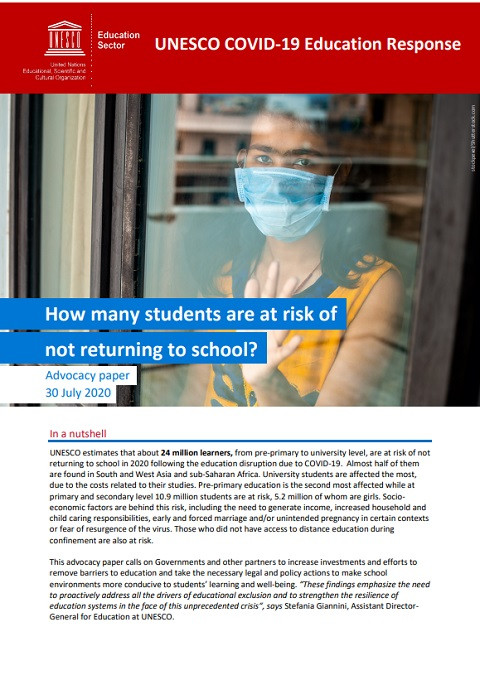 UNESCO COVID-19 Education Response: How Many Students Are at Risk of Not Returning to School?; Advocacy paper سنة النشر: 2020 المؤلف المؤسسي: UNESCO UNESCO estimates that about 24 million learners, from pre-primary to university level, are at risk of not returning to school in 2020 following the education disruption due to COVID-19. Almost half of them are found in South and West Asia and sub-Saharan Africa. University students are affected the most, due to the costs related to their studies. Pre-primary education is the second most affected while at primary and secondary level 10.9 million students are at risk, 5.2 million of whom are girls. Socioeconomic factors are behind this risk, including the need to generate income, increased household and child caring responsibilities, early and forced marriage and/or unintended pregnancy in certain contexts or fear of resurgence of the virus. Those who did not have access to distance education during confinement are also at risk. This advocacy paper calls on Governments and other partners to increase investments and efforts to remove barriers to education and take the necessary legal and policy actions to make school environments more conducive to students’ learning and well-being. “These findings emphasize the need to proactively address all the drivers of educational exclusion and to strengthen the resilience of education systems in the face of this unprecedented crisis“, says Stefania Giannini, Assistant DirectorGeneral for Education at UNESCO.
 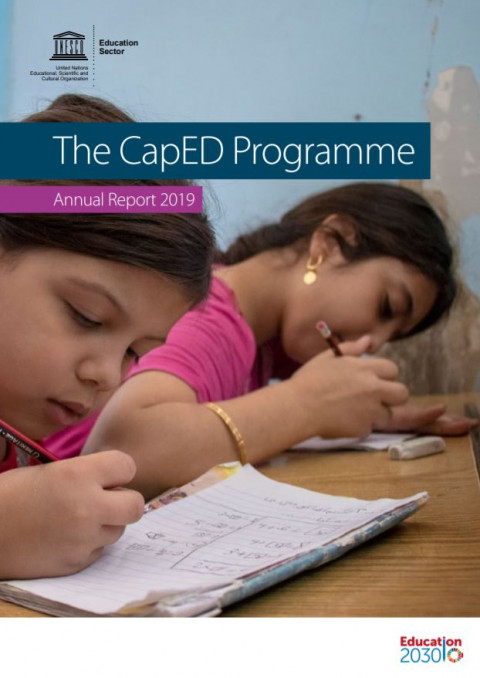 The CapED Programme: Annual Report 2019 سنة النشر: 2020 المؤلف المؤسسي: UNESCO UNESCO is the United Nation’s specialized agency for education and is mandated to lead and coordinate progress towards Sustainable Development Goal 4 – “Ensure inclusive and equitable quality education and promote lifelong learning opportunities for all”.The CapED Programme is central to delivering on this mandate through capacity development. It mobilizes UNESCO’s worldwide network of specialized Institutes and offices and works with partners to assist countries as they develop and implement national plans to deliver on SDG4 commitments.The Annual Report 2019 provides information on achievements and progress made in the 26 countries where CapED is operational. Programme CapED: rapport annuel 2019 سنة النشر: 2020 المؤلف المؤسسي: Organisation des Nations Unies pour l'éducation, la science et la culture (UNESCO) Institution spécialisée des Nations Unies pour l'éducation, l'UNESCO est chargée de conduire et de coordonner les efforts entrepris pour atteindre l'Objectif de développement durable 4 : « Assurer l'accès de tous à une éducation de qualité, sur un pied d'égalité, et promouvoir les possibilités d'apprentissage tout au long de la vie ».Le Programme CapED de développement des capacités pour l'éducation joue un rôle central dans l'exercice de ce mandat. Il mobilise le réseau mondial des instituts spécialisés et des bureaux de l'UNESCO et, en collaboration avec ses partenaires, aide les pays à élaborer et mettre en oeuvre leurs plans nationaux afin d'honorer les engagements qu'ils ont pris au titre de l'ODD 4.Le Rapport annuel 2019 met en lumière les résultats obtenus et les progrès accomplis dans les 26 pays où le Programme CapED intervient.
 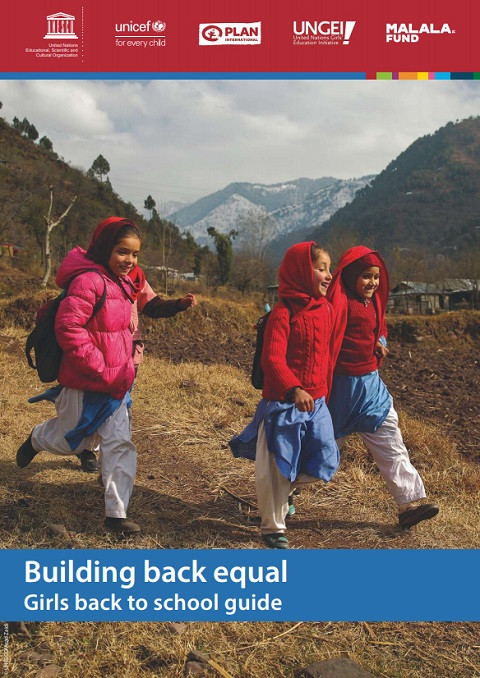 Building Back Equal: Girls Back to School Guide سنة النشر: 2020 المؤلف المؤسسي: UNESCO | United Nations Children's Fund (UNICEF) | Plan International | United Nations Girls' Education Initiative (UNGEI) | Malala Fund The guide provides targeted inputs to ensure continuity of learning during school closures, and comprehensive, timely and evidence-based plans for reopening schools in a way that is safe, gender-responsive and child-friendly, and meets the needs of the most marginalised girls. This guide emphasizes an approach to ‘build back equal’ through gender-responsive measures that transform education systems, prioritise resilience and address the key bottlenecks and barriers to girls’ education, including: Gender-responsive data and evidence to inform action, including data disaggregated by sex and gender-responsive monitoring to identify promising practices to promote gender equality. Policies, laws and plans to advance girls’ rights, including the removal of discriminatory practices that impede girls’ educational participation and completion, and ability to apply their learning. Sustained financing to achieve results, protecting education financing for girls’ education, alongside health, social protection and economy recovery initiatives with an equity lens.