
الموارد
استكشف مجموعة واسعة من الموارد القيمة حول تعليم المواطنة العالمية لتعميق فهمك وتعزيز البحث والمناصرة والتعليم والتعلم.
تم العثور على 3,433 نتيجة
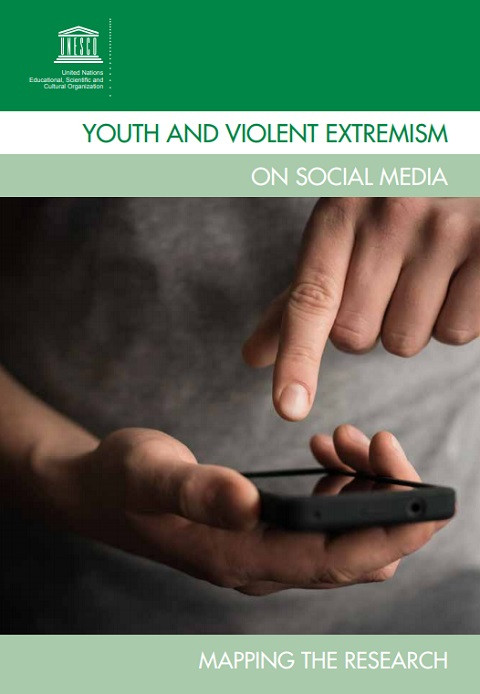 Youth and Violent Extremism on Social Media: Mapping the Research سنة النشر: 2017 المؤلف: Séraphin Alava | Divina Frau-Meigs | Ghayda Hassan المؤلف المؤسسي: UNESCO | Information for All Programme (IFAP) Does social media lead vulnerable individuals to resort to violence? Many people believe it does. And they respond with online censorship, surveillance and counter-speech. But what do we really know about the Internet as a cause, and what do we know about the impact of these reactions? All over the world, governments and Internet companies are making decisions on the basis of assumptions about the causes and remedies to violent attacks.The challenge is to have analysis and responses firmly grounded. The need is for a policy that is constructed on the basis of facts and evidence, and not founded on hunches – or driven by panic and fearmongering.It is in this context that UNESCO has commissioned the study titled Youth and Violent Extremism on Social Media – Mapping the Research. This work provides a global mapping of research (mainly during 2012-16) about the assumed roles played by social media in violent radicalization processes, especially when they affect youth and women. The research responds to the belief that the Internet at large is an active vector for violent radicalization that facilitates the proliferation of violent extremist ideologies.Indeed, much research shows that protagonists are indeed heavily spread throughout the Internet. There is a growing body of knowledge about how terrorists use cyberspace. Less clear, however, is the impact of this use, and even more opaque is the extent to which counter measures are helping to promote peaceful alternatives. While Internet may play a facilitating role, it is not established that there is a causative link between it and radicalization towards extremism, violent radicalization, or the commission of actual acts of extremist violence. Молодежь и насильственный экстремизм в социальных медиа: Сопоставление исследований سنة النشر: 2017 المؤلف: Séraphin Alava | Divina Frau-Meigs | Ghayda Hassan المؤلف المؤسسي: UNESCO | Information for All Programme (IFAP) Оказывают ли влияние социальные сети на уязвимые группы молодежи, в последствие которого они прибегают к насилию? Многие считают, что да. И они отвечают онлайн-цензурой, наблюдением и контрречью. Но что действительно мы знаем об Интернете в качестве причины развития насилия, и что мы знаем о влиянии реакций людей? Во всем мире правительства и интернет-компании принимают решения на основе предположений о причинах и средствах защиты от насильственных нападений.Задача состоит в том, чтобы анализ и ответы были прочно обоснованы. Существует необходимость в политике, которая построена на основе фактов и доказательств, а не основана на суждениях или на панике и страхе.Именно в этом контексте ЮНЕСКО поручила провести исследование под названием «Молодежь и насильственный экстремизм в социальных медиа - сопоставление исследований". Эта работа обеспечивает глобальное сопоставление (в основном в течение 2012-16 гг.) о предполагаемых ролях, которые играют социальные медиа в процессе радикализации, особенно когда они затрагивают молодежь и женщин. Исследование реагирует на убеждение, что Интернет в целом является активным вектором насильственной радикализации, что способствует распространению насильственных экстремистских идеологий.Действительно, много исследований показывает, что протагонисты достаточно широко распространены по всему Интернету. Eсть растущий объем знаний о том, как террористы используют киберпространство. Менее ясное, однако,влияние этого использования и еще более непрозрачное - это степень, в которой встречные меры помогают продвигать мирные альтернативы.
  The Socio-Cultural Impact of COVID-19: Exploring the Role of Intercultural Dialogue in Emerging Responses سنة النشر: 2020 المؤلف: Fethi Mansouri المؤلف المؤسسي: UNESCO This brief illustrates, proponents and practitioners of ICD were quick to adapt to this crisis situation and shifted much of their activities online in order to mitigate the negative impacts of the pandemic. The shift has ensured that cross-cultural exchange, mutual support and intergroup solidarity, all key dimensions of the ICD approach, can be maintained in safe online contexts and thus continue to play a key role within the socio-cultural response to COVID-19.Through inductive exploration of authentic, local, community responses to the COVID-19 crisis, this brief aims to shed light on the new context in which the ICD agenda is being pursued, complementing the many existing quantitative analyses of the socio-cultural impact of the pandemic.
  Enseigner et apprendre avec Twitter سنة النشر: 2019 المؤلف المؤسسي: Twitter | Organisation des Nations Unies pour l'éducation, la science et la culture (UNESCO) Ce document est destiné aux enseignants qui souhaitent créer des cours axés sur l'éducation aux médias et à l'information, et leur lien avec le fait d'être un « citoyen du monde » et un « citoyen numérique ». Que vos cours soient orientés sur l'éducation aux médias et à l'information (MIL), sur les bonnes habitudes à adopter sur Internet ou toute autre compétence liée à l'utilisation du Web, ce document contient des informations qui pourront vous être utiles.
  The Digital Transformation of Education: Connecting Schools, Empowering Learners سنة النشر: 2020 المؤلف: Ana Sepúlveda | Doreen Bogdan-Martin | Alex Wong | Chris Fabian | Borhene Chakroun | Anna Polomska | Samantha O’Riordan | Miguel Alcaine | Istvan Bozsoki | Vladimir Daigele | Jose Maria Diaz Batanero | Hani Eskandar | Aminata Amadou Garba | John Garrity | Farid Nakhli | Sylvia Poll Ahrens | Martin Schaaper | Christine Sund | Nancy Sundberg | Sandeep Taxali | Cleveland Thomas | Frank McCosker | James Lo | Fengchun Miao | Jaime Archundia | Janice Dean | Sophia Farrar | Sunita Grote | Aditi Poddar | Naroa Zurutuza | Nanjira Sambuli | Kavita Gupta المؤلف المؤسسي: International Telecommunication Union (ITU) | UNESCO | United Nations Children's Fund (UNICEF) This report looks into school connectivity and introduces a methodology and framework for mapping and connecting primary and secondary schools to the Internet. It aims to help governments, their partners and interested stakeholders to develop more holistic school connectivity plans. The analysis of this report provides a better understanding of the school connectivity landscape and requirements, to evaluate the benefits of different technologies for different environments, and to analyze business and financial models, as well as suitable content articulating connectivity with quality, safe, and inclusive learning.
  Balancing Act: Countering Digital Disinformation While Respecting Freedom of Expression سنة النشر: 2020 المؤلف: Kalina Bontcheva | Julie Posetti المؤلف المؤسسي: UNESCO | Broadband Commission for Sustainable Development. Working Group on AI Capacity Building | International Telecommunication Union (ITU) This report provides stakeholders with a rich suite of sector-specific recommendations, as well as a helpful 23-point framework that can be used for assessing any particular response to disinformation in the context of freedom of expression challenges. This research will help the widest range of key actors to better understand this phenomenon, and especially the way the world is responding to it, and where the gaps are.At the heart of this knowledge product is the need to balance responses to disinformation with respect for freedom of expression. The research shows us that this can be done.
  Media and Information Literacy: Policy and Strategy Guidelines سنة النشر: 2013 المؤلف: Alton Grizzle | Penny Moore | Michael Dezuanni | Sanjay Asthana | Carolyn Wilson | Fackson Banda | Chido Onumah | Maria Carme Torras Calvo المؤلف المؤسسي: UNESCO This resource aims to treat MIL as a composite concept, unifying information literacy and media literacy as well as considering the right to freedom of expression and access to information through ICTs. It is divided into two parts. Part 1 is the MIL Policy Brief, and is designed for policy or decision makers and can serve as a summary of the publication. Part 2 is divided into several comprehensive chapters and suggests: 1) how to enlist MIL a development tool; 2) conceptual frameworks for MIL policies and strategies; and 3) model MIL policy and strategies that can be adapted by countries globally.
  Beijing+25: Generation Equality Begins With Adolescent Girls' Education سنة النشر: 2020 المؤلف المؤسسي: Plan International France | France. Ministry for Europe and Foreign Affairs | UNESCO This publication examines progress and persistent gaps in our efforts to achieve gender equality in and through education since the adoption of the Beijing Platform for Action 25 years ago. In 2018, 130 million girls worldwide were out of school, and only two out of three girls were enrolled in secondary education. The crisis related to the COVID-19 pandemic is likely to further widen these gaps and threatens to interrupt the education of more than 11 million girls.This publication demonstrates the importance of adolescent girls' education for the advancement of the Beijing Platform for Action’s visionary agenda, and the achievement of the Sustainable Development Goals.It provides recommendations to fast-track investments and action on adolescent girls’ education during the 2021 Generation Equality Forum, and the related Action Coalitions aiming to accelerate progress for gender equality. It promotes intersectoral approaches and multi-stakeholder partnerships, and focuses on three ‘levers of action’: comprehensive sexuality education, the involvement of adolescent girls in science, technology, engineering and mathematics education, and the development of adolescent girls’ leadership. It shares adolescent girls’ own priorities and expectations, and their vision of what is needed for an equal future for us all. Pékin+25 : La Génération Égalité commence par l’éducation des adolescentes سنة النشر: 2020 المؤلف المؤسسي: Plan International France | France. Ministry for Europe and Foreign Affairs | Organisation des Nations Unies pour l'éducation, la science et la culture (UNESCO) Cette publication examine les progrès et les lacunes persistantes dans nos efforts pour parvenir à l'égalité des genres dans et par l'éducation depuis l'adoption du Programme d'action de Pékin il y a 25 ans. En 2018, 130 millions de filles dans le monde n'étaient pas scolarisées et seules deux filles sur trois étaient inscrites dans l'enseignement secondaire. La crise liée à la pandémie de COVID-19 est susceptible d'élargir encore ces écarts et menace d'interrompre l'éducation de plus de 11 millions de filles.Cette publication démontre l'importance de l'éducation des adolescentes pour l'avancement de l’agenda visionnaire du Programme d'action de Pékin et la réalisation des objectifs de développement durable.Elle formule des recommandations pour accélérer les investissements et les actions en faveur de l’éducation des adolescentes lors du Forum Génération Égalité de 2021 et des coalitions d’action qui seront lancées visant à accélérer les progrès en faveur de l’égalité des genres. Elle promeut des approches intersectorielles et des partenariats multipartites et se concentre sur trois « leviers d'action »: une éducation complète à la sexualité, la participation des adolescentes aux sciences, à la technologie, à l'ingénierie et aux mathématiques, et le développement du leadership des adolescentes. Elle fait part des propres priorités et attentes des adolescentes, ainsi que de leur vision de ce qui est nécessaire pour un avenir égal pour tous et toutes.
  What Have We Learnt?: Overview of Findings From a Survey of Ministries of Education on National Responses to COVID-19 سنة النشر: 2020 المؤلف المؤسسي: UNESCO | United Nations Children's Fund (UNICEF) | World Bank As part of the coordinated global education response to the COVID-19 pandemic, UNESCO, UNICEF and the World Bank conducted a Survey on National Education Responses to COVID-19 School Closures. In this joint report, the results of the first two rounds of data collection administered by the UNESCO Institute for Statistics (UIS) were analysed. They cover government responses to school closures from pre-primary to secondary education.