
الموارد
استكشف مجموعة واسعة من الموارد القيمة حول تعليم المواطنة العالمية لتعميق فهمك وتعزيز البحث والمناصرة والتعليم والتعلم.
تم العثور على 3,433 نتيجة
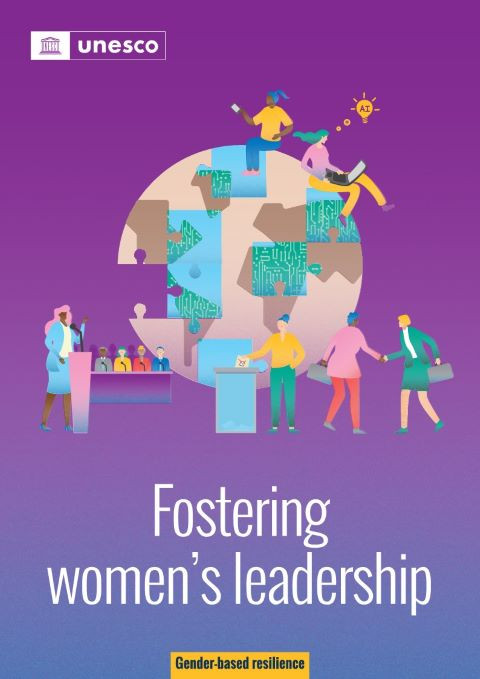 Fostering Women's Leadership سنة النشر: 2024 المؤلف: Mariagrazia Squicciarini | Anna Rita Manca | Garance Sarlat المؤلف المؤسسي: UNESCO No (leadership) share no gain (for societies and economies)! Leveraging UNESCO’s unique Gender-Based Resilience Framework, this report explores the role of women in leadership positions in both decision-making and high-tech, including in artificial intelligence-related innovations. It further highlights progress towards the G20 Brisbane Target, aimed to accelerate progress on gender equality by reducing the gender gap in labour market participation rates by 25% by 2025. Women remain underrepresented in decision-making, holding only about 26% of seats in national parliaments worldwide on average. In the world of work, female labour participation continues to lag behind men’s, at 47% for women against 72% for men on average. Despite progress by G20 members towards the Brisbane Target, a 2% average gap in absolute terms remained to be filled in 2022. In the high-tech world, women make up only 30% of AI professionals, and even less of leaders. Female inventors in AI account for about 37% of patents filed in 2022-23.
 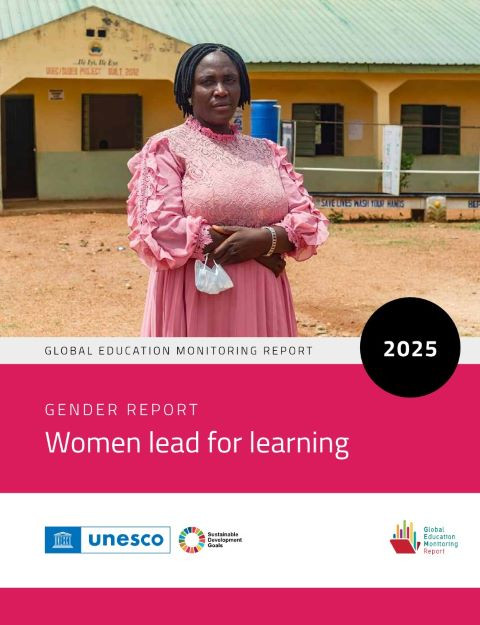 Global Education Monitoring Report 2025: Gender Report: Women Lead for Learning سنة النشر: 2025 المؤلف المؤسسي: UNESCO Barriers to gender equality in education leadership positions can and need to be overcome This gender edition, which is part of the 2024/5 Global Education Monitoring Report on leadership in education, addresses the remaining obstacles for women in their efforts to climb up the leadership ladder in education. Although the teaching profession has been feminized, there are considerable gender gaps in school management, education administration and political leadership positions, a situation illuminated in detail with examples from all over the world. Gender disparity in education leadership is the result of entrenched stereotypes and biases – conscious or unconscious – on the one hand and on the other institutional processes or professional development mechanisms that are insufficiently supportive. Research suggests that women leaders display some differences relative to men in their approaches to education leadership, for example the extent to which they emphasize collaboration, build relationships with the community and retain a focus on learning. While there is little to suggest that these differences are universal or immutable, the evidence points to the fact that the lack of equitable opportunities translates to less talent and fewer diverse approaches to leadership, which are a loss to education systems – not to mention the obvious need for equity. This is particularly evident in parts of the world where gender disparities remain large. This gender edition calls on countries to take a much closer look at gender disparity in education leadership and adopt measures to raise awareness, improve mechanisms and strengthen capacities to address discrimination and bias and thus encourage women who aspire to such careers to pursue them. Gender disparity in education leadership is the result of entrenched stereotypes and biases – conscious or unconscious – on the one hand and on the other institutional processes or professional development mechanisms that are insufficiently supportive. Research suggests that women leaders display some differences relative to men in their approaches to education leadership, for example the extent to which they emphasize collaboration, build relationships with the community and retain a focus on learning. While there is little to suggest that these differences are universal or immutable, the evidence points to the fact that the lack of equitable opportunities translates to less talent and fewer diverse approaches to leadership, which are a loss to education systems – not to mention the obvious need for equity. This is particularly evident in parts of the world where gender disparities remain large. This gender edition calls on countries to take a much closer look at gender disparity in education leadership and adopt measures to raise awareness, improve mechanisms and strengthen capacities to address discrimination and bias and thus encourage women who aspire to such careers to pursue them.
  Journée internationale de l’éducation 2025 : L’intelligence artificielle et l’éducation : préserver l’autonomie dans un monde automatisé سنة النشر: 2025 المؤلف المؤسسي: UNESCO La Journée internationale de l’éducation 2025 vise à : Examiner les nouvelles possibilités offertes par l’IA, en particulier pour l’enseignement, l’apprentissage, l’évaluation et l’administration éducative. Promouvoir le développement de compétences critiques en matière d’IA en dotant les éducateurs et les apprenants des aptitudes nécessaires pour comprendre, utiliser et influencer les technologies d’IA, conformément aux cadres de compétences en IA de l’UNESCO pour les enseignants et les élèves. Veiller à ce que l’IA complète, plutôt qu’elle ne remplace, les éléments humains essentiels de l’apprentissage, notamment le développement des relations en présentiel et de l’intelligence émotionnelle.
 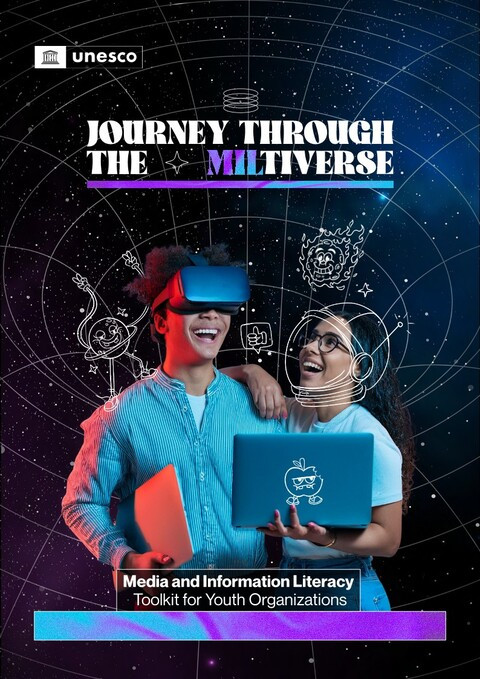 Journey through the MILtiverse: Media and Information Literacy Toolkit for Youth Organizations سنة النشر: 2024 المؤلف: Sandra Acero Pulgarin | Natalia González-Gil | Alejandro Santamaría Virviescas المؤلف المؤسسي: UNESCO Empowering Youth Organizations with and for Media and Information LiteracyIn an era where digital interactions dominate, young people must be equipped with more than just basic digital literacy skills. Media and Information Literacy (MIL) has become an essential competency, enabling them to critically navigate the overwhelming ow of information in our fast-paced and complex information ecosystem. \With the Internet user base getting younger every day — data shows that one in three internet users is a child — countries worldwide are increasingly working on integrating MIL into their education systems. Despite these advancements, many young people still grapple with challenges such as disinformation, hate speech, and other harmful online content. Additionally, new technologies continue to emerge, creating challenges with unknown impacts. For example, 80% of young people aged 10 to 24 use AI multiple times a day for education, entertainment, and other purposes. Global youth organizations are at the forefront of UNESCO’s eorts to promote MIL among young people through informal education. This toolkit serves as a primary resource to help these organizations incorporate MIL into their strategies, policies, and operations, aiming to make MIL a lasting component of their practices and peer-to-peer educational programs. Join us on this journey through the MILtiverse and empower the next generation by making MIL a fundamental life competence for their futures.
 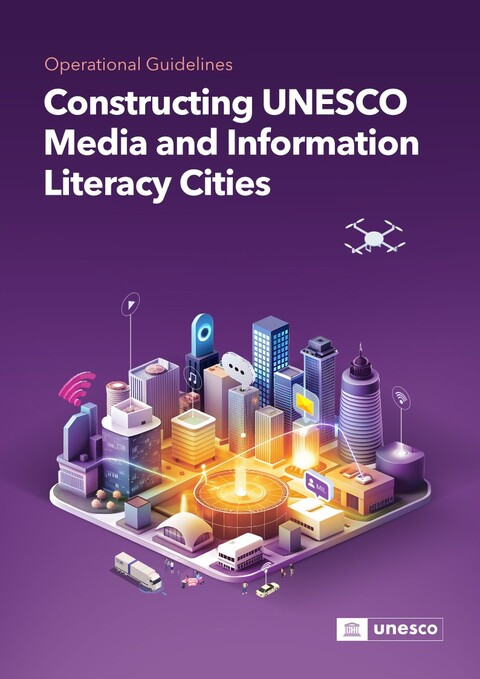 Operational Guidelines: Constructing UNESCO Media and Information Literacy Cities سنة النشر: 2024 المؤلف المؤسسي: UNESCO To support the integration of media and information literacy in urban spaces, UNESCO is releasing operational guidelines for city governance stakeholders. These guidelines aim to help cities align their goals with the benefits of integrating MIL into physical and virtual spaces.The guidelines offer examples of actions for cities interested in pioneering the MIL Cities. Cities are encouraged to share their progress and achievements with UNESCO for future initiatives.All cities and municipalities can participate, regardless of size, internet penetration, or technology use. The guidelines aim to foster diverse partnerships at the municipal level for implementing MIL actions and programmes. Directrices operativas: construyendo Ciudades de Alfabetización Mediatica eIinformacional de la UNESCO سنة النشر: 2024 المؤلف المؤسسي: UNESCO Con miras a apoyar la integración de la alfabetización mediática e informacional en los entornos urbanos, la UNESCO publica directrices operativas para las partes interesadas en la gobernanza de las ciudades. Estas directrices procuran ayudar a las ciudades a alinear sus objetivos con los beneficios de integrar la AMI en espacios físicos y virtuales.Las directrices ofrecen ejemplos de actividades a las ciudades interesadas en ser pioneras en “Ciudades AMI”. Se les alienta a compartir sus avances y logros con la UNESCO para la elaboración de iniciativas en el futuro.Todas las ciudades y municipios pueden participar, independientemente de su tamaño, penetración de Internet o utilización de tecnología. Las directrices intentan propiciar asociaciones diversas a nivel municipal con objeto de ejecutar actividades y programas AMI.
 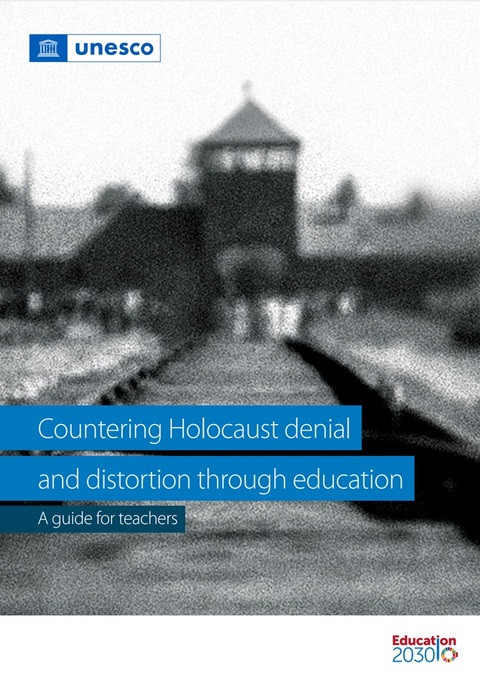 Countering Holocaust Denial and Distortion through Education: A Guide for Teachers سنة النشر: 2025 المؤلف المؤسسي: UNESCO Antisemitic hate speech, disinformation, and conspiracy theories thrive during crises, making it vital for teachers to address these issues in school curricula. Social media has significantly amplified the spread of such harmful content, including Holocaust denial and distortion. These falsehoods, rooted in antisemitic prejudice and conspiratorial thinking, threaten our shared historical memory and promote hatred. To effectively combat these issues, it is essential to have a comprehensive understanding of the Holocaust —how and why the genocide of the Jewish people occurred. This knowledge helps us recognize the causes and risk factors, contributing to the prevention of future atrocity crimes and the fight against antisemitism. In the digital age, it is also imperative to be able to decipher the manipulation of history, and the misrepresentation of the past.The guide provides teachers with the necessary tools and guidance to prevent the spread of Holocaust denial and distortion. It equips teachers with knowledge, teaching principles, and strategies to foster digital literacy, historical understanding, and critical thinking in learners. Aimed primarily at history and social sciences teachers, it outlines key concepts, teaching methods, and approaches to counter Holocaust denial and distortion.
  Countering Holocaust Denial and Distortion through Education: Lesson Activities for Secondary Education سنة النشر: 2025 المؤلف المؤسسي: UNESCO Adaptable lessons to foster critical thinking, empathy and tolerance Holocaust denial rejects historical facts outright, while distortion manipulates the narrative. Both phenomena undermine historical truth, fuel antisemitism, and attack democratic values. By addressing these issues, this set of lesson activities for secondary education seeks to build students’ resilience against falsehoods through fostering critical thinking, empathy, and global citizenship. It was developed by UNESCO and funded by the European Commission to equip educators with tools to confront the dangerous spread of Holocaust denial and distortion. With 12 engaging lessons, students aged 14 to 18 will explore the historical facts of the Holocaust while learning to critically evaluate misinformation in today’s digital world. From analyzing survivor testimonies to deconstructing harmful memes and conspiracy theories, this resource features 12 adaptable lessons that focus on historical literacy, media analysis, and social-emotional competencies. Topics range from identifying denial and distortion, evaluating media and online sources, analyzing primary evidence like survivor testimonies, and understanding the misuse of Holocaust history in memes and conspiracy theories. Activities are scaffolded with questions, examples, and practical exercises to encourage analytical skills and promote meaningful classroom discussions. The lessons also include suggestions for incorporating primary sources, visiting memorial sites, and addressing broader issues of genocide and hate. In doing so, the guide aims to not only preserve Holocaust memory but also strengthen the values of truth, empathy, and tolerance in younger generations.
  Covering Hate Speech: A Guide for Journalists سنة النشر: 2025 المؤلف: Cherian George المؤلف المؤسسي: UNESCO This guide is the first in a series of guides for journalists prepared jointly by the UNESCO Communication and Information and Education Sectors on covering hate speech and its different manifestations.This guide explains what may count as hate speech, the harms it may cause, the way it works, and how media gatekeepers and other actors can address it. Many debates around hate speech are about law and regulation. Understanding the law, especially international law, can help journalists when reporting incidents where speakers are accused of hate speech. It can also help them analyse whether existing laws, as written and as applied, comply with international human rights approaches for striking the right balance between freedom of expression and the right to dignity, equality and non-discrimination.
 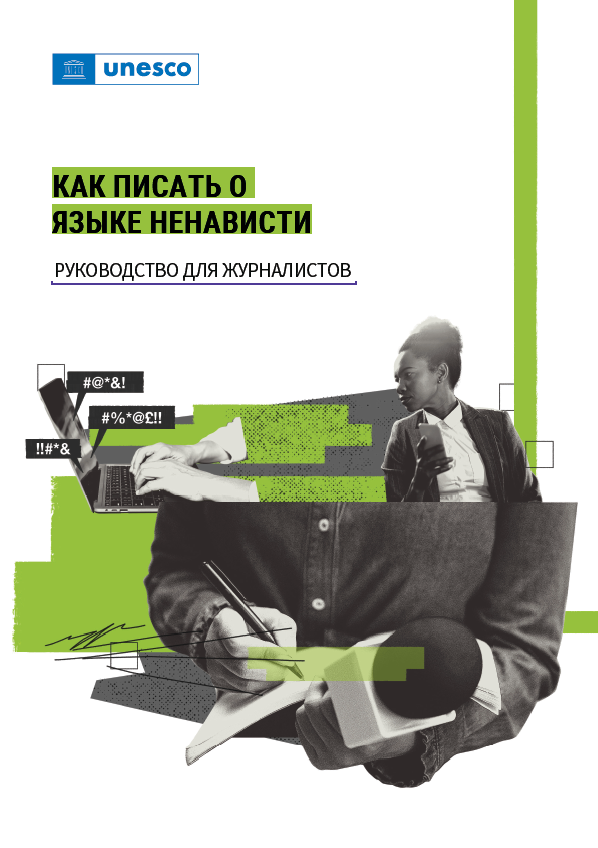 Как писать о языке ненависти: руководство для журналистов سنة النشر: 2025 المؤلف: Cherian George المؤلف المؤسسي: UNESCO Настоящее руководство — первое из серии, подготовленной совместно Секторами коммуникации и информации и образования ЮНЕСКО, и посвящено освещению журналистами языка ненависти и его различных проявлений.В настоящем руководстве рассматриваются определения языка ненависти, вред, который он может причинять, механизмы его распространения, а также способы, с помощью которых представители СМИ и другие заинтересованные стороны могут ему противодействовать. Вокруг языка ненависти нередко возникают правовые споры. Знание законодательства, особенно международного, помогает журналистам освещать случаи, когда кого-либо обвиняют в использовании языка ненависти, а также анализировать, соответствуют ли действующие нормы — как в теории, так и на практике — международным стандартам прав человека, где необходимо находить баланс между свободой выражения и правами на достоинство, равенство и недопущение дискриминации.