
الموارد
استكشف مجموعة واسعة من الموارد القيمة حول تعليم المواطنة العالمية لتعميق فهمك وتعزيز البحث والمناصرة والتعليم والتعلم.
تم العثور على 3,433 نتيجة
 Tendencias mundiales en libertad de expresión y desarrollo de los medios: consideración prioritaria del ámbito digital 2015 سنة النشر: 2017 المؤلف: Iginio Gagliardone | Danit Gal | Thiago Alves Pinto | Gabriela Martinez Sainz المؤلف المؤسسي: UNESCO Dado el éxito del primer informe de Tendencias Mundiales y la necesidad de una investigación ulterior, la UNESCO emprendió una segunda edición en la serie, en la que se hace hincapié en determinadas tendencias de la era digital. Tendencias Mundiales en Libertad de Expresión y Desarrollo de los Medios - Consideración prioritaria del ámbito digital 2015 proporciona un análisis significativo de las áreas clave identificadas en la primera edición del informe como de especial relevancia para un estudio ulterior, y en concreto, de la incitación al odio en Internet, la protección de las fuentes periodísticas, y el papel de los intermediarios de Internet en el fomento de la libertad de expresión, así como de la atención prioritaria continuada a la seguridad de los periodistas. Se basa asimismo en los asuntos planteados en el estudio de 2015 de la UNESCO titulado Keystones to foster inclusive Knowledge Societies (Claves para promover unas sociedades del conocimiento integradoras). Tendances mondiales en matière de liberté d'expression et de développement des médias: regards sur le numérique, 2015 سنة النشر: 2017 المؤلف: Iginio Gagliardone | Danit Gal | Thiago Alves Pinto | Gabriela Martinez Sainz المؤلف المؤسسي: UNESCO Étant donné le succès du premier rapport Tendances mondiales et les besoins d’effectuer des recherches supplémentaires, l’UNESCO a lancé une deuxième édition de la série, qui cette fois approfondit son travail sur une sélection de tendances propres à l’ère numérique. Tendances mondiales en matière de liberté d’expression et de développement des médias – Regards sur le numérique 2015 fournit une analyse substantielle des principaux domaines identifiés dans la première édition comme pouvant faire l’objet de recherches complémentaires, notamment les questions du discours de haine en ligne, de la protection des sources des journalistes et du rôle des intermédiaires de l’Internet dans la promotion de la liberté d’expression, et elle s’intéresse également, tout comme la première, à la sécurité des journalistes. Elle traite également des questions soulevées dans l’étude intitulée Des clés pour la promotion de sociétés du savoir inclusives, publiée en 2015 par l’UNESCO. Глобальные тенденции в области свободы выражения мнений и развития средств массовой информации: Цифровые средства информации, 2015 г. سنة النشر: 2017 المؤلف: Iginio Gagliardone | Danit Gal | Thiago Alves Pinto | Gabriela Martinez Sainz المؤلف المؤسسي: UNESCO Учитывая успех первого доклада о глобальных тенденциях и необходимость проведения дополнительных исследований, ЮНЕСКО возглавила работу над вторым изданием в серии докладов, сосредоточив внимание на подробном анализе ряда тенденций цифровой эпохи. В докладе ЮНЕСКО о «Глобальных тенденциях в области свободы выражения мнений и развития средств информации: цифровые средства информации» за 2015 г. содержится глубокий анализ ключевых областей, названных в первом докладе о глобальных тенденциях наиболее важными для дальнейшего изучения, а именно: язык ненависти в интернете, защита журналистских источников информации и роль интернет-посредников в содействии свободе выражения мнений, а также обращается особое внимание на вопрос безопасности журналистов. Доклад также опирается на вопросы, поднятые в проведенном ЮНЕСКО в 2015 г. исследовании под названием «Основные принципы построения инклюзивных обществ знаний».
 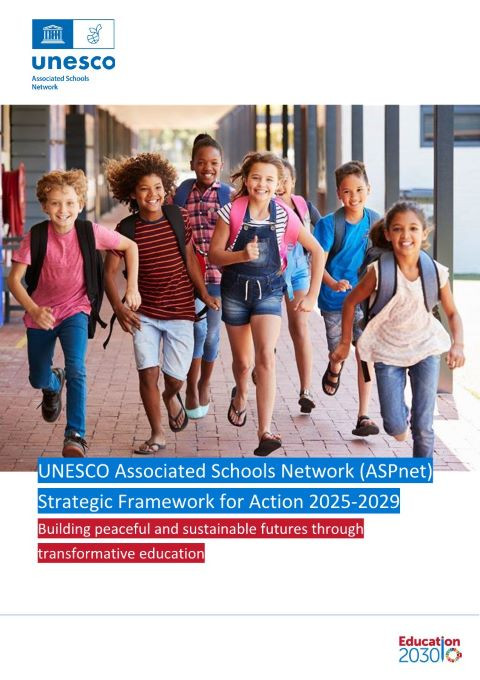 UNESCO Associated Schools Network (ASPnet) Strategic Framework for Action 2025-2029: Building Peaceful and Sustainable Futures through Transformative Education سنة النشر: 2025 المؤلف المؤسسي: UNESCO The ASPnet Strategic Framework explains how UNESCO's pioneering Associated Schools Network (ASPnet) contributes to the achievement of UNESCO’s strategic objectives for Education. This Framework outlines the key thematic areas, innovative educational approaches, and the anticipated outcomes of this dynamic community of educational innovators. It also delineates the roles and responsibilities of its primary stakeholders. The three thematic areas are : "Peace through Global Citizenship Education," "Education for Sustainable Development," and "Intercultural Learning and Appreciation of Cultural Diversity and Heritage." Through initiatives in these areas, ASPnet members inspire and empower teachers, principals, students, families, education professionals, and policymakers to champion transformative education. This prepares learners to become responsible global citizens in an ever-evolving and complex world. Ultimately, the goal is for all participants in this ecosystem to learn from one another and promote international understanding. Red de Escuelas Asociadas de la UNESCO (RedPEA) Marco Estratégico de Acción 2025-2029 : construyendo futuros pacíficos y sustentables a través de la educación transformadora سنة النشر: 2025 المؤلف المؤسسي: UNESCO El Marco Estratégico de la RedPEA explica cómo la pionera Red de Escuelas Asociadas de la UNESCO contribuye a la consecución de los objetivos estratégicos de la UNESCO en materia de educación. Este Marco esboza las áreas temáticas clave, los enfoques educativos innovadores y los resultados previstos por parte de esta dinámica comunidad de innovadores educativos. También delimita las funciones y responsabilidades de sus principales actores. Las tres áreas temáticas son : «La paz mediante la educación para la ciudadanía mundial», “La educación para el desarrollo sostenible” y “El aprendizaje intercultural y la apreciación de la diversidad y el patrimonio culturales”. A través de iniciativas en estas áreas, los miembros de la RedPEA inspiran y capacitan a docentes, directores, estudiantes, familias, profesionales de la educación y funcionarios públicos para defender una educación transformadora. Esto prepara a los alumnos para convertirse en ciudadanos globales responsables en un mundo complejo y en constante evolución. En última instancia, el objetivo es que todos los participantes en este ecosistema aprendan unos de otros y promuevan el entendimiento internacional. Red de Escuelas Asociadas de la UNESCO (RedPEA) Marco Estratégico de Acción 2025-2029 : construyendo futuros pacíficos y sustentables a través de la educación transformadora سنة النشر: 2025 المؤلف المؤسسي: UNESCO Le Cadre stratégique du réSEAU explique comment le Réseau des écoles associées de l’UNESCO (réSEAU), pionnier en la matière, contribue à la réalisation des objectifs stratégiques de l’UNESCO pour l’éducation. Ce Cadre définit les principaux axes thématiques, les approches éducatives innovantes ainsi que les résultats attendus de cette communauté dynamique d’innovateurs en matière d’éducation. Il précise également les rôles et responsabilités de ses principaux acteurs. Les trois axes thématiques sont : « La construction de la paix par l’éducation à la citoyenneté mondiale », « L’éducation au développement durable » et « L’apprentissage interculturel et l’appréciation de la diversitéculturelle et du patrimoine ». À travers des initiatives dans ces domaines, les membres du réSEAU inspirent et renforcent les capacités autonomisent des enseignants, des chefs d’établissement, des élèves, des familles, des professionnels de l’éducation et des décideurs afin qu’ils portent une éducation transformatrice. Cela prépare les apprenants à devenir des citoyens du monde responsables dans un monde contexte mondial en constante évolution et de plus en plus complexe. En définitive, l’objectif est que tous les acteurs de cet écosystème puissent apprendre les uns des autres et promouvoir la compréhension internationale..
  Fostering Women's Leadership سنة النشر: 2024 المؤلف: Mariagrazia Squicciarini | Anna Rita Manca | Garance Sarlat المؤلف المؤسسي: UNESCO No (leadership) share no gain (for societies and economies)! Leveraging UNESCO’s unique Gender-Based Resilience Framework, this report explores the role of women in leadership positions in both decision-making and high-tech, including in artificial intelligence-related innovations. It further highlights progress towards the G20 Brisbane Target, aimed to accelerate progress on gender equality by reducing the gender gap in labour market participation rates by 25% by 2025. Women remain underrepresented in decision-making, holding only about 26% of seats in national parliaments worldwide on average. In the world of work, female labour participation continues to lag behind men’s, at 47% for women against 72% for men on average. Despite progress by G20 members towards the Brisbane Target, a 2% average gap in absolute terms remained to be filled in 2022. In the high-tech world, women make up only 30% of AI professionals, and even less of leaders. Female inventors in AI account for about 37% of patents filed in 2022-23.
 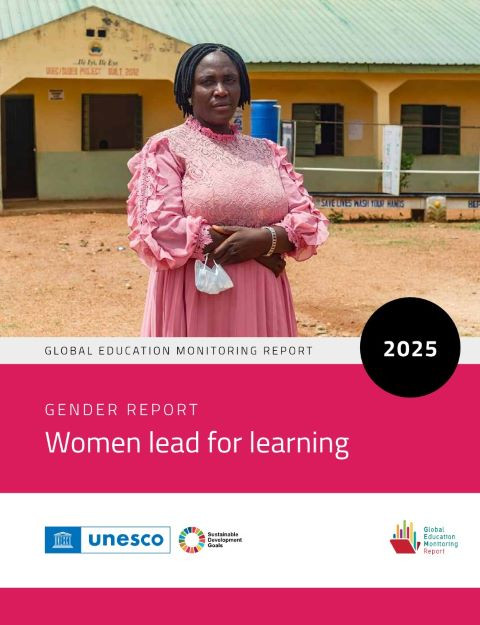 Global Education Monitoring Report 2025: Gender Report: Women Lead for Learning سنة النشر: 2025 المؤلف المؤسسي: UNESCO Barriers to gender equality in education leadership positions can and need to be overcome This gender edition, which is part of the 2024/5 Global Education Monitoring Report on leadership in education, addresses the remaining obstacles for women in their efforts to climb up the leadership ladder in education. Although the teaching profession has been feminized, there are considerable gender gaps in school management, education administration and political leadership positions, a situation illuminated in detail with examples from all over the world. Gender disparity in education leadership is the result of entrenched stereotypes and biases – conscious or unconscious – on the one hand and on the other institutional processes or professional development mechanisms that are insufficiently supportive. Research suggests that women leaders display some differences relative to men in their approaches to education leadership, for example the extent to which they emphasize collaboration, build relationships with the community and retain a focus on learning. While there is little to suggest that these differences are universal or immutable, the evidence points to the fact that the lack of equitable opportunities translates to less talent and fewer diverse approaches to leadership, which are a loss to education systems – not to mention the obvious need for equity. This is particularly evident in parts of the world where gender disparities remain large. This gender edition calls on countries to take a much closer look at gender disparity in education leadership and adopt measures to raise awareness, improve mechanisms and strengthen capacities to address discrimination and bias and thus encourage women who aspire to such careers to pursue them. Gender disparity in education leadership is the result of entrenched stereotypes and biases – conscious or unconscious – on the one hand and on the other institutional processes or professional development mechanisms that are insufficiently supportive. Research suggests that women leaders display some differences relative to men in their approaches to education leadership, for example the extent to which they emphasize collaboration, build relationships with the community and retain a focus on learning. While there is little to suggest that these differences are universal or immutable, the evidence points to the fact that the lack of equitable opportunities translates to less talent and fewer diverse approaches to leadership, which are a loss to education systems – not to mention the obvious need for equity. This is particularly evident in parts of the world where gender disparities remain large. This gender edition calls on countries to take a much closer look at gender disparity in education leadership and adopt measures to raise awareness, improve mechanisms and strengthen capacities to address discrimination and bias and thus encourage women who aspire to such careers to pursue them.
 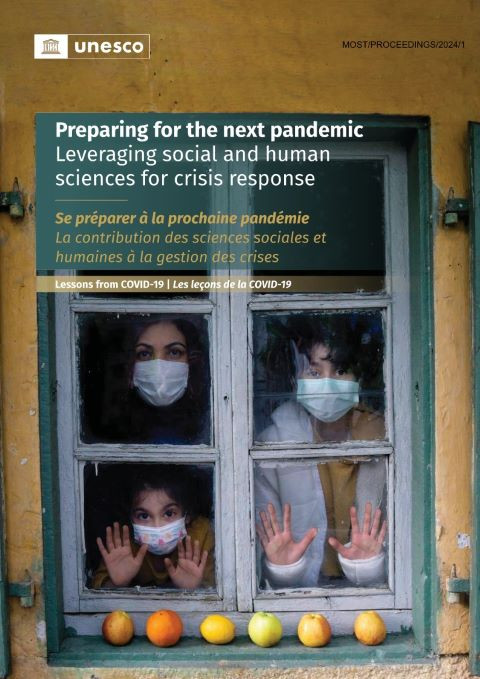 Preparing for the Next Pandemic Leveraging Social and Human Sciences for Crisis: Lessons from COVID-19 سنة النشر: 2024 المؤلف: Erwan Dianteill | N'Dri Thérèse Assié-Lumumba المؤلف المؤسسي: UNESCO The Social Sciences Response to COVID-19 Understanding the social impact of the COVID-19 pandemic is crucial for crafting effective and inclusive recovery policies. Prior to the pandemic, growing gaps in well-being were already undermining environmental sustainability, the social fabric, and progress worldwide. Fragile and unequal systems proved to be a pre-existing aggravating condition that fuelled the pandemic on a global scale. COVID-19 widened the gap between developed countries—which already had the financial means to respond to the crisis and had easy access to the vaccine—and the rest of humanity, resulting in devastating effects in the Global South, with more than 130 million people crossing the poverty line. Addressed to policymakers and scholars, this publication presents a comprehensive state of knowledge of the social science perspectives on the COVID-19 pandemic, covering a wide range of topics from its impact on mental health, education, climate change, economy, governance, migration, demography, digitalization, and more. The authors analyse the challenges faced by society during the pandemic and present actionable proposals for policymakers and practitioners. This publication is a reminder of the importance of Social Sciences and Humanities in addressing global challenges and provides a roadmap for future research and policy action to build more resilient societies.
 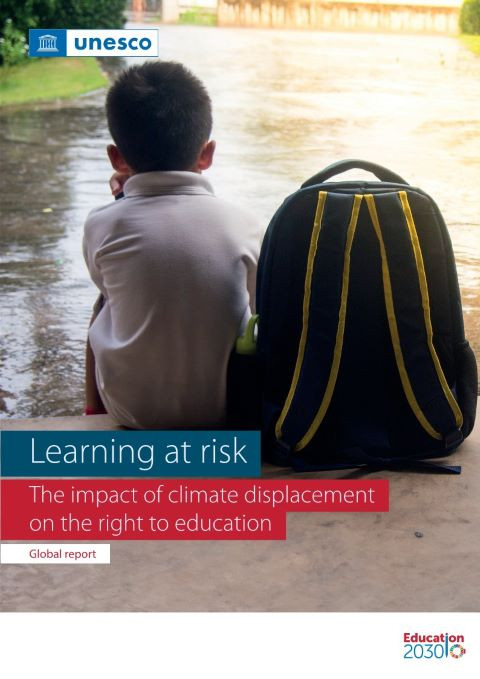 Learning at Risk: the Impact of Climate Displacement on the Right to Education; Global Report سنة النشر: 2023 المؤلف المؤسسي: UNESCO How climate displacement the impacts the right to education The growing impacts of climate change and displacement on education can no longer be ignored. The increasing number of people displaced due to climate change faces unique vulnerabilities, especially in terms of access to education. This challenge is not only attributed to the often limited political and legal recognition of these displaced persons, but also stems from the global community’s lack of awareness of the diverse obstacles they encounter in seeking access to education. This global report, which concludes the “Initiative on the impact of climate change and displacement on the right to education”, aims to provide guidance to policy-makers worldwide on how to better respect, protect and fulfil the right to education of climate-displaced people. It provides an overview of climate-induced barriers to education, and global policy guidance on how to ensure the protection of the right to education of these populations. The report will inform UNESCO’s Initiative on “The evolving right to education within a lifelong learning perspective” which is investigating how the right to education, as enshrined in international normative instruments, could be strengthened to meet modern needs in our rapidly changing societies.