
الموارد
استكشف مجموعة واسعة من الموارد القيمة حول تعليم المواطنة العالمية لتعميق فهمك وتعزيز البحث والمناصرة والتعليم والتعلم.
تم العثور على 3,777 نتيجة
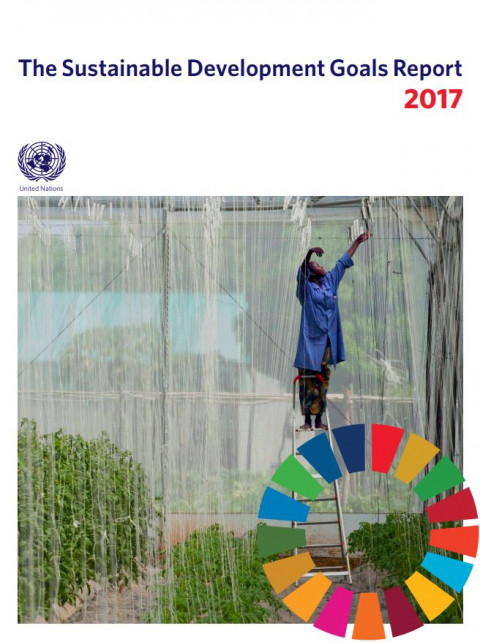 The Sustainable Development Goals Report 2017 سنة النشر: 2017 المؤلف المؤسسي: United Nations (UN) In adopting the 2030 Agenda for Sustainable Development, world leaders resolved to free humanity from poverty, secure a healthy planet for future generations, and build peaceful, inclusive societies as a foundation for ensuring lives of dignity for all.This report provides a snapshot of our efforts to date. It stresses that high-level political leadership and new partnerships will be essential for sustaining momentum. It also underscores the need for reliable, timely, accessible and disaggregated data to measure progress, inform decision-making and ensure that everyone is counted.
  Learning to live together: education for conflict resolution, responsible citizenship, human rights and humanitarian norms سنة النشر: 2013 المؤلف: Margaret Sinclair المؤلف المؤسسي: Education Above All (Qatar) Education cannot offer immediate remedies to the local and global problems that we see on the news screens every day, but it can contribute to solving them over the longer term. This book examines specifically the contribution that education for learning to live together can make, even in countries where teacher training and classroom resources are limited. Many countries have diverse populations (ethnic, linguistic, religious, etc) and seek to maintain harmony among the different groups. In some countries, however, especially where economic stress or climate change have intensified arguments over resources, tensions have led to armed conflict. This brings with it all the misery of death, injury, displacement and poverty, along with disruption of education systems. In some instances education itself has been a contributory factor to the outbreak of conflict, notably through unequal education opportunities for different groups, and through biased school curricula.Civil conflict has brought untold suffering in recent years, and in a globalised world it has negative spill-over effects to neighbouring and other countries. It is vital to develop education policies and curricular reforms that can help convey values and skills for learning to live together to young people, to help lessen tensions, within and between countries.Education policy-makers can help lay the foundations for a better future by adjusting the content and process of education to reflect skills and values for human rights, humanitarian norms, peaceful resolution of conflicts, sustainable development and other issues as elements of local, national and global citizenship.Education reform is not enough, of course, to resolve the numerous problems of our times. The focus of this volume is on the contribution that can be made through aligning the content of education to the goal of learning to live together. This work will have greater impact when it takes place within education systems and policies that are consistent with human rights values and of course when other sectors besides education make their respective contributions.This book shows that transformative education for conflict resolution and peace, for local, national and global citizenship, for human rights and humanitarian values can be implemented even under difficult conditions if there is a policy commitment to do so. Authors have provided examples and lessons learned from their own experiences as eminent practitioners in the field. Learning to live together: education for conflict resolution, responsible citizenship, human rights and humanitarian norms سنة النشر: 2013 المؤلف: Margaret Sinclair المؤلف المؤسسي: Education Above All (Qatar) L'éducation ne peut offrir des remèdes immédiats aux problèmes locaux et mondiaux que nous voyons sur les écrans d'information tous les jours, mais elle peut contribuer à les résoudre sur le long terme. Ce livre examine spécifiquement la contribution que l'éducation peut apporter pour vivre ensemble même dans les pays où la formation des enseignants et les ressources en classe sont limitées.De nombreux pays ont des populations diverses (ethniques, linguistiques, religieuses, etc.) cherchent à maintenir l'harmonie entre les différents groupes. Dans certains pays, cependant, en particulier lorsque le stress économique ou les changements climatiques ont intensifié les arguments sur les ressources, les tensions ont conduit à des conflits armés. Cela apporte avec elle toute la misère de la mort, les blessures, le déplacement et la pauvreté, ainsi que la perturbation des systèmes éducatifs. Dans certains cas, l'éducation elle-même a été un facteur contributif à l'éclatement du conflit, notamment grâce à des possibilités d'éducation inégales pour les différents groupes, et à travers les programmes scolaires biaisés.La guerre civile a causé des souffrances indicibles au cours des dernières années, et dans un monde globalisé, il a des effets négatifs de débordement vers les pays voisins et d'autres pays. Il est essentiel d'élaborer des politiques de l'éducation et la réforme des programmes qui peuvent aider à transmettre les valeurs et les compétences pour apprendre à vivre ensemble pour les jeunes, pour aider à réduire les tensions, à l'intérieur et entre les pays.Education décideurs politiques peuvent aider à jeter les bases d'un avenir meilleur en ajustant le contenu et le processus de l'éducation afin de refléter les compétences et les valeurs des droits de l'homme, des normes humanitaires, la résolution pacifique des conflits, le développement durable et d'autres questions comme éléments de local, national et citoyenneté mondiale.Réforme de l'éducation ne suffit pas, bien sûr, de résoudre les nombreux problèmes de notre temps. L'objectif de ce volume est sur la contribution qui peut être faite par le biais d'aligner le contenu de l'éducation à l'objectif d'apprendre à vivre ensemble. Ce travail aura un plus grand impact quand il a lieu au sein des systèmes et politiques d'éducation qui sont conformes aux valeurs des droits de l'homme et bien sûr, quand d'autres secteurs en dehors de l'éducation font leurs contributions respectives.Ce livre montre que l'éducation transformatrice pour la résolution des conflits et la paix, à la citoyenneté locale, nationale et mondiale, des droits de l'homme et des valeurs humanitaires peut être appliqué même dans des conditions difficiles, s'il y a un engagement politique de le faire. Les auteurs ont fourni des exemples et les enseignements tirés de leurs propres expériences en tant que praticiens éminents dans le domaine.
  Human Rights: 13 Ideas Received To Be Deconstructed سنة النشر: 2022 المؤلف: Céline Branaa | Louise Pluyaud | Louise Savri المؤلف المؤسسي: Commission nationale consultative des droits de l'homme (CNCDH) Aimed at 14-20 year-olds, this book aims to raise awareness of human rights and reminds us of the major role they play in our lives and in the organization of contemporary society. Today, human rights are being challenged by various movements that question their usefulness, effectiveness and universality. The links between certain violations of fundamental rights, climate change, the dangers of digital technology and so many other contemporary issues are often misunderstood or even ignored. The NCCHR is convinced of the urgent need to reaffirm that human rights are the foundation of a democratic society. To this end, the members of the NCCHR set out to deconstruct 13 of the most common misconceptions heard or disseminated in the media and on social networks. Through 13 illustrated chapters, each corresponding to a preconceived idea, human rights appear at the heart of our civilization as a current and indispensable reference. Readers are invited to become actively involved in their promotion. This book is a reminder that fundamental rights are not a construct of the past, but a necessary tool for the present. Highlighting the richness of human rights, this book is an invitation to anticipate a common future in which the dignity and freedom of the human person represent an accessible promise. Les droits humains: 13 idées reçues à déconstruire سنة النشر: 2022 المؤلف: Céline Branaa | Louise Pluyaud | Louise Savri المؤلف المؤسسي: Commission nationale consultative des droits de l'homme (CNCDH) Destiné aux 14-20 ans, ce livre vise à faire connaître les droits humains et rappelle la place majeure qu’ils occupent dans nos vies ainsi que dans l’organisation de notre société contemporaine. Aujourd’hui, les droits humains sont remis en cause par différents mouvements qui contestent leur utilité, leur efficacité ou encore leur universalité. Les liens entre certaines violations des droits fondamentaux, le changement climatique, les dangers du numérique, et tant d’autres aspects contemporains restent d’ailleurs bien souvent incompris voire méconnus. La CNCDH est convaincue de l’urgence de réaffirmer que les droits humains constituent le fondement d’une société démocratique. À cette fin, les membres de la CNCDH ont souhaité déconstruire 13 des idées reçues les plus souvent entendues ou diffusées dans les médias et sur les réseaux sociaux. À travers 13 chapitres illustrés, correspondant chacun à une idée reçue, les droits humains apparaissent au cœur de notre civilisation à la manière d’une référence actuelle et indispensable. Le lecteur y est invité à devenir acteur de leur promotion. Cet ouvrage rappelle à quel point les droits fondamentaux ne sont pas une construction appartenant au passé mais bien un outil nécessaire pour le temps présent. Mettant en avant la richesse des droits humains cet ouvrage est invitation à anticiper un avenir commun dans lequel la dignité et la liberté de la personne humaine représentent une promesse accessible. Pour toutes et tous. خطة العمل: البرنامج العالمي لل تثقيف في مجال حقوق الإنسان؛ المرحلة الأولى سنة النشر: 2006 المؤلف المؤسسي: UN Office of the High Commissioner for Human Rights The Plan of Action for the first phase (2005-2007) of the World Programme was adopted by all United Nations Member States in July 2005. It proposes a concrete strategy and practical guidance for implementing human rights education in primary and secondary schools. On 10 December 2004, the General Assembly of the United Nations proclaimed the World Programme for Human Rights Education (2005-ongoing) to advance the implementation of human rights education programmes in all sectors. Building on the foundations laid during the United Nations Decade for Human Rights Education (1995-2004), this new initiative reflects the international community’s increasing recognition that human rights education produces far-reaching results. By promoting respect for human dignity and equality and participation in democratic decision-making, human rights education contributes to the long-term prevention of abuses and violent conflicts. To help make human rights a reality in every community, the World Programme seeks to promote a common understanding of the basic principles and methodologies of human rights education, to provide a concrete framework for action and to strengthen partnerships and cooperation from the international level down to the grass roots. План действий Всемирная программа образования в области прав человека : Первый этап سنة النشر: 2006 المؤلف المؤسسي: UN Office of the High Commissioner for Human Rights The Plan of Action for the first phase (2005-2007) of the World Programme was adopted by all United Nations Member States in July 2005. It proposes a concrete strategy and practical guidance for implementing human rights education in primary and secondary schools. On 10 December 2004, the General Assembly of the United Nations proclaimed the World Programme for Human Rights Education (2005-ongoing) to advance the implementation of human rights education programmes in all sectors. Building on the foundations laid during the United Nations Decade for Human Rights Education (1995-2004), this new initiative reflects the international community’s increasing recognition that human rights education produces far-reaching results. By promoting respect for human dignity and equality and participation in democratic decision-making, human rights education contributes to the long-term prevention of abuses and violent conflicts. To help make human rights a reality in every community, the World Programme seeks to promote a common understanding of the basic principles and methodologies of human rights education, to provide a concrete framework for action and to strengthen partnerships and cooperation from the international level down to the grass roots. Plan de acción: programa Mundial para la Educación en Derechos Humanos, primera etapa سنة النشر: 2006 المؤلف المؤسسي: UN Office of the High Commissioner for Human Rights The Plan of Action for the first phase (2005-2007) of the World Programme was adopted by all United Nations Member States in July 2005. It proposes a concrete strategy and practical guidance for implementing human rights education in primary and secondary schools. On 10 December 2004, the General Assembly of the United Nations proclaimed the World Programme for Human Rights Education (2005-ongoing) to advance the implementation of human rights education programmes in all sectors. Building on the foundations laid during the United Nations Decade for Human Rights Education (1995-2004), this new initiative reflects the international community’s increasing recognition that human rights education produces far-reaching results. By promoting respect for human dignity and equality and participation in democratic decision-making, human rights education contributes to the long-term prevention of abuses and violent conflicts. To help make human rights a reality in every community, the World Programme seeks to promote a common understanding of the basic principles and methodologies of human rights education, to provide a concrete framework for action and to strengthen partnerships and cooperation from the international level down to the grass roots. Plan d'action: programme mondial en faveur de l'Éducation aux droits de l'Homme, première phase سنة النشر: 2006 المؤلف المؤسسي: UN Office of the High Commissioner for Human Rights The Plan of Action for the first phase (2005-2007) of the World Programme was adopted by all United Nations Member States in July 2005. It proposes a concrete strategy and practical guidance for implementing human rights education in primary and secondary schools. On 10 December 2004, the General Assembly of the United Nations proclaimed the World Programme for Human Rights Education (2005-ongoing) to advance the implementation of human rights education programmes in all sectors. Building on the foundations laid during the United Nations Decade for Human Rights Education (1995-2004), this new initiative reflects the international community’s increasing recognition that human rights education produces far-reaching results. By promoting respect for human dignity and equality and participation in democratic decision-making, human rights education contributes to the long-term prevention of abuses and violent conflicts. To help make human rights a reality in every community, the World Programme seeks to promote a common understanding of the basic principles and methodologies of human rights education, to provide a concrete framework for action and to strengthen partnerships and cooperation from the international level down to the grass roots.
  Plan of action: world programme for human rights education; first phase سنة النشر: 2006 المؤلف المؤسسي: UN Office of the High Commissioner for Human Rights The Plan of Action for the first phase (2005-2007) of the World Programme was adopted by all United Nations Member States in July 2005. It proposes a concrete strategy and practical guidance for implementing human rights education in primary and secondary schools. On 10 December 2004, the General Assembly of the United Nations proclaimed the World Programme for Human Rights Education (2005-ongoing) to advance the implementation of human rights education programmes in all sectors. Building on the foundations laid during the United Nations Decade for Human Rights Education (1995-2004), this new initiative reflects the international community’s increasing recognition that human rights education produces far-reaching results. By promoting respect for human dignity and equality and participation in democratic decision-making, human rights education contributes to the long-term prevention of abuses and violent conflicts. To help make human rights a reality in every community, the World Programme seeks to promote a common understanding of the basic principles and methodologies of human rights education, to provide a concrete framework for action and to strengthen partnerships and cooperation from the international level down to the grass roots.