
الموارد
استكشف مجموعة واسعة من الموارد القيمة حول تعليم المواطنة العالمية لتعميق فهمك وتعزيز البحث والمناصرة والتعليم والتعلم.
تم العثور على 3,777 نتيجة
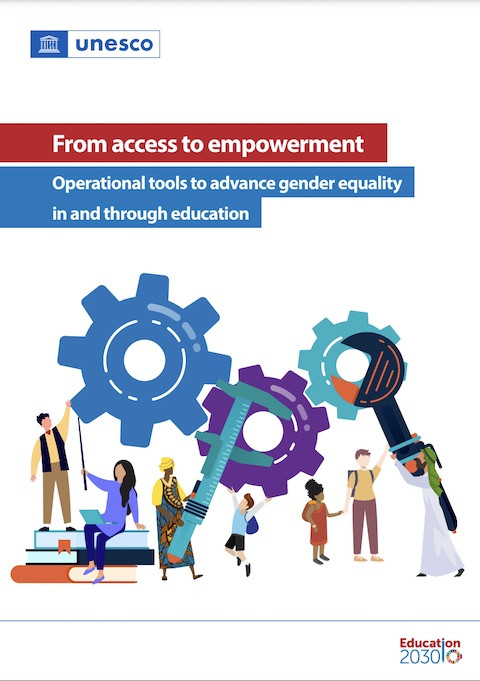 From Access to Empowerment: Operational Tools to Advance Gender Equality in and Through Education سنة النشر: 2021 المؤلف المؤسسي: UNESCO This toolkit has been developed to strengthen individual and institutional capacity to integrate gender equality into education programmes in an effective manner. It has been prepared for all UNESCO Education Sector staff, including those at Headquarters, in Field/Regional/Cluster Offices and in Institutes as well as for implementing partners. This toolkit provides orientation and operational tools to meaningfully integrate gender into all education programmes. The first part provides a short introduction to key concepts on gender equality in and through education and an overview on how gender equality in education links to UNESCO’s vision and internationally agreed objectives. The second part provides practical guidance on how to mainstream gender equality into an education programme, how to design gender-transformative programmes and finally, how to monitor and evaluate gender results in education programmes. Del acceso al empoderamiento: Herramientas operativas para promover la igualdad de género en y a través de la educación سنة النشر: 2021 المؤلف المؤسسي: UNESCO Esta guía se ha desarrollado para fortalecer la capacidad individual e institucional para integrar de forma efectiva la igualdad de género en los programas de educación. Fue elaborada para todo el personal del Sector de Educación de la UNESCO, incluyendo el personal ubicado en la Sede, en las Oficinas fuera de la Sede, regionales y multipaís, y en los Institutos, así como para los asociados en la ejecución de su trabajo. Esta guía ofrece herramientas orientativas y operativas para integrar de forma significativa la cuestión de género en todos los programas de educación. La primera parte ofrece una breve introducción a los conceptos clave de la igualdad de género en y a través de la educación y un resumen general de cómo la igualdad de género en la educación se vincula con la visión de la UNESCO y sus objetivos, aprobados a nivel internacional. La segunda parte ofrece una orientación práctica de cómo integrar la igualdad de género en los programas de educación, cómo elaborar programas transformadores en materia de género y, por último, cómo realizar el seguimiento y la evaluación de los resultados en materia de género en los programas de educación.
 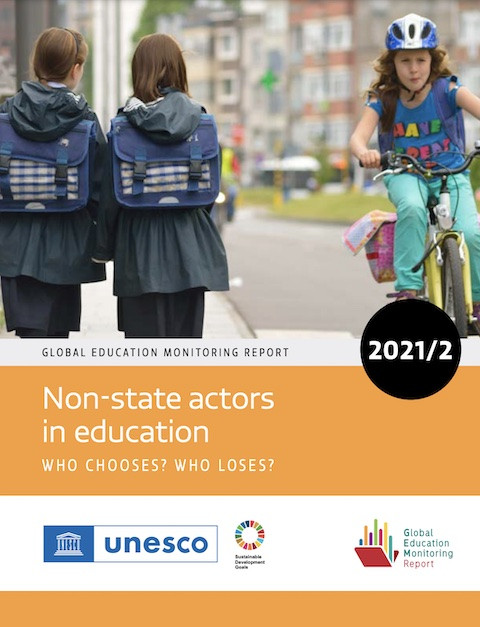 Global Education Monitoring Report 2021/2: Non-state Actors in Education; Who Chooses? Who Loses? سنة النشر: 2021 المؤلف المؤسسي: UNESCO Non-state actors’ role extends beyond provision of schooling to interventions at various education levels and influence spheres. Alongside its review of progress towards SDG 4, including emerging evidence on the COVID-19 pandemic’s impact, the 2021/2 Global Education Monitoring Report urges governments to see all institutions, students and teachers as part of a single system. Standards, information, incentives and accountability should help governments protect, respect and fulfill the right to education of all, without turning their eyes away from privilege or exploitation. Publicly funded education does not have to be publicly provided but disparity in education processes, student outcomes and teacher working conditions must be addressed. Efficiency and innovation, rather than being commercial secrets, should be diffused and practiced by all. To that end, transparency and integrity in the public education policy process need to be maintained to block vested interests. The report’s rallying call – Who chooses? Who loses? – invites policymakers to question relationships with non-state actors in terms of fundamental choices: between equity and freedom of choice; between encouraging initiative and setting standards; between groups of varying means and needs; between immediate commitments under SDG 4 and those to be progressively realized (e.g. post-secondary education); and between education and other social sectors. 全球教育监测报告摘要, 2021/2年: 教育领域的非国家行为体:谁能主动选择?谁将错失机会? سنة النشر: 2021 المؤلف المؤسسي: 联合国教科文组织 (UNESCO) 本文件是2021/2022年全球教育检测报告的摘要,主要聚焦教育领域的非国家行为体,包括私人办学、宗教办学等力量,并探讨了与非国家行为体对教育的影响与存在问题。
 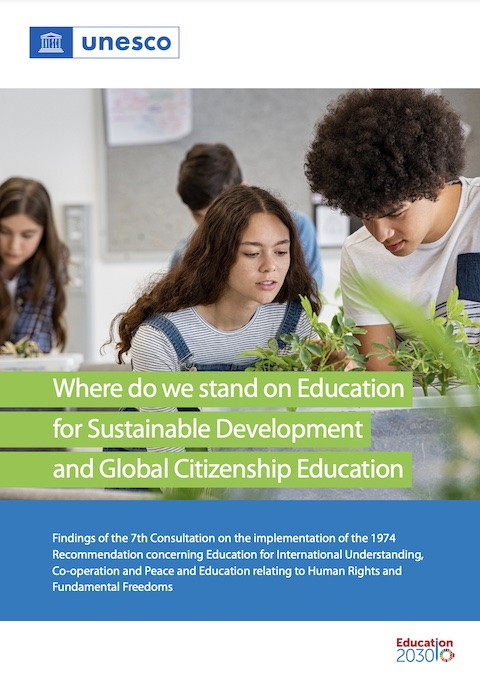 Where Do We Stand on Education for Sustainable Development and Global Citizenship Education: Findings of the 7th Consultation on the Implementation of the 1974 Recommendation Concerning Education for International Understanding, Co-operation and Peace and Education Relating to Human Rights and Fundamental Freedoms سنة النشر: 2022 المؤلف المؤسسي: UNESCO The Recommendation concerning Education for International Understanding, Co-operation and Peace and Education relating to Human Rights and Fundamental Freedoms was adopted by the 18th session of UNESCO’s General Conference in November 1974. Every four years, Member States are invited to report on the measures they have taken to implement the Recommendation in all levels and types of education from pre-primary to tertiary, formal, non-formal and adult education. This document summarizes the results of the 7th consultation on the implementation of the 1974 Recommendation, covering the period 2017-2020. It also contains, for the first time, data for the global indicator adopted by the UN Statistical Commission and the UN General Assembly for the monitoring of Target 4.7 of Sustainable Development Goal for Education.
 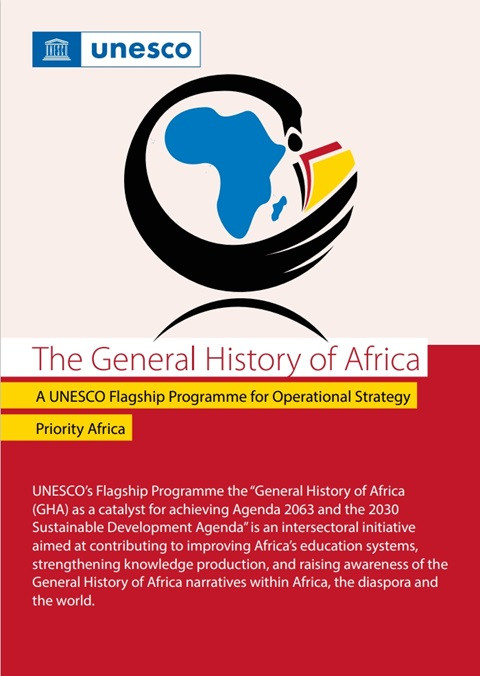 The General History of Africa: A UNESCO Flagship Programme for Operational Strategy Priority Africa سنة النشر: 2024 المؤلف المؤسسي: UNESCO As part of UNESCO’s Operational Strategy for Priority Africa (2022 – 2029), the General History of Africa (GHA) Flagship Programme responds to the challenge of reconstructing Africa and its diaspora historical memory and conscience by revisiting Eurocentric and colonial biases in the representation of their history and societies. It aims to advance a common identity and pride in Africa’s heritage, progress towards greater justice and an inclusive and fair future through the reappropriation and production of knowledge on Africa and its diaspora history in a manner that could contribute to the transformation of education in Africa and beyond. The GHA is aligned with the African Union Agenda 2063, The Africa We Want, the Charter for African Cultural Renaissance, and the United Nations 2030 Agenda for Sustainable Development.
 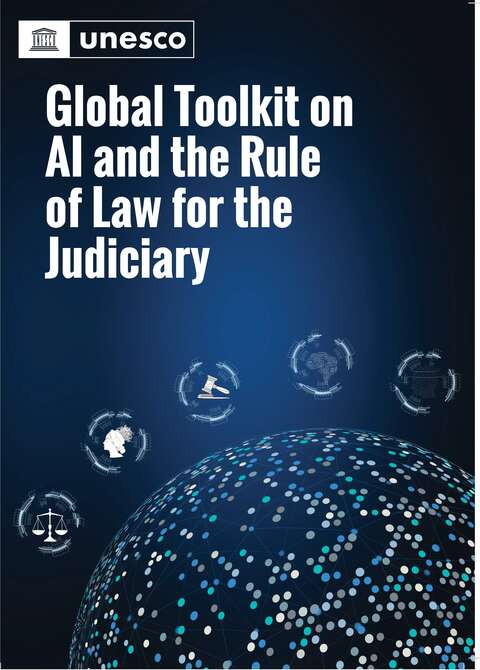 Global Toolkit on AI and the Rule of Law for the Judiciary سنة النشر: 2023 المؤلف: Miriam Stankovich | Ivana Feldfeber | Yasmín Quiroga | Marianela Ciolfi Felice | Vukosi Marivate المؤلف المؤسسي: UNESCO What is Artificial Intelligence (AI)? How does it work? And more importantly, how does it find its way into the judicial context? Technologies such as AI have been around for decades, but only recently have they begun to be used in a variety of justice and law enforcement settings. While AI has immense potential for the justice system, helping judges make better decisions, improving efficiency, increasing access, and helping to detect and prevent crime, there are also some important issues that justice stakeholders should consider as they prepare for a future in which AI is increasingly used in justice systems.In 2022, UNESCO launched two needs assessments. First, through UNESCO’s Artificial Intelligence Needs Assessment Survey in Africa, 90% of the 32 countries surveyed requested capacity building support for the Judiciary on AI. At the same time, a second global survey of judicial actors in 100 countries underlined the need for better understanding the use of AI in the administration of justice and its wider legal implications on societies.The “Global Toolkit on AI and the Rule of Law” for the Judiciary responds to these needs and provides judicial actors (judges, prosecutors, state attorneys, public lawyers, law universities and judicial training institutions) with the knowledge and tools necessary to understand the benefits and risks of AI in their work. The toolkit will assist judicial actors in mitigating the potential human rights risks of AI by providing guidance on the relevant international human rights laws, principles, rules and emerging jurisprudence that underpin the ethical use of AI.
 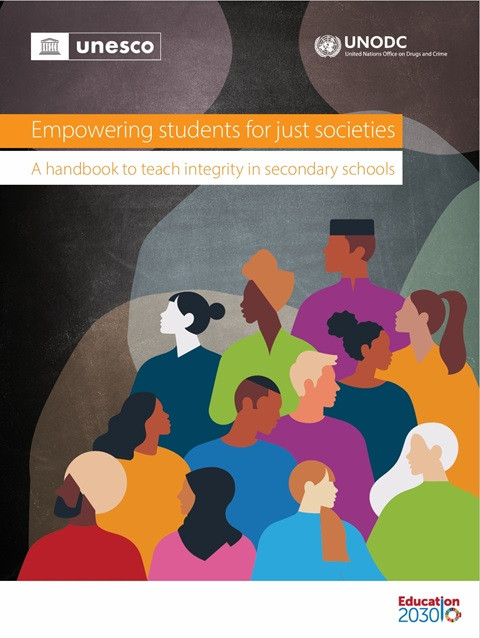 Empowering Students for Just Societies: A Handbook to Teach Integrity in Secondary Schools سنة النشر: 2024 المؤلف المؤسسي: UNESCO | UN. Office on Drugs and Crime (UNODC) The importance of education lies in its power to shape the values of upcoming generations and equip them with the knowledge to make informed decisions. Contemporary challenges, including corruption must be addressed through education, transparency, accountability and the rule of law, among other efforts. This joint publication by UNODC and UNESCO is a response to this important issue. It is aimed at educators who are striving to inspire and prepare future generations to actively contribute to societies grounded in integrity, ethics and respect for the rule of law. The handbook builds on the first two launched in 2019. This publication highlights the transformative power of education in strengthening the knowledge, skills, attitudes and values necessary for addressing global challenges, especially those that stem from a lack of integrity, like corruption. It underlines the crucial role education plays in nurturing critical thinking, empathy, ethical behaviour, and a commitment to justice and equality among people. The handbook presents a catalogue of educational activities, lesson plans and outside the classroom resources designed to empower youth to reject corrupt practices and become agents of change, promoting integrity and upholding democratic values.
  평화, 인권, 국제이해, 협력, 기본적 자유, 세계시민성, 지속가능발전을 위한 교육 권고: 해설서 سنة النشر: 2024 المؤلف المؤسسي: 유네스코 '평화, 인권, 국제이해, 협력, 기본적 자유, 세계시민성, 지속가능발전을 위한 교육 권고'를 소개하고 교육에 관심이 있는 이해관계자들 대상으로 권고의 내용과 활용을 담은 해설서.
 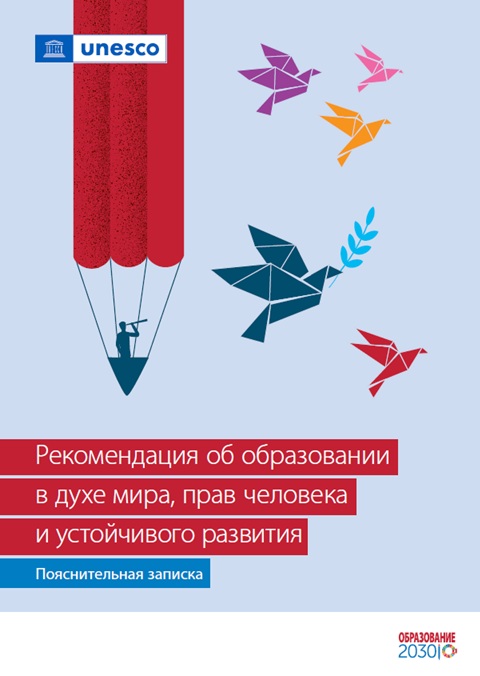 Рекомендация об образовании в духе мира, прав человека и устойчивого развития. Пояснительная записка سنة النشر: 2024 المؤلف المؤسسي: UNESCO Данная брошюра знакомит с обновленной Рекомендацией и кратко разъясняет, каким образом сформулированные в ней руководящие принципы могут быть применены на практике и в повседневной жизни различными субъектами деятельности в сфере образования.