
الموارد
استكشف مجموعة واسعة من الموارد القيمة حول تعليم المواطنة العالمية لتعميق فهمك وتعزيز البحث والمناصرة والتعليم والتعلم.
تم العثور على 91 نتيجة
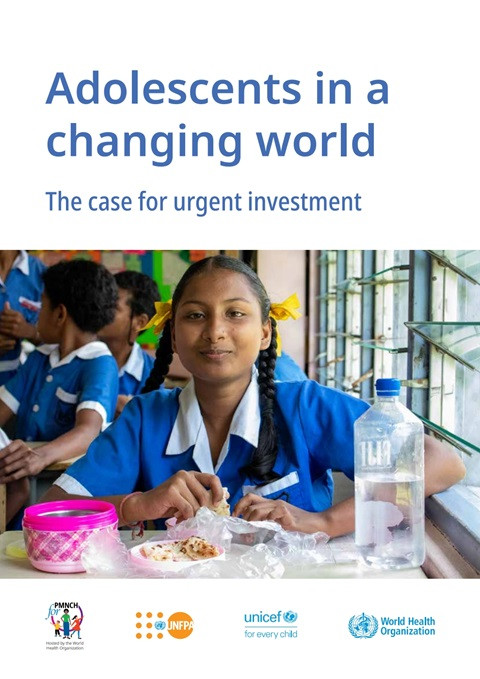 Adolescents in a Changing World: The Case for Urgent Investment سنة النشر: 2024 المؤلف المؤسسي: World Health Organization (WHO) | United Nations Children's Fund (UNICEF) This report focuses on the strong returns on investment associated with investing in adolescent health and well-being. Today, adolescents make up more than 16% of the world's population. They are a demographic that is often overlooked or misunderstood. Investments in adolescents can reduce inequalities and help to protect their human rights. The economic and social returns from a wide range of investments to address adolescent well-being are significant. The report makes a compelling case for investing in adolescents, they are living in a world facing multifaceted crises, and they will be tomorrow's changemakers and leaders. The staggering cost of inaction is estimated at US$110 trillion over a period of 27 years (2024-50). That amounts to 7.7% of the total GDP of those countries included in the models, which themselves include around 80% of the world's population. Many interventions will yield high returns, including those focused on health services and multisectoral interventions, for example on SRHR, HPV, TB, myopia, education and training, child marriage and road accident prevention. This evidence base is crucial for policymakers, practitioners, researchers, educators, donors, and civil society organizations as we map the road ahead for a better and more sustainable future. Investing in adolescent health and well-being strengthens the human capital of a country, and hence a country's potential for future development and for ending extreme poverty and creating more inclusive societies.
 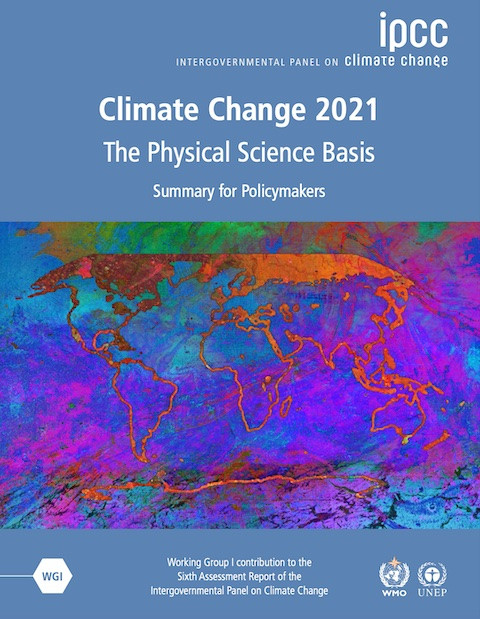 [Summary] Climate Change 2021: The Physical Science Basis; Summary for Policymakers سنة النشر: 2021 المؤلف: Valérie Masson-Delmotte | Panmao Zhai | Anna Pirani | Sarah L. Connors | Clotilde Péan | Sophie Berger | Nicolas Caud | Yazhen Chen | Leah Goldfarb | Marcos I. Gomis | Min Huang | Kathy Leitzell | Elisa Lonnoy | James B.R. Matthews | Timothy K. Maycock | Trudy Waterfield | Ozlem Yelekçi | Rucong Yu | Baohua Zhou المؤلف المؤسسي: Intergovernmental Panel on Climate Change (IPCC) The Summary for Policymakers (SPM) provides a high-level summary of the understanding of the current state of the climate, including how it is changing and the role of human influence, and the state of knowledge about possible climate futures, climate information relevant to regions and sectors, and limiting human-induced climate change.
  Strengthening Social and Emotional Learning in Hybrid Modes of Education: Building Support for Students, Teachers, Schools and Families سنة النشر: 2024 المؤلف المؤسسي: UNESCO International Bureau of Education (IBE) This Discussion Paper focuses on the essential role of social and emotional learning (SEL) in the global movement to transform education and amplify its social, economic, environmental and personal impacts in a rapidly changing world. It explores how the mainstreaming of SEL into educational policies and practices can contribute to realizing future visions of education that are flexible, reflective, innovative, and impactful. Specifically, the Paper focuses on six topics that, as a whole, reflect global experiences in integrating and implementing SEL in its various forms both during and in the wake of the COVID-19 pandemic. Its main objective is to animate discussion on how to integrate a SEL dimension in hybrid modes of teaching and learning. This introductory overview presents the overall purpose and scope of the Paper, defines its underlying concepts and introduces the topics brought to this forum through the lenses of a diverse group of educators from Africa, the Arab States, Asia, Europe, and Latin America.
 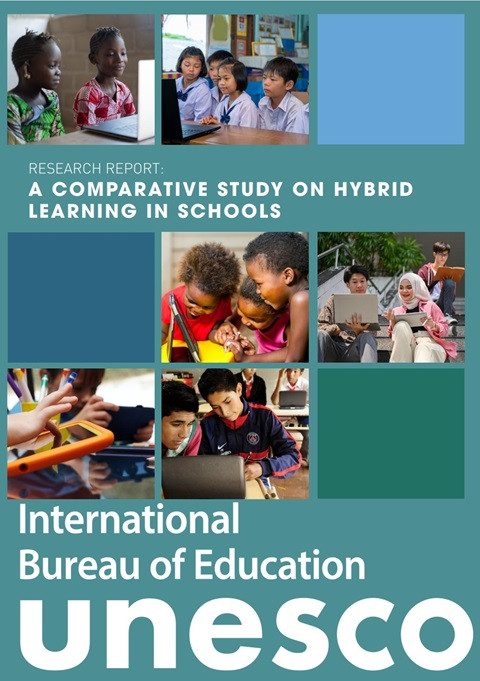 Research Report: A Comparative Study on Hybrid Learning in Schools سنة النشر: 2024 المؤلف المؤسسي: UNESCO International Bureau of Education (IBE) During the COVID-19 lockdown, policymakers and educators faced an unprecedented challenge disrupting all levels of education. The initial optimism about replacing physical classes with virtual lessons diminished as complex interconnected issues emerged. To address the need for continuous and sustainable learning, school systems implemented variations of hybrid learning during the pandemic, seeking to integrate physical and virtual classes. These approaches prompted this comparative study led by UNESCO-IBE. The initial phase of this study involved collecting and analysing data on hybrid strategies from six countries. The research aimed to examine factors influencing hybrid learning implementation during the lockdown, with a subsequent focus on developing and validating a practical Hybrid Learning Framework for Schools. The cross-case analysis was designed not to rank or compare, but to understand and connect different scenarios and contexts. Phase I focuses on current hybrid learning practices and influencing factors, while Phases II and III will concentrate on using the information gathered to create and validate a Hybrid Learning Framework for Schools. Aligned with UNESCO-IBE’s overarching vision of a comprehensive, personalized, and democratized curriculum accessible to all, hybrid learning facilitates inclusive education across diverse regions, overcoming geographical and temporal limitations. The approach aims to unlock the unique potential of every learner, fostering a more flexible educational environment.
  Snapshot Report: SDGs in the UNECE Region سنة النشر: 2019 المؤلف المؤسسي: United Nations Economic Commission for Europe (UNECE) This document provides a brief snapshot of some aspects of SDG performance in the UNECE region. It covers the SDGs that will be discussed at the 2019 Regional Forum on Sustainable Development for the UNECE region but it does not attempt to provide an exhaustive assessment. It only uses the available information in the UN SDG Global Database and the sources referenced there to illustrate a selected number of SDG issues. In a very few cases, when no data is available from this database and associated sources, information from other international organizations is used to provide some context to the discussions.
  Global Framework for Refugee Education سنة النشر: 2019 المؤلف المؤسسي: Global Refugee Forum Education Co-Sponsorship Alliance | UN. Office of the United Nations High Commissioner for Refugees (UNHCR) This Global Framework for Refugee Education has been produced by the Global Refugee Forum’s Education Co-Sponsorship Alliance, comprising more than 60 partners. It aims to help partners to translate the Global Compact on Refugees and the Refugee Education 2030: A Strategy for Refugee Inclusion into pledges for concrete action to help achieve inclusive and equitable quality education for all by 2030.
  الوقاية من العنف الجنسي والعنف الجندري والاستجابة لهما في حالات اللاجئين في منطقة الشرق الأوسط وشمال أفريقيا سنة النشر: 2015 المؤلف المؤسسي: UN. Office of the United Nations High Commissioner for Refugees (UNHCR) تواجه منطقة الشرق الأوسط وشمال أفريقيا الأزمات الانسانية والتهجير القسري على نطاق غير مسبوق. هذه الصراعات إلى جانب التهجيرالناتج عنها تلقي باعبائها بشكل غير متناسق على على النساء والأطفال، والذين يضمون 78% من اللاجئين السوررين. وقد اصبح العنف الجنسي والجندري واسع الانتشار بشكل متزايد في هذه الدول المتاثرة بالنزاع، وغالبا ما يكون أحد أسباب الفرار منها.أن العنف الجنسي والعنف الجندري هما مشكلة خطيرة تنتهك حقوق الانسان، وتتفاقم أكثر فأكثر نتيجة الصراعات والنزوح الذي ينتج عن ذلك. ودعما للعمليات المتعددة القطاعات والمنسقة للوقاية من هذا العنف الجنسي والجندري والاستجابة لهما، يحدد هذا التقرير الإستراتيجيات بالتوافق مع المعايير الدولية، التي تستخدمها المفوضية بالتعاون مع السلطات المحلية، والمنظمات الغير حكومية، وغيرها من الشركاء في جميع أنحاء المنطقة، لتحقيق نتائج ملموسة في الوقاية من العنف الجنسي والجندري وحماية اللاجئين. Sexual and Gender-based Violence Prevention and Response In Refugee Situations in the Middle East and North Africa سنة النشر: 2015 المؤلف المؤسسي: UN. Office of the United Nations High Commissioner for Refugees (UNHCR) The Middle East and North Africa (MENA) region is facing humanitarian crises and forced displacement on an unprecedented scale. These conflicts and the resulting displacement disproportionately burden women and children, who now comprise 78 per cent of Syrian refugees. Sexual and gender-based violence (SGBV) is becoming increasingly widespread in these conflict-affected countries, and is often one of the causes of flight. In support for multi-sectorial and coordinated SGBV prevention and response, this report outlines strategies, in line with international standards, that UNHCR uses in coordination with national authorities, non-governmental organizations (NGOs), and other partners across the region, to bring tangible results in preventing and responding to SGBV in refugee situations, as well as in the inter-agency response in situations of internal displacement.
  RESPECT Women: Preventing Violence Against Women سنة النشر: 2019 المؤلف المؤسسي: World Health Organization (WHO) Violence against women and girls remains pervasive across the world, despite significant efforts being made to recognize, eliminate, and prevent it in all its forms. Eliminating violence against women and girls is pivotal to achieving gender equality, women’s empowerment, and the Sustainable Development Goals. Elimination can only be done through prevention. Successful prevention requires: political commitment and leadership,implementing laws and policies that promote gender equality,investing in women’s organizations,allocating resources to prevention, andaddressing the multiple forms of discrimination women face daily. Based on the principles of respect and equality, and lessons learned from evidence-based results on what works in preventing violence from occurring and recurring, the World Health Organization (WHO) and UN Women, in collaboration with ten other UN, bilateral, and multilateral agencies, have developed “RESPECT Women: Preventing violence against women”. This publication provides a comprehensive framework to inform policy makers and implementers about designing, planning, implementing, monitoring, and evaluating interventions and programmes on preventing and responding to violence against women. The framework outlines seven inter-related intervention strategies derived from the word “respect”: Relationships skills strengthenedEmpowerment of womenServices ensuredPoverty reducedEnvironments made safeChild and adolescent abuse preventedTransformed attitudes, beliefs and norm
  UNITED NATIONS HUMAN RIGHTS MECHANISMS and the Right to Education in Insecurity and Armed Conflict المؤلف: Takhmina Karimova | Gilles Giacca | Stuart Casey-Maslen المؤلف المؤسسي: Geneva Academy of International Humanitarian Law and Human Rights This publication, United Nations Human Rights Mechanisms and the Right to Education in Insecurity and Armed Conflict, seeks to respond to the acute need to identify trends in the practice, and contribution, of United Nations human rights mechanisms to the protection of education in times of insecurity and conflict. It is the result of a one-year research project carried out by researchers at the Geneva Academy of International Humanitarian Law and Human Rights (Geneva Academy). The research was overseen by a Legal Advisory Committee and subject to multi-disciplinary peer review. Accompanying the publication is a summary policy document intended to guide future work in this area. An electronic version of each publication is available at http://www.geneva-academy.ch and at http://www.educationandconflict.org.United Nations Human Rights Mechanisms and the Right to Education in Insecurity and Armed Conflict is the second in a series of legal research documents commissioned by Protect Education in Insecurity and Conflict (PEIC) on the protection of education during insecurity and armed conflict. PEIC is a programme of the Education Above All Foundation, an independent organization chaired by Her Highness Sheikha Moza Bint Nasser of Qatar, UNESCO Special Envoy for Basic and Higher Education. A policy, research, and advocacy organization, PEIC is concerned with the protection of education during insecurity and armed conflict. PEIC’s Legal Programme contributes to such protection through the strategic use of international and national law. Its legal research papers are authored by academics and/or practicing lawyers. They are aimed at a varied audience, including international and national lawyers; non-legally trained education experts and policy-makers within governments; political, social, and cultural bodies; and civil society. The Geneva Academy aims to provide instruction of a high academic standard, conduct and promote scientific research, organize training courses and expert meetings, and provide legal expertise in the branches of international law relating to situations of armed conflict. Founded in 2007, the Academy replaces the University Centre for International Humanitarian Law created in 2002 by the Faculty of Law of the University of Geneva and the Graduate Institute of International Studies, now the Graduate Institute of International and Development Studies(IHEID).