
الموارد
استكشف مجموعة واسعة من الموارد القيمة حول تعليم المواطنة العالمية لتعميق فهمك وتعزيز البحث والمناصرة والتعليم والتعلم.
تم العثور على 1,402 نتيجة
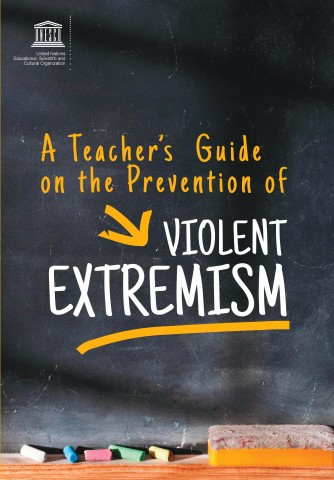 Методическое пособие по предотвращению насильственного экстремизма سنة النشر: 2016 المؤلف المؤسسي: Организация Объединенных Наций по вопросам образования, науки и культуры (UNESCO) Насильственный экстремизм и движущие факторы радикализации относятся к числу наиболее распространенных проблем нашего времени. Нельзя сказать, что насильственный экстремизм присущ только тому или иному возрасту либо полу, той или иной группе либо общине, однако перед идеями его сторонников и членов террористических организаций особенно уязвимы молодые люди.Сталкивающаяся с такими угрозами молодежь должна располагать возможностями для своевременного получения актуального образования, с тем чтобы овладеть знаниями, навыками и жизненными установками, которые могут помочь ей противостоять вышеупомянутой пропаганде.Развитие таких компетенций требует помощи со стороны квалифицированных преподавателей, пользующихся доверием и уважением со стороны молодых людей и поддерживающих с ними тесные контакты.Настоящее пособие разработано с учетом этой проблематики в помощь учителям старших классов начальной школы и младших и старших классов средней школы. Авторы пособия надеются, что оно поможет работе учителей в рамках как формального, так и неформального образования. دليل المعلم حول منع التطرف العنيف سنة النشر: 2016 المؤلف المؤسسي: منظمة الأمم المتحدة للتربية والعلم والثقافة (UNESCO) إنه دليل اليونسكو الأول للمعلم حول منع التطرف العنيف من خلال التعليم. جرى تطوير هذه الوثيقة استجابة فورية لحاجات الدول الأعضاء في اليونسكو، كما جاء في القرار التاريخي،20151 EX/197 رقم 46 الذي اتخذه المجلس التنفيذي لليونسكو في تشرين الأول/أكتوبر ويدعو فيه المنظمة إلى تعزيز قدرتها لتوفير المساعدة للبلدان الساعية إلى تقوية استجابة قطاعها التربوي للتطرف العنيف، بما فيه بواسطة برامج التربية العالمية على المواطنة القائمة على حقوق الإنسان، مع مراعاة السياقات الوطنية...بغية ضمان انطباق دليل المعلمين هذا على مختلف السياقات الجغرافية والاجتماعية والثقافية، فقد جرى وضعه بعد عملية تشاورية موسعة مع خبراء ومعلمين من المناطق المختلفة، كما اختبرته ميدانياً الأطراف التربوية المعنية في البلدان المختلفة بالتالي، و يمكن استخدامه كما هو، أو اعتباره نموذجاً يحتاج إلى أن يوضع في سياقه، ويترجم بغية تلبية حاجات المتعلمين المحددة.... في المرحلة العليا من التعليم آخذين هذا في الاعتبار، جرى وضع هذا الدليل للمعلمين في المرحلة العليا من التعليم الابتدائي، والمرحلة الدنيا والمرحلة العليا من التعليم الثانوي. كما تم تطويره مع الأمل بتمكنه من من دعم جهود المعلمين في الأطر التربوية النظامية وغير النظامية....ويسعى هذا الدليل بشكل خاص إلى: تقديم النصائح العملية حول متى وكيف تُناقش مسألة التطرف العنيف مع المتعلمين... ومساعدة المعلمين في تأمين مناخ عام في الصف الدراسي يفضي إلى الحوار المحترم والنقاش المفتوح والتفكير النقدي. عناوينه الرئيسة: حول التطرف العنيف، إدارة المناقشات في قاعة الصف، الرسائل الأساسية الواجب إيصالها، الأسئلة الأكثر طرحا ومراجع.
 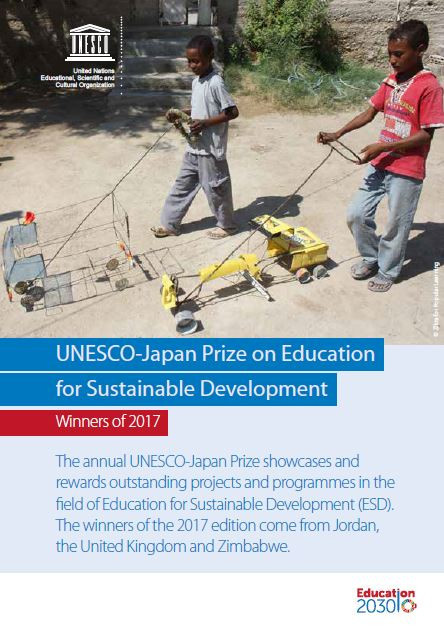 UNESCO-Japan Prize on Education for Sustainable Development: Winners of 2017 سنة النشر: 2017 المؤلف المؤسسي: UNESCO The annual UNESCO-Japan Prize showcases and rewards outstanding projects and programmes in the field of Education for Sustainable Development (ESD).The winners of the 2017 edition come from Jordan, the United Kingdom and Zimbabwe.Among this year’s winners are a school, business and a non-profit organization, promoting ESD, respectively, at the local, regional and global level: Sihlengeni Primary School from the Republic of Zimbabwe; the social enterprise Zikra from the Hashemite Kingdom of Jordan; and the Hard Rain Project from the United Kingdom of Great Britain and Northern Ireland. Each of them will receive an award of USD 50,000.The Director-General of UNESCO and the Japanese Minister of Education will award the Prize to the three laureates in a ceremony at UNESCO Headquarters in Paris on 3 November 2017, during the 39th session of the General Conference.
  From words to action; Des paroles aux actes سنة النشر: 2014 المؤلف المؤسسي: UNESCO Since its creation in 1945, UNESCO has been working to enhance mutual understanding between peoples, founded on an ever more subtle knowledge of cultures in their rich diversity in order to promote the dignity of all through the affirmation of the principles, rights and values of our common humanity. The era of globalization characterizes our societies, in a cultural landscape which, more than ever, is permeated with diversity because of the mutual influences of peoples, communities, and of their cultural and religious practices. A major issue remains: the need to demonstrate the benefits of promoting both respect for human rights and cultural diversity, recognizing the importance of genuine intercultural dialogue in order to fight against new forms of racism, discrimination, intolerance, extremism and radicalization. UNESCO, with lengthy practical experience as an international laboratory of ideas, monitors respect for universal values, in particular by initiating research and producing various kinds of teaching tools designed for the acquisition of intercultural skills. Which skills should be mobilized or acquired in order to be able not only to respect but also to appreciate the Other in all his or her diversity. How many of these skills can be useful on both a collective level and an individual one in order to protect cultural rights, protect oneself from, or to transcend prejudice? Intercultural sensibility and aptitudes have to be explored since they refer to the willingness and capacity of people to step outside of their own logic and systems of thought in order to engage with others, and appreciate different cultural narratives especially if they are not equally valorized or recognized in a given societal context. This portfolio proposes a basic tool for capacity building in support of exchange, communication and cooperation beyond cultural, religious and national borders, allowing the emergence of a global citizenship in a safer world for all. In this perspective, this set of key resources consists of papers by international experts exploring the linkage between respect for cultural diversity and human rights, with all that that implies. It brings together other publications such asIntercultural Competences, Conceptual and Operational Framework, published by UNESCO in 2013, and documents such as Dire la Tolérance (Defining Tolerance), published in 1997 and translated into English and into Arabic, and, finally, UNESCO’s Programme of Action for a Culture of Peace and Non-Violence, A Vision in Action, published in English in 2012 and in French in 2013. Symbolically released on 10 December 2014, Human Rights Day, this multilingual and evolving publication is designed primarly to be an Open Access tool, a flagship project of the International Decade for the Rapprochement of Cultures (2013-2022). In the same spirit, its content will be enriched and developed in an e-learning format, throughout the Decade.
  Conceptualizing Intercultural Understanding within International Contexts: Challenges and Possibilities for Education سنة النشر: 2017 المؤلف: Fethi Mansouri, Ruth Arber المؤلف المؤسسي: UNESCO This chapter interrogates the ways in which intercultural conception has been defined in diverse contexts, providing the framing context for policy and curriculum measures to work with the manifestations of global population movement, diversity and change. It asks questions the ways in which conversations about intercultural understanding can be broadened to consider how entrenched systemic inequalities, the underlying notional and institutional frameworks that support them, and the mono-cultural and specific privileges and oppression, which are so often their enduring outcome, can be dismantled. To that end, it examines how policy and notional and practical work, in relation to intercultural understanding, can better encompass structural and cultural change regarding the ways in which cross cultural encounters and intercultural relations are shaped and take place.
 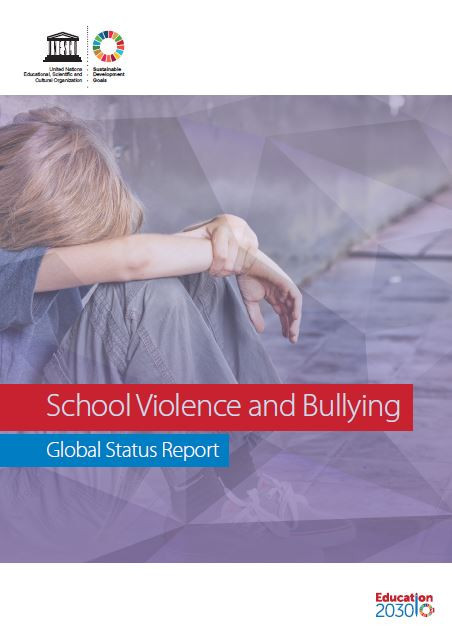 School Violence and Bullying: Global Status Report سنة النشر: 2017 المؤلف المؤسسي: UNESCO School violence and bullying occurs throughout the world and affects a significant proportion of children and adolescents. It not only negatively impacts their educational outcomes, but harms their physical health and emotional well-being.This report aims to provide an overview of the most up-to-date available data on the nature, extent and impact of school violence and bullying and efforts to address the problem. It was prepared by UNESCO and the Institute of School Violence and Prevention at Ewha Womans University for the International Symposium on School Violence and Bullying: From Evidence to Action, Seoul, Republic of Korea, 17 – 19 January, 2017.
  [Video] The Ten Targets of the Sustainable Development Goal 4...with Elyx سنة النشر: 2017 المؤلف المؤسسي: UNESCO This new UNESCO animation explaining the ten targets of the Sustainable Development Goal 4.Together with Elyx, the UN's first digital ambassador, discover how to ensure inclusive and quality education for all and promote lifelong learning. [vidéo] Les Dix Cibles de l’Objectif de Développement Durable 4...avec Elyx ! سنة النشر: 2017 المؤلف المؤسسي: UNESCO Regardez cette nouvelle animation expliquant les dix cibles de l'Objectif de développement durable 4. Avec Elyx, le premier ambassadeur numérique de l'ONU, découvrez comment garantir une éducation inclusive et de qualité pour tous et promouvoir l'apprentissage tout au long de la vie. [Vídeo] Descubre las Diez Metas del Objetivo de Desarrollo Sostenible 4... ¡con Elyx! سنة النشر: 2017 المؤلف المؤسسي: UNESCO La UNESCO presenta su nuevo vídeo para explicar las diez metas del Objetivo de Desarrollo 4. Junto a Elyx, la primera embajadora digital de la UNESCO, descubre como garantizar una educación inclusiva, equitativa y de calidad y promover oportunidades de aprendizaje durante toda la vida para todos. Десять задач Цели 4 в области устойчивого развития ... с Эликс! سنة النشر: 2017 المؤلف المؤسسي: UNESCO Обеспечение качественного образования для всехПосмотрите эту новую анимацию ЮНЕСКО, объясняющую десять задач Цели 4 в области усточивого развития. Вместе с Эликс, первым цифровым послом ООН, узнайте, как обеспечить всеохватное и качественное образование для всех и содействовать обучению.