
الموارد
استكشف مجموعة واسعة من الموارد القيمة حول تعليم المواطنة العالمية لتعميق فهمك وتعزيز البحث والمناصرة والتعليم والتعلم.
تم العثور على 3,777 نتيجة
 Education for Democratic Citizenship and a Culture of Peace سنة النشر: 2022 المؤلف: Jéssica Marisol Vera Carrera المؤلف المؤسسي: University of Santiago de Cali Education for peace and citizen training as a promotion of peace construction. It is a global need in educational centers, particularly when making a comparison in Colombia and Mexico, to understand that education is a dynamic, continuous and permanent educational process by playing a fundamental role in the formation of the citizen; It is also the conducive setting for the promotion of socio-emotional skills that allow students to have sufficient tools to be a citizen agent of peace. Educación para la ciudadanía democrática y cultura de paz سنة النشر: 2022 المؤلف: Jéssica Marisol Vera Carrera المؤلف المؤسسي: University of Santiago de Cali La educación para la paz y formación ciudadana como fomento de construcción de paz. Es una necesidad global en los centros educativos, particularmente al realizar un comparativo en Colombia y México, comprender que la educación es un proceso educativo, dinámico, continuo y permanente al desempeñar un papel fundamental en la formación del ciudadano; además es el escenario propicio para el fomento de habilidades socioemocionales que le permitan a los estudiantes contar con las herramientas suficientes para ser un ciudadano agente de paz.
 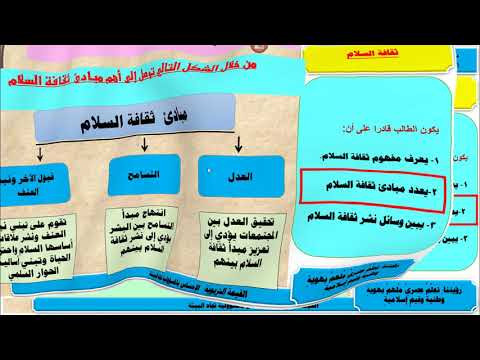 Citizenship of a Culture of Peace سنة النشر: 2021 المؤلف: Graeme Simpson المؤلف المؤسسي: AL-andalus Educational Complex The video is a lesson from the social studies book for the tenth grade in the State of Qatar. The teacher explains citizenship for peace and its dissemination. The teacher begins by explaining the concept of a culture of peace and goes on to the principles of peace and the foundations for its dissemination. The class is suitable for Arab students in general to understand what peace is and how to spread it. مواطنة ثقافة السلام سنة النشر: 2021 المؤلف: Graeme Simpson المؤلف المؤسسي: AL-andalus Educational Complex الفيديو عبارة عن حصة تدريسية من كتاب الدراسات الاجتماعية للصف العاشر بدولة قطر. يشرح المعلم فيها المواطنة من أجل السلام ونشرها. يبدأ المعلم بشرح مفهوم ثقافة السلام ويستطرد في مبادئ السلام وأسس نشره. الحصة مناسبة للطلبة العرب عموما في فهم ماهية السلام وسبل نشره.
  Cultural Diversity and Shared Citizenship سنة النشر: 2008 المؤلف: BoAzza Binasher | Abdullah Alalawai المؤلف المؤسسي: Modern Times Magazine This integrated file from the Journal of Modern Times reviews the issue of citizenship and cultural diversity. The file reviews many reflective questions on the subject of shared citizenship. The file contributes in general to setting a democratic cultural policy that guarantees the values of solidarity and peace in order to preserve human civilization. ملف التنوع الثقافي و المواطنة المشتركة سنة النشر: 2008 المؤلف: BoAzza Binasher | Abdullah Alalawai المؤلف المؤسسي: Modern Times Magazine يستعرض هذا الملف المتكامل من مجلة الأزمنة الحديثة قضية المواطنة والتنوع الثقافي. حيث يستعرض الملف تساؤلات كثيرة حول موضوع المواطنة المشتركة. ويسهم الملف عموما في وضع سياسة ثقافية ديموقراطية تضمن قيم التضامن والسلام من أجل الحفاظ على المكتسبات الإنسانية.
  Culture of Peace and Education for Democratic Citizenship سنة النشر: 2006 المؤلف: Jose Tuvilla Rayo The Culture of Peace understood as the synthesis concept - sum of human rights, democracy, disarmament and sustainable human development - demands, as a humanizing response of globalization, important efforts of educational systems towards the achievement of four world social contracts ( Lisbon Group, 1995): the contract of basic needs aimed at suppressing inequalities, the cultural contract aimed at promoting tolerance and dialogue between cultures, the contract of democracy aimed at a system of world government; and, the Earth contract to promote stable and lasting human development. To do this - remembering Juan Carlos Tedesco (2001) - learning to live together, one of the pillars of 21st century education, can not be maintained in the exclusive domain of merely rhetorical adherence. Cultura de Paz y educación para la ciudadanía democrática سنة النشر: 2006 المؤلف: Jose Tuvilla Rayo La Cultura de Paz entendida como el concepto síntesis --suma de derechos humanos, democracia, desarme y desarrollo humano sostenible--, demanda, como respuesta humanizadora de la globalización, importantes esfuerzos de los sistemas educativos hacia la consecución de cuatro contratos sociales mundiales (Grupo de Lisboa, 1995): el contrato de las necesidades básicas destinado a suprimir las desigualdades, el contrato cultural destinado a promover la tolerancia y el diálogo entre culturas, el contrato de la democracia encaminado hacia un sistema de gobierno mundial; y, el contrato de la Tierra para promover un desarrollo humano estable y duradero. Para ello – recordando a Juan Carlos Tedesco (2001) – aprender a vivir juntos, uno de los pilares de la educación del siglo XXI, no puede ser mantenido en el terreno exclusivo de la adhesión meramente retórica.
 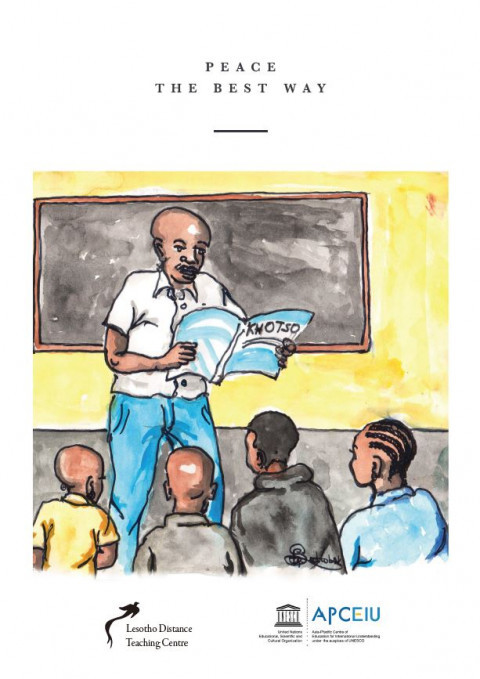 Peace the Best Way سنة النشر: 2017 المؤلف المؤسسي: Lesotho Distance Teaching Centre (LDTC) The storybook titled “Peace, the Best Way (Ngoan’a Khotso Ha a Lebale Tsa Khotso)” is an end-product of Workshop in Lesotho on GCED: Teacher Training on Peace Education & GCED Learning Material Development held between 12 and 14 of July 2017. During the workshop, participants created learning materials on peace and conflict transformation based on what they have learned throughout the sessions.The authors share their stories of conflicts that they encounter in their everyday lives and further identify ways of managing and resolving the conflicts in a peaceful manner to let everyone live in harmony. They hope to instill the importance of peace not only to the adults reading the book, but also to the younger generation who learn from their parents and adults of the community.The book published in English as well as Sesotho, will be used as teaching and learning resources for learners and also be disseminated to public locations including schools, community centers and libraries.For more information on the Workshop, Please click here.
  Nuestra diversidad creativa: informe de la comisión mundial de cultura y desarrollo, versión resumida سنة النشر: 1996 المؤلف المؤسسي: World Commission on Culture and Development This report is designed to address a diversified audience across the world that ranges from community activists, field workers, artists and scholars to government officials and politicians. We want it to inform the world’s opinion leaders and to guide its policy-makers. We want it to capture the attention of the world’s intellectual and artistic communities, as well as the general public. We aim to have shown them how culture shapes all our thinking, imagining and behaviour. It is the transmission of behaviour as well as a dynamic source for change, creativity, freedom and the awakening of innovative opportunities. For groups and societies, culture is energy, inspiration and empowerment, as well as the knowledge and acknowledgment of diversity: if cultural diversity is ‘behind us, around us and before us”, as Claude L&i-Strauss put it, we must learn how to let it lead not to the clash of cultures, but to their fruitful coexistence and to intercultural harmony. Just as in the tasks of building peace and consolidating democratic values, an indivisible set of goals, so too economic and political rights cannot be realized separately from social and cultural rights. The challenge to humanity is to adopt new ways of thinking, new ways of acting, new ways of organizing itself in society, in short, new ways of living. The challenge is also to promote different paths of development, informed by a recognition of how cultural factors shape the way in which societies conceive their own futures and choose the means to attain these futures. I have for some time been concerned with the “culture of peace”. There is now considerable evidence that neglect of human development has been one of the principal causes of wars and internal armed conflicts, and that these, in turn, retard human development. With government complicity and with the intention of raising export receipts, private businesses continue to sell advanced military technology, nuclear materials and equipment for the production of bacteriological and chemical warfare. The concept of state sovereignty which still prevails today has increasingly come under scrutiny. In the area of peace-keeping, the distinction between external aggression and internal oppression is often unrealistic. The predominant threat to stability are violent conflicts within countries and not between them. There is an urgent need to strengthen international human rights law. Many of the most serious troubles come from within states – either because of ethnic strife or repressive measures by governments. Conditions that lead to tyranny and large-scale violations of human rights at home sooner or later are likely to spill over into a search for enemies abroad. The temptation of repressive states to export internal difficulties is great. Consider the Soviet Union’s invasion of Hungary and Czechoslovakia after it had used domestic oppression and the persistent refusal - for many years - of the previous South African governments to grant independence to Namibia. An ounce of prevention is better than a ton of punishment.