
الموارد
استكشف مجموعة واسعة من الموارد القيمة حول تعليم المواطنة العالمية لتعميق فهمك وتعزيز البحث والمناصرة والتعليم والتعلم.
تم العثور على 3,777 نتيجة
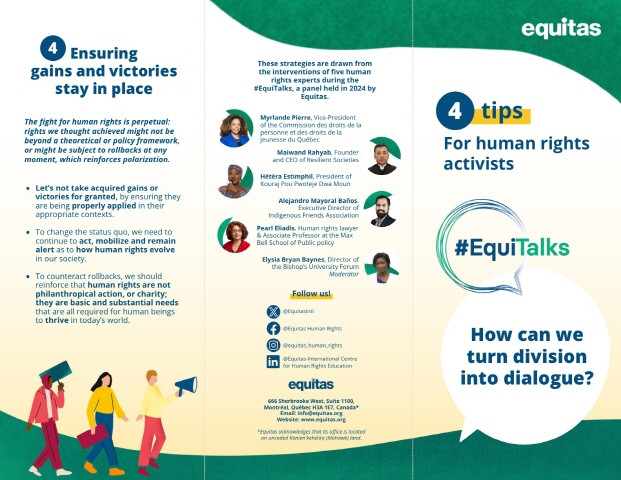 #EquiTalks: Comment transformer la division en dialogue ? سنة النشر: 2024 المؤلف المؤسسي: Equitas Ce document rassemble les réponses de cinq défenseurs des droits humains lors du panel de discussion #EquiTalks en 2024, qui ont tenté de répondre à la question suivante : Comment transformer la division en dialogue? Le dépliant offre des pistes de solution et des conseils pour contrer la polarisation des opinions sur les droits humains.
 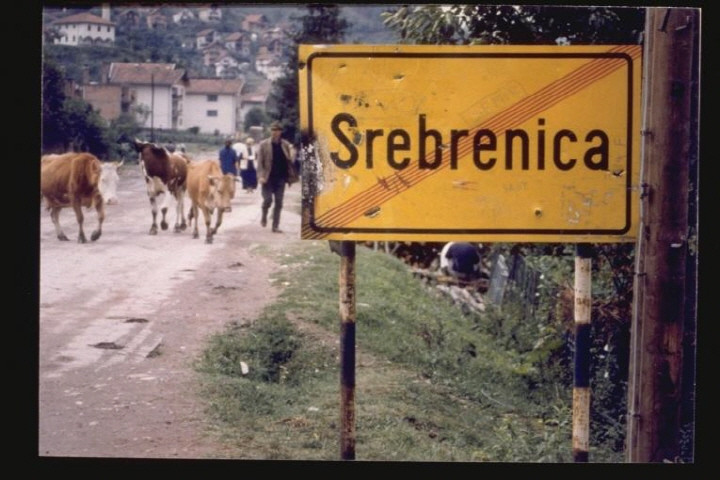 [Podcast] Back to Srebrenica سنة النشر: 2022 المؤلف المؤسسي: Doctors without Borders Since its creation in 1971, Médecins Sans Frontières has been providing medical assistance to populations in need in numerous extremely complex situations. Its staff has often witnessed various types of crimes and abuses. In this podcast, we will take a closer look at one of these crises: the siege of the city of Srebrenica and the massacre that followed the fall of this city during the Bosnian War in the 1990s. [Podcast] Retour à Srebrenica سنة النشر: 2022 المؤلف المؤسسي: Doctors without Borders Depuis sa création en 1971, Médecins Sans Frontières apporte une aide médicale aux populations qui en ont besoin dans nombre de situations extrêmement complexes. Son personnel a souvent été témoin de toutes sortes de crimes et d’abus. Dans ce podcast, nous allons examiner en détail l’une de ces crises : le siège de la ville de Srebrenica et le massacre qui suivra la chute de cette ville, lors de la guerre de Bosnie, au cours des années 1990.
  Our Reflections: Global Inequality and Solidarity سنة النشر: 2022 المؤلف: Jenny Bien-Aimé المؤلف المؤسسي: Quebec Association of International Cooperation Organizations (AQOCI) In 2022, the SDI took place from February 6 to 12, and the member organizations of AQOCI chose the theme "In the context of the COVID-19 pandemic: calling for the co-construction of a just and united world."With this theme, the public was invited to discuss the persistent global inequalities and injustices and to explore solutions for making our world more just, united, and equitable.For the occasion, the comic book Nos Reflets was created by the artist Jenny Bien-Aimée. Nos reflets: Les inégalités mondiales et la solidarité سنة النشر: 2022 المؤلف: Jenny Bien-Aimé المؤلف المؤسسي: Association québécoise des organismes de coopération internationale (AQOCI) En 2022, la SDI s'est déroulée du 6 au 12 février et les organismes membres de l’AQOCI ont choisi comme thématique « Dans le contexte de pandémie de COVID-19 : appeler à la coconstruction d’un monde juste et solidaire ».Avec cette thématique, le public a été convié à échanger sur les inégalités et les injustices persistantes à l’échelle mondiale et à discuter des solutions pour rendre notre monde plus juste, solidaire et équitable.Pour l'occasion, la bande dessinée Nos Reflets a été produite par l'artiste Jenny Bien-Aimée.
 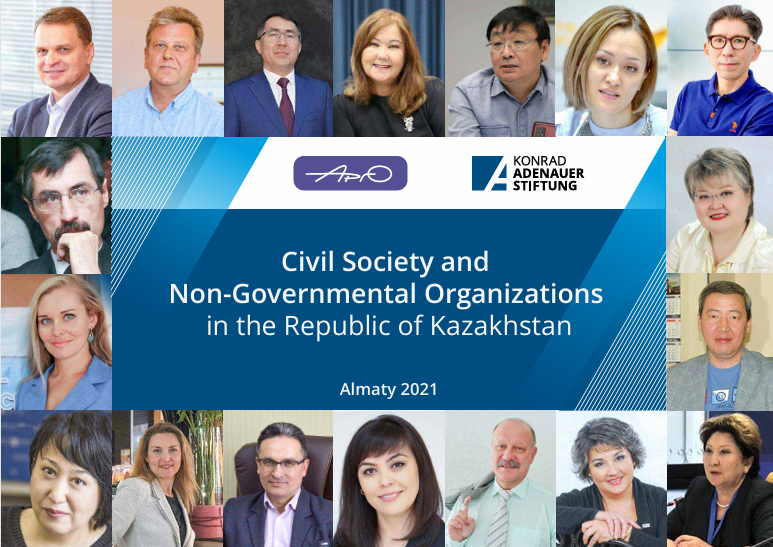 Civil Society and Non-Governmental Organizations in the Republic of Kazakhstan سنة النشر: 2021 المؤلف: Madiyar Kozhakhmet | Evgeny Zhovtis | Dosym Satpayev | Roman Podoprigora | Natalia Yantsen | Kaisha Atakhanova | Vadim Nee | Banu Nurgaziyeva | Zulfiya Baysakova | Shakhnoza Khasanova | Saken Zhanazarov | Diana Okremova | Gulmira Birzhanova | Lyazzat Kaltayeva | Saniya Arapova | Sergey Gulyaev | Sergey Khudyakov | Vitaly Kulik المؤلف المؤسسي: Civil Society Development Association (ARGO) This book is a collection of articles on a wide range of issues concerning CSOs and civil society development in Kazakhstan. The publication is designed for nongovernmental organizations, government agencies, Academia includes students and general readers. Гражданское общество и неправительственные организации в Республике Казахстан سنة النشر: 2021 المؤلف: Madiyar Kozhakhmet | Evgeny Zhovtis | Dosym Satpayev | Roman Podoprigora | Natalia Yantsen | Kaisha Atakhanova | Vadim Nee | Banu Nurgaziyeva | Zulfiya Baysakova | Shakhnoza Khasanova | Saken Zhanazarov | Diana Okremova | Gulmira Birzhanova | Lyazzat Kaltayeva | Saniya Arapova | Sergey Gulyaev | Sergey Khudyakov | Vitaly Kulik المؤلف المؤسسي: Civil Society Development Association (ARGO) Настоящая книга представляет собой сборник статей по широкому кругу вопросов, касающихся развития НПО и гражданского общества в Казахстане. Издание предназначено для неправительственных организаций, государственных органов, студентов, научного сообщества, а также широкого круга читателей.
  حالة حقوق الإنسان في العالم: أبريل/نيسان 2024 سنة النشر: 2024 المؤلف المؤسسي: Amnesty International Le Rapport d’Amnesty International décrit la situation des droits humains dans le monde en 2023 dans 155 pays différents. Les équipes de journalistes et d’enquêteurs de l'ONG peignent un portrait plutôt sombre, avec notamment un recul du droit des femmes, les conséquences dramatiques du réchauffement climatique sur les populations les plus vulnérables, le recul du droit de manifester, ou encore la prolifération de la haine en ligne dans le monde. La multiplication des conflits armés et le choc du 7 octobre ont également eu des conséquences dramatiques. Cependant, quelques bonnes nouvelles sont aussi à noter, avec des avancées pour les droits des personnes LGBTI par exemple. Amnesty International Report describes the human rights situation worldwide in 2023 in 155 different countries. TheNGO's teams of journalists and investigators paint a rather gloomy picture, with, in particular, a decline in women's rights, the dramatic consequences of global warming on the most vulnerable populations, a decline in the right to protest, and the proliferation of online hate around the world. The multiplication of armed conflicts and the shock of October 7 have also had dramatic consequences. However, there is some good news too, with advances in LGBTI rights for example. 世界人权状况:2024年4月 سنة النشر: 2024 المؤلف المؤسسي: Amnesty International Le Rapport d’Amnesty International décrit la situation des droits humains dans le monde en 2023 dans 155 pays différents. Les équipes de journalistes et d’enquêteurs de l'ONG peignent un portrait plutôt sombre, avec notamment un recul du droit des femmes, les conséquences dramatiques du réchauffement climatique sur les populations les plus vulnérables, le recul du droit de manifester, ou encore la prolifération de la haine en ligne dans le monde. La multiplication des conflits armés et le choc du 7 octobre ont également eu des conséquences dramatiques. Cependant, quelques bonnes nouvelles sont aussi à noter, avec des avancées pour les droits des personnes LGBTI par exemple. Amnesty International Report describes the human rights situation worldwide in 2023 in 155 different countries. TheNGO's teams of journalists and investigators paint a rather gloomy picture, with, in particular, a decline in women's rights, the dramatic consequences of global warming on the most vulnerable populations, a decline in the right to protest, and the proliferation of online hate around the world. The multiplication of armed conflicts and the shock of October 7 have also had dramatic consequences. However, there is some good news too, with advances in LGBTI rights for example. 세계 인권 현황 보고서: 2024년 4월 سنة النشر: 2024 المؤلف المؤسسي: Amnesty International Le Rapport d’Amnesty International décrit la situation des droits humains dans le monde en 2023 dans 155 pays différents. Les équipes de journalistes et d’enquêteurs de l'ONG peignent un portrait plutôt sombre, avec notamment un recul du droit des femmes, les conséquences dramatiques du réchauffement climatique sur les populations les plus vulnérables, le recul du droit de manifester, ou encore la prolifération de la haine en ligne dans le monde. La multiplication des conflits armés et le choc du 7 octobre ont également eu des conséquences dramatiques. Cependant, quelques bonnes nouvelles sont aussi à noter, avec des avancées pour les droits des personnes LGBTI par exemple. Amnesty International Report describes the human rights situation worldwide in 2023 in 155 different countries. TheNGO's teams of journalists and investigators paint a rather gloomy picture, with, in particular, a decline in women's rights, the dramatic consequences of global warming on the most vulnerable populations, a decline in the right to protest, and the proliferation of online hate around the world. The multiplication of armed conflicts and the shock of October 7 have also had dramatic consequences. However, there is some good news too, with advances in LGBTI rights for example.